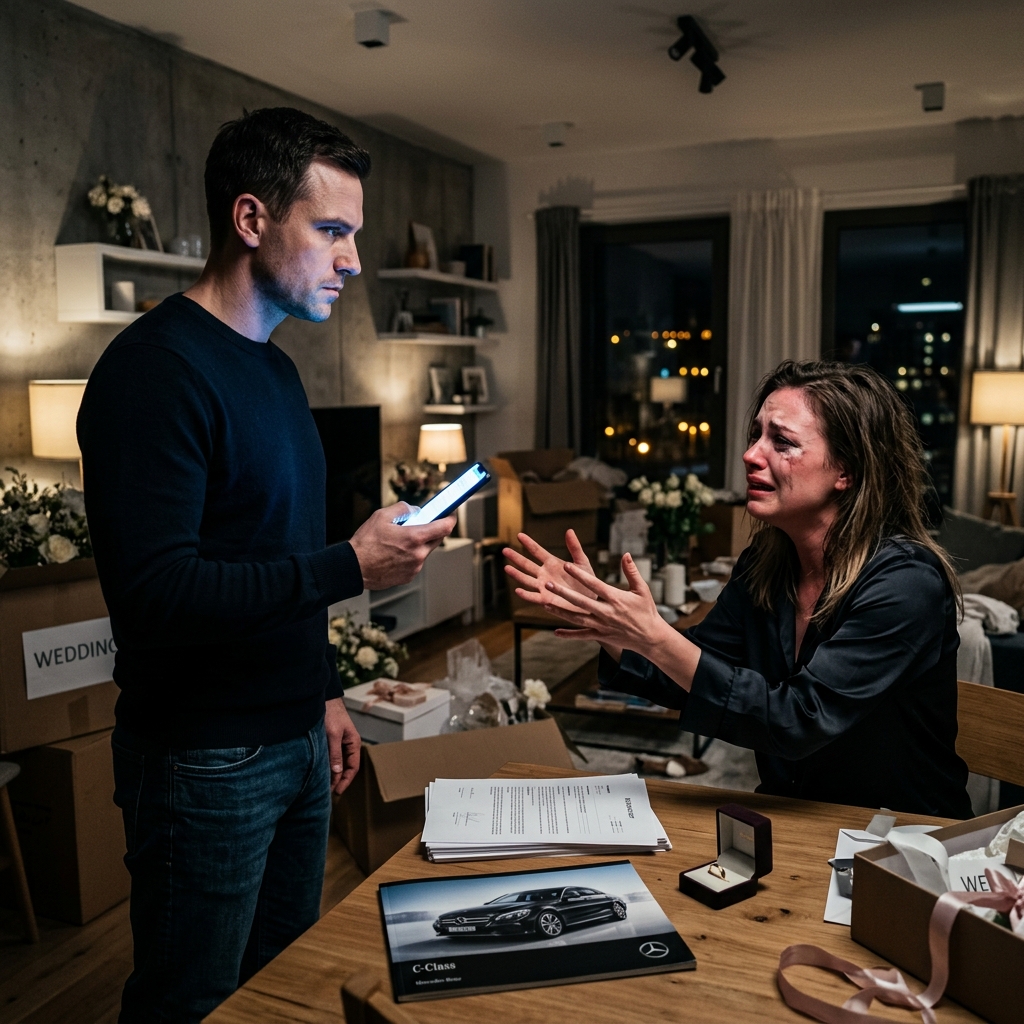
Exactly two years before Daniel walked into that kitchen with Vanessa behind him and divorce papers in his hand, I had stood in front of the mirror in our bedroom fastening a pair of pearl earrings while he watched me from the doorway with that soft smile that used to make me feel safe.
“You know,” he said, “you’re terrifying when you’re focused.”
I laughed and looked at him through the mirror.
“That’s funny. Most people call it organized.”
“No,” he said, stepping closer. “Organized is a spreadsheet. You’re more… surgical.”
At the time, I thought it was admiration.
Later, I understood it was observation.
Daniel had always liked capable women as long as their competence served him. He liked that I could take a chaotic room and make it feel expensive. He liked that I could look at a project file for thirty seconds and spot three numbers that didn’t make sense. He liked that investors trusted me, that clients relaxed around me, that my taste elevated every space he wanted to sell. He liked introducing me as his wife when it made him look stronger. What he did not like, what he never said directly but carried in the back of his throat like a private resentment, was that people often trusted me more than they trusted him.
I didn’t see that right away because when you are building a marriage, you are always choosing which details deserve your full attention and which ones you can forgive as mood, fatigue, stress, ego, or ordinary male insecurity. In the early years, I forgave too much because I wanted peace, and peace inside a marriage can look very similar to blindness if you are not careful.
Back then, Vanessa was still the safe place.
That is what made the betrayal so exquisite.
A husband can disappoint you and still fit inside the oldest story in the world. Men leave. Men lie. Men get bored, threatened, greedy, weak. But a best friend knows where your body keeps its tenderness. A best friend knows which silences mean “I’m tired” and which mean “I’m breaking.” A best friend knows the names of your fears because she has heard them in your own voice. And then one day she uses that knowledge not to protect you but to get closer to whatever she wants.
Vanessa and I met at twenty-four in the waiting room of a design licensing office downtown, both irritated, both overcaffeinated, both trying to look patient while the receptionist kept insisting there was a system delay. She made a joke about government efficiency, I laughed, and by the end of the afternoon we had exchanged numbers and gone for drinks. Some friendships arrive slowly through repetition. Ours arrived fully dressed. Within six months she knew what kind of flowers I hated, which cousin I avoided at family events, what I looked like when I was trying not to cry, and what kind of praise actually mattered to me. When my father died, she stayed with me three nights in a row. When my first independent client nearly canceled a contract and I locked myself in the bathroom at work to panic, she stood outside the door and said, “Come out. If they want to play games, we’ll play better.”
That was Vanessa. Efficient comfort. Fast intimacy. Total access.
And because she was funny and beautiful and attentive in exactly the right doses, people loved her. Women trusted her. Men watched her. She had a way of listening that made you feel chosen. At the time, I thought it came from generosity. Later I learned it came from appetite.
The first time Daniel mentioned her too warmly, I dismissed it.
We had hosted a dinner at the house. Four couples. Too much wine. Too much money in one room pretending it was humble. After everyone left and I was loading glasses into the dishwasher, Daniel leaned against the counter and said, almost lazily, “Vanessa’s sharp.”
I didn’t look up.
“She is.”
“Dangerously so.”
I smiled to myself, still rinsing stemware.
“You say that like you’re impressed.”
He shrugged.
“You don’t survive in her kind of beauty without learning how to use it.”
I turned then, one glass still in my hand.
“Her kind of beauty?”
He laughed softly.
“Don’t do that.”
“Do what?”
“Pretend you don’t hear what I mean.”
At the time, I chose to hear it as a passing observation. Married people survive by stepping over small sparks before they become fire. What I did not realize was that by then, the room had already been quietly filling with gas.
The shift began so gradually that if you had asked me to identify the exact week my marriage changed, I couldn’t have done it. I can tell you the season. Rainy. I can tell you the smell of it. Damp linen, traffic, polished wood, expensive cologne I hadn’t bought him. I can tell you the first detail I could not explain away. Daniel stopped sharing his day.
That sounds small until it starts happening to you. A marriage is not made only of vows and mortgage payments and family holidays. It is made of repeated access. Daily access. What happened at lunch. Who annoyed you. Why that phone call irritated you. What deal fell through. Who embarrassed themselves in a meeting. The ordinary debris of a person’s life. When somebody stops bringing that home, they are not just protecting privacy. They are relocating intimacy.
Daniel began coming home later. Not scandalously late at first. Later enough to miss dinner. Later enough to say, “Long day,” kiss my forehead, and disappear into the shower before we could settle into the old routine. His phone started living face down. He started carrying it room to room. He took calls outside on the patio. Once, at nearly midnight, I found him standing barefoot by the pool whispering into the dark with the kind of softness men reserve for women they are trying not to wake or trying very hard to please.
When he saw me, he ended the call so fast it was almost childish.
“Who was that?” I asked.
“Investor from Miami,” he said.
“At midnight?”
“Time difference.”
“Miami has the same time as we do.”
He stared at me for a second too long, then smiled.
“You’re right. I meant L.A.”
He kissed my cheek after that like it should erase the lie.
I let it.
Not because I believed him.
Because I was beginning to understand that I needed him relaxed, arrogant, and sure of me.
A week later, Vanessa canceled our usual Saturday brunch because she had “the worst migraine” and then accidentally posted a mirror selfie from a hotel spa two hours outside the city. She deleted it within six minutes. I know because I saw it in the backseat of a car on my way to a client meeting and spent the entire drive staring at my phone like it had just coughed blood. The photo alone proved nothing. Women lie to other women all the time for reasons much smaller than betrayal. But there is a very specific sensation that comes when your body recognizes a pattern before your mind is willing to name it. That sensation settled into me then and did not leave.
A month after that, I found the hotel receipt.
I did not go looking for it. That part matters. I wasn’t snooping through pockets like a suspicious wife in a bad television drama. I was sorting laundry. Doing what I had done a hundred times before. His navy suit was draped over the chair by the closet, and when I reached into the inner pocket to check for receipts before sending it to dry cleaning, there it was. Intercontinental. Two nights. Dinner service. Wine. Dessert. One king suite. A date that corresponded to a “broker dinner” he had sworn ran late enough to require staying downtown.
I sat on the edge of our bed with that receipt in my hand and felt something inside me become very, very still.
Not numb.
Still.
There is a difference.
Numbness is absence.
Stillness is calculation.
I thought about calling him immediately. I thought about taking a photo and texting it to Vanessa with no context, just to see what she would say. I thought about smashing every glass in the kitchen and making him come home to the sound of consequence. Instead, I folded the receipt exactly the way I found it, placed it back into the pocket, hung the suit in the wardrobe, washed my hands, and finished seasoning the fish for dinner.
When he came home that night, he kissed me at the door and said, “Something smells incredible.”
I smiled and asked if he wanted rice or potatoes.
That was the night I stopped reacting and started building.
The first person I told was not Vanessa, obviously. Not Daniel. Not even my sister. It was Nicole, a mutual friend who had known both of us long enough to understand discretion and long enough to recognize when her loyalty was being tested.
We met for lunch at a restaurant where the music was too loud and the tables were too close, which made it the perfect place to say dangerous things because nobody in those places ever believes the dramatic conversation at the next table is real. Nicole arrived ten minutes late, sat down, ordered sparkling water, and spent the first five minutes pretending her earrings required urgent adjustment.
Finally she said, without looking up, “I saw Daniel.”
I tore my bread in half.
“Okay.”
“With someone.”
I buttered one piece.
“Okay.”
She looked up then, startled by my calm.
“You already know.”
“Not officially.”
Nicole inhaled slowly.
“It was Vanessa.”
There it was.
Named.
Clean.
The thing itself.
I chewed once, swallowed, and said, “How many times?”
She stared.
“I don’t know.”
“You’ve seen them before.”
Not a question.
She nodded once.
“At least three.”
“In public?”
“Yes.”
“Comfortable?”
Her mouth tightened.
“Yes.”
I leaned back.
“Good.”
She blinked.
“Good?”
“Yes,” I said. “If they’re comfortable, they’re careless.”
She watched me for a long moment.
“You are frightening me a little.”
“I’m not the one you should be afraid of yet.”
That was the afternoon I called Steven Hale.
He had handled my business contracts for four years. He was a property and corporate attorney, exacting, discreet, impossible to bully, and famously expensive in a way that made incompetent men nervous. When I told his assistant I needed a confidential consultation “with no digital paper trail outside your office,” she paused for half a second and then gave me a private slot at seven the next morning.
Steven’s office smelled like leather, coffee, and old money pretending to be modern. He took one look at my face and did not waste time with fake sympathy.
“Tell me what you know,” he said.
I told him.
Not dramatically.
Chronologically.
Receipt. Calls. Friend sighting. Timeline changes. Asset structure. Properties. Joint accounts. My contributions. His businesses. Our marital home. The development property in Westbrook. My interior firm. Everything.
He listened without interrupting and took notes in a black notebook with no logo on it.
When I finished, he said, “Do you want to confront him or bury him?”
I looked at him.
“Legally.”
He almost smiled.
“Good answer.”
For forty minutes, he walked me through every option available to a woman who was smarter than her husband and more patient than his mistress. We talked about separation of assets, traceable contributions, exposure thresholds, timing, corporate liability, reputational leverage, and the difference between vengeance that feels satisfying and strategy that survives court review.
At the end of the meeting, he closed the notebook and said, “If you begin now, do not rush. Men like your husband only become truly vulnerable when they are absolutely certain they are safe.”
I stood.
“I can do patience.”
“I believe you,” he said.
And then, just before I reached the door, he added, “One more thing.”
I turned.
“If he has forged anything, or moved anything using your identity without full consent, do not confront him. That changes the entire game.”
I found the forged signature four months later.
It was almost beautiful in its stupidity.
The property in Greenpoint Heights was supposed to be a long-term investment. That was how Daniel sold it to me over dinner one night a year earlier. “Low noise. High return. Give it two years.” I hadn’t thought much about it after the closing because my own company was scaling and because I had by then already begun emotionally withdrawing from the marriage. But while going through copies of our property records with Steven’s accountant, I found a supplemental loan file attached to the property. Co-signatory authorization. My signature at the bottom.
Not mine.
Close enough to survive a quick glance.
Not close enough to survive me.
I sat with that document on my lap for an hour. Then I scanned it, saved three copies, filed the original, and said nothing to Daniel. Nothing at all.
That night he came home irritable because some deal had stalled. He poured himself whiskey, loosened his tie, and started complaining about “how useless some of these guys are when real money is on the table.”
I served dinner.
He ate.
I asked one or two questions.
He mistook my composure for dependence.
That became his third mistake.
By then Vanessa had become bolder.
She stopped pretending I was the center of our friendship. She became almost overly generous with advice, the way guilty women often do when they’re trying to manage your perception of them. She started saying things like, “You deserve a man who sees you,” and “Sometimes women grow and marriage doesn’t.” She was always just respectful enough to avoid looking suspicious, but the edge was there if you listened closely. Once, while helping me choose fabric for a client’s penthouse project, she trailed her fingers along a silk panel and said, “Do you ever feel like you outgrow people before you realize it?”
I looked at her in the mirror.
“Do you?”
She smiled.
“I think some people outgrow lives they’re too scared to leave.”
There it was again.
Not enough to accuse.
More than enough to remember.
At home, Daniel became increasingly careless because my silence made him brave. He stopped deleting all his messages. He still hid the phone, yes, but badly. Like a man who had begun to enjoy the deception more than he feared discovery. Once, in the shower, he left the screen lit on the sink. I didn’t touch it. I didn’t need to. Vanessa’s name glowed there with the last message visible.
Can’t wait until this is over. I hate pretending with her.
I smiled to myself when I read that.
Because neither of them understood what pretending actually looked like.
Pretending was me packing my jewelry in stages over nine months and moving it to a secure box under the company’s insurance inventory.
Pretending was me relocating original property files, passports, tax records, and personal titles one careful folder at a time.
Pretending was me signing off on dinner reservations and smiling in couple photos while quietly renting a furnished apartment downtown six months before the confrontation ever happened.
Pretending was me still climbing into bed beside him at night and waiting until his breathing changed before reaching for my phone to send Steven a timestamped summary of every suspicious detail from the day.
I was not surviving.
I was curating evidence.
And because humiliation matters best when it happens in the right room, I wasn’t only thinking about money. I was thinking about audience.
Daniel’s entire self-image depended on three things: success, admiration, and the illusion of masculine control. If I took the money quietly, he would still tell himself a story in which he had chosen freedom and paid a cost. If I exposed him privately, he would still perform victimhood to whoever remained loyal enough to listen. No. If I wanted the lesson to last, I needed him to lose the room.
Vanessa made that easier.
She was ambitious but impatient. Unlike Daniel, who wanted to preserve appearances until the last possible second, she wanted visibility. She wanted people to know she had won. I suspect she had fantasized about it for months. The new girlfriend revealed. The wronged wife replaced. The social circle forced to reorient itself around the upgraded pair. Women like Vanessa do not simply want love. They want witnesses.
So I gave her the chance.
Daniel chose the Tuesday confrontation very carefully. He waited until my mother had left that morning after a weekend visit. He checked the house staff schedule. He confirmed the gate cameras were working but the upstairs cleaner was off. He wanted privacy, but not too much privacy. Enough for the scene to feel contained. Not enough for it to look cowardly. I know because I saw the pattern later. Men like him always imagine themselves as dignified villains. They never understand how pathetic they look from the outside.
When he arrived with Vanessa at his shoulder and those papers in his hand, I saw all of it at once. The rehearsal. The confidence. The belief that he was walking into a final act he controlled.
He set the envelope down.
I read every page.
I smiled.
“I signed those three weeks ago,” I told him.
His first expression was confusion.
His second was anger.
His third, the one that mattered, was fear.
Because fear only shows when certainty leaves.
I walked to the drawer beneath the island, took out the brown file, and placed it beside his envelope.
“What is that?” he asked.
“Your answer.”
He opened it.
Inside were copies of the title transfers, account dissolution notices, contribution ledgers, and one highlighted page from the Greenpoint Heights file.
He flipped through too fast at first, not understanding what he was seeing. Vanessa stepped closer, leaning in.
Then he hit the forged signature.
Everything stopped.
“What is this?” she asked.
I answered before he could.
“That,” I said pleasantly, “is the moment your fiancé mistook my trust for stupidity.”
Daniel looked up sharply.
“Alyssa—”
I held up one finger.
“No. We’re past first names now. Read.”
He stared at me.
Vanessa took the file from him and scanned the page herself.
“You forged—”
“He did,” I said.
She looked at him then, really looked at him, and the first fracture appeared in her face. Not heartbreak. Alarm. Because suddenly this wasn’t about a wife he no longer loved. It was about a man who had lied to everyone in the room, including her.
“I also sent copies this morning,” I said.
“To whom?” Daniel demanded.
“Your partners. Your lender. Your board liaison. And your mother.”
That last one hit hardest.
His face changed instantly.
“You sent this to my mother?”
“She deserved to know her son was using his wife’s name to commit fraud while planning to parade his mistress through a divorce.”
Vanessa set her handbag on the chair as if she needed both hands free to hold reality in place.
“You said everything was clean,” she whispered to him.
“It is,” he snapped. “It’s just—”
“Just what?”
He rounded on me.
“You wanted a war?”
I laughed softly.
“No, Daniel. You brought the war to my kitchen. I just finished it.”
He took a step toward me.
I took one back, measured, precise, giving him exactly enough distance to feel it.
“Business is business,” I said. “Remember? You used to say that at dinner every time I questioned your methods. Business is business. Emotions are expensive.”
I pointed to the file.
“I took notes.”
He looked like a man trying to stop his own blood from hitting the floor.
Vanessa, however, still had one last illusion to preserve.
“What happens now?” she asked.
I looked at her, and because I had once loved her in the deep, uncomplicated way women love the friends who witness their becoming, my answer was kinder than she deserved.
“Now,” I said, “you find out what you actually won.”
I picked up my bag, my keys, my phone.
“The house keys stay on the hook. The car in the garage is in my name. The art in the study has already been appraised and moved under private holding. The account you’ve both been paying dinners out of has eleven thousand dollars left because I left that much on purpose. Enough to feel possible. Not enough to feel safe.”
Daniel stared.
Vanessa went white.
I opened the front door and stepped into afternoon light.
I did not look back.
But I heard him say my name once.
Not loudly.
Not angrily.
Like a man who had only just realized he was already alone.
Three days later, they made the one move I had hoped for and fully expected: they went public too soon.
Vanessa posted an engagement photo.
Not a subtle one either. A full reveal. Champagne glasses. Ring forward. Daniel smiling like a man who had been liberated instead of disassembled. The caption was nauseating.
Sometimes the right love arrives after the wrong season.
I stared at it for exactly seven seconds.
Then I sent one text.
To Steven.
They jumped early.
His reply came immediately.
Good. Then we finish on schedule.
The event that weekend was not technically an engagement party. It was a real estate launch gala for one of Daniel’s flagship developments. Investors, city officials, design press, social media people, industry wives, hungry juniors trying to look relevant. It was exactly the right room. His room. The place where his reputation breathed.
Vanessa attended on his arm.
That was her first public appearance in my place.
I almost admired the nerve.
Almost.
When I entered the ballroom forty minutes later in a black dress and a pair of diamond studs my mother said made me look “like trouble with excellent posture,” the noise in the room didn’t stop all at once. It shifted. Heads turned in stages. Recognition moved through the crowd like current.
Vanessa saw me first.
Of course she did.
Women like her are always tracking the woman they displaced.
Her smile froze.
Daniel turned.
And for the first time since he brought those papers to my house, I watched real uncertainty cross his face in public.
I walked straight toward them.
No rush.
No scene.
The slower you move in moments like that, the more the room comes with you.
“You’re not invited,” Daniel said when I stopped in front of them.
His voice was lower than usual. Less certain. Good.
“I know,” I said. “I came for the correction.”
Vanessa tried for a smile.
“This really isn’t the place.”
“Oh,” I said softly, glancing around at the cameras, the glass walls, the polished crowd gathering without pretending they weren’t gathering, “it’s exactly the place.”
Daniel moved closer.
“Do not do this.”
I met his eyes.
“You should have thought of that before using my name to build your lies.”
Then I turned to the nearest cluster of investors, who were already pretending not to listen badly enough that everyone around them could see through it.
“Since all of you are here,” I said, raising my voice just enough to carry, “you deserve to know exactly what you’re celebrating.”
That did it.
Noise dropped.
Phones lifted.
Vanessa’s face emptied.
Daniel hissed my name.
I ignored him.
“This man,” I said, gesturing toward him with cool precision, “did not just leave his wife for her best friend. If that were the only issue, I would have stayed home and let God punish him on His own schedule.”
A few shocked laughs escaped the crowd.
I continued.
“He used my forged signature to secure financing on a jointly held property. He misrepresented internal asset positions. And he brought his affair partner into public negotiations while assuming I was too naive, too emotional, or too dependent to notice.”
Gasps. Whispers. One investor’s wife covered her mouth. Somewhere to my left, somebody murmured, “Jesus.”
Daniel stepped forward.
“Everything she’s saying is being twisted—”
“By documents?” I asked. “That’s impressive.”
Laughter this time, sharper.
Vanessa grabbed his arm.
“You told me this was handled.”
He shook her off.
“Not now.”
She stared at him.
“No. Right now.”
Good. Very good.
I reached into my bag and removed one copy of the forged co-sign file and one letter from Steven’s office confirming formal review proceedings. I handed them to the nearest senior investor, an older man who had known Daniel since he was thirty.
“Mr. Kane,” I said, “since your fund is exposed to this development, you should read that tonight.”
The man took the papers with the stunned caution of someone accepting a live grenade.
Daniel lunged, not enough to touch me, enough to destroy himself further.
“Give me that!”
Security moved immediately.
Not because I asked.
Because men with money do not like unpredictability at their events.
Vanessa stepped back from him as though his body had become contagious.
“You lied to me,” she said.
There it was.
The line every mistress thinks she owns.
The one that always amuses me.
As if deception becomes tragic only when it reaches her.
Daniel’s voice cracked for the first time all night.
“It’s not what it looks like.”
Vanessa laughed once. Short. Disbelieving. Humiliated.
“You said she had nothing,” she whispered.
The crowd heard it.
That was the line.
The one that would survive after the night ended.
You said she had nothing.
Daniel turned toward her.
“Vanessa—”
“No,” she snapped, louder now, tears rising in exactly the wrong way for someone who had planned to debut herself as victorious. “You told me she needed you. You told me she was comfortable, passive, blind. You said this would be clean.”
I looked at her with a calm I had earned.
“You didn’t take my life,” I said. “You took my problem.”
That sentence landed like a dropped knife.
The room actually inhaled.
Daniel looked at me like he wanted to hate me enough to survive me.
He couldn’t.
Because hate still requires access.
And I was already beyond his reach.
I stepped closer, just enough that only he and Vanessa could hear what came next.
“You thought you were discarding me,” I said. “But I had already outgrown you.”
Then I stepped back, smiled at the room, and added in a voice everyone could hear:
“Enjoy the launch. If there’s anything left to launch.”
I turned and walked out.
No rush.
No shaking hands.
No backward glance.
Because power, once displayed correctly, should never look uncertain on the exit.
The fallout was immediate.
By Monday morning, the board had initiated internal review. By Tuesday, the lender froze new drawdowns on the Greenpoint property. By Wednesday, press whispers had become industry news. Not front-page scandal, nothing so vulgar. Worse. Trade chatter. Investor discomfort. The kind of reputation damage that spreads through private dinners and unanswered calls and careful distance. Daniel hired two lawyers in ten days. The first one told him the forged signature issue was “highly problematic.” The second told him to stop texting everyone emotionally because it made him look reckless.
Vanessa stayed in the house for thirteen days.
That number matters because I know exactly when she left. On the fourteenth day, the gate log recorded a moving van at 10:12 a.m. and her car leaving at 11:47. She took her dresses, her makeup cases, and the illusion. She left the note on the kitchen counter because people like her always need one final chance to control the emotional framing of their exit.
This isn’t what I thought it was.
I laughed when Steven read that line to me over the phone.
“What did she think it was?” he asked dryly.
“A promotion.”
Daniel called that night.
“She left.”
I said nothing.
“Are you listening?”
“Yes.”
“I need help.”
There was no architecture left in his voice now. No polish. No confidence. Just the raw sound of a man standing inside consequences and realizing none of the women he used were willing to mother him through them.
“You should call your mistress,” I said.
“She left.”
“Yes,” I replied. “I heard that part.”
“Please.”
I almost admired the shamelessness.
“Daniel,” I said softly, “I was your wife. Not your recovery plan.”
And I hung up.
My mother visited a week later.
She walked through my apartment, touched the curtains, looked at the arrangement of things, the order of it, the deliberate calm.
“You were ready,” she said.
“You raised me that way.”
She sat across from me for a long time without speaking. Then she asked the only question that mattered.
“Are you sad?”
I answered honestly.
“Yes.”
“For him?”
“No,” I said. “For what I thought it was when it began.”
She nodded.
“That is the correct thing to mourn.”
We sat together in silence after that. Some grief doesn’t need explanation. It just needs witness.
The divorce finalized faster than Daniel expected because men who commit procedural fraud rarely have the luxury of drawing out civil battles. He settled. Quietly. Bitterly. Publicly enough that the right people knew, privately enough that he could keep pretending some dignity remained. It didn’t. Not really.
Vanessa disappeared from the social scene for a while. When she reappeared months later at a charity dinner with a different man and a different face on, she glanced at me once from across the room and then away. We never spoke again. That was wise.
Daniel lost the launch, the property, two investors, and the confidence of everyone who mattered. What he lost from me was harder to describe because it wasn’t just affection. It was legitimacy. Men like Daniel are built from reflected certainty. They become who the room tells them they are. I was the room that had loved him most sincerely, and once that room closed, he became smaller in every direction.
Two months after the divorce, I legally restored my maiden name. The paperwork took fifteen minutes. The feeling took less.
Three months after that, I signed two new corporate contracts and opened a second studio office uptown. The press called me composed. Some people mistook it for coldness. It wasn’t coldness. It was what remains when illusion burns off and you discover you are still standing.
Sometimes, in the late hour between work and sleep, I think about that Tuesday. The envelope. The yellow dress. The way Vanessa scanned my house like hunger had finally been invited inside. The way Daniel expected me to collapse under the neat brutality of legal paper and a replacement woman at his shoulder. And every time I think of it, I return not to the betrayal, but to the smile.
That smile confused them because it came from a place they had never imagined I had access to.
They thought silence meant I was behind.
They thought patience meant I was weak.
They thought composure meant I did not know.
But quiet women know more than people think. We notice the pauses. The lies that arrive too fast. The new cologne. The shifted body language. The borrowed confidence. The friend who listens too closely. The husband who stops asking questions because he has already started building another audience for himself. We notice everything. We just decide very carefully when knowledge becomes action.
And if there is one lesson in all of this, it is not that men cheat or that friends betray or that money reveals character. It is simpler than that.
The most dangerous mistake you can make with a woman who has gone quiet is to assume she has stopped moving.
Sometimes she has not gone still at all.
Sometimes she is simply loading the gun.
![[FULL STORY] My girlfriend texted me, "I think we should break up now."I immediately replied, "You're right. I'm](https://social-media.rabedo.com/thumbnails/1776939185_33.png)

![[FULL STORY] My Brother Tried to Steal My New Car… and Destroyed My Father’s Life Instead](https://social-media.rabedo.com/thumbnails/1777217459_9eba7da8-b156-444c-9101-7db3c585e959.png)
![[FULL STORY] My Wife Said Her Parents Think I’m a Burden – Then Sunday Dinner Exposed Everything | A Quiet Betrayal Story](https://social-media.rabedo.com/thumbnails/1776416605_671810847_1914268542859645_6533352712659064611_n.jpg)