
After I walked out of that launch gala, the city did what cities like ours always do. It didn’t explode all at once. It leaned in. Quietly. Greedily. Lagos, New York, London, Boston, Paris, it doesn’t matter. Wealthy circles all have the same disease. They pretend to hate scandal while feeding on it like sugar. By midnight, three people had texted me to “check in.” By one in the morning, two blogs had vague posts about “a major real estate executive facing internal questions.” By breakfast, everyone who mattered already knew enough to avoid calling Daniel back. That was the part I had counted on. Shame is painful, but professional silence is lethal.
I was at my apartment the morning after the gala, barefoot in a cream robe, pouring coffee into a white ceramic mug, when Steven called.
“You were excellent,” he said without preamble.
I almost laughed.
“Good morning to you too.”
“It is a good morning. One board member resigned from the launch committee before midnight. Kane’s office requested full forensic review at 7:10 a.m. And Daniel’s lender has frozen his latest draw request.”
I carried the mug to the window and looked down at the city.
“So he’s bleeding.”
“He is not bleeding,” Steven said. “He is discovering he is mortal.”
That made me smile.
“And Vanessa?”
“A mutual acquaintance says she left the gala separately. Crying.”
I closed my eyes briefly.
Not out of pity.
Out of recognition.
Women like Vanessa never imagine themselves becoming the embarrassed one. They are always built around the belief that they are the disruption, never the casualty. The look on her face when she realized Daniel had lied to her too had almost made me feel something.
Almost.
“What happens next?” I asked.
“The audit team is moving faster than expected. They found irregular transfers attached to the Greenpoint property and two side agreements that were never properly disclosed.”
I straightened.
“Two?”
“Yes. One we knew. One we didn’t.”
“What kind?”
Steven paused.
“A secondary consulting contract routed through a shell company.”
I said nothing.
Then slowly, “Vanessa.”
“Most likely.”
The room seemed to sharpen around me.
Of course. Of course he had already started feeding her from the structure he thought I’d never see. Money is the first true confession in any affair. Not flowers. Not hotel rooms. Money. Money tells you whether the betrayal is fantasy or architecture.
“Send me everything,” I said.
“It’ll be in your inbox in ten.”
When the email came, I read it at my dining table in complete silence. Vanessa had been paid through a shell consultancy for “brand positioning services” tied to one of Daniel’s developments. The dates overlapped exactly with the months he told me he was spending late nights with investors. Five payments. Not enormous. Not life-changing. But enough to prove intent. Enough to prove she had not simply fallen into his arms out of helpless desire. She had stepped into a system designed to reward her.
I sat back and stared at the screen.
Not because I was shocked.
Because it made the entire thing uglier.
Affairs are one kind of betrayal. Strategic affairs with invoices are another.
At noon, my phone rang. Daniel.
I let it ring out.
Then again.
Then again.
On the fourth call, I answered.
For three seconds, neither of us spoke.
Then he said, “You’re enjoying this.”
His voice sounded terrible.
Raw. Sleep-deprived. Smaller.
“No,” I said. “I’m respecting it.”
“What does that even mean?”
“It means I’m letting the truth do what it does.”
He exhaled hard.
“You blindsided me.”
I actually laughed.
“That’s brave coming from you.”
“You humiliated me in front of everyone.”
“No,” I said. “You humiliated yourself in front of everyone. I just made sure the room had subtitles.”
He was silent.
Then, quieter, “You could have handled this privately.”
I walked back to the kitchen and set my mug down.
“Could I?”
“Yes.”
“And what would that have looked like, Daniel?”
No answer.
I continued anyway.
“You handing me papers in my own house with my best friend standing behind you like she was already measuring the curtains?”
He inhaled sharply.
“That wasn’t—”
“Don’t.”
I cut him off, and my voice went colder than I intended.
“Do not rewrite that scene to make yourself feel less disgusting.”
He tried a different angle.
“You never fought for us.”
That stopped me.
Not because it hurt.
Because it was so nakedly absurd.
“I spent eighteen months not detonating your life the first moment I knew,” I said softly.
“That was me fighting for what remained of my dignity. Don’t confuse restraint with indifference.”
He said nothing.
Then, very quietly, “Did you ever love me?”
I looked out the window.
At the traffic.
At the city.
At the life moving outside me without caring whether I answered.
“Yes,” I said.
A long pause.
“Then how can you do this?”
I smiled without humor.
“Because I stopped first.”
And I hung up.
Three days later, Vanessa came to see me.
That surprised me, though in retrospect it shouldn’t have. Some women cannot survive not being understood, especially by the woman they betrayed. They need to tell their version. They need to place themselves back in the center, not as villain, but as misunderstood participant in a tragic, complicated romance.
My doorman called upstairs.
“There’s a Miss Vanessa Hart here to see you.”
I closed my laptop slowly.
“What does she look like?”
He hesitated.
“Upset, ma’am.”
“Send her up.”
If she wanted an audience, I would give her one.
When I opened the door, she looked nothing like the woman who had stood behind Daniel in my house. No yellow dress. No poised smile. No polished certainty. She wore jeans, a black blouse, no visible jewelry, and her eyes were swollen from crying. She clutched her handbag with both hands the way frightened women do in public spaces when they want their posture to hold together longer than their emotions.
For one full second, we just looked at each other.
Then she said, “You look good.”
“I slept.”
She let out a broken laugh that died quickly.
“Can I come in?”
I stepped aside.
She walked in slowly, taking in the apartment. Smaller than the house. Cleaner. More deliberate. Less decorative, more exact. I could see her reading it, trying to understand what kind of woman leaves one beautiful life and recreates another so quickly.
I didn’t offer her tea.
She sat anyway.
I remained standing.
“That feels right,” she said.
“What does?”
“You standing while I sit. It feels like a hearing.”
“In some ways, it is.”
She looked down at her hands.
“I didn’t come here to fight.”
“No,” I said. “You came here to explain.”
Her eyes lifted.
“Yes.”
“I know.”
She nodded once and inhaled carefully.
“I didn’t plan this.”
I almost interrupted, but didn’t. Better to let liars fully decorate their own traps.
“He was unhappy,” she continued. “He talked to me. It started as emotional. Then it became… more.”
“Emotional,” I repeated.
She winced slightly.
“I know how that sounds.”
“Do you?”
“Yes.” Her voice trembled. “I know what I did.”
“No,” I said softly. “You know what happened to you. That’s not the same thing.”
Her face tightened.
“That’s unfair.”
I laughed once.
“Unfair?”
She looked up sharply.
“Yes. Unfair.”
Now I sat down across from her, because I wanted her to hear this without the distraction of posture.
“You came into my home for over a year,” I said.
“You listened to me talk about my marriage. You watched me cook for him. You sat on my couch and asked me if I was happy. You let me comfort you over jobs, men, family, all while sleeping with my husband and taking money from his projects through a shell contract. And you want to use the word unfair in my apartment?”
The blood left her face.
“He told you about the contract.”
“No,” I said. “The documents did.”
She opened her mouth. Closed it.
Then tried a different truth.
“I didn’t know he forged your signature.”
“That’s the line you came here to save?”
“I’m serious.”
“I believe you,” I said.
That seemed to throw her.
“You do?”
“Yes.”
I leaned back.
“I believe Daniel lied to you about that specific thing. Men like him compartmentalize. He probably told you I was cold. Controlling. Overinvested in the business. Maybe he told you I didn’t understand him.”
She looked away.
I smiled sadly.
“That’s always the script.”
Tears rose in her eyes.
“I loved him.”
“No,” I said.
Her head snapped up.
“You wanted to beat me.”
Her lips parted.
“What?”
“You didn’t want my husband. You wanted the proof that you could take something central from a woman people respected.”
She shook her head immediately.
“That’s not true.”
“It is,” I said. “Because if you had loved him, you would’ve wanted the real version. The stressed version. The indebted version. The weak version. But you only stayed while you thought the life around him was stable.”
“That’s not fair—”
“There’s that word again.”
She stood abruptly.
“You think you know everything.”
I rose too.
“No. I know enough.”
Her face twisted then, and for the first time, some of the sweetness cracked off completely.
“You always thought you were better than me.”
There it was.
Not grief.
Not remorse.
Competition.
Alive and ugly.
I looked at her for a long moment.
“No,” I said quietly. “I thought we were different things.”
She laughed bitterly.
“Same difference.”
“No,” I said. “Not at all.”
She picked up her handbag.
“You know what your problem is?”
I almost smiled.
“Please. I’d love to hear it.”
“You make people feel small.”
That one interested me.
“How?”
“By acting like you’re always composed. Always one step ahead. Always…” She gestured at me in frustration. “Correct.”
I nodded slowly.
“Daniel said something similar.”
Her eyes flashed.
Of course he did.
That answered more than anything else she could have confessed.
I stepped closer.
“Do you know the difference between making people feel small and refusing to shrink so they can feel big?”
She didn’t answer.
Because she knew.
Vanessa left without another word. But at the door, I said one final thing.
“You and I were never fighting over the same thing.”
She turned.
“You wanted my life,” I said. “I wanted peace. That’s why you lost.”
After she left, I stood alone in the center of my apartment and felt nothing triumphant. Just clean. Very clean.
That weekend, Daniel’s mother called me.
I almost didn’t answer, but I respected her enough to pick up.
Her voice was steadier than I expected.
“Alyssa.”
“Yes, Mrs. Cole.”
“No,” she said. “If we are speaking now, after everything, then call me Diane.”
I sat down.
“Okay. Diane.”
There was a long silence on the line.
Then she said, very quietly, “I am ashamed.”
I closed my eyes.
“You didn’t do this.”
“I raised the man who did.”
There are some sentences that arrive so nakedly sincere they strip the room of all performance. That was one of them.
“I know you did not call to comfort me,” I said gently.
“No.” A breath. “I called because I needed to tell you something and because you deserve to hear it from me, not through lawyers or gossip.”
I straightened slightly.
“What is it?”
“I saw him yesterday.”
“And?”
“He looked at me and blamed you.”
I said nothing.
“He said you were cold. Humiliating. Ruthless. He said you wanted to destroy him.”
I waited.
“And I told him,” Diane said, voice sharpening for the first time, “that a woman does not become ruthless in a vacuum. She becomes precise after a man gives her reason.”
That nearly made me cry.
Nearly.
“I also told him,” she continued, “that if he ever uses my house, my name, or my sympathy to protect himself from consequences, I will remove every comfort he mistakes for birthright.”
I exhaled slowly.
“He’s your son.”
“Yes,” she said. “And you were my daughter as long as he was your husband. He forgot what that meant. I did not.”
We spoke for another ten minutes. About nothing dramatic. Practical things. Her health. My work. The weather. But beneath it was something larger and sadder. Two women standing on opposite sides of the wreckage of the same man, both recognizing that grief is not ownership. We ended the call gently.
Daniel, on the other hand, kept unraveling.
Not spectacularly. Men like him rarely unravel in public the way women do. They unravel administratively. Missed calls. Delayed filings. Panic in private. False confidence in rooms that no longer believe them. He still tried to posture for a while. Still wore the right suits. Still showed up at one networking dinner too many. But the problem with reputational damage among powerful people is that nobody needs to say it out loud. They simply stop returning your energy. They let your jokes die in the air. They “circle back” less often. They move you from head table to afterthought in one quarter.
A month after the gala, Steven sent me an update: the Greenpoint lenders were pushing for civil remedy, not criminal escalation, provided Daniel signed a structured admission and financial withdrawal agreement. In plain English, they weren’t interested in sending him to prison. They wanted him removed, neutered, and permanently distrusted. Which, in his world, was almost worse.
I signed my part of the final property separation that afternoon.
A week later, the divorce settlement closed.
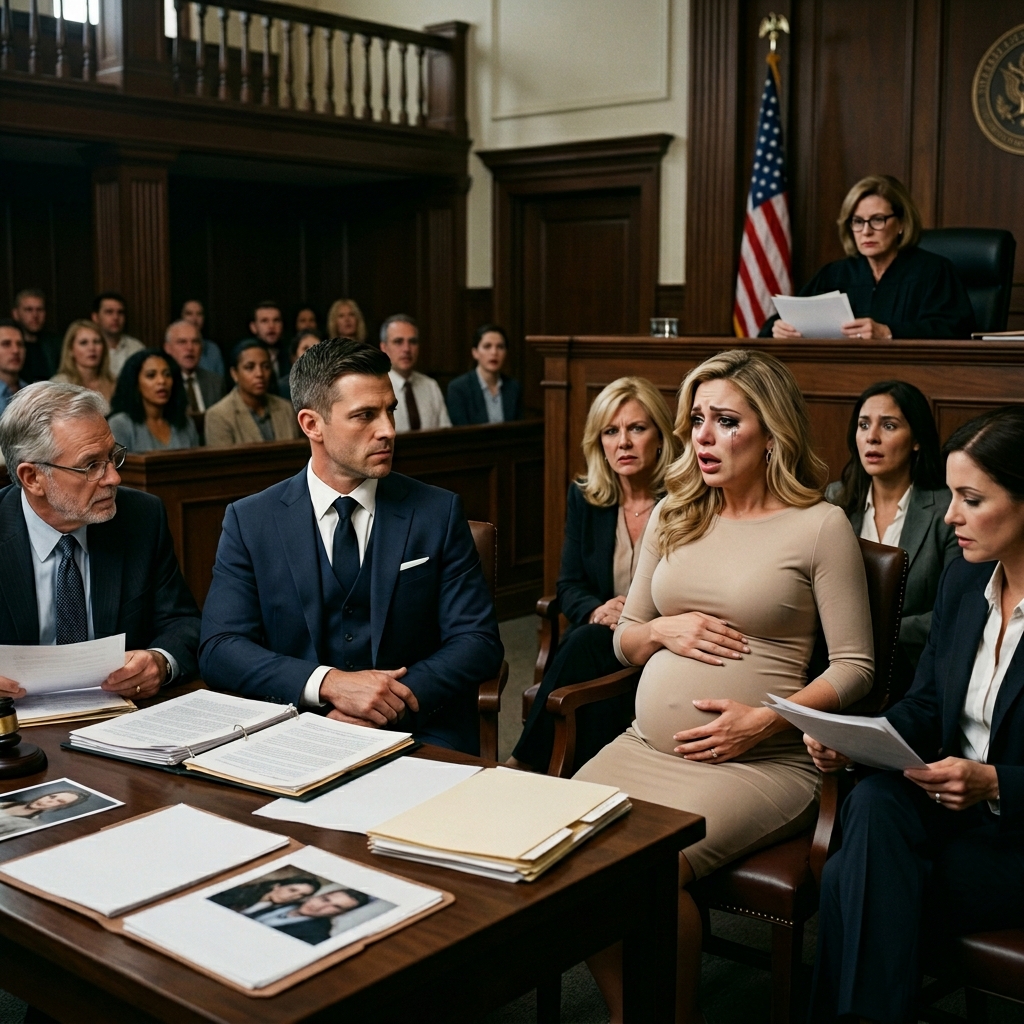
No dramatic courtroom.
No tears.
No cinematic confrontation.
Just signatures, exhausted lawyers, and the sound of a chapter becoming paperwork.
When it was done, Steven asked, “How do you feel?”
I thought about it honestly.
“Lighter,” I said.
He nodded.
“That’s usually the right answer.”
Two months later, I legally restored my maiden name.
I became Alyssa Warren again on a Thursday morning in an office with bad fluorescent lighting and a clerk who never once looked up properly from her desk.
I signed the form.
She stamped it.
And that was it.
No thunder.
No miracle.
No swelling soundtrack.
Just a woman taking herself back.
The first time I introduced myself with that name again, I was at a meeting with a hotel group interested in a full interior redesign contract. The executive extended his hand and said, “Alyssa Warren? I’ve heard good things.”
I shook his hand and smiled.
“I’d like to give you better ones.”
He laughed.
And something in me settled into place.
Not because a man approved of me.
Because he was meeting the correct version.
Three months after that, I signed two new commercial contracts and hired six more people.
Six months after that, I took over a second office space uptown with floor-to-ceiling windows and enough natural light to make ambition feel almost holy.
And one rainy Tuesday, not long after that, I ran into Daniel by accident.
I was leaving a meeting downtown. He was standing under the awning of a hotel entrance, no umbrella, one hand in his coat pocket, staring absently at the street. He looked older. Not dramatically. Just… used. Like the city had started collecting from him daily.
He saw me.
Straightened.
For one moment, we were suspended there in the rain-muted noise, two people who used to share a bed and now barely shared a language.
“Alyssa.”
I nodded once.
“Daniel.”
He looked at me the way people look at places they burned down and somehow still miss.
“You look…” He trailed off.
“Well?” I offered.
He gave a faint, embarrassed laugh.
“Yes. Well.”
“I am.”
A pause.
Then, “Can we talk?”
I considered it.
Then stepped just under the awning, not close enough to feel intimate.
“For one minute.”
He nodded quickly, almost gratefully.
“I know I don’t deserve anything from you.”
That was a promising start, so I stayed silent.
“I just…” He swallowed. “I need you to know that I see it now.”
“What?”
“What I did. What you were. What I threw away.”
Rain hit the street harder for a moment.
I watched it bounce.
He continued.
“I kept telling myself you were controlling. Or cold. Or too focused on work. But that wasn’t true.”
No, I thought. It wasn’t.
“You were carrying everything,” he said. “And I resented you for not making me feel stronger while you did it.”
That was the closest thing to truth he had ever given me. I respected it, even then.
“And Vanessa?” I asked.
He gave a humorless smile.
“She wanted the version of me that existed when you were still holding the floor up.”
I looked at him.
“And when she figured out the floor was you?”
He nodded once.
“She left.”
Of course she did.
He inhaled.
“I’m sorry.”
I believed him.
That’s the strange part.
I believed that in this small wet doorway, in the wreckage of his own ego, he was finally sorry.
But belief and access are not the same thing.
“I know,” I said.
He looked surprised.
“You know?”
“Yes.”
A pause.
“And?”
I smiled very slightly.
“And nothing.”
That landed harder than anger would have.
Because anger still implies active connection.
Nothing is the real exile.
He stared at me for a long second.
Then he nodded.
“I deserved that.”
“Yes,” I said. “You did.”
I stepped back into the rain and raised my hand for the car that was already coming.
As I opened the door, he said my name once more.
I turned.
“What?”
He looked at me carefully, like he knew he had no right to ask for anything but asked anyway.
“Were you ever afraid?”
I thought about that.
About the receipt.
The forged signature.
The launch gala.
Vanessa in yellow.
The envelope on my table.
My own smile.
Then I answered.
“Yes.”
He looked almost relieved by that.
“Of losing everything?”
“No,” I said.
“Of becoming someone hard enough to survive you.”
The car door closed between us.
That night, alone in my apartment, I stood by the window with a glass of wine and looked out at the city lights stretched under rain. People who met me now sometimes mistook my stillness for coldness. They called me intimidating. Precise. Hard to read. I didn’t correct them. Let people translate women however they need to in order to survive them. It changes nothing.
The truth is much simpler.
I am not cold.
I am clear.
There is a difference between bitterness and discernment, and I learned it the expensive way. Bitterness keeps the wound alive so it can keep speaking. Discernment closes the wound and remembers the lesson.
What Daniel lost was not just a wife.
Vanessa lost more than a social victory.
And I gained more than escape.
I gained accuracy.
About people.
About silence.
About what patience can build in the hands of a woman no longer interested in being underestimated.
If there is one cruelty more dangerous than betrayal, it is misreading the person you betray. Daniel looked at me for two years and saw what was useful to him. Composed. Loyal. Manageable. Vanessa looked at me and saw what she wanted to defeat. Taste. Stability. The room. Neither of them saw what was underneath because quiet women rarely advertise the machinery of their survival.
But we are always building.
Always watching.
Always deciding when the truth becomes action.
And the most dangerous thing you can do to a woman who has gone quiet is assume she has gone still.
Sometimes she has not gone still at all.
Sometimes she is simply waiting for the room to fill before she turns on the lights.
![[FULL STORY] My Wife Said I Should Cook For Myself And She Wasn’t A Restaurant. So I Did—And Quietly Restructured](https://social-media.rabedo.com/thumbnails/1777217055_C4.png)


![[FULL STORY] She Shared: 'A Guy Who Can’t Deal with a Powerful Woman Isn’t Truly a Man ' This Came After I](https://social-media.rabedo.com/thumbnails/1776831891_8.png)