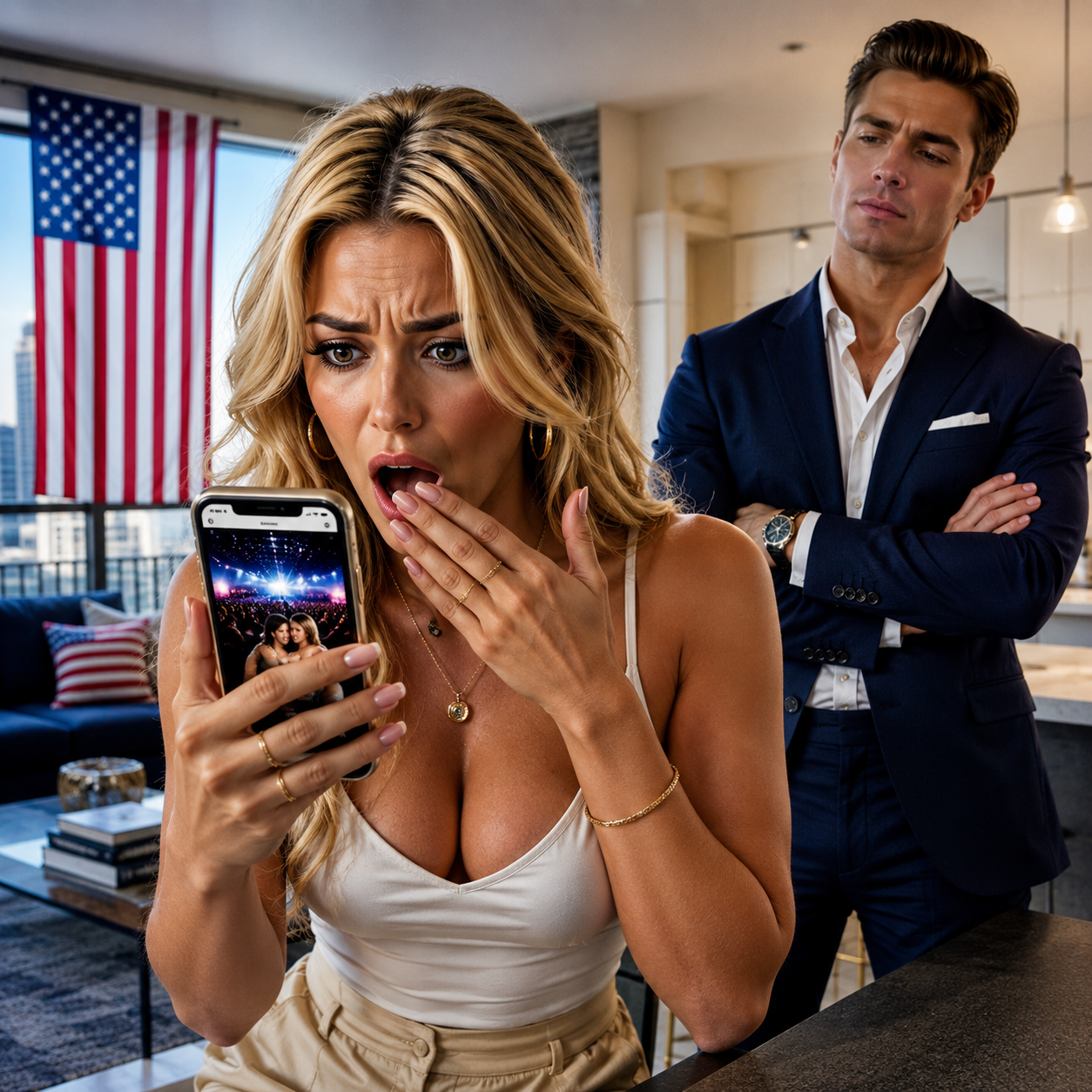

"Don't freak out. I’m going to a late-night strategy dinner with Marcus. Be a good boy and don't wait up."
That was the text. The "be a good boy" part was the cherry on top of a very bitter sundae. My name is Julian. I’m 34, and I design supply chain architectures for global firms. In my world, everything is a system. Inputs, outputs, bottlenecks, and redundancies. If a shipment is late, there’s a reason. If a sensor trips, there’s an intrusion. I live by logic because logic doesn’t lie. People, however, lie constantly.
Elena, my girlfriend of five years, was the "superstar" of a boutique marketing agency. Or so she told me every night while she sipped expensive Pinot Noir I paid for in a condo I owned. She’s 29, beautiful, and possessed a "victim mentality" so refined it was almost an art form. Over the last eight months, Elena had transitioned from a dedicated partner into a stranger who treated me like a reliable, slightly boring piece of furniture.
"You’re just so... predictable, Julian," she’d say, laughing as she checked her reflection in the mirror, wearing a new Gucci belt she claimed was a 'performance bonus.' "You like your schedules, your spreadsheets, and your quiet nights. I need energy. Marcus says I’m the engine of the firm. He needs me at these late sessions."
Marcus. The CEO. A 48-year-old "disruptor" with a tan that looked like it cost more than my first car and a smile that never reached his eyes. I wasn't jealous; I was observant. A marketing agency doesn't need "strategy dinners" at 11:00 PM on a Tuesday at The Gilded Lily, a restaurant where the tasting menu starts at $400.
The system was failing. I could feel the friction.
The breakthrough didn't happen because I went through her phone. I’m better than that. It happened because of a synchronization error. We shared a high-end tablet for our smart-home controls. One evening, while trying to adjust the balcony lighting, a notification banner slid down from the top of the screen. It was an iMessage, but it wasn't a text. It was a screenshot of an internal spreadsheet.
The sender: Marcus. The caption: "Our little secret fund is growing, superstar. Another 'consulting fee' approved. See you at the hotel."
My heart didn't race. My breathing didn't change. I simply opened the photo. It was a ledger of fraudulent reimbursements. Elena wasn't just sleeping with him; she was his accomplice in a systematic embezzlement scheme. She would submit fake invoices for "freelance designers" or "event rentals," Marcus would approve them, and they’d split the cash or use it to buy the designer gear she’d been flaunting.
She was the fall girl. Marcus was the architect, but he was using her name on the paper trail.
I spent the next three hours in my home office. I didn't drink. I didn't pace. I mapped the logistics of their destruction. I accessed the cloud backup she’d neglected to secure. I found hundreds of emails, photos of them together in hotel suites paid for by the company, and, most importantly, the digital signatures on the fraudulent invoices.
I realized then that Elena didn't just want a "fast track." She wanted a shortcut at my expense. While I was calculating our future, she was calculating how much she could skim before the house of cards collapsed.
I looked at the clock. 11:45 PM. She was likely at The Gilded Lily right now, laughing at her "predictable" boyfriend while Marcus’s hand was on her knee.
I began to export the data. I didn't just want her gone. I wanted the system to purge her. I wanted the delivery of her consequences to be overnighted, tracked, and signed for.
I spent the next two weeks being the perfect, boring Julian. I listened to her stories about "exhausting" client meetings. I even bought her a bouquet of lilies to celebrate her "hard work." She looked at me with that pitying, manipulative smile.
"You're sweet, babe. Really. I don't know what I'd do without my rock."
You’re about to find out, I thought.
The moment arrived on a Thursday. Elena was dressed in a silk slip dress that cost more than my monthly mortgage payment. She was dousing herself in a heavy, floral perfume that always gave me a headache.
"Big night?" I asked, leaning against the kitchen island with a glass of water.
"Huge," she sighed, faking exhaustion. "Marcus needs to finalize the quarterly pitch. It’s going to be a long one. Don’t wait up, okay?"
She kissed my cheek. Cold. Calculated. She walked out the door, her heels clicking like a countdown timer.
At 8:00 PM, I received the "Don't freak out" text.
I replied: "Enjoy."
Then, I opened my laptop. I had three windows open. The first was an encrypted email to the firm’s Board of Directors and the lead auditor of their parent company. The second was a direct message to Marcus’s wife, Vivienne—a woman known in social circles as a "Black Widow" of divorce court. The third was the Uber app.
I hit 'Send' on the emails first. 15 gigabytes of fraud evidence, hotel receipts, and internal memos began flying through the fiber-optic cables.
Next, I messaged Vivienne. I didn't say much. Just a link to a private folder and a GPS pin of The Gilded Lily.
Finally, I summoned a car. Not for me. I ordered a premium SUV to the restaurant with a specific destination: the police station’s precinct where Marcus’s brother-in-law worked as a captain. I knew they were doing more than eating tonight; I’d seen the "Contingency" line item on the ledger for "party favors"—recreational substances they liked to use at these "meetings."
I sat back and watched the tracking dot of her phone on our shared "Find My" app. They were at the restaurant. They were comfortable. They felt untouchable.
But the shipment of their reality was about to be redirected. I had no idea how violent the collision would be, but I knew one thing for certain: the superstar was about to lose her light.
But as I watched the GPS icon flicker, I noticed something I hadn't planned for. A second car was already parked at the restaurant—one belonging to a private investigator I hadn't hired...


![[FULL STORY] MY WIFE TOLD THE EXHAUSTED BREADWINNER TO COOK FOR HIMSELF SO I STARTED TREATING HER LIKE THE ROOMMATE SHE CLEARLY WANTED TO BE](https://sa.greatgames.info/storage/thumbnails/1777882553_C8.jpg)
![[FULL STORY] They Kicked Him Out of His Own House—While Her Lover Was Still Inside](https://sa.greatgames.info/storage/thumbnails/1776415871_D26.jpeg)
![[FULL STORY] My Fiancée Said: “If You Loved Me, You’d Stop Digging Into My Secrets.” I Said: “Then Pack Them Too.](https://sa.greatgames.info/storage/thumbnails/1777350137_B5.png)