The text message was a bluff. I knew it within seconds. It was the kind of low-effort psychological warfare my sister, Clara, loved to play. She probably had a friend shadow me or just guessed I’d be checking my accounts. I didn't reply. I didn't even block the number. I just archived it under a new folder on my desktop titled 'The Circus'.
When you're an engineer, you learn that every structure has a "single point of failure." For my family, that point was my patience. And it had just snapped.
By 8:00 p.m., the first wave of the "Digital Deconstruction" began to hit.
The phone plan was the first to go dark. I watched the status bars on my dashboard go from green to grey. My father’s line, my mother’s, Clara’s, and her husband Greg’s. They were now in a 48-hour "purgatory." They could receive calls, but they couldn't make them or use data unless they put their own credit cards on file.
My phone started lighting up like a Christmas tree.
Clara (Missed Call) Mom (Missed Call) Dad (Missed Call) Clara: "Elias, my data isn't working. I’m trying to order a dress for the cruise. Fix it."
I didn't answer. I went to 'Step Two: The Vault.'
Over the years, I had become the custodian of their digital identities. Because I was "the tech-savvy one," I managed their passwords, their Netflix, their Amazon Prime, their cloud storage. I even managed the digital keys for the smart-locks I had installed in my parents' house—the house I had helped pay for.
I logged into the master password manager. I didn't change their passwords; that would be petty. I simply revoked "Shared Access."
Suddenly, the world became a very confusing place for the Vance family.
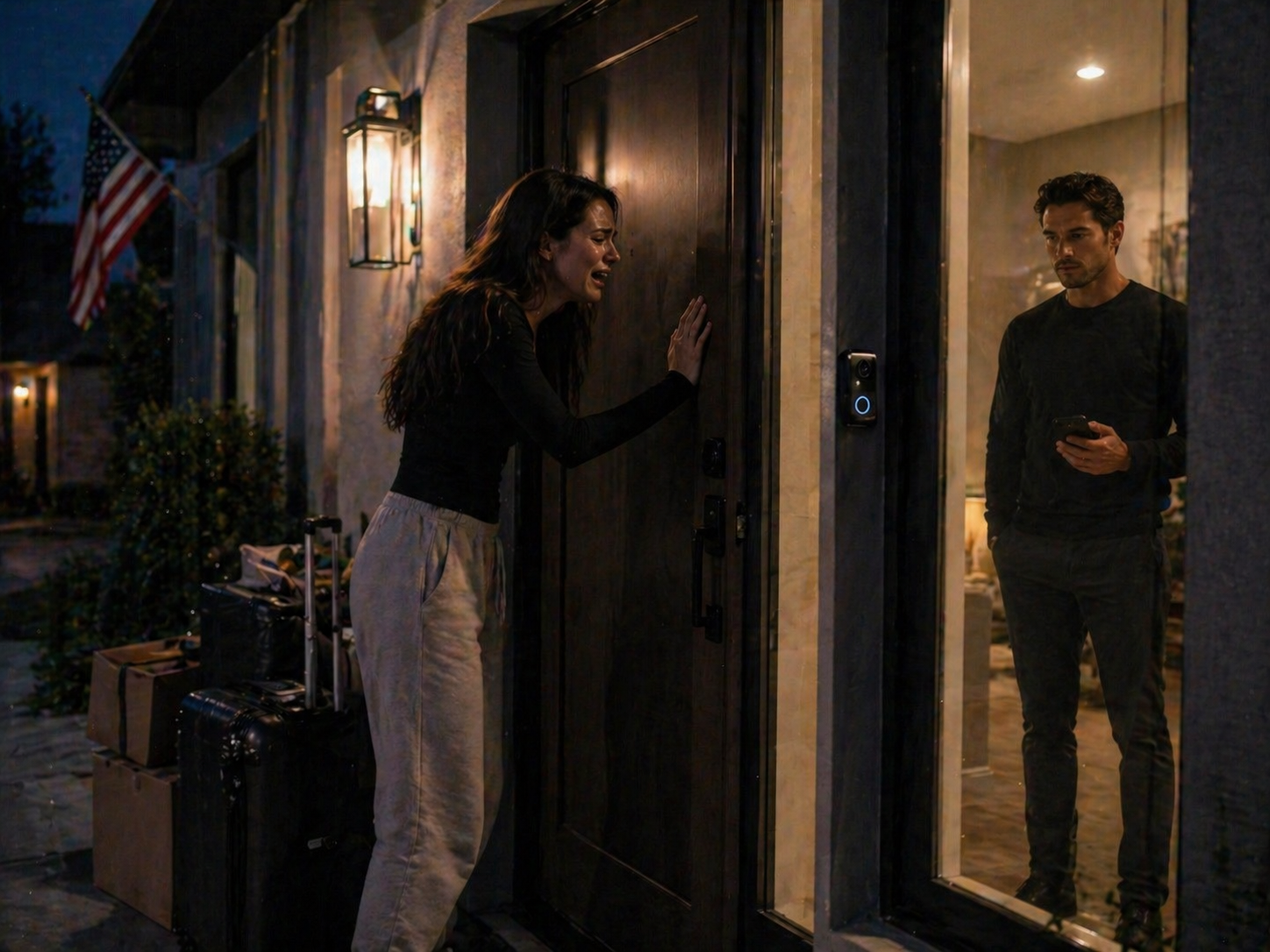
At 10:30 p.m., my doorbell rang. I checked the camera. It was Clara. She looked frantic, her hair disheveled, clutching her phone like a holy relic. I opened the door, but I didn't step back to let her in.
"Elias! What is going on?" she shrieked. "Greg can't get into his work email because the recovery code goes to your phone! Mom can't get into her iPad! And my phone says 'No Service'!"
I leaned against the doorframe, crossing my arms. "I sent an email to the family group four hours ago, Clara. I’m sure you saw it before your data cut out."
"I didn't read it! I thought it was just one of your boring work updates!"
"It wasn't," I said calmly. "It was a notice of termination. I’m no longer the family's CTO. Or the bank. Or the safety net."
Clara’s face shifted from anger to that practiced "victim" pout that had worked on me for thirty years. "Elias... we’re family. Why are you being so mean? Is this about the cruise? We were going to tell you the final cost tonight!"
"You didn't need to tell me," I said, showing her the notification on my phone. "My bank told me. $22,450. On a card meant for Mom’s heart medication."
"We were going to pay you back!"
"With what, Clara? You haven't had a job in six months. Dad is living on a pension that barely covers his golf fees. And Greg? Greg spent his last bonus on a jet ski."
"You have so much!" she cried, her voice rising. "It’s just money to you! To us, it’s a memory! Don't you want to make memories with us?"
"I have enough memories, Clara. Mostly of me paying for things while you guys look at the eggs."
I started to close the door.
"Wait!" she shouted. "Mom is crying! She thinks you’re having a breakdown! She’s calling Aunt Sarah and everyone! They’re going to think you’ve lost it because of the accident!"
"Let them think what they want," I said. "But tell Mom she’ll need to find a new way to log into her Facebook to post about how mean I am. I’ve revoked the shared login."
I shut the door and turned the lock. The click sounded like a period at the end of a very long, exhausting sentence.
The next morning, 'Step Three: The House' began.
The house my parents lived in was legally theirs, but the infrastructure was mine. I had installed the solar panels, the high-efficiency HVAC system, and the entire smart-home grid under my own accounts to "save them money."
I didn't turn off their power. I’m not a monster. But I did "Suspend Licenses" on the management software.
The thermostat would now only work manually. The smart-locks reverted to physical keys. The security cameras—the ones I used to check to make sure Mom hadn't fallen—went dark.
I was removing myself from their walls.
By noon, my father managed to call me from a landline. His voice was a low growl, the one he used right before he’d lose his temper when I was a kid.
"Elias. Enough of this theater. You’ve humiliated your mother. You’ve locked us out of our own home systems. You turn everything back on right now, or I’m coming over there."
"You’re welcome to come over, Dad," I said, sitting at my kitchen table with a cup of coffee. "But I won't be opening the door. And if you try to force it, I’ll have the footage of you doing it sent directly to your new insurance provider—the one you’ll have to find since I removed you from my umbrella policy this morning."
There was a long silence on the other end. I could hear him breathing, the sound of a man realizing for the first time that the "useful" son had teeth.
"You’re ungrateful," he finally whispered. "After everything we did for you after the crash... the physical therapy... the depression..."
"You didn't do those things for me, Dad," I said, my voice steady. "You did them so you wouldn't have to feel guilty. And I’ve paid you back ten times over. The mortgage is clear. The cars are paid. The debt is settled."
"We are your family!"
"No," I said. "You’re a group of people who share my DNA and my routing number. Only one of those things is permanent."
I hung up.
I spent the rest of the day working on 'Step Four: The Business.' My parents had a small boutique decor business that ran entirely under my LLC for tax purposes—another "favor" that had lasted too long.
I didn't shut down their store. I simply "Decommissioned the Hosting Service."
Their website disappeared. Their payment gateway froze. Their inventory system went offline.
I sent a formal, cold email to their business address: 'Due to a restructuring of L.M. Digital Services, your courtesy license has been revoked. You have 30 days to migrate your data to a private server. Failure to do so will result in permanent data loss.'
By that evening, the family group chat—which I could still see on my desktop but had silenced on my phone—was a war zone.
Clara was posting screenshots of "The Ledger" I had accidentally-on-purpose left in a shared folder months ago—a spreadsheet of every cent I had spent on them. She called it "proof of my obsession."
But then, my phone buzzed with a message from someone I hadn't talked to in years. My cousin, Leo.
"Hey Elias. I just saw what Clara posted. Man... I had no idea you were carrying all of them for this long. Are those numbers real? $15k for her wedding? $40k for the house? Dude... why didn't you tell us?"
I realized then that the "Ledger" wasn't my shame. It was my evidence.
But as I was about to reply to Leo, a new alert flashed on my screen. This one wasn't from the bank or the phone company. It was from the security system at my parents' house.
Even though I had suspended the licenses, I still had "Administrator Emergency Access."
Someone was at their front door. Someone I didn't recognize. A man in a suit, holding a briefcase. He wasn't a family member. He looked like a process server.
My father opened the door, and the man handed him a bright yellow envelope.
I leaned in, squinting at the grainy image on my laptop. My father’s face went pale. He looked at the paper, then looked directly into the security camera as if he knew I was watching.
He didn't look angry anymore. He looked terrified.
And for the first time, I realized that there was a secret in that family ledger that even I hadn't discovered yet. Something they were hiding behind my money.
The cliff was crumbling, and I wasn't the only one who was about to fall.
![[FULL STORY] My Girlfriend Humiliated Me At Her Family Barbecue By Rejecting Marriage To My Face, So I Blocked Her And Handed Her The Ring Box In Front Of Her Entire Office.](https://sa.greatgames.info/storage/thumbnails/1776847485_10.png)
![[FULL STORY] She Asked Me To Disappear When Her Ex Came Back — I Found Out He Was Destroying Lives For A Living](https://sa.greatgames.info/storage/thumbnails/1777361209_A4.png)

![[FULL STORY] She Said She Settled for Me, Then Came Back When I Found Someone Who Didn’t](https://sa.greatgames.info/storage/thumbnails/1777913472_a5e547fc-386a-4a74-9991-bf455c9daf59.jpg)