

She treated me like an option long before I found the list.
That was what I understood later. At first, I thought the problem was one text message, one dinner, one name she said too softly, one party where she forgot I was standing close enough to hear. But it was never one thing. It was the way she always left just enough distance between us to make me reach. It was the way she accepted my love like a reservation she might still cancel. It was the way she called me her future when she wanted comfort and “too intense” when I wanted certainty.
My fiancée’s name was Natalie. We had been together four years, engaged for eight months, and six months away from a wedding she had mostly planned and I had mostly paid for. I was thirty-four, a procurement manager for a hospital network, which meant I spent my days negotiating contracts, finding waste, and making sure expensive systems did not collapse because someone forgot to read the fine print. My life was not glamorous, but it was stable. I owned a modest townhouse, drove a paid-off car, helped my younger sister with college when I could, and believed that love meant showing up even when nobody clapped for it.
Natalie used to say that was what she loved about me.
“You’re the only man who ever made me feel like I could stop auditioning,” she told me once, curled beside me on the couch during a thunderstorm.
I believed her.
That was my first mistake.
The first time I noticed I was not the only man in her emotional life was a year before we got engaged. We were at brunch with her friends when someone mentioned a man named Julian. The table reacted too quickly. A sharp little silence, a few smirks, Natalie looking down at her mimosa like the bubbles had become fascinating. I asked later who Julian was, and she laughed.
“Ancient history,” she said.
“How ancient?”
“College. Sort of after college. It was complicated.”
Complicated. That word is where honesty goes when it does not want to undress.
I asked if they still talked.
“Sometimes,” she said. “He checks in. It’s not a thing.”
A phrase like not a thing should never be trusted when someone says it too quickly.
But I wanted to trust her, so I did. Or I tried to.
Julian became a shadow with good timing. He texted when she was stressed. He liked every photo she posted within minutes. He sent songs, articles, private jokes I did not understand. When I asked about it, Natalie called me insecure. When I stopped asking, she called me mature. That was how she trained me without ever admitting there was a lesson.
By the time we got engaged, Julian was still “not a thing,” but he was never fully gone. He sent a message the night I proposed. I know because Natalie’s phone lit up while she was calling her mother. I saw his name and the first line.
“So he finally did it?”
I should have asked then.
Instead, I told myself not to ruin the happiest night of our lives.
That was my second mistake.
The proposal happened in my backyard under string lights I hung myself. Natalie cried, said yes, kissed me like I had saved her from something, and posted the ring before dessert. My mother cried. My sister screamed over FaceTime. Natalie’s friends filled the comments with heart emojis and words like finally and deserved and our girl.
Julian liked the post.
No comment.
Just a like.
A small, quiet thumbprint on the edge of our future.
Wedding planning started the next week. Natalie wanted a venue with exposed beams and a garden ceremony, a photographer who shot “cinematic intimacy,” a floral designer who apparently had a waiting list, and a dress appointment that required a deposit. I was practical. I asked about budgets, timelines, contracts. She said I was being “spreadsheet romantic,” which she claimed was affectionate but somehow made everyone laugh at my expense.
Still, I paid. Not blindly. Not foolishly. But more than half. Then more than that. Her parents promised to contribute, then delayed. Her freelance marketing work had slow months. The florist needed a deposit. The caterer had a payment deadline. The hotel block required a guarantee.
“I’ll pay you back when my invoices clear,” she said.
Sometimes she did.
Often she did not.
I kept track quietly because procurement managers keep records the way some people keep prayers.
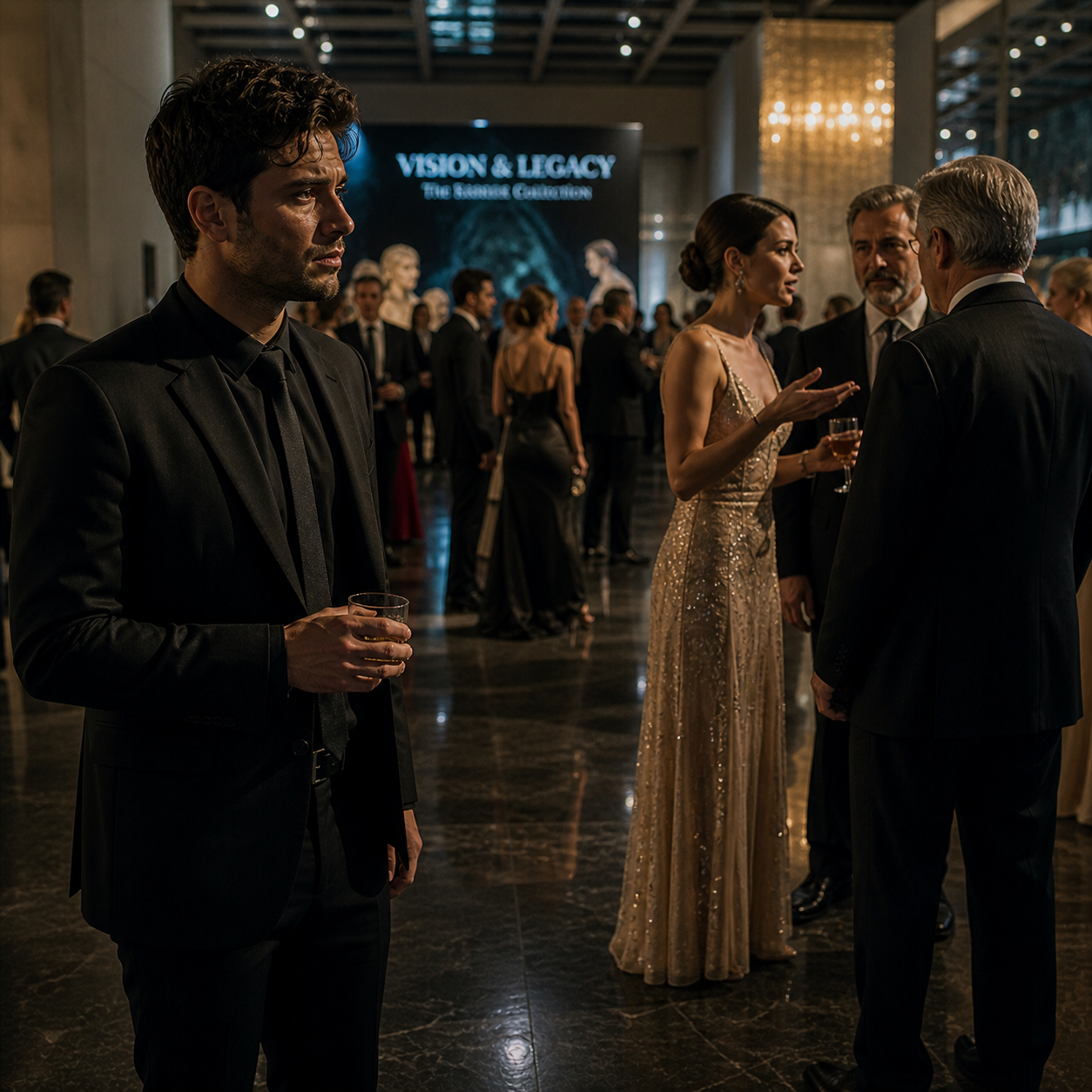
The real beginning of the end came at her friend Elise’s engagement party.
It was held at a wine bar downtown, the kind with brick walls, uncomfortable stools, and a menu where nothing was simply cheese if it could be called curated dairy. Natalie wore a green dress I loved and spent most of the night across the room from me, laughing with Elise, her friend Maya, and two men I did not know. I did not mind at first. I was not the kind of man who needed to be attached to his partner in public. But then I noticed her phone lighting up again and again. She would glance down, smile, type quickly, and turn the screen away.
At one point, Maya leaned toward her and said, loudly enough for me to hear, “Okay, but what are you going to do if Julian actually comes back for real?”
Natalie froze.
Elise slapped Maya’s arm. “Shut up.”
I looked at Natalie.
She did not look at me.
Maya saw me then and laughed too brightly. “I’m kidding.”
No one believed her.
On the drive home, I asked.
“Is Julian coming back?”
Natalie stared out the passenger window. “What does that even mean?”
“It means Maya said something and everyone acted like she said it in front of the wrong person.”
She sighed. “Miles.”
There it was. My name used as an accusation.
“I’m asking a fair question.”
“She was drunk.”
“That doesn’t answer it.”
“Julian might be moving back to the city. That’s all.”
“When did you find out?”
“A few weeks ago.”
“A few weeks?”
“It wasn’t relevant.”
I laughed once. “Your college almost-ex moving back was not relevant enough to mention?”
“He’s not my almost-ex.”
“What is he?”
She turned toward me, irritated. “He is a person I had history with before I met you.”
“Do you still want him in your life?”
She looked offended. “I’m engaged to you.”
“That also does not answer it.”
Her jaw tightened. “I am not doing this. I’m not going to spend my engagement defending myself because your ego gets fragile around one name.”
“My ego?”
“Yes. You get like this whenever you feel like you’re not the only option in the room.”
I went quiet.
The only option.
She had said it like that was an unreasonable thing to want from the woman wearing my ring.
The rest of the drive happened in silence.
At home, she softened. She always did after cutting too deep. She came into the kitchen while I was drinking water and wrapped her arms around my waist from behind.
“I love you,” she said against my back.
I did not answer immediately.
She squeezed tighter. “I chose you.”
That should have comforted me.
Instead, it sounded temporary.
Two weeks later, I found the list.
Not by snooping. Not by hacking. Not by doing any of the desperate things people imagine when a relationship turns suspicious. I found it because Natalie had used my laptop to log into her email after hers died during a vendor call. She forgot to log out. When I opened the browser the next morning to check a supplier contract, her inbox was there.
I was going to sign out.
Then I saw the subject line.
“Before you marry him.”
From Julian.
My body went still.
I know there are people who say they would never click. Good for them. Maybe they are better than me. Maybe they have never seen the name that haunts their relationship sitting in an inbox six months before their wedding with a subject line like a warning label.
I clicked.
The email was long. Emotional. Dramatic in a way only men who confuse intensity with depth can be.
Julian wrote that moving back had made him think about everything. He wrote that Natalie had always been the one person who understood him. He wrote that seeing her engaged made him realize he had lost more than a relationship. He wrote that if she was truly happy, he would step back. But if there was even a part of her that wondered, he needed to know before it was too late.
I scrolled.
Natalie had replied.
Not once.
Many times.
The thread went back weeks.
Her messages were careful, but not innocent. She told him she was confused. She told him Miles was wonderful, but sometimes wonderful felt like a decision rather than a fire. She told him she loved me, but love with me was calm in a way that scared her because calm sometimes felt like settling. She told him she could see a future with me, but when she imagined what-ifs, his face still appeared.
Then I saw the attachment.
A note file titled “Decision Map.”
My hands went cold.
I opened it.
It was not literally titled “list of options,” but it might as well have been.
There were two columns.
Miles.
Julian.
Under my name: stable, kind, financially responsible, loves me deeply, good family, safe home, wants marriage, reliable father material, emotionally available, predictable, not exciting, may limit growth, practical, sometimes too serious.
Under Julian: chemistry, history, creative, understands my wild side, exciting, risky, financially unstable, inconsistent, intense, could hurt me again, makes me feel alive, no clear plan, may leave, but maybe changed.
At the bottom, she had written:
“Question: Do I want peace or passion? Can Miles become more? Can Julian become safe? Is it wrong to keep both doors open until I know?”
I stared at that last line until the words blurred.
Keep both doors open.
That was what I was.
A door.
Not a person. Not a partner. Not the man paying venue deposits and helping her mother fix her printer and holding her when wedding stress made her cry.
A door she could keep open while checking whether the other one led somewhere more interesting.
I took screenshots.
Then I signed out of her email.
Then I sat at my kitchen table for almost an hour without moving.
I did not confront her that day.
That surprised me. I had imagined, if something like this ever happened, that I would explode. That I would print the email, throw it onto the table, demand answers, watch her cry, maybe forgive too quickly because I loved her and because leaving would require dismantling a future everyone already celebrated.
But something in me felt too tired for performance.
She had treated me like an option.
So I decided to remove myself from the list.
Not dramatically. Not with a midnight screaming match. Not with a jealous confrontation that would let her say I was controlling and insecure.
Cleanly.
Completely.
Quietly enough that by the time she realized I was gone, the decision would already be made.
The first thing I did was call my lawyer, Caroline Ward.
Caroline had helped me with my townhouse purchase and a contract dispute years earlier. She had a voice like a locked filing cabinet.
I told her the situation.
She asked, “Are you married?”
“No.”
“Joint property?”
“No. She lives in her apartment. Some belongings at my house.”
“Shared accounts?”
“One wedding account. Mostly my contributions. Some vendor contracts in my name.”
“Do you want to continue the engagement?”
“No.”
There was a pause, then the sound of typing.
“Good. Then this is simpler. Emotional, but legally simpler.”
I almost laughed.
“What do I do?”
“Gather records. Do not drain shared funds beyond your documented contributions. Notify vendors according to contract terms. Do not threaten Julian. Do not post online. Do not send her the screenshots in anger. Decide whether you want a conversation or a notice.”
“A notice?”
“A clear written statement that the engagement is over and logistics will be handled in writing.”
“That feels cold.”
“Cold is not always cruel. Sometimes cold is how you avoid being pulled into a fire.”
That sentence stayed with me.
Cold is how you avoid being pulled into a fire.
The next week, I became a quiet accountant of my own heartbreak.
I downloaded wedding account statements. I gathered vendor contracts. I listed every deposit, whose card paid it, whose name was on the agreement, cancellation windows, refund terms. I boxed up the things Natalie had left at my house: sweaters, skincare, books, two framed prints, a pair of boots, half a drawer of hair products, a mug that said future Mrs. Bennett, which I wrapped in newspaper because even hurt men can be careful with ceramic.
I did not change my behavior much at first.
That was the strangest part.
I still answered her texts. I still asked about her day. I still kissed her when she came over, though less deeply. She noticed, of course. Natalie noticed shifts in attention the way a cat notices movement under a door.
“You’ve been weird,” she said one night while we were eating takeout on my couch.
“Have I?”
“Yes.”
“How?”
“Quiet.”
“I’m often quiet.”
“Not like this.”
I looked at her.
For a moment, I almost told her everything.
Then her phone lit up on the coffee table.
Julian.
She flipped it over so quickly the chopsticks fell out of her hand.
That answered enough.
“I’m tired,” I said.
Her eyes narrowed.
“Of what?”
“Long week.”
She relaxed.
Because long week was predictable. Long week was safe. Long week was not a man quietly packing her out of his life.
The second thing I did was stop being available for competition.
Julian moved back on a Friday.
I knew because Natalie told me Sunday, as if she had not known the date for weeks.
“He’s back,” she said, carefully, while helping herself to coffee in my kitchen.
“Who?”
She gave me a look.
“Julian.”
“Oh.”
“That’s all you have to say?”
“What would you like me to say?”
She frowned. “Nothing. I just don’t want it to be weird.”
“Then don’t make it weird.”
She watched me closely.
“He asked if we could get coffee. For closure.”
There it was. The sacred word of people reopening doors.
Closure.
I nodded.
“Okay.”
Her expression changed. “Okay?”
“Yes.”
“You’re not upset?”
“I think you should do whatever you need to do.”
She seemed disappointed.
Maybe she wanted jealousy. Maybe she wanted a fight. Maybe she wanted me to prove her place in my life by trying to block his.
I gave her nothing.
She went to coffee with Julian that Tuesday.
I called the venue that same afternoon.
“Hi, this is Miles Bennett. I’m calling about the Bennett-Harper wedding scheduled for October.”
The coordinator was cheerful. “Of course, Miles. How can I help?”
“I need the cancellation terms in writing, please. I’m not canceling yet, but I need to understand the timeline.”
Her voice softened immediately.
“I’ll send everything over.”
That was the first thread I pulled.
The more I pulled, the more the wedding loosened.
By Friday, I knew exactly what ending it would cost.
Too much.
Less than marrying her.
The third thing I did was tell my sister.
My younger sister, Leah, had loved Natalie cautiously. Leah was twenty-three, direct in the way only younger siblings can be, and allergic to people who made kindness look like weakness. She came over Saturday for lunch, saw the boxes stacked in the guest room, and said, “Who died?”
“My engagement.”
She stopped smiling.
I told her everything.
Julian. The emails. The decision map. The list. Keep both doors open.
Leah did not interrupt. When I finished, she walked to the guest room, looked at the boxes, then came back and hugged me so hard I almost dropped the plate I was holding.
“I’m sorry,” she said.
“Me too.”
“You’re not taking her back, right?”
I laughed into her shoulder.
“No.”
“Good. Because I was about to become a problem.”
That made me laugh for real.
Then she pulled back and said, “You know what the worst part is?”
“What?”
“She wrote reliable father material like she was reviewing a stroller.”
That was so brutally accurate I had to sit down.
Leah stayed all afternoon. She helped label the boxes. She ordered pizza. She made me block Julian on social media before I could doom-scroll. She also said something I did not forget.
“Being chosen should not feel like waiting for someone to finish comparing prices.”
That became the sentence that carried me through the next part.
The final conversation happened the following Thursday.
Not because I wanted it then, but because Natalie forced it.
She came to my house at eight-thirty, eyes bright, cheeks flushed, wearing the nervous energy of someone who had been emotionally fed somewhere else and wanted to see if home still smelled the same.
“We need to talk,” she said.
I stepped aside and let her in.
She walked into the living room, saw the boxes near the wall, and stopped.
“What are those?”
“Your things.”
Her face went blank.
“My things?”
“Yes.”
“Why are they boxed?”
“Because you need to take them with you.”
She turned slowly.
“Miles.”
I had expected anger.
The fear came first.
“What is happening?”
I gestured toward the couch.
“Sit down.”
She did not.
“Tell me what’s happening.”
“The engagement is over.”
Silence.
Then she laughed once.
Small. Disbelieving.
“No, it isn’t.”
“Yes, it is.”
“What are you talking about?”
“I know about Julian.”
Her face changed.
Not enough for someone innocent.
Enough for someone caught.
“I told you we had coffee.”
“I know about the emails.”
The room went completely still.
Natalie’s mouth opened, then closed.
I continued, “I know about the decision map.”
Her eyes filled instantly.
“Miles.”
“No.”
She flinched.
“You don’t get to say my name like it’s an emergency exit.”
Tears slipped down her cheeks.
“You went through my email?”
“You left it open on my laptop.”
“That doesn’t give you the right.”
“You’re right. I should not have had to find out that way. But the bigger issue is not how I learned I was an option. It’s that I was one.”
She covered her face.
“I was confused.”
“I know.”
“I never cheated.”
“Maybe not physically.”
“That matters.”
“So does making a spreadsheet of your fiancé versus your ex.”
She dropped her hands.
“It wasn’t a spreadsheet.”
I stared at her.
She looked away.
That was when I almost laughed, because even then, even in the middle of collapse, she wanted to correct the format.
“Natalie, you wrote down my value like you were deciding between apartments.”
“That’s not fair.”
“You wrote stable, good family, safe home, reliable father material.”
Her face crumpled.
“And under him, chemistry, history, passion.”
“I was trying to understand my feelings.”
“By keeping both doors open.”
She whispered, “I didn’t mean it like that.”
“You wrote it like that.”
She stepped toward me.
“I love you.”
“I believe you love parts of me.”
“No, I love you.”
“Then why was I on a list?”
That question broke something in her. She sank onto the couch and cried into her hands.
I wanted to comfort her.
That was the worst part.
Even knowing everything, some part of me still wanted to sit beside her, rub her back, tell her we could slow down, postpone, talk, heal. Love does not disappear just because betrayal arrives with documentation.
But then I looked at the boxes.
Her things, neatly packed.
My future, still salvageable.
And I stayed standing.
“I’m not going to compete for my own engagement,” I said.
She looked up.
“I wasn’t asking you to compete.”
“Yes, you were. Quietly. You wanted Julian available emotionally while I remained available practically. You wanted passion as a possibility and me as the plan. You wanted to choose me only after making sure the other door didn’t open wider.”
She sobbed.
“I was scared.”
“Of what?”
“Of making the wrong choice.”
I nodded.
“That’s human. But I’m not staying with someone who sees marrying me as a choice she might regret if something shinier comes back.”
“He’s not shinier.”
“No. He’s unfinished business. And I refuse to be the furniture in the waiting room.”
That sentence landed.
She looked around the room then, at the house she had half moved into emotionally but never fully committed to respecting.
“What about the wedding?”
“I’m canceling anything in my name tomorrow. I already know the terms. Anything in your name, Caroline will send details.”
“Caroline?”
“My lawyer.”
Her face went pale.
“You got a lawyer?”
“Yes.”
“You planned this.”
“Yes.”
“For how long?”
“Since I found the list.”
She looked wounded, as if my preparation were the betrayal.
“You let me keep planning.”
“You let me keep paying.”
She had no answer.
I took the engagement ring box from the coffee table and placed it beside her. She looked at it, then at the ring on her finger.
“You want it back?”
“I want my life back. The ring is your decision.”
She cried harder.
“I don’t want Julian.”
I believed her, strangely.
Maybe by then she did not. Maybe Julian had become less romantic once I removed the safety underneath the fantasy. Maybe passion felt different when the backup plan stood up and left the room.
“That doesn’t change anything,” I said.
“Please don’t do this.”
“I’m not doing this to you. I’m doing it for me.”
For the first time, she looked at me like she understood I was not negotiating.
She removed the ring slowly and placed it in the box.
Then she whispered, “I thought you’d fight for me.”
“I did,” I said. “For four years. You just called it being there.”
She picked up her purse and left without taking the boxes.
Leah helped me deliver them to Natalie’s apartment the next day.
The wedding cancellation was ugly but clean.
The venue kept a percentage. The florist was kind. The photographer offered credit for a future event, which felt like a threat but was meant politely. The caterer refunded most because we were early enough. The honeymoon deposit hurt. I absorbed my portion and sent Natalie a spreadsheet of shared costs through Caroline.
Natalie did not like that.
She sent one message before Caroline told her attorney to handle communication.
“So this is all I am now? A spreadsheet?”
I stared at it for a long time.
Then I replied once.
“No. That was how you treated me.”
After that, I blocked her except for legal channels.
The social fallout came in waves.
Natalie told people we had “different visions of commitment.” Julian posted moody song lyrics on Instagram like a man auditioning for a wound he did not earn. Maya texted me that Natalie was devastated and I should have been more understanding because “confusion before marriage is normal.”
I replied, “So is leaving when you’re treated like an option.”
No answer.
My mother took the news quietly. She had liked Natalie, but she loved me. When I showed her the list, she did not insult Natalie. She did not call her names. She simply folded the paper, handed it back, and said, “You were not born to wait in someone’s maybe.”
That sentence did more for me than three weeks of sleep.
For a while, healing did not feel like freedom.
It felt like withdrawal.
I missed the routines. Her shoes by the door. Her voice in the kitchen. The way she sang badly when she cooked. The version of her who once held my face and said I made her feel safe.
I hated that I missed her.
Leah told me, “Missing her just means you were attached. It doesn’t mean she was right for you.”
That helped.
A month later, Julian disappeared from Natalie’s public life. Mutual friends said they tried dating for about two weeks after the breakup, but reality was less cinematic than tension. He was still charming, still inconsistent, still allergic to stable employment. Natalie apparently discovered that passion does not pay deposits or remember allergy restrictions or sit with your mother during surgery.
I did not celebrate.
Not really.
There was satisfaction, yes. I am human. But mostly, it made me sad. Not because I wanted her back, but because she had burned something real to test whether a fantasy was still warm.
Three months after the breakup, Natalie sent a letter through Caroline.
Not an email. A real letter.
Caroline scanned it and asked if I wanted to read it. I said yes.
Natalie wrote that she was sorry. She said she had confused doubt with depth and drama with meaning. She said making the list had been her attempt to control fear, but reading it now made her sick. She said I had deserved certainty, not comparison. She said the line “keep both doors open” haunted her because she finally understood that doors do not stay open without someone standing in the cold.
That line got me.
I did not respond for a week.
Then I wrote back, through Caroline.
“I accept your apology. I hope you find clarity before you ask anyone else to build a future with you.”
That was all.
It has been a year now.
I still live in the townhouse. Leah finished her semester with a 3.8 GPA and now reminds me constantly that she is the successful sibling. My mother comes over on Sundays. I repainted the room Natalie wanted to use as a shared office and turned it into a library. I kept one wedding gift that arrived too late to return: a heavy cast-iron Dutch oven from my aunt. She told me to keep it because “good cookware should not suffer for bad decisions.”
So I cook now.
Badly at first. Better lately.
There is a strange peace in making dinner for yourself after years of feeding someone else’s uncertainty.
I have dated a little. Nothing serious. I am not rushing. I no longer mistake being chosen quickly for being chosen well. I ask better questions now. I listen not only to what someone says, but what they keep available in the background. Old doors. Backup plans. Unfinished stories. People are allowed to have histories. They are not allowed to make you live in competition with them.
Sometimes I think about the list.
Not often, but sometimes.
The words under my name no longer hurt the way they did at first.
Stable. Kind. Financially responsible. Loves me deeply. Good family. Safe home. Reliable father material.
Those were not insults.
They were gifts she lacked the maturity to value without comparison.
The problem was never that Julian’s column had passion. The problem was that Natalie believed passion and peace had to compete, and she placed me in the peace column like a sensible purchase she could return if desire came back in stock.
She treated me like an option.
So I removed myself from the list.
Not because I stopped loving her overnight.
Because I finally understood that love is not a waiting room, and I was not a door she got to keep open while deciding whether someone else might walk through.
![[FULL STORY] My Girlfriend Invited Her "Work Husband" to Our Valentine’s Dinner, So I Left Them With the Bill and a Breakup.](https://sa.greatgames.info/storage/thumbnails/1776850825_15.png)
![[FULL STORY] She Said It Was a Girls Trip… Until One Photo Changed Everything](https://sa.greatgames.info/storage/thumbnails/1777823209_689528452_972865328768091_6498037895089496525_n.jpg)
![[FULL STORY] My Girlfriend Humiliated Me At Her Family Barbecue By Rejecting Marriage To My Face, So I Blocked Her And Handed Her The Ring Box In Front Of Her Entire Office.](https://sa.greatgames.info/storage/thumbnails/1776847485_10.png)
![[FULL STORY] My girlfriend’s friends had set up a clever little act—she was supposed to pretend she was walking](https://sa.greatgames.info/storage/thumbnails/1777001911_r17.png)