The first time Emma made a joke at my expense, I laughed because everyone else did. That is how it starts most of the time. Not with one huge betrayal, not with some dramatic moment where a person suddenly shows you who they are, but with a little laugh you force out because the room is watching and you do not want to seem too sensitive. Then it happens again. And again. Each joke gets sharper. Each apology gets smaller. Eventually, you realize you are no longer part of the conversation. You are the entertainment.
By the night of our engagement party, I had become very good at laughing when Emma cut me in public.
We had been together four years, engaged for six months. I was thirty-three, a civil engineer, quiet by nature, the kind of man who checked the weather before driving two hours and kept extra batteries in the drawer. Emma was thirty, bright, beautiful, social, and impossible to ignore in any room. She worked in public relations, which suited her perfectly because she knew how to shape a story before anyone else knew they were inside one.
When we first met, I loved that about her. She could make strangers feel like old friends. She could turn a boring dinner into a memory. She could walk into a room where she knew nobody and leave with three invitations, two business cards, and someone telling her she had “such incredible energy.”
She used to say she loved that I was steady. Grounded. Safe.
Later, those words changed meaning.
Steady became boring. Grounded became predictable. Safe became unimpressive.
The first public joke happened at a friend’s birthday dinner two years into our relationship. Someone asked how we met, and before I could answer, Emma said, “Caleb basically adopted me after I got tired of dating men with personalities.”
Everyone laughed.
I laughed too. It was small. Harmless, I told myself. She squeezed my arm under the table and said, “You know I adore you,” so I let it go.
A few months later, at her company holiday party, she introduced me to her boss by saying, “This is Caleb. He builds bridges and somehow still can’t build a decent outfit without me.”
The boss laughed. Emma laughed. I looked down at the jacket she had picked for me and smiled.
Later, when I told her it embarrassed me, she rolled her eyes and said, “Babe, people like self-deprecating humor. It makes you approachable.”
“But I wasn’t the one making the joke,” I said.
She kissed my cheek and replied, “That’s because you’re not funny.”
She said it sweetly enough that I let that go too.
That became the pattern. She would say something sharp in public, then soften it in private just enough to make me doubt the wound. If I pushed, she called me sensitive. If I got quiet, she called me passive-aggressive. If I asked her to stop, she told me I was asking her to shrink her personality.
I did not want her to shrink. I just wanted her to stop making me smaller so she could look bigger.
But I never said it that clearly.
Maybe if I had, things would have ended sooner.
The engagement party was Emma’s idea. Technically, it was “ours,” but like most things in our relationship, ours meant I paid and she curated. It was held at a rooftop lounge downtown, the kind with soft lighting, overpriced cocktails, and a view of the city that made people speak louder because they felt important.
My mother helped with flowers. My best friend Daniel coordinated the music. Emma handled the guest list, which somehow grew from forty people to ninety-two because she kept saying, “We can’t not invite them, Caleb, it would look weird.”
I noticed she invited nearly all of her coworkers, several people from her networking circle, two influencers she barely knew, and a few of my friends she considered “presentable.” My cousin Mark did not make the list because he was “a little too casual.” My college roommate Aaron did not make it because Emma said he had “divorced energy,” whatever that meant.
I let it happen because I told myself the wedding would be different.
That was a lie, but a comforting one.
The night began beautifully. I will give her that. Emma knew how to make things look perfect. White flowers, gold candles, champagne tower, little cards with our initials embossed in the corner. She wore a silver dress that made half the room stare when she walked in. I wore the navy suit she had chosen and the tie she had changed three times before deciding it was acceptable.
For the first hour, everything felt almost happy.
My mother cried when she hugged us. Daniel clapped me on the back and said, “You alive?” I said, “Ask me after the speeches.” Emma floated from group to group, laughing, touching arms, posing for photos, performing joy so convincingly that I almost forgot how tired I was.
Then her coworker Lila arrived.
Lila was the kind of person who turned every conversation into a competition and every compliment into a weapon. She had never liked me. Or maybe she had never respected me. With people like Lila, the difference hardly matters.
She hugged Emma dramatically and looked me up and down.
“Caleb,” she said. “You clean up well.”
“Thanks,” I said.
Emma laughed. “Don’t encourage him. It took three outfit changes and a minor emotional crisis.”
I smiled because Lila laughed.
Daniel, standing beside me, did not.
He leaned close and muttered, “Already?”
I pretended not to hear.
The first real crack came around nine, when people started gathering near the small stage for speeches. Emma’s father spoke first. He was kind, nervous, and clearly overwhelmed by the microphone. He said I was dependable, respectful, and the first man he had seen make Emma feel calm. That meant more to me than I expected.
My mother spoke next. She talked about my father, who had passed away seven years earlier, and how he would have loved to see me happy. Her voice broke once. Emma squeezed my hand for the room to see.
Then Daniel gave his toast. It was funny, warm, and exactly long enough. He told a story about me driving three hours in college to help him after his car broke down, then said, “That’s Caleb. He may not be loud, but when life gets heavy, he shows up.”
I looked down because I did not want people to see my face.
For a moment, I felt seen.
Then Emma took the microphone.
The room cheered. She smiled, glowing under the rooftop lights, and waited until everyone quieted.
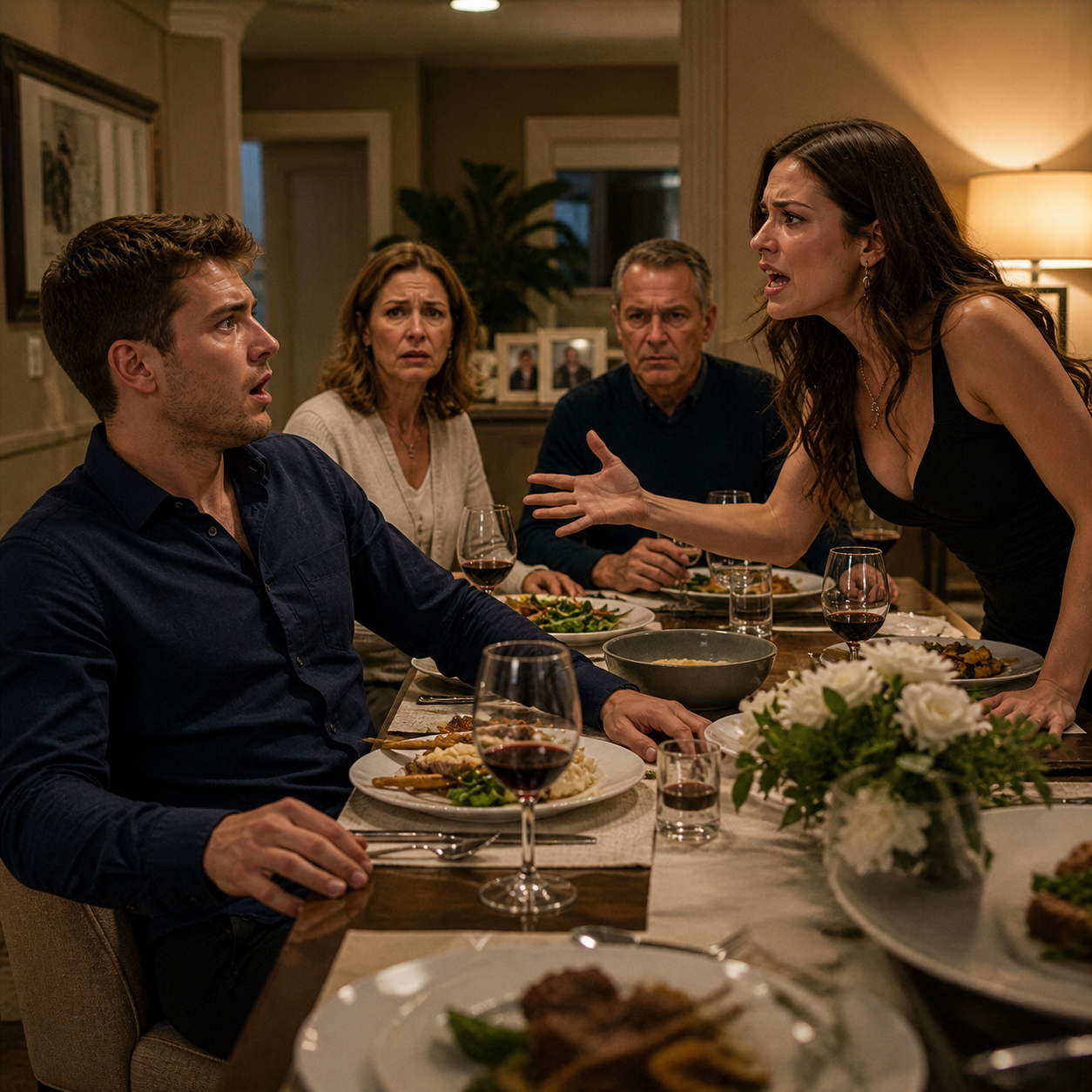
“I guess it’s my turn,” she said. “First of all, thank you all for being here. I know some of you came for the champagne, some came for the view, and some came because you wanted proof that I’m actually marrying an engineer.”
Laughter.
I smiled.
She turned toward me.
“Caleb, where do I even start? You are the most consistent person I know. Truly. If reliability were a person, it would wear those sensible shoes you refuse to throw away.”
More laughter.
I glanced at my shoes. They were new. She had chosen them.
Emma continued, “When we first met, I honestly thought, this man is either incredibly stable or secretly asleep. Turns out, both.”
The room laughed louder.
Something tightened in my chest.
She smiled at me like we were sharing a private joke, but we weren’t. I was not laughing anymore.
She kept going.
“But seriously, everyone says marriage is about finding your other half. I think marriage is about finding someone who balances you. I bring the sparkle, the fun, the big ideas, the social calendar, the taste, obviously.”
Laughter.
“And Caleb brings… structural integrity.”
People laughed again.
I heard Daniel say quietly, “Jesus.”
Emma was enjoying herself now. The room was with her. That always made her bolder.
“Honestly, sometimes I think if I left Caleb alone for a week, he’d eat plain chicken, alphabetize his socks, and call it personal growth.”
More laughter.
I looked at my mother. Her smile was frozen.
Emma raised her glass.
“But that’s why we work. I keep him interesting, and he keeps me from making emotionally expensive decisions. Most of the time.”
Then Lila shouted from the crowd, “You upgraded him!”
The room laughed.
Emma pointed at her. “I did! Look at him. Full renovation project.”
Something in me went cold.
Not angry.
Cold.
Emma turned back to me, laughing.
“And to be fair, he knows it. Caleb, babe, let’s be honest. Before me, you were one bad haircut away from becoming a houseplant.”
The laughter became uncomfortable in patches. Some people still enjoyed it. Some looked down. Some glanced at me and away again, which somehow felt worse than laughing.
I waited for her to stop.
She didn’t.
She lifted her glass higher. “But I love him. I do. Because under all that awkward silence and spreadsheet energy, there is a good man. A very good man. And good men are hard to find, especially ones this trainable.”
Trainable.
That was the word.
Not boring. Not awkward. Not even renovation project.
Trainable.
It landed with a finality I felt in my bones.
I looked at the woman holding the microphone. My fiancée. The woman I had planned to marry. The woman my mother had welcomed into our family. The woman who had just taken every private insecurity I had ever trusted her with and turned it into a rooftop routine.
She expected me to smile.
She expected me to absorb it.
She expected me to let the room laugh and later accept her apology-that-wasn’t-an-apology.
I know because she looked directly at me and winked.
The old me would have smiled.
The old me would have raised my glass.
The old me would have swallowed the humiliation because the room was full, the deposits were paid, and conflict in public felt unbearable.
But she had disrespected me in front of everyone.
So I ended it where everyone could see.
I walked onto the small stage.
At first, people clapped because they thought it was planned. Emma smiled, relieved, and handed me the microphone.
“Your turn, babe,” she said.
I took it.
Then I looked at her for a long second.
Her smile faltered.
The room quieted.
I turned to the crowd.
“Thank you all for coming tonight.”
My voice was steady. That surprised me. Inside, everything hurt. But my voice did not shake.
“I want to thank my mother for helping with the flowers, Daniel for the speech, and everyone who came to celebrate what was supposed to be the beginning of our marriage.”
Emma’s face changed.
Supposed to be.
She heard it first.
I continued.
“I also want to thank Emma for being honest tonight.”
A few people chuckled, unsure.
Emma whispered, “Caleb.”
I did not look at her.
“For a long time, I told myself the jokes were harmless. I told myself I was being sensitive when I felt embarrassed. I told myself that love meant taking the hit privately so the person you love could shine publicly.”
No one was laughing now.
Emma reached for my arm. “Caleb, don’t.”
I stepped slightly away.
“But tonight made something very clear. The woman I was going to marry does not respect me. She knows how to praise me when it sounds good, but she does not respect me when she has an audience.”
My mother covered her mouth.
Daniel stood very still.
Emma whispered, “You’re embarrassing me.”
That almost made me laugh.
I looked at her then.
“You embarrassed me first. Repeatedly. Publicly. And you expected me to protect you from the consequences privately.”
Her eyes filled instantly.
There it was. The quick tears. The ones that had ended so many arguments before they could become truths.
“Caleb, it was a joke.”
“No,” I said. “A joke is something both people can laugh at. What you did was use a microphone to make sure everyone understood where you think I belong. Beneath you.”
The room was silent except for the city noise below.
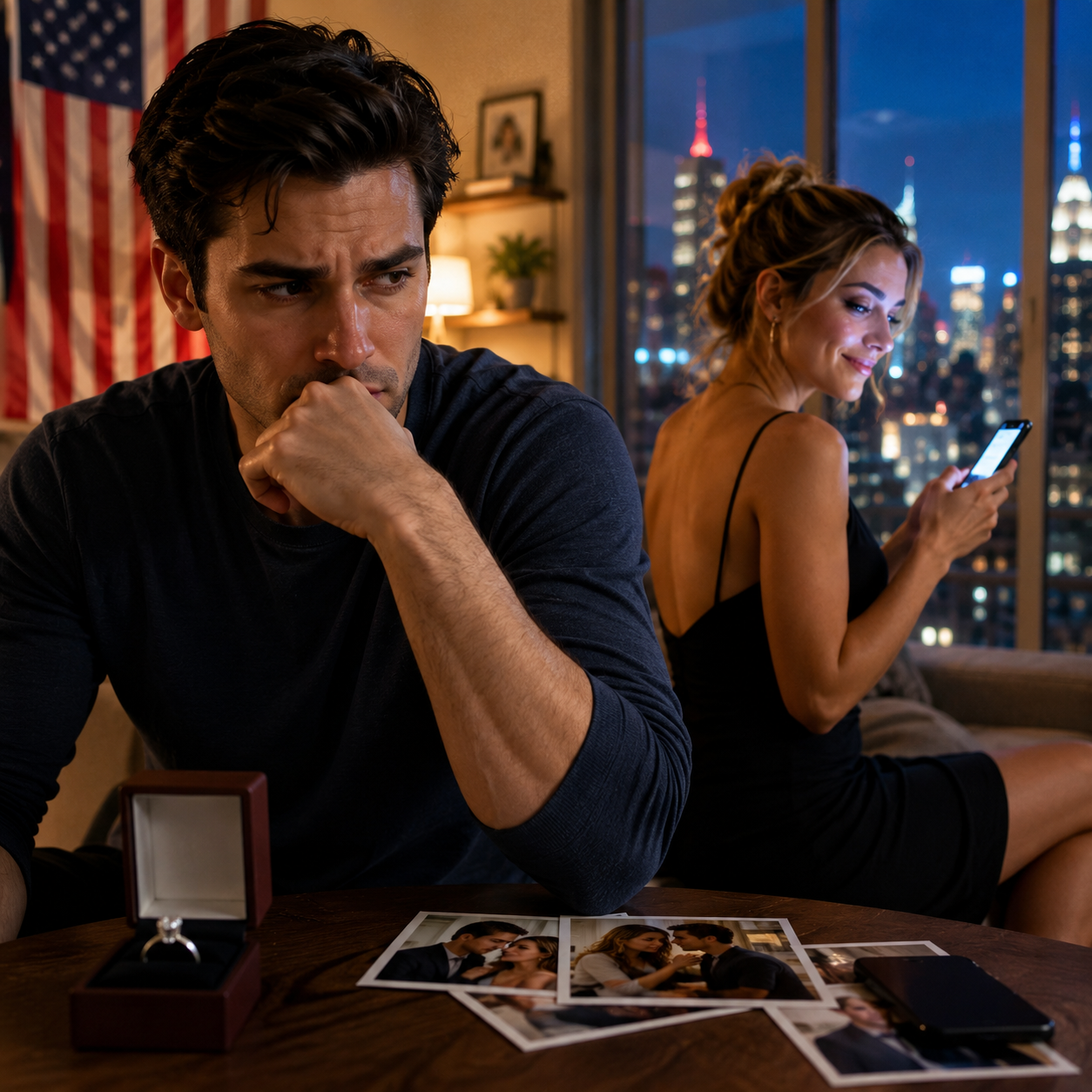
I took the engagement ring box from my jacket pocket. Not the ring itself. She was wearing that. This was the empty box I had kept because I am the sort of man who keeps things like that.
I set it on the small cocktail table beside the microphone stand.
“I will not marry someone who needs to make me smaller to feel impressive.”
Emma’s face went pale.
“No.”
“Yes.”
“You’re not serious.”
“I am.”
“Caleb, stop. We can talk about this later.”
I looked around the rooftop. At her friends, my family, our coworkers, the people who had laughed, the people who had looked away, the people who had heard enough.
“No,” I said. “Later is where disrespect goes to survive. You chose public. So I’m choosing public too.”
She started crying harder.
“You’re cruel.”
That word hit me, but it did not stop me.
“No. Cruel was calling me trainable in front of my mother.”
My mother began crying then. Quietly. That hurt more than anything Emma had said.
Emma turned toward the crowd. “You all know I didn’t mean it like that.”
No one answered.
Not even Lila.
Especially not Lila.
Emma looked at her best friend. “Lila?”
Lila stared into her glass.
That was when Emma realized the room had shifted. Public humiliation only works when the audience stays yours. She had miscalculated. She had counted on my silence and their laughter. She had not prepared for my dignity to stand up in front of both.
I handed her the microphone.
“The engagement is over.”
Then I stepped off the stage.
Daniel moved immediately, placing himself beside me like a wall.
“You good?” he asked.
“No.”
“Want to leave?”
“Yes.”
My mother joined us before I reached the stairs. She hugged me hard, shaking.
“I’m sorry,” she whispered.
I held her and said, “Me too.”
Behind us, Emma was sobbing now. Not the elegant tears she used in arguments. Real panic. Real humiliation. Real loss of control.
“Caleb,” she called. “Please don’t leave like this.”
I stopped at the door.
For a moment, I almost turned back fully.
Four years is not nothing. Love does not disappear just because respect does. It lingers in the body, in habits, in the instinct to comfort the person crying your name.
But then I remembered her voice under the lights.
Trainable.
I looked back once.
“You taught me not to stay.”
Then I left.
The ride down in the elevator felt endless. Daniel stood on one side of me, my mother on the other. No one spoke until we reached the lobby.
Then Daniel said, “I have never been prouder of you in my life.”
I laughed once, but it broke halfway.
My mother touched my cheek. “Come home with me tonight.”
“I should go to my place.”
“No,” she said, in the voice that had ended childhood fevers, bad report cards, and one terrible breakup in college. “Tonight, you come home.”
So I did.
I slept in my old room for the first time in years. Or tried to. Mostly, I stared at the ceiling and replayed the night until the words became meaningless sounds. My phone buzzed nonstop on the nightstand.
Emma called thirty-two times before midnight.
Then came the texts.
Caleb, please answer.
I’m sorry.
I went too far.
I was nervous.
You humiliated me.
You made me look horrible.
Everyone is asking questions.
Please don’t do this.
We can fix it.
You know I love you.
Then, at 1:13 a.m., the message that confirmed I had made the right decision.
You could have talked to me privately instead of destroying me in front of everyone.
I stared at that one for a long time.
Then I typed one reply.
You had every chance to respect me privately before disrespecting me publicly.
I sent it.
Then I turned off my phone.
The next morning, the story had already started spreading. That is the thing about public endings. People want to own a version of them. By ten, three people had texted Daniel asking if I was okay. By eleven, my cousin sent me a screenshot of Lila’s vague post about “men weaponizing insecurity.” By noon, Emma had posted a black-and-white photo of her hand without the ring visible, captioned: Sometimes the people you love punish you for being human.
I almost responded.
Almost.
The old me wanted to explain. To correct. To make sure nobody believed I had been cruel for no reason.
Daniel stopped me.
He came over with coffee, took one look at my face, and said, “No.”
“I didn’t say anything.”
“You were thinking loudly.”
“She’s making it sound like I exploded over nothing.”
“She made a speech in front of ninety people calling you a renovation project and trainable. You don’t need to litigate reality with Instagram captions.”
“She’ll control the story.”
“Not with everyone.”
He was right.
Around two, messages started coming in.
Emma’s cousin wrote, “I’m sorry. That speech was awful.”
One of her coworkers wrote, “You handled that with more grace than I would have.”
My aunt wrote, “I never liked how she talked to you. I should have said something.”
That last one made me angry at first. Not at my aunt specifically. At everyone. At the silence around small cruelty. At the way people notice disrespect but wait for the wounded person to handle it. At the way everyone becomes brave after the ending.
Then my mother sat beside me and said, “People often recognize harm before they know how to interrupt it.”
I wanted to argue, but I couldn’t.
Because I had recognized it too.
And I had stayed.
The practical fallout began on Monday.
The wedding was ten weeks away. The venue contract was in my name because I had paid the deposit. The photographer was in Emma’s because she wanted creative control. The florist was split. The honeymoon was on my card. The band was non-refundable. The catering had a cancellation window that closed in five days.
I spent the entire morning making calls.
No drama. No speeches. Just cancellations.
“Due to the engagement ending, we need to cancel the event.”
I said it so many times it began to feel like a line from someone else’s life.
Emma started calling again around noon. I did not answer.
Then her father called.
I answered because I respected him.
“Caleb,” he said, voice heavy. “I don’t know what happened between you two, but ending it like that was unnecessary.”
I closed my eyes.
“Sir, you were there.”
“I know Emma went too far.”
“She humiliated me.”
“She was joking.”
“Did you laugh?”
Silence.
That silence answered enough.
He sighed. “She is devastated.”
“I believe that.”
“She says you won’t speak to her.”
“That is correct.”
“Four years deserves a conversation.”
“Four years deserved respect.”
He did not respond for a moment.
Then he said, quieter, “I told her the same thing.”
That surprised me.
“She won’t hear it from me,” he continued. “Maybe one day she will. But for now, she feels exposed, and Emma has never handled exposure well.”
“No,” I said. “She handles other people’s exposure just fine.”
He exhaled.
“I’m sorry, Caleb.”
That was all he said before hanging up.
Emma came to my house that evening.
I saw her car pull into the driveway through the front window. For a moment, I considered pretending I was not home. Then I remembered I had spent too many years hiding inside my own discomfort.
I opened the door before she knocked.
She looked smaller than usual. No makeup. Hair tied back. Oversized sweater. The engagement ring was not on her finger.
“Can we talk?” she asked.
“On the porch.”
Her mouth tightened, but she nodded.
We sat on opposite ends of the bench. The same bench where she had once rested her head on my shoulder and told me she could see us growing old here.
She looked at her hands.
“I’m sorry.”
I said nothing.
“I mean it.”
“I believe you’re sorry.”
She looked up, hurt. “What does that mean?”
“It means I believe you feel bad now.”
Her eyes filled.
“Caleb.”
“No.”
She flinched.
“You don’t get to soften this with my name.”
She looked away.
“I was trying to be funny.”
“You were trying to be admired.”
The truth of it sat between us.
She wiped her cheek.
“I didn’t think you’d actually leave.”
That sentence hurt more than the apology helped.
“I know.”
“I thought you knew me. I thought you knew I say things.”
“I do know you. That’s why I left.”
She looked at me then.
For the first time, maybe, she looked afraid of what I had learned.
“I love you,” she said.
“I loved you too.”
“Loved?”
“Yes.”
Her face collapsed.
I felt the pull to comfort her. I hated that pull. Even then, some part of me wanted to take care of the woman who had wounded me. That is how deep habits go.
But love without respect is not love you can live inside.
She whispered, “You embarrassed me in front of everyone.”
“You disrespected me in front of everyone.”
“I know.”
“And if I had waited until we got home, what would have happened?”
She did not answer.
I answered for her.
“You would have told me I was too sensitive. You would have said it was a joke. You would have cried because I ruined the night. I would have ended up apologizing for reacting. Then we would have moved on until the next time.”
She closed her eyes.
“That’s not fair.”
“It’s accurate.”
A tear slipped down her face.
“I don’t know why I do that.”
That was the first honest thing she said.
I breathed out slowly.
“I hope you figure it out.”
“You won’t help me?”
“No.”
She looked stunned.
“I can’t be the person you practice hurting while you learn how to stop.”
She cried then. Quietly. Not dramatically. That almost broke me.
Almost.
When she left, she placed the engagement ring on the bench between us.
“I don’t want to keep something I didn’t protect,” she said.
Then she walked to her car and drove away.
I sat on the porch until the sky turned dark.
For the first time since the party, I felt the grief fully. Not anger. Not humiliation. Grief. The death of the future is still a death, even when leaving saves you.
The months that followed were not triumphant.
People like stories where the man walks away, the woman regrets everything, and life instantly becomes better. Real life is quieter and more annoying. There were vendor disputes, awkward calls, mutual friends choosing sides, and lonely Sundays where I forgot for half a second that I did not need to text Emma a photo of something funny at the grocery store.
I missed her sometimes.
That embarrassed me until my mother said, “Missing someone does not mean they were good for you. It means your heart had routines.”
So I built new routines.
Sunday breakfast with my mother. Thursday basketball with Daniel and his brother. Long walks after work. Therapy, eventually, because Daniel said, “You can either pay someone now or make all your friends unpaid interns in your emotional recovery.”
Therapy helped.
My therapist asked me once, “What did you feel when she called you trainable?”
I said, “Small.”
Then I corrected myself.
“No. I felt displayed.”
That was the word.
Displayed.
Like I was not a person beside her, but an object she had modified and wanted credit for improving.
After that, healing became clearer. I did not need to become louder or harsher or less forgiving. I needed to stop confusing quietness with consent. I needed to stop handing people my dignity just because they promised to give it back later.
Six months after the engagement ended, I ran into Lila at a charity event.
I considered leaving when I saw her, but she approached before I could.
“Caleb,” she said. “Hi.”
“Lila.”
She looked uncomfortable, which I enjoyed more than I should have.
“I owe you an apology.”
I waited.
“That night, I encouraged it. I thought it was funny because Emma always made it seem like you were okay with that dynamic.”
“I wasn’t.”
“I know that now.”
“You knew enough then.”
She looked down.
“Yes.”
That surprised me.
“I’m sorry,” she said. “Really.”
I nodded.
“Thank you.”
She glanced behind me. “Emma asks about you sometimes.”
I felt less than I expected.
“What do you tell her?”
“That you look peaceful.”
I smiled slightly.
“That’s kind of you.”
“It annoys her.”
“That’s kind of you too.”
For the first time in months, hearing Emma’s name did not feel like being pulled backward.
A year after the party, Daniel got married.
Small ceremony. Backyard. Barbecue instead of plated dinner. His wife, Maya, walked down the aisle barefoot because her shoes hurt and nobody cared. During the reception, Daniel handed me the microphone for a toast.
For a second, my hand froze around it.
A microphone had become a memory.
Daniel noticed. He leaned close and said, “Different room. Different people.”
He was right.
I looked out at the guests. No rooftop. No performance. No one waiting for me to become a punchline.
I spoke about showing up. About how love is not proven by grand speeches but by daily respect. About how the right person does not need an audience to be kind.
Daniel cried. Maya cried. I almost did.
Afterward, my mother hugged me and said, “Your father would have liked that.”
That meant everything.
I still have moments when I replay Emma’s speech. Less often now, but sometimes. The word trainable still has teeth. But it no longer bites as deeply.
Because I know something now that I did not know then.
Public disrespect is not made harmless by calling it a joke.
A person who loves you may tease you, challenge you, laugh with you. But they do not repeatedly place your dignity on a table and invite others to pass it around.
And if they do, you are not required to wait until private to reclaim it.
Emma disrespected me in front of everyone.
So I ended it where everyone could see.
Not because I wanted revenge.
Because I finally understood that dignity does not need to whisper just because disrespect found a microphone first.
![[FULL STORY] My Wife’s Best Friend Said She Was Only With Me Because He Was Married, So I Shattered His Fantasy..](https://sa.greatgames.info/storage/thumbnails/1776395575_522b78d9-a1c7-4aaf-91ca-0689d714ffd3.png)
![[FULL STORY] She Told Me to Leave Her Life… So I Did Before Sunrise](https://sa.greatgames.info/storage/thumbnails/1777023162_a454c7c7-0f85-406a-a682-87ba6f3eba8d.png)

![[FULL STORY] My Ex-Wife Married Her New Guy Right After Our Divorce, But One Question From A Guest At Her Dream..](https://sa.greatgames.info/storage/thumbnails/1777220686_C12.png)