
The first rule of disappearing is that you have to actually want to be gone. Most people fail because they leave a "backdoor" open—a secret social media account, a friend they still talk to, a habit they can’t break. Not me.
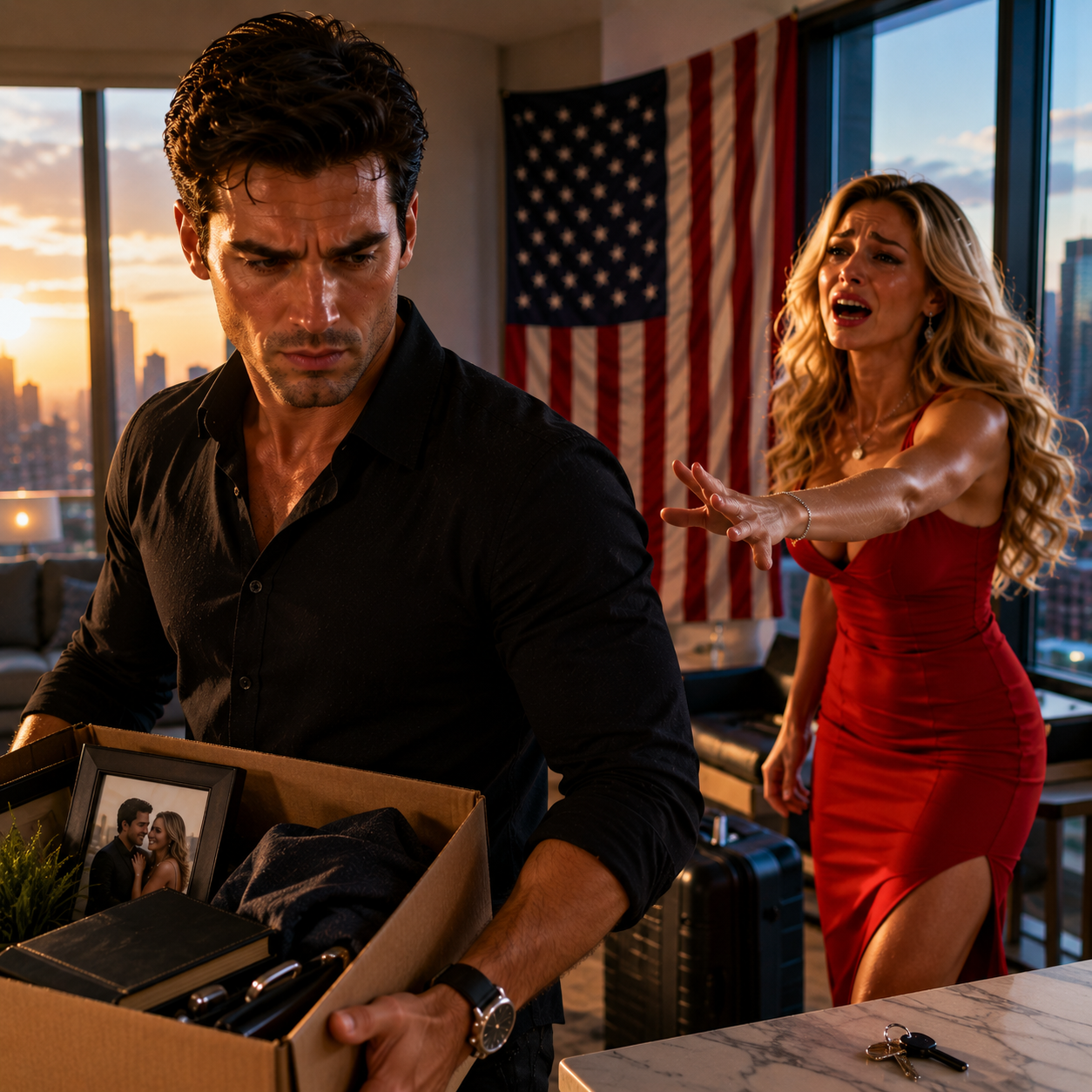
I arrived in Portland with a duffel bag, a toolbox, and a heart made of reinforced concrete. My friend, Marcus, met me at a diner. He took one look at my face and didn't ask a single question. He just handed me a set of keys to a small, clean apartment near the waterfront and said, “Work starts Monday at seven. Don’t be late.”
I wasn't. For the next six months, I threw myself into the grit of construction management. I was on site before the sun rose, and I was the last one to leave. There’s a certain peace in building things that are meant to last—skyscrapers, bridges, foundations. It was the polar opposite of my marriage, which had been built on sand and financed by my soul.
I changed everything. New phone, new email, new bank. I even started going by "E" at work. I was a ghost in a hard hat.
Back in our old city, however, the ghost was starting to haunt Clara.
I found out later, through a string of frantic emails sent to my sister (which she dutifully ignored until I gave her the green light to vent), that Clara’s "fresh start" lasted exactly seventy-two hours.
See, Clara’s biggest mistake wasn't just being a narcissist—it was being a narcissist who was functionally illiterate in the real world. She had spent a decade in classrooms and hospitals. She knew how to repair a heart valve, but she didn't know that if you don't pay the "dead weight" husband's utility bills, the lights go out.
On Saturday night, while she was hosting a small "newly single and successful" gathering for her fellow residents, the power died. She assumed it was a fuse. It wasn't. It was the result of me closing the account she’d never bothered to put her name on.
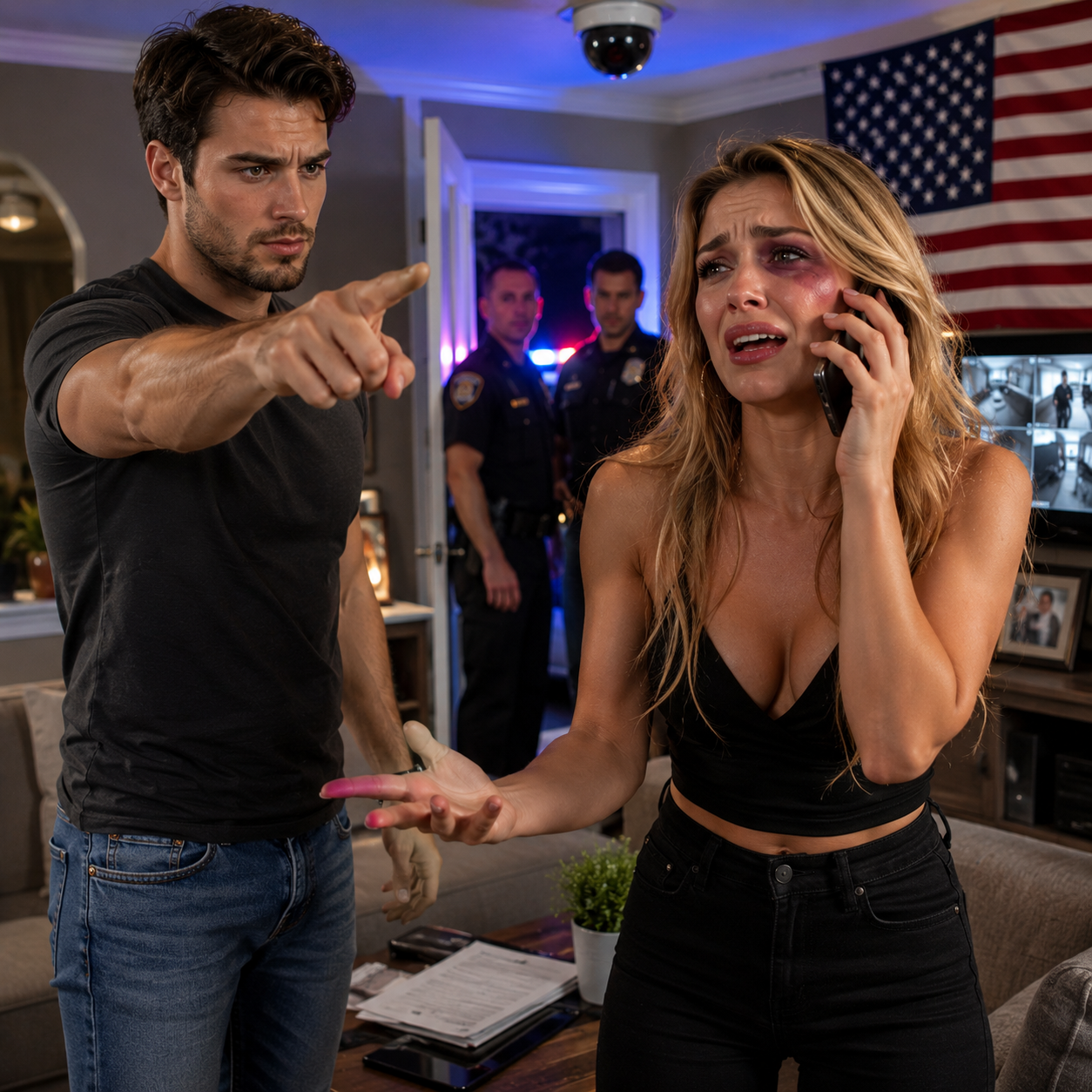
Then came the landlord. When she tried to pay the rent on the first of the month, she discovered the portal was closed. She marched down to the leasing office with her "Dr." badge pinned to her chest, expecting them to bow. Instead, they told her the lease was in Ethan Vance’s name, he had given notice, and since she wasn't a co-signer, she had five days to vacate or sign a new lease at the current market rate—which had doubled since we moved in.
She didn't have the deposit. She didn't have the credit score. She had a mountain of student debt and a residency salary that, while decent, was nothing compared to the combined income and stability I had provided.
The calls to my sister, Sarah, started getting vicious.
“Tell Ethan to stop this game!” Clara had screamed into a voicemail. “He’s being childish. I need the login for the Wi-Fi and he needs to come sign this lease guarantor form. I’m a doctor, for God’s sake! I can’t live in a dark apartment!”
Sarah played the message for me months later. We sat on my balcony in Portland, the river sparkling below us.
“What did you do?” I asked.
“I did what you told me,” Sarah said, smirking. “I replied with a one-sentence email: 'Ethan doesn't live here, and he doesn't have a wife. Please contact your attorney for all future inquiries.'”
Clara didn't have an attorney. Attorneys cost money. And Clara was quickly learning that "doctor money" doesn't actually hit your bank account until you’ve been practicing for a while. She was in residency, making maybe sixty thousand a year while carrying four hundred thousand in debt. Without my double shifts covering the "boring" stuff, she was drowning.
But the real drama began when she realized I wasn't coming back.
In her mind, the divorce papers were a power play. She expected me to cry. She expected me to beg for a "trial separation." She expected me to offer her more money just to keep her in my life. When I signed and walked, I took away her leverage. You can’t manipulate someone who isn't there to listen.
By month eight, I was thriving. I’d been promoted to Senior Project Manager. I had a new truck, a few good friends, and I’d started dating a woman named Maya. Maya was a landscape architect—someone who understood the beauty of planning and the necessity of a strong base. She was the first person in a long time who asked me how my day was, without following it up with a request for a bill payment.
I thought I was safe. I thought the 1,000 miles between us was enough.
Then, one Tuesday, I walked into the office and saw Marcus looking uneasy.
“Hey, E,” he said, rubbing the back of his neck. “Some woman called the main line today. Said she was from a medical board and was looking for an ‘Ethan Vance’ regarding a sensitive family matter.”
My stomach dropped. “What did you tell her?”
“Nothing,” Marcus said. “The receptionist told her we don't give out employee info. But she was persistent, man. She knew your middle name. She knew where you worked back in Chicago. She’s hunting you.”
I felt a cold shiver. Clara wasn't just huffing and puffing anymore. She was using her professional credentials to abuse databases. As a resident, she had access to insurance networks, hospital records, maybe even NPI registries. She was tracking the "dead weight."
I went home that night and sat in the dark. Why now? Why after nearly a year?
The answer came in the form of a package delivered to my front door two days later. I don't know how she got my address—maybe a private investigator, maybe a lucky break with a change-of-address form I missed.
Inside the box was a single item: a framed photo of us from our third anniversary. We were sitting on a park bench, and I was looking at her like she was the only thing that mattered. Across the glass, she had written in red lipstick: “I’m sorry. I was wrong. Please call me.”
I didn't feel nostalgic. I felt violated. She had tracked me across the country to drop a piece of trash on my doorstep.
I took the photo, frame and all, and walked it straight to the trash chute. But as I watched it disappear, my phone buzzed. It was a text from an unknown number.
“I know you’re in Portland, Ethan. I saw you leave your apartment this morning. You look good. Stronger. We need to talk. I’m at the bistro on 4th. I’ll wait until they close.”
She wasn't just hunting. She was here.
I stood in my kitchen, my heart hammering against my ribs. Part of me wanted to keep hiding. But the man I had become in Portland—the man who built skyscrapers—didn't hide.
I grabbed my keys. Not to go to the bistro, but to go to the one place I knew would end this. However, as I pulled out of my garage, I saw a familiar silver car idling at the end of the block.
It was Clara. And she wasn't just waiting for a talk—she was following me.
But as she pulled out to tail my truck, she didn't realize that I wasn't heading for a romantic reunion. I was heading for the local precinct to file the first of many legal barriers.
The cliffhanger? Just as I pulled into the police station parking lot, she sped up and blocked my path with her car, jumping out before I could even turn off the engine. She didn't look like a doctor anymore. She looked like a woman who had lost everything and was about to make it everyone else’s problem.
![[FULL STORY] My Girlfriend Asked for an Open Relationship… Then Lost Everything When I Chose Her Best Friend](https://sa.greatgames.info/storage/thumbnails/1776503346_668460178_975562764995926_6810130845607786474_n.jpg)

![[FULL STORY] I Asked One Question Over Coffee — And My Wife Destroyed Our Marriage In An Hour](https://sa.greatgames.info/storage/thumbnails/1777885018_d01c17e5-9630-45be-b340-9898a04ad281.png)
![[FULL STORY] My Fiancée Declared: "My 'Bachelorette' Is A Fortnight In Europe With My Former Flame Don't Pla](https://sa.greatgames.info/storage/thumbnails/1777885790_D3.jpg)