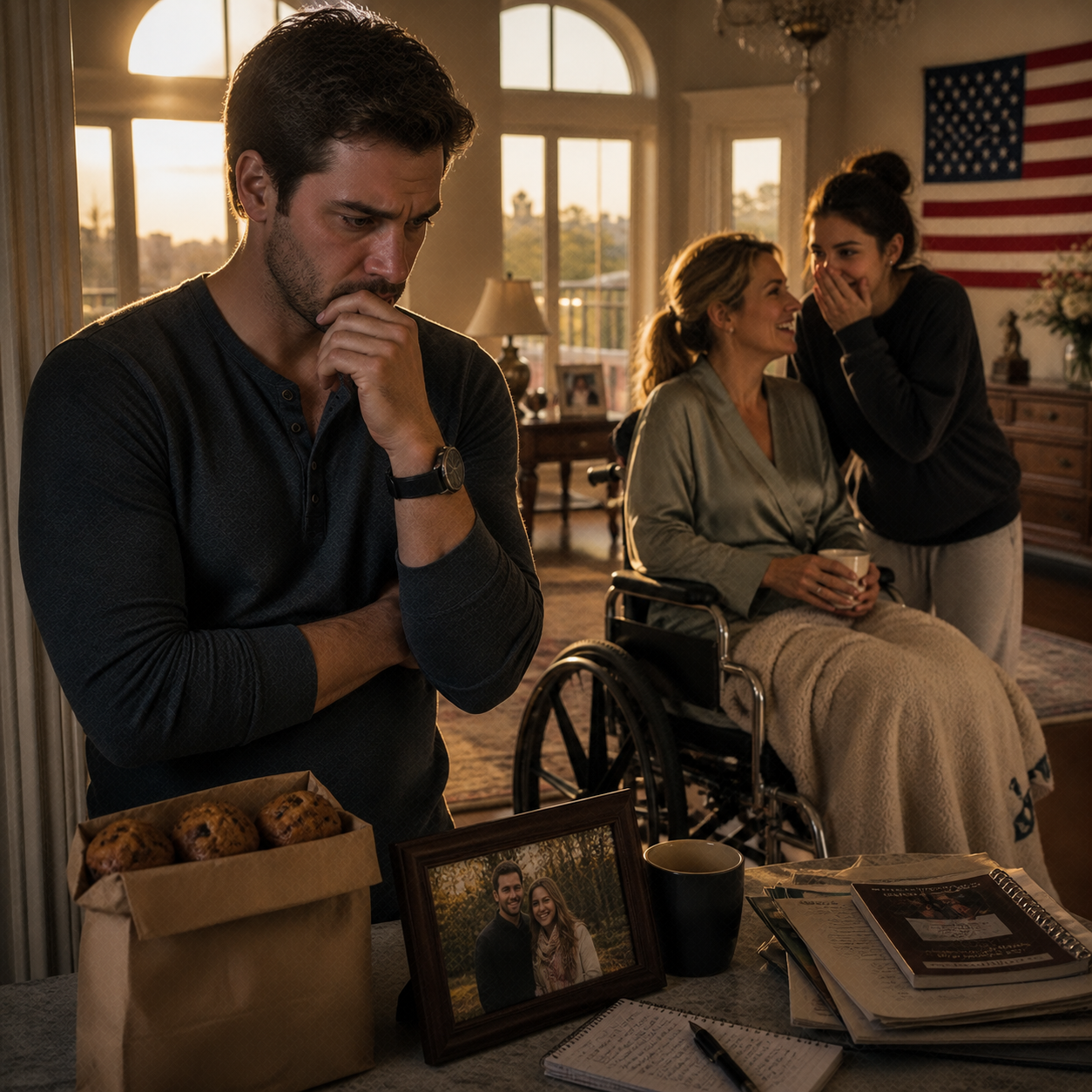

For a long time, Vanessa thought my silence meant I had nothing to say.
That was her first mistake.
She thought every time I paused instead of arguing, I was accepting her version of the story. She thought every time I let a comment pass without defending myself, I had no defense. She thought every time I looked away from her phone lighting up at midnight, every time I noticed a half-truth and chose not to expose it immediately, every time I heard her friends laugh at my expense and stayed calm, it meant I was too passive to do anything about it.
But silence is not always surrender.
Sometimes silence is observation.
Sometimes silence is the only way to hear what people reveal when they think you are not listening.
By the time I finally spoke, Vanessa had already told me everything I needed to know without meaning to. She had told me in the way she turned her phone face down whenever I entered the room. She had told me in the way she started correcting my clothes before we met her new friends. She had told me in the way she used to say “our apartment” and slowly began calling it “this place.” She had told me in the way she smiled at another man’s name before she remembered I was standing there.
His name was Elias Grant.
I had never hated a name before.
But for six months, Elias became a shadow in every room Vanessa and I shared.
At first, he was just a business contact. Then he was a mentor. Then he was someone who “understood opportunity.” Then he was someone who “challenged her thinking.” Then he was the person she quoted when she wanted to make my caution sound small.
Elias says comfort is where ambition goes to die.
Elias thinks I’m underpricing myself.
Elias believes people either expand or become background.
Elias says relationships should accelerate your future, not decorate your present.
That last one stayed with me.
Not because it was clever.
Because Vanessa repeated it while standing in the kitchen I had repainted for her, beside the office corner I had built so she could start her consulting business, under the pendant lights I installed after watching three tutorials and shocking myself once badly enough to smell metal for an hour.
Relationships should accelerate your future.
I remember looking at her and thinking, I carried half of your future up three flights of stairs in cardboard boxes.
But I did not say that.
I stayed quiet.
Not because I agreed.
Because I wanted to see how far she would go if I stopped interrupting her with the truth.
The night everything became clear, we were at a rooftop dinner for Vanessa’s thirty-first birthday. I had not planned the event. That was new. For the first three years of our relationship, I planned almost everything meaningful: birthdays, anniversaries, weekend trips, little celebrations after difficult weeks. Vanessa used to say no one had ever made her feel so carefully loved.
This time, she said she wanted to plan it herself.
“I just want something that feels like me,” she told me.
I asked what that meant.
She smiled, but not warmly.
“Different.”
That should have been enough.
But love makes a person slow to accept obvious meanings.
The dinner was held at a sleek rooftop restaurant downtown, all black tables, brass lamps, glass railings, and waiters who spoke softly enough to make every dish sound expensive. Vanessa wore a white silk dress I had never seen before. She looked stunning. She always did when she wanted to be seen. Her hair fell over one shoulder in loose waves. Her earrings caught the light every time she turned her head.
I arrived with the gift I had bought her, a first edition copy of a design book she had once searched for online and given up on because it was too expensive. I had spent two months finding it through a collector. It was wrapped in dark green paper, the color she loved before she started saying neutrals photographed better.
When I handed it to her, she smiled quickly.
“Oh, Julian. That’s sweet.”
Sweet.
A word that used to mean tenderness.
Lately, it meant disappointing.
She placed the gift on the table behind her without opening it.
I noticed.
I said nothing.
Her new friends arrived in waves. There was Margot, a brand strategist who treated sincerity like a social mistake. There was Celeste, a wellness founder who spoke in soft tones and somehow made every sentence sound like a business pitch. There was Nina, recently divorced and proud of how little she believed in compromise. And then there was Elias.
Vanessa had not told me he was coming.
He stepped out of the elevator wearing a dark jacket, no tie, and the relaxed confidence of a man used to entering places where other people became alert. He was older than us, maybe thirty-eight, with silver at his temples and the kind of smile that made you feel assessed rather than greeted.
Vanessa saw him before I did.
Her whole face changed.
Not dramatically. Vanessa was too controlled for that. But I had loved her long enough to notice small things. The way her shoulders lifted. The way her smile became brighter and more nervous. The way she touched her hair before he reached the table.
“Elias,” she said.
He kissed her cheek.
“Happy birthday, Vanessa.”
His hand stayed lightly at her waist for one second too long.
I watched it.
Then he turned to me.
“You must be Julian.”
“I am.”
His handshake was firm and meaningless.
“Vanessa has told me a lot about you.”
I smiled.
“Funny. I was about to say the same.”
Something flickered in his eyes. Amusement, maybe. Or warning.
Vanessa laughed too quickly and touched my arm.
“Julian is quiet, but don’t let that fool you.”
Everyone smiled.
I looked at her hand on my sleeve.
Quiet.
There it was.
The role she had assigned me for the evening.
The dinner began, and I watched more than I spoke. I watched how Vanessa leaned toward Elias when he talked. I watched how her friends seemed to already know him. I watched how Margot asked him questions she never asked me, how Celeste laughed softly at his smallest observations, how Nina looked at Vanessa and Elias together with the satisfied expression of someone seeing a prediction confirmed.
Halfway through the meal, Margot asked everyone to say something they admired about Vanessa.
It should have been harmless.
Celeste said Vanessa had visionary feminine leadership. Nina said Vanessa was finally stepping into her power. Elias lifted his glass and said Vanessa had the rare courage to outgrow rooms that no longer matched her future.
Everyone murmured approval.
Vanessa looked at him like he had handed her a crown.
Then it was my turn.
I held my glass but did not stand. I looked at Vanessa, and for a moment, all I could see was the woman I met four years earlier. The woman who wore paint on her jeans because she had spent the day helping her sister decorate a nursery. The woman who cried when her first client paid her invoice because she thought it meant she was real. The woman who once fell asleep on my couch with financial planning notes spread across her chest.
“I admire Vanessa’s ability to imagine a life before it exists,” I said. “When we first met, she had more ideas than evidence. She built anyway. That takes courage.”
For a second, her face softened.
Then Elias said, lightly, “Ideas are only the beginning, though. At some point, imagination needs scale.”
The table laughed politely.
Vanessa looked down at her plate.
I turned to him.
“Of course,” I said. “Though scale without structure is just collapse with better lighting.”
The laughter stopped.
Elias smiled slowly.
Vanessa’s eyes snapped to mine.
It was the first time that night she truly looked at me.
I took a sip of water.
Then I went quiet again.
To understand why my silence mattered, you need to understand how Vanessa and I began.
I met her in a print shop in Seattle during a winter storm.
I was thirty-two then, working as a civil project coordinator for a construction firm. Not glamorous work, but steady, demanding, and useful. I managed timelines, permits, contractor schedules, site reports, and the thousand small details that kept projects from turning into expensive disasters. I was good at it because I noticed things. I noticed patterns. I noticed what people avoided. I noticed when someone said yes too quickly or explained too much.
Vanessa was standing near the counter with a flash drive in one hand and panic in her eyes. She needed presentation boards printed for a client pitch the next morning, but the file was corrupted. The print shop employee looked like he wanted to disappear into the copy machine.
I was there picking up revised site plans.
Vanessa turned to no one in particular and said, “I think I’m going to lose my first real client because of a PDF.”
I asked if I could look.
She stared at me for half a second, then handed me the flash drive with the desperate trust of a person out of options.
It took twenty minutes. The file was not destroyed, just exported badly. I helped recover the images, rebuild the layout enough to print, and stayed until the boards came out warm and perfect from the machine.
Vanessa looked at them, then at me.
“You may have saved my entire career,” she said.
“I hope your entire career is backed up somewhere better than this flash drive.”
She laughed.
That laugh made the storm outside seem less cold.
She insisted on buying me coffee. The coffee shop next door was nearly empty because of the weather. We sat by the window while snow gathered on parked cars and talked until the employees began stacking chairs.
Vanessa was twenty-eight, newly independent after leaving a design agency where she felt invisible. She wanted to build a boutique interiors and branding studio for small hospitality businesses. She had talent, taste, and no operational structure whatsoever.
I had structure.
That became our beginning.
Our first year together was full of building.
Not just romance, though there was plenty of that. Late dinners. Rainy walks. Her hand in mine during movies she always claimed she would stay awake for and never did. But what made us close was the work of building a life that felt possible.
I helped her create client timelines. I organized her invoices. I set up basic accounting software. I helped her negotiate a contract with a café owner who tried to pay half in exposure. I drove across town with paint samples, assembled shelves, mounted mood boards, and once spent an entire Sunday helping her stage a tiny hotel lobby because the photographer had only one available slot.
Vanessa noticed then.
“You make things real,” she told me once.
We were sitting on the floor of her tiny studio, surrounded by fabric samples and empty takeout containers.
“And you make real things beautiful,” I said.
She kissed me like that was the answer she had been waiting for.
When she moved in after eighteen months, it felt natural. My apartment had better light, more space, and a second bedroom she could use as a studio office. She brought books, samples, plants, lamps, candles, and a large framed sketch of a chair that I never understood but learned to like because she loved it.
For a while, our life worked beautifully.
I had a steady salary. Her income came in waves. Some months she earned well. Some months she panicked over late payments and uncertain leads. I covered more of the rent. I paid for groceries. I helped with business expenses when she needed software, photography, travel, materials. I did not keep score because I thought we were moving toward a shared future.
Maybe we were.
For a while.
The shift began after Vanessa landed the Alder House project.
Alder House was a boutique hotel renovation owned by a local investment group. It was her biggest client by far. The project put her in rooms with developers, investors, brand consultants, and people who spoke about design as if chairs could change civilization. Vanessa was thrilled. I was proud of her.
Then she met Elias.
He was not officially her boss. That would have been simpler. He was an outside advisor to the investment group, someone with contacts in luxury hospitality and enough money to make people treat his opinions like weather. He liked Vanessa’s work. He praised her instincts. He told her she was thinking too locally.
At first, his approval energized her.
Then it changed her.
She began talking about repositioning her studio. Raising rates dramatically. Dropping smaller clients. Moving into premium hospitality. Hosting private concept events. Creating a lifestyle platform around her design philosophy.
Some ideas were good.
Some were fantasy.
When I asked practical questions, she began hearing doubt where there was only structure.
“How much would the concept event cost?”
“That’s not the right first question, Julian.”
“It’s a necessary question.”
“Not everything starts with numbers.”
“No, but bills eventually arrive with them.”
She would sigh then, as if I had dragged a beautiful kite back to the ground.
“You always make things feel smaller.”
That hurt because she used to say I made things real.
The difference between real and small, I learned, depended on whether she wanted to hear me.
Her friends changed too.
The old Vanessa had friends like her sister Elise, who was warm, blunt, and practical. Her college friend Dana, who ran a bakery and had no patience for pretension. Her former roommate Kim, who wore mismatched socks and cried at dog rescue videos.
The new Vanessa spent more time with Margot, Celeste, and Nina.
They admired ambition but only when it came dressed in expensive language. They spoke often about expansion, alignment, feminine power, and releasing what no longer served. I noticed that what no longer served usually meant people who had been useful before they became inconvenient.
At a dinner one night, Nina asked Vanessa if I was involved in her business.
Vanessa smiled and said, “Julian helps with the practical side.”
“The practical side,” Margot repeated, nodding.
I waited for Vanessa to add more.
She did not.
The practical side.
As if I were a drawer where she kept warranties.
On the drive home, I said, “You made my role sound small tonight.”
She looked tired immediately.
“Please don’t start.”
“I’m not starting. I’m telling you how it felt.”
“I didn’t mean it that way.”
“I know. That doesn’t change how it landed.”
She stared out the window.
“You’re being sensitive.”
I heard the door closing in that sentence.
Sensitive meant she would not be opening the subject again.
So I stayed quiet.
Not because it did not matter.
Because I was beginning to understand that Vanessa did not want to see what she was doing. And if someone refuses to look, sometimes the only thing you can do is watch.
So I watched.
I watched her become secretive with her phone.
I watched her stop mentioning small clients because they no longer matched the story she wanted to tell about herself.
I watched her avoid my family gatherings but attend every event Elias recommended.
I watched her accept my help privately and diminish it publicly.
I watched her call my caution fear, then use my spreadsheets when she needed numbers for investors.
I watched her speak about “outgrowing survival mode” while using the financial stability I provided to take risks she later claimed I could not understand.
The quiet changed me.
At first, it hurt. Silence felt like swallowing glass. Every comment I did not answer scraped something inside me. But gradually, silence gave me distance. Distance gave me pattern. Pattern gave me clarity.
I began keeping notes.
Not dramatic notes. Not evidence for revenge. Just truth.
Dates she canceled plans.
Expenses I covered.
Business systems under my name.
Conversations where she dismissed concerns that later proved correct.
Names of people involved in her new projects.
Promises she made.
Promises she forgot.
Seeing it written down helped. It turned emotional fog into shape.
One night, while reviewing shared expenses, I realized I was paying for almost everything that allowed Vanessa to perform independence.
Rent.
Utilities.
Software subscriptions.
Website hosting.
Business insurance she had forgotten to renew until I reminded her.
Storage for samples.
Half the deposit for an event she claimed Elias had “strategically encouraged.”
My credit card was attached to the print vendor, the booking software, and the project management platform. My apartment was her studio. My car transported her samples. My evenings absorbed the operational stress she did not want to acknowledge.
And publicly, I was just quiet Julian.
Practical Julian.
Stable Julian.
The man who made things smaller.
That was when my silence became preparation.
I did not cut her off immediately. I did not want to be cruel, and a part of me still hoped she would wake up before I had to leave. But I began separating things. I created export folders. I documented account ownership. I paid down the shared card. I stopped volunteering help she did not ask for respectfully. I made sure my finances were clean.
Vanessa noticed some of it.
“You’ve been distant,” she said one night.
“I’ve been busy.”
“With what?”
“Work. Personal things.”
She frowned.
“You never used to be vague with me.”
I looked at her phone, face down beside her wine glass.
“No,” I said. “I didn’t.”
She looked away.
We both understood the sentence.
Neither of us touched it.
Then came the birthday dinner.
The rooftop. The white dress. Elias’s hand at her waist. The gift she did not open. The toast about outgrowing rooms. My sentence about scale and collapse.
After that, the night soured.
Vanessa became cold. Elias became more careful. Margot watched me with new interest, as if the houseplant had spoken. I stayed polite. I stayed quiet. I stayed long enough to see exactly what I needed to see.
Near the end of the dinner, Vanessa stepped away to take a call.
Her purse remained on the back of her chair. Her phone was in her hand. But a small folded card fell from the purse when she moved it. I picked it up, intending to place it back.
I saw my name.
Not in Vanessa’s handwriting.
In Elias’s.
Julian is holding the old version of you in place. Tonight should make that clear.
I stared at the sentence.
Then the next.
If you want more, you must stop negotiating with comfort.
No confession. No explicit affair. Nothing dramatic enough for a courtroom.
But enough.
More than enough.
I placed the card on the table beside her untouched birthday gift.
When Vanessa returned, she saw it immediately.
Her face went pale.
I stood.
“Julian,” she said softly.
I looked at Elias. He looked back, expression controlled.
Then I looked at Vanessa.
“Happy birthday.”
I walked out.
She followed me to the elevator.
“Wait.”
I pressed the button.
“Julian, please.”
I turned.
Her eyes were wide now. Scared. Not of losing me yet. Of losing control.
“What was that card?” I asked.
She swallowed.
“It’s not what you think.”
“I think it’s advice from a man who has been helping you emotionally exit our relationship while enjoying the stability I provided.”
Her mouth opened, then closed.
The elevator doors opened.
She stepped closer.
“I’ve been confused.”
“No,” I said. “You’ve been comfortable enough to be careless.”
That landed.
Tears filled her eyes.
“I didn’t cheat on you.”
“I didn’t accuse you of that.”
“Then why are you acting like this?”
“Because betrayal doesn’t always wait for a bedroom.”
She flinched.
I stepped into the elevator.
She reached for the door.
“Can we talk at home?”
I looked at her.
“We don’t have a home tonight. We have a place full of things I finally understand.”
The doors closed.
I went to my brother’s apartment that night.
Caleb opened the door, took one look at me, and said nothing. He just stepped aside. That was one of the reasons I loved him. Some people understand that questions are not always the first form of care.
The next morning, I sent Vanessa an email.
Vanessa,
I’ll stay elsewhere while we separate our living and business arrangements. I’ll provide exports for systems under my accounts and a reasonable transition period of thirty days. I will no longer cover business expenses, event costs, or subscriptions after that period.
Please do not bring Elias to the apartment.
Julian
She called immediately.
I did not answer.
Then came the messages.
You misunderstood.
Please don’t do this by email.
Elias has nothing to do with us.
You’re punishing me for being honest about wanting growth.
I still love you.
That last one hurt.
Not because I did not believe it. I did.
Vanessa loved me in the way people love electricity: deeply when the lights go out, casually when the room is bright.
I replied once.
I stayed quiet long enough to see clearly. Please respect the transition plan.
She did not reply for three hours.
Then she wrote:
I didn’t know you were this cold.
I almost answered.
I almost explained that cold was not the same as no longer burning myself for her warmth.
Instead, I put the phone down.
The separation was not clean, because separating from someone whose life is tangled with yours never is.
Vanessa cried. Then she got angry. Then she tried tenderness. Then logistics. Then blame. She said I had been emotionally unavailable for months. I said I had been emotionally observant. She said I was using money to control her. I sent a list of accounts under my name and transition instructions. She said I had changed. I said she had finally noticed.
When I returned to the apartment to pack, she was there.
She had placed my birthday gift, still unopened, on the kitchen table.
“I opened it,” she said quietly.
I glanced at the design book.
“And?”
Her eyes filled.
“You remembered.”
“Yes.”
She touched the cover.
“I mentioned it once.”
“Twice.”
A tear slipped down her cheek.
“That makes this worse.”
“I know.”
She looked up.
“Elias said you would make this about sacrifice.”
I smiled faintly.
“Elias says many things.”
“He thinks you resent my growth.”
“No. I resent being used as scaffolding by someone who complains about the view.”
She covered her face.
For a moment, the old Vanessa appeared. The woman in the print shop. The woman whose panic I helped turn into boards. The woman who said I made things real.
“I don’t know what to do without you,” she whispered.
There it was.
The honest sentence.
Not I choose you.
Not I was wrong.
Not I see you.
I don’t know what to do without you.
I felt sadness, but not surprise.
“You’ll learn,” I said.
Her hands dropped.
“That’s it?”
“That’s it.”
“You’re really leaving?”
“Yes.”
“After four years?”
“Because of four years.”
She sat down slowly, like the sentence had weight.
I packed for two hours.
She did not stop me.
The first thirty days were exactly what I expected.
The systems began to wobble.
Vanessa did not know the project management platform well enough to rebuild it quickly. The print vendor required updated payment information. The website hosting renewal failed because it was attached to my card. The sample storage invoice came due. The event Elias encouraged her to plan had deposits she could not cover without investor commitments that had not materialized.
Elias advised. He did not pay.
That distinction became important.
Two weeks into the transition, Vanessa called me at midnight.
I answered because I thought something serious had happened.
Her voice was shaking.
“The event venue is threatening to release the date.”
“Did you pay the second deposit?”
“I thought Elias’s group was handling it.”
“Did you get that in writing?”
Silence.
“Vanessa.”
“I know.”
“What do you need from me?”
She started crying.
“I don’t know. I just needed someone calm.”
That sentence moved through me like a ghost from our old life.
I closed my eyes.
“I can’t be that person for you anymore.”
She cried harder.
“I made such a mess.”
“Yes.”
“You don’t have to agree so quickly.”
“I’m not going to lie to make this softer.”
“I miss you.”
I believed that too.
“I miss who we were before you needed other people to make me look small.”
She went quiet.
Then she whispered, “I never thought of it that way.”
“I know.”
That was the problem.
She had not thought of it.
She had let other people narrate me until I became a character in her escape story.
The event collapsed two weeks later.
Not publicly in some dramatic scandal. It simply did not happen. The venue released the date. Elias moved on to another project. Margot and Celeste expressed sympathy in the language of opportunity. Nina told Vanessa that collapse was often a portal.
I heard that and laughed for the first time in days.
A portal.
Sometimes a collapse is just a collapse.
Vanessa’s business survived, but smaller. She returned to client work instead of grand platform dreams. She moved into a modest studio across town. She rebuilt her systems with a part-time operations assistant who, according to Caleb, charged enough to make Vanessa finally appreciate what free support had cost me.
As for me, I rebuilt quietly.
I moved into a smaller apartment near the water. I took a promotion at work that required more site oversight but gave me more authority. I started seeing a therapist because silence had helped me see clearly, but I did not want it to become a permanent way of hiding pain.
I learned that I had used quiet as protection long before Vanessa. As a child, I stayed quiet during my parents’ arguments because listening helped me predict the weather in the house. At work, quiet made me effective. In love, quiet made me observant. But too much quiet had also allowed Vanessa to believe my feelings did not need space.
That part was mine to fix.
Clarity is not the same as communication.
I had seen everything clearly.
Next time, I wanted to speak before leaving became the only honest sentence.
Six months later, I saw Vanessa at a small design showcase.
I almost skipped it, but a friend had a booth there, and I was tired of avoiding places just because memory might be standing inside. Vanessa was near a display of hotel concept boards, speaking to a young designer. She looked different. Less polished. More tired. More real.
When she saw me, she stopped mid-sentence.
I nodded.
She excused herself and walked over.
“Julian.”
“Vanessa.”
“You look well.”
“I am.”
That answer seemed to hurt and comfort her at once.
“I’m glad,” she said.
I believed her.
For a moment, we stood in the kind of silence that once would have swallowed every truth. This time, I did not let it.
“How are you?” I asked.
She gave a small laugh.
“Learning the difference between ambition and performance.”
“That sounds useful.”
“It is. Expensive, but useful.”
I almost smiled.
She looked down at the brochure in her hands.
“I owe you an apology.”
“You gave me several.”
“Most of them were attempts to stop consequences.”
That was honest.
I waited.
She took a breath.
“I let people make me ashamed of the very things that made my life work. Your steadiness. Your caution. Your quiet. I called it small because I wanted to feel bigger. And I let Elias make me feel chosen because he admired the version of me that didn’t need to be responsible yet.”
I felt the words land, but not as heavily as they once would have.
“Thank you,” I said.
Her eyes shone.
“I know it’s too late.”
“Yes.”
She nodded.
“I also know you saw it before I did.”
“I did.”
“Why didn’t you say more?”
That question was fair.
A few months earlier, I might have defended myself. I might have listed all the times I did speak, all the times she dismissed me, all the moments I swallowed because the result felt predetermined.
Instead, I answered the harder truth.
“Because watching became easier than fighting to be heard. That wasn’t healthy either.”
She looked surprised.
Then sad.
“I’m sorry I made speaking feel useless.”
“So am I.”
There was no victory in that exchange.
Only truth.
Vanessa wiped one tear quickly and gave a small smile.
“I still have the book.”
“I figured.”
“I finally read it.”
“And?”
“You were right. It was exactly what I needed before I knew what I was becoming.”
That hurt.
But gently.
“I’m glad,” I said.
We parted without drama.
No hug. No promise to catch up. No reopening of a door that had taken too much pain to close.
Just goodbye.
A year later, I think about silence differently.
I still value it. Silence can reveal patterns. Silence can protect dignity. Silence can keep you from reacting before you understand what is real. Silence gave me the space to see Vanessa clearly when my heart wanted to keep editing the picture.
But silence has limits.
Stay quiet long enough to see clearly.
Do not stay quiet so long that you disappear.
That is what I learned.
Vanessa thought my quiet meant I would accept anything. She thought because I did not fight every small insult, I had not noticed the war. She thought because I did not demand proof, I had no evidence. She thought because I loved calmly, I would lose calmly too.
She was wrong.
I stayed quiet long enough to see everything clearly.
I saw the way she changed when another man’s approval entered the room. I saw how her friends renamed my support as limitation. I saw how ambition became an excuse to devalue the person who had helped make ambition possible. I saw my own part too, the way I let silence become a substitute for boundaries.
And once I saw it, I could not unsee it.
That was the gift and the grief of clarity.
It did not make leaving easy.
It made staying impossible.


![[FULL STORY] My Ex Tracked Me Down After 2.5 Years... To Make Me Raise Her Affair Baby](https://sa.greatgames.info/storage/thumbnails/1777367799_2.png)
![[FULL STORY] She Wanted $175,000 a Year to Be My Wife… So I Sent Her an Invoice for Dating Me](https://sa.greatgames.info/storage/thumbnails/1776914567_d08c9381-3de8-419a-9d7e-cf873c4e39bb.png)