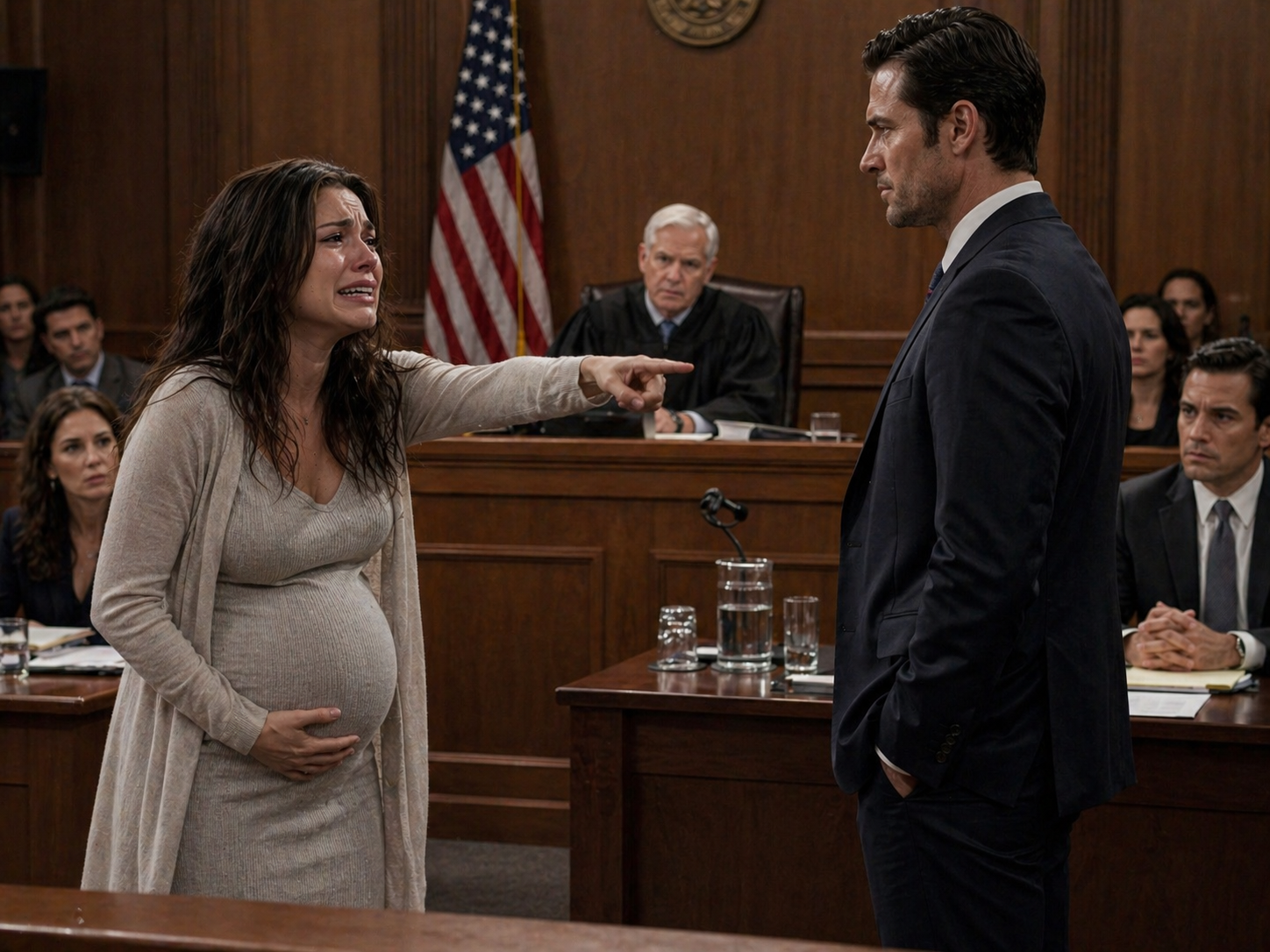

“You’re just not on my level anymore, Mark. I’m a doctor now, and you... you’re just the guy who fixed the Wi-Fi while I was studying. We should both move on to people in our own leagues.”
Those words didn’t just hurt. They were a surgical strike, delivered with the kind of clinical coldness you’d expect from a surgeon—which, ironically, is exactly what I had spent the last seven years paying for Sarah to become.
My name is Mark. I’m 35, a Systems Architect. For the past decade, my life hasn't been mine; it’s been a support system for Sarah’s ambition. When she got into medical school seven years ago, we sat at our cramped kitchen table and made a pact. She would focus 100% on her studies, and I would handle "everything else." At the time, I thought that was what a supportive husband did. I thought I was building a foundation for our future.
I worked 70-hour weeks. I took on every soul-crushing freelance project I could find. I skipped lunches, wore the same three pairs of jeans until they frayed, and drove a beat-up 2012 sedan while ensuring Sarah had a reliable, safe SUV for her late-night rotations. I paid the rent, the utilities, her tuition, her insurance, and even her expensive organic meal prep kits because "her brain needed the right fuel."
During those years, I became a ghost in my own social circle. My friends stopped calling after I turned down the tenth weekend trip in a row because I had to cover a double shift to pay for Sarah's board exams. I was exhausted, lonely, and physically drained, but I told myself it was worth it. I had this vision of the finish line: Sarah in her white coat, both of us finally breathing, finally starting the family we talked about.
But as Sarah entered her final year of residency, the woman I married began to vanish. The warmth was replaced by a sharp, condescending edge. If I asked about her day, it was "too complicated for me to understand." If I mentioned our finances, I was "being controlling." I chalked it up to burnout. I was a fool.
The "bombshell" happened at her residency completion party. It was a black-tie affair at a penthouse lounge downtown—a venue that cost more for one night than I’d spent on myself in three years. I’d bought a new suit, feeling like a million bucks because I thought this was our victory lap.
Halfway through the night, as the champagne flowed and Sarah’s colleagues laughed about inside medical jokes I couldn't follow, she pulled me onto the balcony. The city lights were beautiful, but the look in her eyes was ice-cold.
She didn't start with "Thank you." She didn't start with "We did it." She handed me a thick, manila envelope.
"What’s this?" I asked, my heart hammering against my ribs. "A down payment for the house?"
"It’s a petition for dissolution of marriage, Mark," she said, her voice steady. "And the settlement agreement. I’ve already signed my part. You should sign yours tonight. It’ll make the transition easier for everyone."
I felt the air leave my lungs. "Sarah? Is this a joke? I... I just paid your final tuition installment last month. We were supposed to go to Italy. We were supposed to—"
"We were supposed to grow," she interrupted, swirling her glass of Bollinger. "But I grew, and you stayed... here. I’m moving into a different world now, Mark. A world of surgeons, specialists, and high-stakes medicine. You’re a great guy, really, but you’re a 'support' person. I need a partner who challenges me, not someone who just provides for me."
Behind the glass doors of the balcony, I saw her best friend Melanie and two other residents watching us. They weren't looking with sympathy. They were smirking. They were waiting for the "obedient dog" to sign his papers so the real party could start.
Sarah pushed a pen into my hand. "Just sign it, Mark. Don't make a scene. You’ve always been so passive anyway. Let’s end this with some dignity."
I looked at the pen. I looked at the woman I had spent seven years of my life building into a success. And then, I looked at her friends through the glass. In that moment, the "passive" version of Mark died. I didn't cry. I didn't scream. I simply tucked the envelope under my arm and handed the pen back to her.
"No," I said quietly.
"Excuse me?" Sarah’s brow furrowed.
"I said no. I’m not signing a single thing tonight. And Sarah? You’re right. We aren’t on the same level. Because I have a soul, and you clearly traded yours for a lab coat."
I walked off that balcony, through the crowd of stunned doctors, and straight out the door. But as I sat in my car in the parking lot, my hands finally starting to shake, I realized I’d left my house keys on the table near the coat check. When I walked back in to grab them, I overheard Melanie whispering to Sarah in the hallway.
"Did he sign? Tell me he signed so we can call the locksmith for the apartment tonight."
"He’s being difficult," Sarah snapped. "But it doesn't matter. By the time he figures out about the account in the Caymans and what I did with the joint tax return, it’ll be too late anyway."
My blood turned to liquid nitrogen. I didn't grab my keys. I walked out, realizing that the divorce wasn't just an ending—it was a heist. And I had no idea how deep the rabbit hole went... until I checked our shared cloud drive that night.
![[FULL STORY] My Fiancée Left Me When I Lost My Job, Not Knowing I Had Already Signed a Better Contract](https://sa.greatgames.info/storage/thumbnails/1777366595_424d7e06-ca75-4f86-89e2-e06910ff4d99.png)

![[FULL STORY] She Told Me to Leave Her Life… So I Did Before Sunrise](https://sa.greatgames.info/storage/thumbnails/1777023162_a454c7c7-0f85-406a-a682-87ba6f3eba8d.png)