
![[FULL STORY] My Fiancée Left Me When I Lost My Job, Not Knowing I Had Already Signed a Better Contract](https://sa.greatgames.info/storage/thumbnails/1777366595_424d7e06-ca75-4f86-89e2-e06910ff4d99.png)
My fiancée ended our engagement over oysters and champagne, three hours after I lost my job. She did it in front of her parents, our wedding planner, and a waiter who tried so hard not to stare that I almost felt sorry for him.
They say that when you’re about to die, your life flashes before your eyes. But when your life is being dismantled by the person you love, it’s different. You don’t see your life; you see the architecture of the lies you’ve been living in. You see the cracks you ignored because they were small, and you see the foundation you built for two people, only to realize you were the only one carrying the bricks.
Losing my job at Celsian Logistics was not the worst thing that happened to me that day. The worst thing was learning exactly what I was worth to the woman I planned to marry.
My name is Owen Carter. I’m thirty-eight years old, and for a long time, I believed that love was a partnership of mutual growth. I was the guy who fixed the boilers in my father’s small duplex, the guy who learned that if something breaks, you don't panic—you analyze, you troubleshoot, you repair. That was my career, and that was my approach to life.
Camille Bennett was different. She was a woman of aesthetics, of branding, of the "look" of things. She ran a boutique consultancy, making luxury brands look more expensive than they actually were. I admired that. I thought we balanced each other. I was the structure; she was the polish.
I thought I was building a life, but as I sat in that restaurant—the Ashbury Grand, with its chandeliers and the smell of expensive lilies—I realized I had only been financing a display.
The Tuesday of the collapse started with a victory. I had signed a contract with HarborPoint Care that morning at 8:07 a.m. I was to be their new COO. Better salary, actual equity, and the autonomy I’d craved for years. I had the signed document in my inbox, hidden safely away. It was my parachute. But that afternoon, the Celsian layoffs happened. I was let go, along with a dozen others. I had the parachute, but I wanted to surprise Camille. I wanted to tell her over dinner that while one door had closed, a much bigger one had opened.
I walked into the Ashbury Grand, banker’s box in the trunk of my car, ready to transition from a moment of crisis to a moment of revelation.
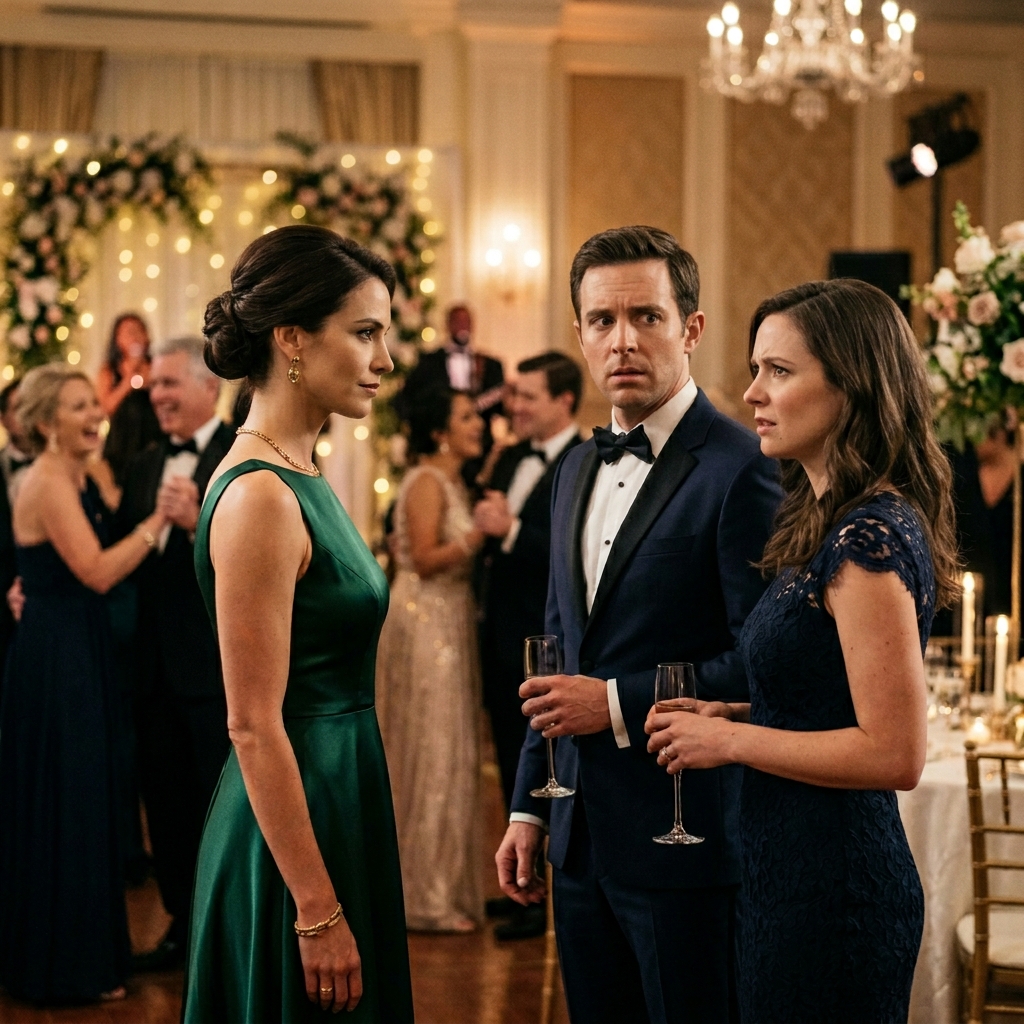
Camille was seated with her parents, Elaine and Douglas. Our planner, Joanna, was there too, looking terrified. The moment I sat down, the air shifted. Camille didn’t ask about my day. She didn’t look at me with warmth. She looked at me with the same clinical detachment she used when reviewing a failing brand portfolio.
“Is it true?” she asked. No greeting. No “How are you?” Just the audit.
“Yes,” I replied.
She took a slow, deliberate breath. “When were you going to tell me?”
“I found out this morning,” I said, my voice steady.
“And you still came here? Knowing that the venue, the honeymoon, the logistics—everything is pegged to a specific financial status?”
Her father, Douglas, chimed in. “Owen, marriage is stability. We’re concerned that you’re not projecting the… image of someone ready for this wedding.”
I looked at Camille. “My job changed, not who I am. I’m handling it.”
She laughed, a sharp, cold sound. “That’s not enough. We have a standard, Owen. You know that.”
She slowly pulled the engagement ring from her finger. She placed it on the table next to her bread plate. The sound was quiet, yet it rang louder than a gunshot in my mind.
“I cannot marry someone whose entire value proposition can disappear in a single meeting,” she said, her eyes devoid of empathy. “Today proved you’re worth a lot less than I thought.”
At that moment, the waiter arrived with the oysters. He froze. The silence was absolute. I looked at Camille—the woman I had supported through her business failures, her family’s medical bills, and her darkest insecurities—and saw her for the first time as she truly was. She wasn't my partner. She was a risk-averse investor, and I had just been downgraded to a liability.
I stood up. I didn’t shout. I didn’t beg. I reached down and picked up the ring.
“I hope you never have to learn your value from someone who only loved your momentum,” I said.
I turned and walked toward the exit. But as I reached the door, I felt the heavy, suffocating weight of everything I was leaving behind—not just the woman, but the future I thought I’d secured. I didn't know then that the hardest part wasn't the breakup; it was the realization that I was about to be hunted for my silence.
I walked to my car, my hand trembling as I gripped the steering wheel, wondering if the worst was truly behind me, or if this was just the beginning of a game I didn't know I was playing.
![[FULL STORY] My Ex-Wife Tried to Triple Child Support to Save Her New Husband From Bankruptcy, So I Exposed His Secret Gambling Addiction In Court.](https://sa.greatgames.info/storage/thumbnails/1777180063_C5.png)
![[FULL STORY] She Said It Was “Only Flirting for Sales” — Then One Email Destroyed Her Career](https://sa.greatgames.info/storage/thumbnails/1776742155_a45629b3-d9dd-414c-ad10-0a3322534fc5.png)

![[FULL STORY] She Laughed With Her Friends, "He's So Obsessed With Me. No Matter How Much I Push Him Away, He](https://sa.greatgames.info/storage/thumbnails/1777365195_13.png)
![[FULL STORY] My Fiancée Chuckled, Saying, 'My Money Stays Mine, Even After We Wed ' I Grinned, Slipped the](https://sa.greatgames.info/storage/thumbnails/1776734684_11.png)