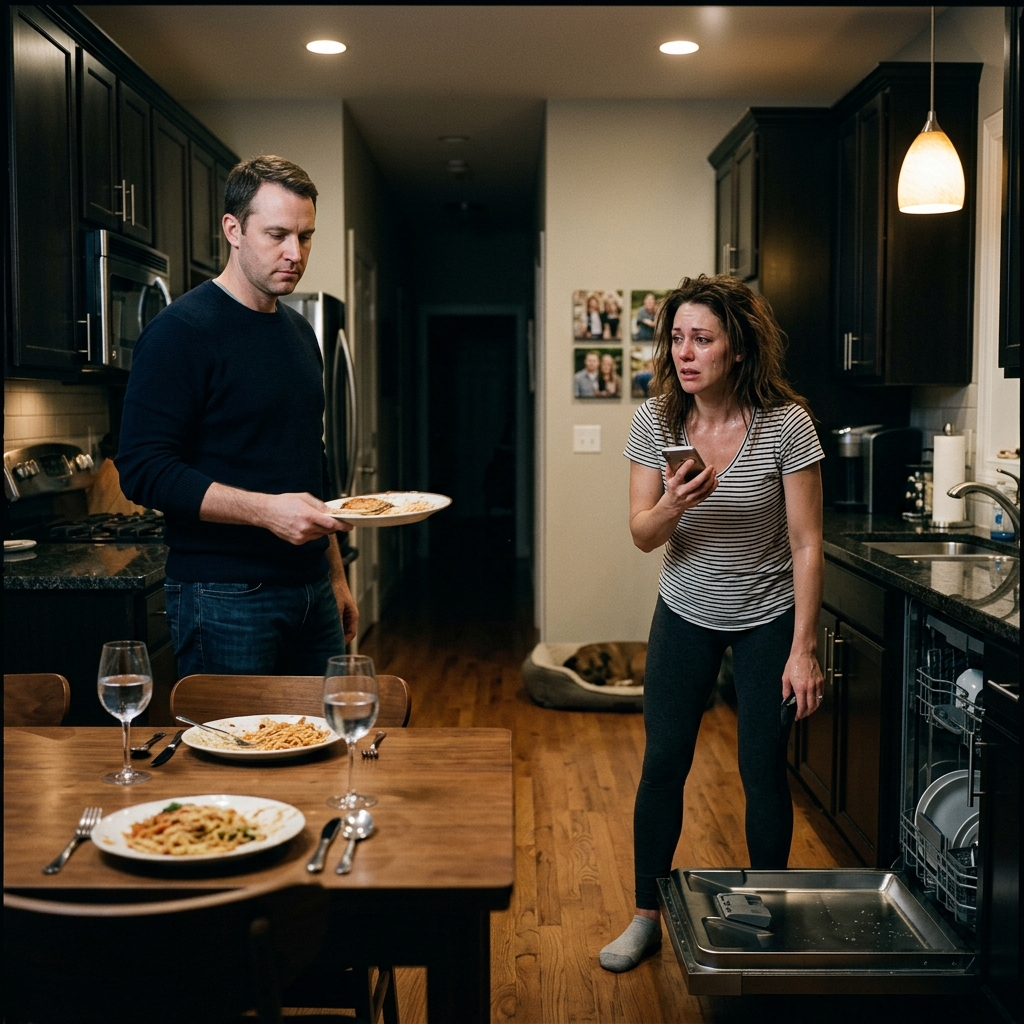
![[FULL STORY] They Held a Mother’s Day Dinner Without Me… Then Grandma Called From Hospice and Exposed Everything](https://social-media.rabedo.com/thumbnails/1777216758_235d17d6-6f2c-40c2-9880-f35022f6baaa.png)
Have you ever spent money just to remind someone you still exist?
Not because they deserved it.
Not because you’re noble or endlessly forgiving.
But because there’s a stubborn part of you that still wants to believe you’re the kind of daughter who sends flowers on Mother’s Day.
That was me.
I spent $43.50 on white tulips for my mother.
White tulips, because when I was little, she used to keep them in a blue pitcher on the kitchen windowsill. Back when life was simple. Back when it was just Mom, Dad, and me. Back before Roy.
My father died when I was thirteen.
Heart attack. Tuesday morning. April. Forty-one years old.
One minute rinsing his coffee mug, the next minute gone.
My mother, Diane, spent two years in grief. Then she met Roy Kesler at a library fundraiser. He was polite, organized, and smiled the kind of smile that never reached his eyes.
She looked at him like he had saved her.
I knew better.
Roy wasn’t loud or violent. He didn’t slam doors or raise fists.
He did something quieter.
He rearranged everything.
Your plans. Your habits. Your place at the table. Your confidence.
By the time you noticed, your life no longer felt like yours.
I’m Colleen Fontaine. Forty years old. Single mom. Intake coordinator at a recovery center. Salary: $47,800 a year, which is the kind of number you know exactly when you check your bank balance before buying gas.
My son Beckett is eleven.
He is funny, observant, and too young to understand adult cruelty.
But children notice everything anyway.
Mother’s Day that year fell on a Sunday.
Beckett made me pancakes that were too thick and too sweet. Then he handed me a handmade card that said “Best Mom Ever,” with a drawing of me that looked like a stick figure trapped in a tornado.
I put it on the fridge like it belonged in a museum.
We had a good day. Quiet. Warm. Real.
Then Tuesday evening, Beckett was doing homework at the kitchen table when he turned his iPad toward me.
“Mom… how come Grandma Diane had dinner without us?”
My stomach dropped before I even looked.
It was my half-sister McKenzie’s Instagram story.
A photo from Sunday night.
Mother’s Day dinner at Diane’s house.
The green tablecloth. The good china. The dried flower centerpiece my mother insisted was elegant.
Seven people seated around the table.
Roy at the head, of course.
Diane beside him. McKenzie. Roy’s brother Phil and his wife. A neighbor. Another relative.
Every chair full.
No me.
No Beckett.
I felt my son watching my face. Waiting for an explanation.
“They just forgot to call, baby,” I said softly. “It happens.”
That was the first lie I told him about this.
It came too easily.
Like muscle memory.
Beckett looked back at the photo and quietly counted the chairs with his lips. Then he returned to his math homework.
I stood at the sink for a long time after that, washing the same pan three times because I didn’t know what else to do with my hands.
I wondered if my mother had received the tulips.
I wondered if she read the card.
I wondered if forgetting me felt natural to them by now.
But the truth is, that dinner wasn’t the beginning.
It was just the moment I finally saw it clearly.
The Thanksgiving before that, Roy assigned seats using index cards like he was hosting a formal event.
He put me at the folding table.
A wobbly card table in the corner.
I was thirty-eight years old, eating turkey on a paper plate beside my nine-year-old son and my half-sister’s boyfriend, who kept calling stuffing “filling.”
Meanwhile, the adults sat at the main table.
I said there was room if we added another chair.
Roy never looked up.
“This way Beckett won’t feel left out. Kids should sit together.”
Beckett was the only child there.
I wanted to flip the table.
Instead, I smiled. Ate dinner. Drove home with my dignity somewhere on the highway.
Then there was Beckett’s birthday.
Every year my mother mailed him a card with twenty dollars inside. He kept every single one in a shoebox under his bed.
Then one year… nothing.
I called Diane.
“Oh,” she said after a pause. “Roy thought kids don’t really care about cards anymore. They’re all on phones now.”
Beckett was nine.
He didn’t have a phone.
He had a shoebox full of proof that his grandmother once remembered him.
So I lied again.
“T he mail must have lost it.”
That was our family system.
They neglected.
I explained it away.
Then came Grandma Janette.
My father’s mother.
Strong, sharp, impossible to fool.
She had helped hold me together after Dad died. She’d show up every day for six weeks, sit at the kitchen table, do crossword puzzles while my mother cried in the bedroom, then leave dinner on the stove with one note: Eat.
No speeches. No drama. Just love.
In 2021, Janette had a minor stroke. She recovered, but Roy quickly inserted himself into her life.
He drove her to appointments. Organized her bills. Managed groceries. Everyone praised how helpful he was.
Then one day, casually over lunch, he announced he now had power of attorney over her finances.
No one had mentioned it to me before.
When I questioned it, Roy smiled that dead smile.
“Colleen, honey, you’ve got enough on your plate. Let me handle it. That’s what family does.”
I should have listened to my instincts then.
Instead, I let myself be made to feel difficult. Again.
Then came the phone call.
Thursday evening.
Caller ID: hospital hospice unit.
“Miss Fontaine, your grandmother is requesting a visit. Tonight, if possible.”
I was there in thirty minutes.
Room 14 smelled like antiseptic and vanilla. Janette looked smaller, thinner, but her eyes were unchanged. Sharp as broken glass.
“Close the door,” she said.
I did.
Then she looked at me and said the sentence that changed everything.
“Roy has been stealing from me.”
She pulled a folder from under her pillow.
Bank statements. Notes. Copies.
Three years of withdrawals from her savings account.
Bathroom renovation: $12,600.
HVAC replacement: $8,750.
Roof repairs: $6,900.
Kitchen upgrades: $14,290.
And more.
Total gone: over $67,000.
“My account had ninety-one thousand,” she said. “Now it has twenty-three.”
I could barely breathe.
She told me Roy got her to sign the power of attorney while she was weak after the stroke. Told her it was only to help with bills. Told her the money was for repairs, medication, house needs.
She wanted to believe him.
Because the alternative was admitting her daughter married a thief.
Then she grabbed my wrist.
“Fix this before I die.”
I took the folder home and didn’t sleep at all.
The next days were a blur of highlighters, coffee, research, and rage.
My coworker Patrice helped me piece it together. Fake contractor names. Withdrawals with no documentation. Repairs that never happened.
I went to Janette’s house.
The bathroom Roy charged $12,600 to renovate still had the same pink tile from 1987.
The kitchen still had the same old refrigerator from the 90s.
Nothing had changed.
Nothing except her bank balance.
Then Roy found out I’d visited hospice.
He called the facility and had me removed from the visitor list, claiming I was causing distress to my dying grandmother.
I drove there after work and was stopped in the lobby.
I sat in my car for forty-five minutes afterward, staring at a dead phone screen, wondering if maybe I really was the problem they always said I was.
Then Patrice said the sentence I needed.
“You’re not crazy. You’re inconvenient.”
That same night, I got a text from McKenzie.
My half-sister. Roy’s daughter.
“I heard Dad on the phone. I know what he did. Tell me what to look for.”
She searched his locked filing cabinet while he was at work.
The combination?
That told me everything I needed to know about Roy.
Inside were fake invoices from fake companies matching the stolen withdrawals.
One real roofing company listed had never even worked on Janette’s house.
Now we had proof.
We filed a formal elder financial abuse report. Adult Protective Services moved quickly.
Janette signed a notarized statement revoking Roy’s power of attorney.
My visitation rights were restored.
Then came the final meeting.
Room 14.
Me. Diane. McKenzie. Patrice. A social worker. Janette in bed.
Roy waited outside.
When he tried to enter, Patrice blocked the doorway.
“This is a family meeting.”
He smiled. “I am family.”
“That’s under review,” she said, and shut the door.
Inside, I laid out every document. Every fake invoice. Every withdrawal. Every photo of the untouched house.
My mother picked up the fake bathroom renovation invoice and stared at it.
“The bathroom is pink,” she whispered.
“Since 1987,” I said.
Something changed in her face.
Not anger.
Recognition.
The realization that she had spent twenty-five years defending a man who had been using everyone around him.
Janette took Diane’s hand.
“I’m sorry, baby,” she said.
Then she revoked Roy’s authority officially.
Updated her will. Protected the house. Named me executor.
Roy was removed from everything.
Accounts. Access. Control.
My mother stood up, opened the door, looked at Roy waiting in the hallway… and walked straight past him without saying a word.
She came home with me that night.
Suitcase already packed in her trunk.
One week later, Roy sat alone at the same table where he hosted that Mother’s Day dinner.
One plate.
One fork.
One cold egg on the stove.
The man who controlled the seating chart had no one left to seat.
My mother filed for separation.
McKenzie applied for financial aid.
Family members stopped taking his calls once investigators contacted them.
The man who always decided who belonged was suddenly the only one left outside.
That Sunday, Beckett and I visited Janette again.
My mother rode with us. McKenzie sat in the backseat laughing with Beckett over some game I didn’t understand.
It was the first time the four of us had ever felt like a real family.
Beckett carried a handmade card into hospice.
On the front it said: Happy Grandma Day.
“That’s not a real holiday,” I told him.
“I know,” he said. “I just didn’t want to wait.”
Janette held that card against her chest.
Then she looked around the room.
Me.
My mother.
McKenzie.
Beckett.
Everyone who should have been there… finally was.
No folding table.
No missing invitation.
No one pushed aside.
And somewhere else, Roy Kesler was learning what an empty table feels like when you’re the one no one saves a seat for.


![[FULL STORY] My Fiancée Demanded I Gift Her Parents Equity In My Company As A Wedding Present, So I Handed Her Back The Ring Instead.](https://social-media.rabedo.com/thumbnails/1777189654_C1.png)
![[FULL STORY] My Wife Tried To Kick Me Out To Move Her Ex In, Saying Her Parents Would Back Her. By Nightfall,...](https://social-media.rabedo.com/thumbnails/1777216697_R3.png)