
I looked at the bag.
Then at the apartment key still hanging from her keyring.
Then at the phone she kept flipping face-down every time it lit up.
And I said, “Then I’ll send you back where you belong.”
She frowned like I was being dramatic.
“What does that mean?”
“It means,” I said, “if you think the past understands you better than the man you’ve been living with for two years, then you should go see what the past has to offer.”
Her mouth tightened.
“You’re twisting this.”
“No,” I said. “I’m accepting it.”
What she didn’t know was that I’d already looked Ryan up.
And Ryan already had a girlfriend.
Let me explain.
My name is Jonah Reed. I’m thirty-four years old, and until that Thursday night, I thought I was in the kind of relationship people eventually build a marriage out of.
Not because it was dramatic.
Because it was solid.
Or at least I thought it was.
I work in cybersecurity compliance, which is an incredibly boring way to say I get paid well to make sure companies don’t accidentally burn themselves down with bad systems and worse habits. I write policy frameworks, audit internal controls, clean up vendor risk, and explain the same five concepts to senior executives until they stop pretending security is optional.
It is not sexy work.
No one hears “cybersecurity compliance” and thinks mystery, danger, spontaneity, or romance.
That was probably part of the problem.
Because my girlfriend, Elena, lived in a world that prized mood over structure. She was a brand stylist and set designer. She could take a cheap room, a rack of clothes, two lamps, and six pieces of fruit and somehow make it look like the cover of a magazine for women who own linen pants and emotional boundaries.
She made things beautiful.
I made things stable.
For a while, that felt like balance.
We met at a gallery opening neither of us really wanted to attend. A friend of mine had invited me because his firm was sponsoring one of the artists. Elena was there working the visual side of the event because one of the exhibitors had hired her for the installation.
I was standing near a sculpture that looked like someone had lost a fight with copper wire when she came up beside me and said, “If you stare at it any harder, it’ll explain itself out of pity.”
I laughed.
“That obvious?”
“Painfully.”
She smiled, and that was it.
For the first year, she loved the things she would later resent.
She loved that I was calm.
She loved that my apartment always had extra coffee, clean towels, and a charger that fit her phone.
She loved that I remembered things. The names of her clients. The flower she hated. The café where she liked the croissants but not the coffee. The exact way to talk her down when a project went sideways and she started spiraling.
She used to call me safe like it was the highest compliment possible.
“You make everything feel less loud,” she said once, lying on my couch with one of my sweatshirts on and her bare feet tucked under my leg. “I didn’t know how tired I was until I met you.”
I thought that mattered.
I think it did.
Just not enough.
Elena had an ex named Ryan Vale.
Everybody has an ex.
Ryan was different.
Ryan was one of those men women describe with warning signs disguised as poetry.
He was a photographer. Sometimes. A musician. Occasionally. A creative director when the room was big enough and drunk enough to let him say it without questions. He wore rings, leather jackets in weather that didn’t require them, and the kind of confidence that looks magnetic until you realize it’s just practiced avoidance.
According to Elena, Ryan had been the great mistake before me.
They dated for almost two years. He cheated. He disappeared for days. He borrowed money. He turned every argument into a performance and every apology into an event.
“So why stay that long?” I asked once, early in our relationship.
She had shrugged in that careless way people do when they’re embarrassed by a past version of themselves.
“Because he understood parts of me that were messy,” she said. “And at the time, I thought being understood was worth being hurt.”
I should have paid more attention to that sentence.
Especially the first half.
Understood parts of me that were messy.
I didn’t really have messy parts.
Not in the romanticized way.
I paid bills on time. I kept backups. I updated my insurance. I booked flights early. I had a retirement account and a labeled drawer for batteries.
That sounds boring if you’ve never had chaos cost you something.
To me, it felt like peace.
Elena moved into my apartment after a year and a half.
Technically, it was my apartment. I bought it before I met her. Two bedrooms, decent view, nothing flashy, walking distance to the train and three places that made very good soup. She started by leaving a toothbrush and a sweater. Then shoes. Then half a closet. Then somehow the second bedroom became her “temporary prep room,” which meant fabric swatches, styling racks, mood boards, sample props, and three mirrors that all made me look vaguely disappointed in myself.
I didn’t mind.
I made more than she did, and her income fluctuated because creative freelance work is basically gambling with invoices. So I covered the mortgage, the utilities, the internet, most groceries, and later the health insurance gap when she went fully independent. She paid for things too when she could. Flowers, takeout, little house touches, occasional dinners, gifts that made the apartment feel more like a story than a space.
I told myself it was partnership.
Mostly, it was.
Until Ryan came back.
It started with a message.
Elena mentioned it casually one Sunday, like she was telling me a former classmate had gotten engaged or a coffee shop had closed.
“Ryan texted me,” she said, not looking up from her laptop.
I was in the kitchen making breakfast.
“Ryan Ryan?”
She laughed softly.
“How many Ryans do you think I have unresolved tension with?”
“One too many, apparently.”
She smiled.
“He’s back in the city. Opening some studio with a couple of guys. He wanted to say hi.”
“And?”
“And I said hi.”
That should have been the whole story.
It wasn’t.
At first, it was “just closure.”
Then it was “he asked about my work.”
Then “he wants recommendations for fabric sourcing.”
Then “he says he’s changed.”
Then “you’re not seriously jealous of Ryan, are you?”
That last one showed up a lot.
Not because I was jealous.
Because anything short of cheerful approval became insecurity in her version of events.
I tried to be reasonable.
“I’m not jealous,” I told her one night while she answered his messages at 11:40 p.m. in bed beside me. “I’m just wondering why your cheating ex suddenly needs this much access to your time.”
She didn’t even look up.
“You’re making it more dramatic than it is.”
“He’s texting you every day.”
“He’s in a weird place.”
“So he calls the woman he cheated on for emotional support?”
She finally set her phone down then and turned toward me with that expression I grew to hate—part pity, part irritation, as if I were forcing her to explain something beneath her.
“Jonah,” she said, “not every connection has to be threatening just because it existed before you.”
Threatening.
That word did a lot of work in our relationship by the end.
I didn’t like Ryan. That made me threatened.
I didn’t like her disappearing for “coffee” with him on Wednesday nights. That made me controlling.
I didn’t like hearing his name come up every time she talked about feeling creatively stuck. That made me insecure.
People with weak arguments love turning discomfort into pathology.
Over the next two months, Elena started shifting.
Not suddenly.
Quietly.
That’s how these things go.
She became distant in the apartment and more animated when talking about things Ryan had said. She started using words like “restless” and “misunderstood.” She complained that my life had a predictability to it that made her feel old.
One night, after I reminded her that our internet renewal discount would expire if we didn’t switch the plan before midnight, she laughed and said, “God, you really do make everything feel like admin.”
I looked at her.
“And you make basic competence sound like an insult.”
She rolled her eyes.
“See? This is what I mean.”
“What?”
“You don’t get the energy I need sometimes.”
“Energy.”
“Spontaneity. Movement. Creative momentum. Not everything has to be about efficiency.”
“Not everything is. But rent usually is.”
That started a fight.
Not because I said anything cruel.
Because I kept saying accurate things at moments when she wanted romance to excuse irresponsibility.
Around then, her friends started getting involved.
Not openly.
That would’ve been easier.
Just enough.
One friend, Claire, said over drinks, “You and Jonah are so stable it’s almost intimidating.”
That sounds nice until you hear the tone.
Another said, “Ryan was a disaster, but at least he made life interesting.”
Elena laughed.
That was when I really started to understand the problem.
She wasn’t trying to get away from pain.
She was trying to get back to intensity.
People confuse the two all the time.
I asked her once, directly, “Do you miss Ryan, or do you miss being younger and more self-destructive with him?”
She stared at me for a long time.
Then she said, “You always reduce feelings into neat little categories so you can win.”
That was not an answer.
It was enough.
Two weeks before everything ended, I looked Ryan up.
Not because I’m proud of snooping.
Because by then I was tired of being told not to worry while his name kept showing up like mildew in the corners of my relationship.
Elena had told me Ryan was single.
Actually, she’d said, “Ryan can barely commit to charging his phone, let alone another person.”
That line stayed with me because it was exactly the kind of myth people preserve about exes they’re not fully done with. Charming incompetence as personality. Emotional unreliability as weather. It always sounds more romantic than it is.
I found Ryan’s new studio account in under three minutes.
Then a tagged photo from an opening two weeks earlier.
Ryan in black, smiling at the camera.
A woman with a hand on his chest.
Caption: *Proud of you, babe. Can’t wait to see what you build here.*
Tagged: Brooke Sanderson.
There were more.
A weekend trip to Hudson.
A blurry kitchen selfie with red wine.
A photo of the two of them carrying rolled backdrop paper into the studio with the caption *building things with my favorite person.*
I stared at those for a while.
Then I took screenshots.
Not because I planned anything.
Because I suddenly understood that if I brought this to Elena, she would accuse me of stalking Ryan out of jealousy. She would say Brooke was probably a friend, a collaborator, a cousin, a landlord, a figment of algorithmic suggestion. She would defend the fantasy because the fantasy was doing something for her that truth was not.
So I said nothing.
That was my last courtesy.
The actual break happened on a Thursday.
I came home just after ten, later than usual because a client had decided that 5:15 p.m. was the perfect time to discover they’d failed an audit six months in a row. By the time I unlocked the apartment door, I was tired in the kind of way that makes even a warm room feel like a reward.
The apartment lights were on.
Music low.
Elena was in the kitchen.
And there was an overnight bag on the counter.
That bag was what made everything clean.
Not because a bag proves betrayal.
Because a bag proves planning.
She had already chosen her next move before I was invited into the conversation.
I set my keys down.
“What’s the bag for?”
She looked at it, then at me, like maybe she had hoped I wouldn’t notice the object sitting in the middle of our kitchen like a witness.
“I need a little space tonight.”
“From me.”
“Yes.”
“Where are you going?”
She folded her arms.
“Does it matter?”
“Yes.”
She sighed.
“Ryan said I could use his spare room.”
I almost laughed.
Not because it was funny.
Because exhaustion is very close to clarity sometimes, and clarity often arrives carrying insult by the handle.
I looked at her.
“You’re going to your ex.”
“I’m going somewhere I can think.”
“Your ex’s apartment.”
“Yes.”
“And you expect me to react how?”
“I expect you not to make this ugly.”
I nodded slowly.
“Of course.”
She mistook that for surrender and relaxed. That was her second mistake.
“I’m not saying anything happened,” she said quickly. “I just need to breathe. We’ve been circling the same thing for months.”
“What thing?”
“That you don’t get me anymore.”
I stared at her.
“Anymore.”
“You know what I mean.”
“No,” I said. “I really don’t.”
She pushed hair back behind one ear, frustrated now that I was asking for actual meaning instead of accepting mood as evidence.
“I feel dead here sometimes, Jonah.”
I said nothing.
“With you, everything has become routines and calendars and grocery lists and taxes and emails and sleep. With Ryan, things were messy, yeah, but he understood me. He understood parts of me better than you ever could.”
There it was.
The sentence.
Clean. Final. Unmistakable.
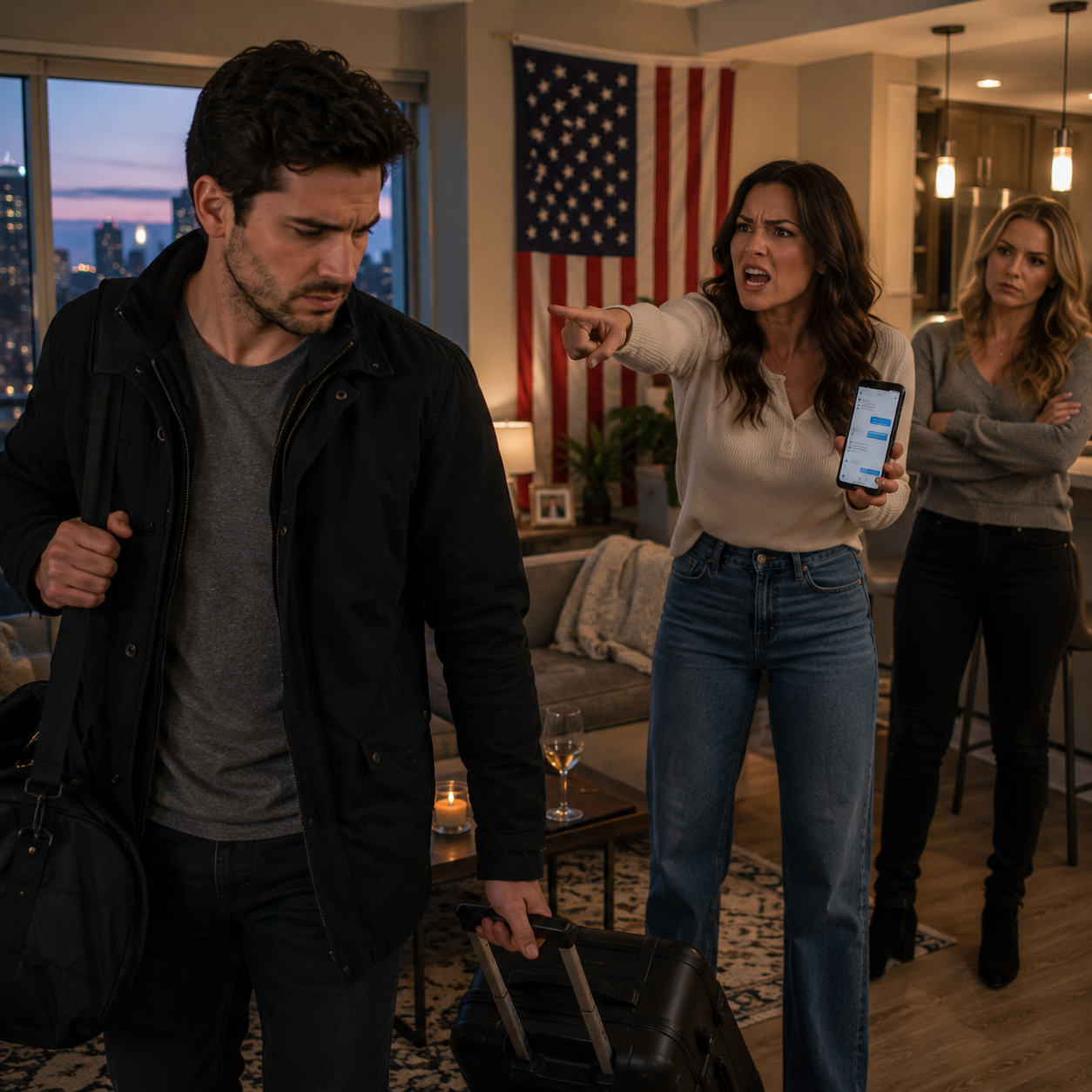
I looked at the bag again.
Then back at her.
“Then I’ll send you back where you belong.”
She blinked.
“What does that mean?”
“It means you don’t get to sleep in my bed after telling me another man understands you better.”
“Jesus, you’re being dramatic.”
“No. I’m being clear.”
I walked past her to the bedroom, pulled a small duffel from the closet, and filled it with the essentials she’d need if she insisted on spending the night elsewhere: toiletries, charger, medication, the sweater she always looked for when she was cold, the notebook she pretended not to care about until it went missing.
She followed me, angry now.
“What are you doing?”
“Helping.”
“That’s not funny.”
“It’s not supposed to be.”
“You don’t get to kick me out because I’m trying to be honest.”
“You packed a bag before the conversation. Don’t pretend this is me overreacting to your bravery. You were leaving anyway.”
She stopped.
That one hit.
Because it was true.
I zipped the duffel and handed it to her.
“Your building app access ends at midnight. Your physical key goes on the counter.”
Her face changed.
“You’re serious.”
“Yes.”
“You’re ending three years because I said one hard thing?”
“No,” I said. “I’m ending three years because for months you’ve been emotionally halfway gone and tonight you finally told me where.”
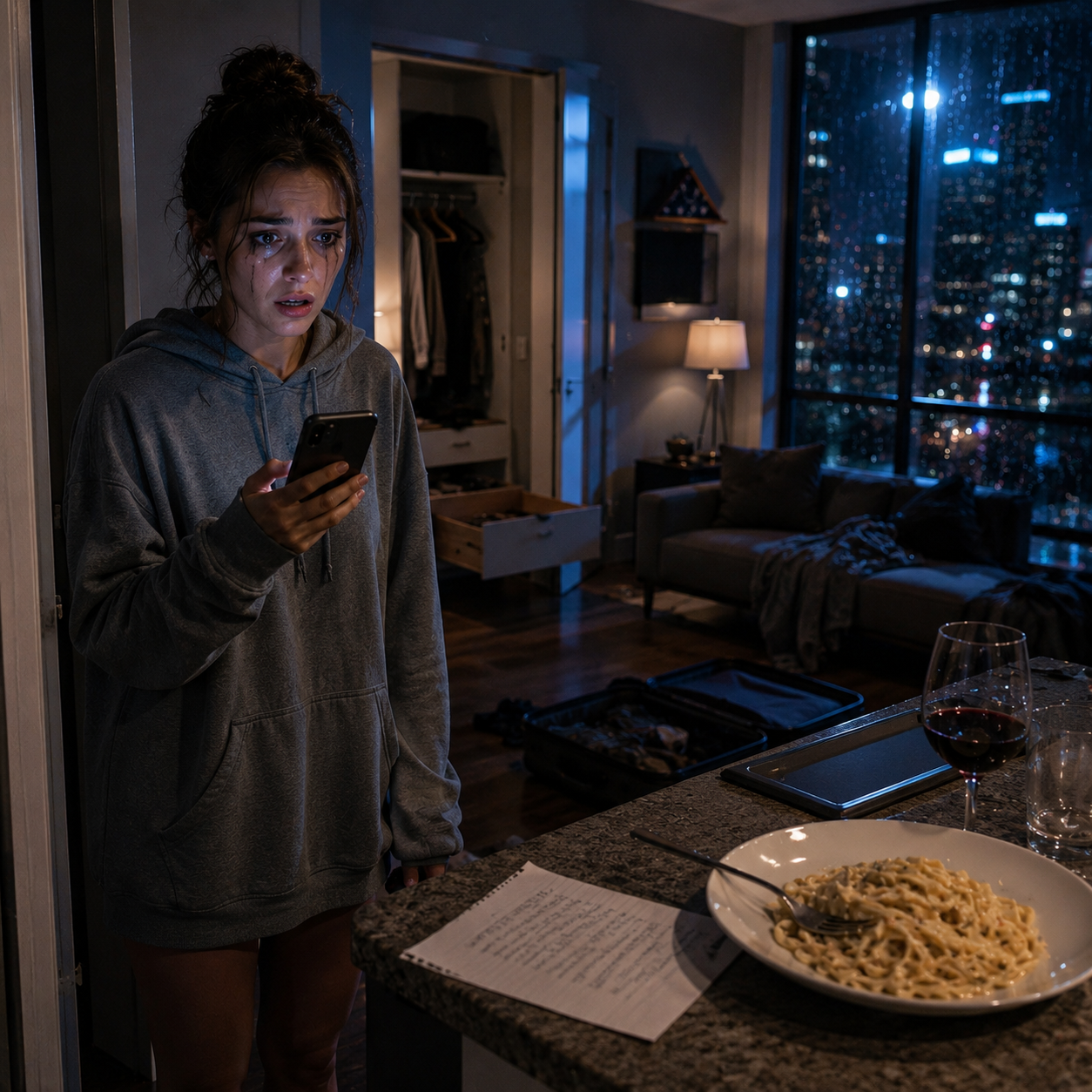
She started crying.
That almost got me.
Almost.
But there is a particular cruelty in crying after you’ve already arranged the ride.
“I didn’t think you’d do this,” she whispered.
“I know.”
That was the whole problem.
She thought I’d absorb it. Process it. Wait. Let her leave and come back with her feelings organized and my life still open for inspection.
She picked up the bag.
Then she said, “You’ll regret making this so final.”
I looked at her.
“Elena, the final part was choosing your ex’s apartment.”
She took her key off the ring, set it on the counter, and left.
At 11:42 p.m., my phone rang.
It was her.
I almost didn’t answer.
Then I did.
She was not crying anymore.
She was furious.
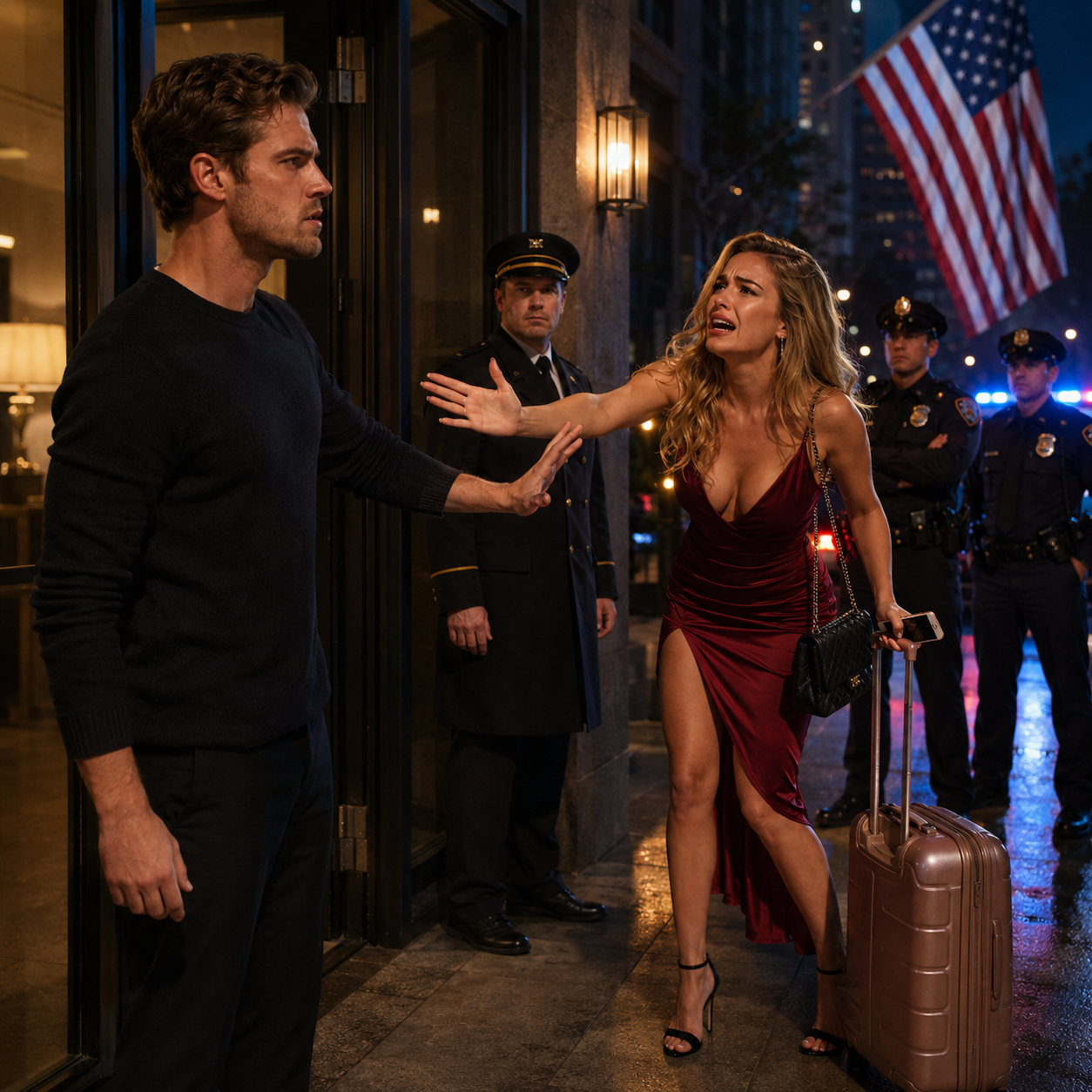
“A woman answered the door.”
I leaned back against the headboard.
“I know.”
Silence.
Then, “You knew?”
“Yes.”
“You knew he had a girlfriend?”
“Yes.”
“And you didn’t tell me?”
I laughed once.
Not kindly.
“No, Elena. It wasn’t my job to research your emotional affair harder than you did.”
“He told me Brooke was his business partner.”
“He also told you he understood you better than I did. He seems to say whatever the room needs.”
“You let me walk into that.”
“No. You chose to walk there.”
“He embarrassed me.”
There it was.
Not *he lied to me.*
Not *I humiliated us.*
He embarrassed me.
I said, “That sounds familiar.”
She made a broken sound.
“I can’t stay here. Brooke is screaming, Ryan is freaking out, and—”
“And what?”
“I need to come back.”
“No.”
“Jonah, please. Just for tonight.”
“No.”
“Where am I supposed to go?”
“You had the whole evening to think about that before deciding where you were understood.”
“That’s cruel.”
“No. It’s a boundary. You used to like those when they belonged to other people.”
She hung up.
I slept badly anyway.
Not because I doubted myself.
Because grief doesn’t care when clarity arrives.
Update One.
The next morning, I started dividing a life.
That sounds colder than it felt.
It felt mostly administrative and nauseating.
I changed the building app permissions.
Removed her parking access.
Changed streaming passwords.
Took her line off my phone plan and requested a transfer code.
Canceled the boutique hotel weekend I had booked for us two weeks later because I had planned to surprise her with a quiet trip after her latest shoot wrapped.
I left the utilities alone. I’m not monstrous.
Then I sent one email.
Elena,
You are no longer living here.
You may schedule two pickup windows over the next 14 days for the remainder of your things. I will have them boxed and available. Please use Claire or your sister if you prefer not to come alone.
Your phone line transfer code is attached. Building access is revoked. Shared subscriptions are closed.
I am not discussing Ryan, Brooke, “space,” or whether what happened qualifies as cheating. You planned to leave for another man’s apartment after months of telling me not to worry about him. That is enough.
Logistics only from here.
Jonah.
She called immediately.
I declined.
She texted right after.
This is insane.
Then:
Nothing happened between us.
Then:
I just needed clarity.
Then:
Ryan lied to me too.
Then:
You’re punishing me for being honest.
That last one got a response.
No. I’m responding to you leaving.
She answered:
I hadn’t left yet.
I wrote back:
You packed the bag before the conversation.
She didn’t reply for an hour.
Then:
Can we at least talk in person?
No.
She tried anyway that evening.
Buzzed the building three times. A delivery guy let her in. She knocked until my neighbor opened her own door and gave her the kind of New York stare that can file complaints without speaking.
I did not answer.
Eventually, Elena texted:
You really changed the code.
Yes.
This is humiliating.
So was hearing my girlfriend say another man understood her better while she packed to sleep at his place.
That ended the exchange.
Update Two.
Brooke called me on Sunday.
I almost didn’t pick up because I didn’t know the number.
I’m glad I did.
Her voice was steady in the way people sound when they are several degrees past anger and into organization.
“This is Brooke,” she said. “Ryan’s girlfriend.”
I sat down.
“Okay.”
“I’m not calling to yell at you.”
“That’s considerate.”
She laughed once without humor.
“I just wanted to confirm timelines. He’s saying Elena showed up uninvited. Elena’s saying he invited her. I figured the truth is probably sitting somewhere between your screenshots and both of their egos.”
“Fair.”
I told her the truth.
Ryan had been messaging Elena for months. Elena had insisted they were talking for closure or “creative connection.” She left my apartment with an overnight bag and the stated intention of staying there because he understood her better than I did.
Brooke was quiet for a moment.
Then she said, “He told me he was meeting a vendor.”
“That sounds like Ryan.”
“So she didn’t know?”
“No.”
“She looked like she’d been electrocuted when I opened the door.”
I believed that.
Brooke exhaled.
“Good.”
That surprised me enough to show in my voice.
“Good?”
“Not because I enjoy humiliating strangers. Because I’ve been telling myself for months that I was paranoid. He’s been pulling away, guarding his phone, talking about needing ‘freedom to create.’ Apparently freedom to create meant lining up replacements.”
I leaned back in my chair.
“I’m sorry.”
“Don’t be. Better one bad night than six more lying months.”
That sentence stayed with me.
Brooke continued, “He’s gone, by the way.”
“What?”
“I threw him out.”
That one did make me smile a little.
“Efficient.”
“I’m an architect. We solve structural problems.”
Then she added, “For what it’s worth, she looked more stupid than malicious.”
“That sounds right.”
“Still not your problem.”
“No.”
“Good.”
We hung up after that.
The cleanest alliance I’ve ever had with another human being formed entirely because the same man thought he could tell two women they were uniquely understood.
There’s probably a thesis in that.
Update Three.
Elena’s friends split fast.
The romantic ones took her side first.
Of course they did.
They said I was cold, punitive, controlling, technical about feelings. One of them texted, “You can’t just shut someone out because they’re confused.”
I replied, “You can if they leave with a bag for their ex’s apartment.”
Blocked after that.
Claire, her closest friend, called two days later.
I almost didn’t answer.
Then I did because by that point I was curious what story Elena had chosen for the audience.
Claire sounded tired.
“She told me everything.”
I said nothing.
“Well. Her version first. Then the version with more crying.”
“That sounds layered.”
“She didn’t know he had a girlfriend.”
“I know.”
“She says nothing physical happened.”
“That’s irrelevant.”
Claire went quiet.
Then, softly, “I know.”
That surprised me.
She continued, “I think she thought Ryan was some unfinished chapter she could walk through and come back from. Like if she proved to herself she still had access to that version of herself, then she could choose you more honestly.”
I laughed once.
“That’s a beautiful way of saying she wanted to keep me safe while auditioning nostalgia.”
Claire sighed.
“You’re not wrong.”
“No.”
“I’m not calling to convince you to take her back.”
“Then why are you calling?”
“Because she’s saying she ruined the best thing in her life for a fantasy she built from old pain and flattering messages. And because, if I’m honest, some of us helped her romanticize it.”
There it was.
The audience.
There is always an audience around women like Elena and men like Ryan. Friends who mistake recklessness for authenticity. Friends who call stable love boring because they only ever meet it after chaos has exhausted them.
Claire said, “She kept saying you were safe.”
“She used to mean that as praise.”
“I know.”
“Then she started saying it like it was proof she was settling.”
Silence.
Then, “Yeah,” Claire said. “That’s true.”
That hurt more than it should have.
Not because it was new.
Because hearing the quiet insult spoken aloud always feels worse than sensing it.
Claire apologized for her own part in it before hanging up.
I appreciated that.
It changed nothing.
But it mattered.
Update Four.
Elena came by the apartment on the first pickup day.
I let her in because I’m not interested in dragging grief into theater once the curtains are already down.
I had boxed everything carefully. Clothes. Books. Camera accessories. Skin care lined in tissue paper because she always hated when practical people packed like practical people. A smaller box with personal things she would’ve panicked about later—passport, grandmother’s bracelet, her hard drive, the notebook she left by the bed.
She stood in the living room looking like a woman touring a version of her own life she no longer had the right to walk through freely.
“It looks different,” she said.
“It’s cleaner.”
She flinched.
“You don’t have to do that.”
“Do what?”
“Make every sentence hurt.”
I looked at her.
“Elena, every sentence hurts right now. Some of them just happen to be true too.”
She nodded like she couldn’t really argue.
She looked smaller than I remembered. Or maybe just less lit.
No makeup.
Hair pulled back.
One of my old sweatshirts she must have accidentally taken in the wrong box from that first night.
That bothered me more than it should have.
“You can keep the sweatshirt,” I said.
Her eyes flicked up.
“I was going to return it.”
“I don’t want things back that still think they belong to me.”
That one landed. Hard.
She sat down on the arm of the couch but didn’t lean. Like even now she knew this room had changed around her.
“I know you don’t owe me a conversation,” she said, “but can I say one thing?”
I stayed standing.
“You can say one thing.”
She looked at her hands.
“It wasn’t Ryan.”
I actually laughed then.
Not because it was funny.
Because that sentence always comes when the fantasy fails.
“It was exactly Ryan.”
“No,” she said quickly. “I mean yes, physically, technically, obviously. But what I was chasing wasn’t him. It was the idea that someone once saw the parts of me that felt wild and unfinished and difficult and still wanted them.”
I said nothing.
“And I think somewhere along the way, I started resenting that you loved me in ways that felt calm. Like calm meant I was becoming less vivid.”
“That sounds like a you problem.”
“It is.”
She looked up at me then, eyes wet.
“That’s the first true thing I’ve said in months.”
I folded my arms.
“You said he understood you better than I ever could.”
“I know.”
“Did you mean it?”
She closed her eyes.
“In that moment? Yes.”
I appreciated the honesty even as it cut.
She continued, “But I don’t think I understood what I was actually saying.”
“No,” I said. “You understood. You just didn’t think it would cost you this much.”
She started crying quietly.
Not dramatic.
Which somehow made it worse.
“I thought you’d fight harder,” she whispered.
“I know.”
“And that’s awful.”
“Yes.”
“I treated your steadiness like a guarantee.”
“Yes.”
“I’m sorry.”
I believed that she was sorry.
That did not move me one inch.
“What do you want from me?” I asked.
Her face broke a little more.
“I don’t know.”
“That’s not true.”
She looked down.
“I want you to tell me I made a terrible mistake and there’s still a way back.”
“There isn’t.”
She nodded.
Like she had expected it.
Like hope had still insisted on coming with her anyway.
I carried her boxes to the elevator. We didn’t hug. That would’ve been a lie.
As the doors closed, she said, “Ryan told Brooke he and I were just helping each other process old feelings.”
I looked at her.
“Sounds like he understands himself beautifully.”
The doors shut.
Update Five.
The strangest part of a breakup like that is how quickly your life becomes administrative.
Remove name from grocery delivery.
Cancel extra set of gym access.
Update emergency contact.
Return second restaurant reservation.
Reclaim the spare closet.
Donate the bedding she picked because it photographed well but never stayed cool enough to sleep under.
I didn’t feel heroic.
I felt tired.
Then better.
Then guilty for feeling better.
Then better again.
About a month after the breakup, Elena sent an email with the subject line: *No response needed.*
I opened it anyway.
It was long.
Not manipulative-long. Reflective-long.
She said she had started therapy after realizing she didn’t just miss Ryan. She missed the version of herself that confusion let her perform. She said she had mistaken intensity for understanding and unpredictability for depth.
Then came the sentence that mattered:
*Ryan did not understand me better than you. He just knew how to flatter the parts of me that still wanted to be unmade.*
That was good.
Painful.
Late.
But good.
She also wrote:
*You understood me enough to see what I was doing before I did. I hated that because it felt like being known without having room to romanticize myself.*
That one sat with me for a while.
Because it was true.
I had seen it.
Not perfectly. Not early enough.
But I had seen enough to know that the version of Elena chasing Ryan was not finding herself. She was trying to feel chosen by a chaos she’d once survived and later edited into a personality trait.
I didn’t respond.
Some apologies are bridges.
Some are mirrors.
That one was a mirror.
She needed to see herself in it.
Not me.
Update Six.
Brooke texted me two months later.
Not about Ryan.
About an event space recommendation.
Apparently she was helping a friend with an exhibition and needed a venue with decent lighting and better management than the place she was considering.
I sent her two names and told her which one overcharged for sentiment.
She replied, *You seem annoyingly useful.*
I wrote back, *That’s the nicest thing anyone’s said to me all year.*
She sent a laughing emoji and nothing else.
There is something deeply healing about being useful in a room where nobody is ashamed of it.
Ryan, from what I heard through a friend of a friend, left the city again.
Of course he did.
Men like Ryan don’t stay anywhere long enough to be fully known.
They survive by making departure look like mystery.
I hope some other city enjoys his self-discovery in moderation.
Elena moved into a smaller place in Brooklyn.
Started taking more local styling jobs instead of chasing the dramatic ones. Her work got quieter. Better, according to Claire.
That didn’t make me want her back.
It made me feel something simpler and sadder.
Relief that maybe the lesson had at least done something useful with the wreckage.
Final Update.
It has been eleven months since Elena packed the overnight bag.
I don’t think about Ryan anymore.
That feels like a victory.
I think about Elena less too, though not never.
Certain songs still do it. Certain restaurants. The smell of the rosemary hand soap she used to buy in ridiculous glass bottles.
But the grief has moved from the center of the room to the corner.
It still exists.
It just doesn’t dictate the layout anymore.
My apartment feels like mine again.
Not because her things are gone.
Because the space no longer waits for someone to decide whether it’s enough.
I repainted the second bedroom. Turned it into an actual office instead of the set-prep room it had become. Bought a chair that prioritizes my spine over aesthetics. Started cooking again without hearing commentary about how my meals “look like competence.”
I’ve been seeing someone for about three months.
Her name is Mara.
She’s an industrial designer. Practical. Funny. Beautiful in the kind of way that doesn’t seem to know it’s being observed.
On our third date, I told her a compressed version of what happened.
Not because I owed the history.
Because I’ve learned that the right people can handle a truth without trying to style it for mood.
She listened.
Then she said, “That sounds exhausting.”
I almost laughed from relief.
Not “romantic.”
Not “complicated.”
Not “maybe she was confused.”
Exhausting.
Exactly.
A few weeks ago, Mara came over while I was reorganizing the kitchen.
She picked up one of Elena’s old decorative trays I had somehow forgotten to get rid of and asked, “Do you love this?”
“No.”
“Do you use it?”
“No.”
“Then why is it here?”
I looked at her.
Then at the tray.
Then threw it out.
Healing sometimes looks very stupid and very specific.
I saw Elena once after the letter.
At a bookstore in the design section.
She was holding a book about set construction and pretending to read the back cover. I knew that posture. It meant she was thinking about something else and didn’t want anyone to ask.
She saw me.
Paused.
Then gave me a small, sad smile.
Not hopeful.
Not performative.
Just human.
I nodded.
She nodded back.
Neither of us moved closer.
That was the whole exchange.
No final speech.
No closure monologue.
No theatrical proof that we had become wiser and kinder and above it all.
Just two people who had once built a life together, now standing in different aisles of it.
People still ask sometimes—mostly friends who heard the short version—whether I was too harsh.
Whether telling her to go where she belonged was cruel.
No.
Cruel would have been begging someone to choose me after she told me the past knew her better.
Cruel would have been pretending the sentence meant less than it did just because I was afraid of losing her.
Cruel, mostly, would have been abandoning myself to keep the apartment warm for someone else’s nostalgia.
I didn’t force her toward Ryan.
I didn’t manufacture Brooke.
I didn’t create the lie or the fantasy.
I just stopped volunteering to compete with both.
That is the difference.
There’s a particular kind of breakup where the other person wants you to stay soft enough to catch them if the leap fails.
They want space, closure, freedom, confusion, complexity, “figuring themselves out”—all the beautiful phrases people use when they want to test a door without giving up the house.
That was Elena.
She wanted to walk toward Ryan without fully losing me.
She wanted to see whether the old intensity still fit, but keep my steadiness waiting nearby in case it didn’t.
And when she said he understood her better than I ever could, what she was really saying was this:
*I want to believe the life that hurts me is deeper than the life that loves me well.*
I couldn’t fix that.
I couldn’t love her out of it.
And I wasn’t willing to turn my apartment, my patience, and my future into a waiting room while she figured out which version of herself felt more cinematic.
So I let her go.
That is the real ending.
Not Brooke answering the door.
Not Ryan getting caught.
Not Elena crying in my hallway.
The real ending was me refusing to be the backup home for someone chasing a fantasy she’d already dressed up as understanding.
If someone tells you the past understands them better than you, let them go test the past.
If it still fits, you were never the future.
And if it doesn’t, that lesson belongs to them.
Not to the person they asked to wait with the light on.