
The following afternoon, the private courier arrived precisely on time. I signed for the thick, pristine white envelope, the one with the travel agency’s logo embossed in gold on the corner. I walked into the living room and placed it squarely in the center of the coffee table. It looked innocent enough, a heavy piece of stationery that held the power to shatter her world.
I went into the kitchen to make a fresh cup of coffee, leaving the door to the kitchen open so I could hear everything. I didn't have to wait long.
About ten minutes later, Sandra emerged from the spare bedroom she’d been using as a personal closet. She was humming something, clearly in a good mood, still riding the high of thinking everything was back to normal. She caught sight of the envelope on the coffee table. Her eyes lit up.
"Oh, is that for the trip?" she asked, her voice carrying that specific, excited tremor she reserved for luxury purchases.
"I believe so," I said, keeping my tone perfectly neutral, leaning against the kitchen counter with my coffee mug in hand.
She practically skipped to the table, tearing the envelope open with eager fingers. She pulled out the itinerary and the new tickets. She unfolded the first page, her smile beaming—and then, it froze.
The air in the room seemed to go thin. She read the document once. Then she read it again, her finger tracing the text. She looked up, her brow furrowed, a flicker of confusion crossing her face.
"Mark," she said, her voice small, almost a whisper. "Who is Joan?"
I took a slow, deliberate sip of my coffee. "That would be my mother."
She stared at me. She looked back at the ticket. She looked at me again. The gears were turning, but they were grinding, unable to reconcile reality with her expectations. "Your mom? Why is her name on this? Is this… is this for another trip? Did you book something for them?"
"No," I said, my voice cutting through the silence like a scalpel. "That’s your ticket. Or, rather, it was your ticket. I had the name changed."
That was the moment. The bomb went off.
Her face transformed in seconds—from confusion to shock, and then into a deep, blotchy red of pure, unfiltered rage. "You did what? You changed the name? What do you mean you changed the name?"
I didn't move. I didn't flinch. "It’s very simple, Sandra. Last night, you told me that your cheating didn't mean anything. I decided to take you at your word. If the betrayal meant nothing, then our relationship must mean nothing. And if our relationship means nothing, then our anniversary trip, which was a celebration of that relationship, also means nothing."
She was shaking now, clutching the tickets so hard the paper was beginning to tear. "You can’t do that! That’s my trip! That’s our trip! You bought that for me!"
"I bought it to celebrate a commitment you broke," I corrected, my voice calm, almost clinical. "Since the commitment is gone, so is the celebration. My parents are celebrating thirty-five years of actual commitment. The trip will mean something to them."
I have never seen a person’s demeanor change so rapidly. The "remorseful" girlfriend was gone. The woman standing in my living room was a creature of pure entitlement.
"Change it back!" she shrieked, her voice cracking. "Call them right now and change it back! I don’t care what it costs, you change it back right now, Mark!"
She wasn't apologizing. She wasn't begging for forgiveness. All her energy, all her outrage, was focused entirely on the loss of her vacation. It was the most clarifying moment of my life.
"No," I said. The word was quiet, but it was final.
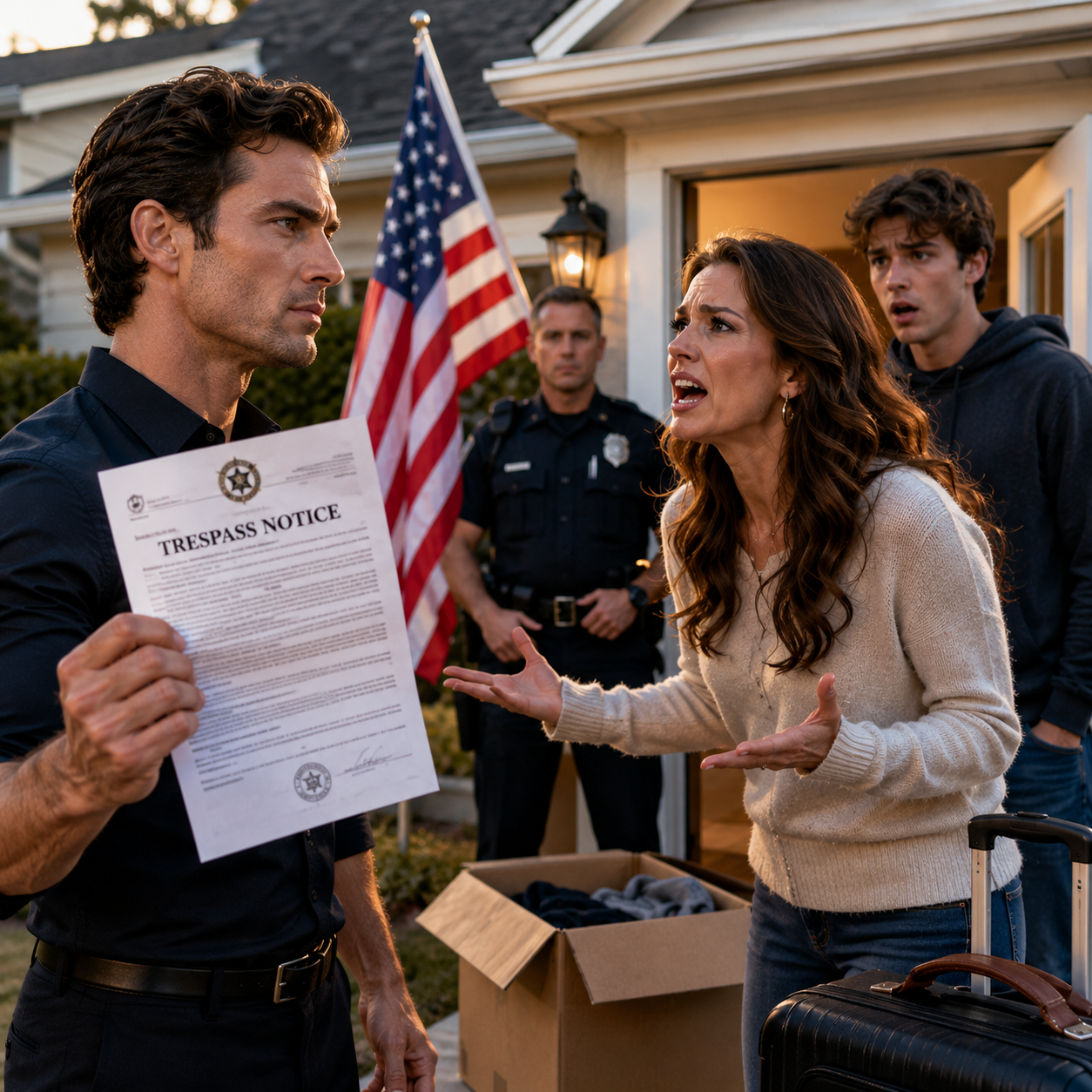
"I will not be changing it back," I continued, setting my mug down. "And that’s not all. We are finished. The trust is gone. I want you to pack your things. I want you out of my house."
The screaming intensified. She called me every name in the book. She accused me of being cruel, of being abusive, of trying to ruin her life—all over a vacation she felt entitled to, even after she had shredded the foundation of our relationship. I let her scream until she was hoarse. I didn't engage. I didn't defend myself. I just repeated the facts.
"You have twenty-four hours to pack your belongings and leave. After that, I will be changing the locks."
She realized I was serious. The rage morphed into a frantic panic. "Leave? Go where? I live here!"
"No," I said coldly. "You have been staying in my house. There is a difference. That arrangement is now over. I suggest you start making calls."
She stood there, mouth opening and closing like a fish out of water. Then, she pulled out her phone and called her best friend, Jessica. Between sobs, she explained that I was "kicking her out" and "stealing her trip." She, of course, omitted the reason why.
Jessica arrived an hour later. She swept into the house like a storm, arm draped around a sobbing Sandra, glaring at me with eyes full of venom. She didn't say a word to me; she just guided Sandra to the bedroom to start throwing clothes into suitcases.
I spent the rest of the evening in my office, listening to the muffled sounds of their whispering and the dragging of luggage. I knew this wasn't the end. I knew the storm was just moving from the inside of my house to the outside world.
The twenty-four hours were almost up. As I listened to them slamming drawers in the other room, I felt a strange sense of anticipation. I was ready for whatever came next, but I realized with a sudden jolt that they weren't just leaving—they were already planning their next move to destroy me



![[FULL STORY] My Wife Left Me With Our Newborn For Her Lover. Fifteen Years Later She Tried To Reconnect, But ...](https://social-media.rabedo.com/thumbnails/1776414803_3bafb6a5-6492-414c-9f1a-ecc4a04e88a6.png)