Evelyn graduating from college.
Evelyn with her parents at charity galas.
Evelyn in Paris.
Evelyn on a yacht.
Evelyn, Evelyn, Evelyn.
Not one photo of us together.
There had been a dozen chosen. I knew because I had sent them myself. Our first Christmas. Our engagement trip to Maine. The picture my mother took of Evelyn laughing in my kitchen with flour on her black sweater because she had tried to help make pierogi and failed miserably. That was my favorite one.
Gone.
In their place, at the center of the display, sat a large framed photo of Evelyn alone in her wedding dress from the bridal portrait shoot I had not been allowed to attend.
Under it, a small engraved plaque read:
Evelyn Hartwell
A New Chapter in the Hartwell Legacy
Something cold settled in my chest.
“Where are the photos I sent?” I asked.
Marcy looked genuinely uncomfortable. “They were removed from the final layout.”
“By Evelyn?”
“By her mother.”
I let out a slow breath and looked toward the gardens where, in a few hours, guests would be sipping champagne and congratulating my bride on the beautiful event built around her.
My phone buzzed.
Evelyn.
Where are you? Hair team is asking if you saw the new program. Please don’t make a thing about it today. It looks cleaner this way.
Cleaner.
That was the word she used.
Not accidental. Not sorry. Cleaner.
I typed back slowly.
My name is missing from our wedding.
Three dots appeared.
Then disappeared.
Then appeared again.
Daniel, please. It’s just design. Nobody cares about that stuff.
I looked around at the signs, the programs, the photos, the monogrammed napkins with only her initials, and the cocktail menu named after her favorite places.
Nobody cares.
I did.
And I was starting to understand that was the problem.
Before I could respond, I heard heels clicking across the marble floor. Evelyn’s mother, Caroline Hartwell, entered like she owned the oxygen in the room. She wore a pale blue silk robe with “Mother of the Bride” embroidered on the back and had a champagne flute in one hand even though it was not yet eight.
Behind her came Evelyn’s younger sister, Paige, holding a garment bag and looking at her phone.
Caroline stopped when she saw me.
“Oh,” she said. “Daniel. You’re early.”
“It’s my wedding.”
She smiled without warmth. “Of course.”
I held up the program. “Why is my name not on this?”
Caroline glanced at it like I had asked why dust existed. “The designer felt the layout was stronger centered around Evelyn.”
“The designer or you?”
Her smile hardened.
“Today is about Evelyn,” she said. “Every bride deserves one day where she feels like the center of the world.”
“I’m not asking to be the center of the world. I’m asking why my own wedding doesn’t mention me.”
Paige snorted without looking up from her phone. “Men never care until they think they’re being ignored.”
I ignored her.
Caroline took one step closer. “Daniel, I know you’re not used to events like this, but there are traditions in families like ours. The bride’s family hosts. The bride’s family sets the tone. The groom supports.”
“The groom pays too,” I said.
The words came out quieter than I expected.
Caroline’s eyes flickered.
There it was.
The thing they all knew but preferred not to say out loud.
When Evelyn and I got engaged, Richard had insisted he wanted to “handle the wedding like a father should.” Two months later, Evelyn came to me crying because her parents were “temporarily illiquid.” Their line of credit was frozen. A development project had stalled. Vendors were demanding deposits.
She said she was embarrassed.
She said the wedding was already announced.
She said canceling would humiliate her family.
I asked what she needed.
She cried harder and said she hated asking.
I transferred the first deposit that afternoon.
Then another.
Then I bought out the venue contract when Richard’s check bounced.
Then I paid the florist, the caterer, the band, the security deposit, the luxury transportation, the bridal suite, the guest block guarantee, and the legal fee for the judge who would officiate privately before the reception.
But Caroline still told everyone the Hartwells were hosting.
I let it happen because Evelyn asked me to.
“My father will pay you back after the Weston project closes,” she said.
I didn’t care about being paid back. I cared that she looked ashamed when she said it, and I wanted to protect her.
I should have paid more attention to what she was ashamed of.
Not needing help.
Being seen needing help from me.
Caroline lowered her voice. “This is not the time to discuss money.”
“No,” I said. “Apparently it’s the time to erase me from something I paid for.”
Her face went still.
Then she leaned in close enough that Marcy politely stepped away.
“Listen to me,” Caroline said softly. “Evelyn has dreamed of this day since she was a little girl. You can either be generous and let her have it, or you can prove every doubt this family had about you.”
“Every doubt?”
“That you don’t understand class. That you think money makes you equal. That you are marrying above your station and cannot handle the pressure.”
I stared at her.
For a moment, the room was so quiet I could hear staff rolling silverware carts in the hallway.
Then I laughed once, not because anything was funny, but because something inside me finally cracked cleanly instead of bending.
“Does Evelyn know you talk to me like this?”
Caroline smiled.
“Evelyn knows who she is.”
That was the moment Evelyn entered.
She stood at the far end of the terrace in a white satin robe, her hair pinned halfway up, makeup half-done, still more beautiful than she had any right to be at eight in the morning while destroying me.
“Mom,” she said sharply.
Caroline straightened.
Evelyn looked at me, then at the program in my hand.
Her expression shifted from irritation to panic to control in less than one second.
“Daniel,” she said. “Come upstairs with me.”
“No. We can talk here.”
Her eyes flashed. “Do not do this in front of people.”
“Do what?”
“Make today about your ego.”
The words landed harder than Caroline’s insults.
“My ego?” I asked.
“Yes,” Evelyn said, lowering her voice but not enough. “Your ego. You saw some stationery and decided it means I don’t love you.”
“You removed my name.”
“It’s aesthetic.”
“You removed our photos.”
“My mother thought the family display looked more cohesive.”
“You changed the welcome sign.”
“It’s just a sign.”
“You replaced the monogram with only your initials.”
“Because E.H. looked better than some crowded combined logo.”
“Some crowded combined logo,” I repeated.
Evelyn rubbed her forehead. “God, Daniel. Can you please not be small today?”
Behind her, Paige smirked.
Small.
I had been called practical, lucky, rough around the edges, too quiet, too serious, not their world, not their type, not exactly what they expected. But “small” felt different.
Small was not about money.
Small was about place.
They had assigned me one.
I looked at Evelyn and said, “Do you want to marry me today?”
Her mouth opened, then closed.
“Don’t be dramatic.”
“That’s not an answer.”
“Of course I want to marry you.”
“Then why does this wedding look like I’m not part of it?”
Her jaw tightened. “Because my family has a reputation, Daniel. Because people are coming today who have known us for generations. Because every detail reflects on us. Because sometimes I need one day where I don’t have to explain you.”
The sentence came out fast, like she had not meant to say it, but once it existed, no one could hide from it.
Marcy froze beside the floral table.
Caroline looked annoyed, not shocked.
Paige’s smile faded because even she understood Evelyn had gone too far.
I stared at my fiancée.
“You don’t have to explain me?”
Evelyn’s eyes filled with something that almost looked like regret. “That’s not what I meant.”
“It’s exactly what you meant.”
“No. I meant…” She exhaled shakily. “I meant you can be intense. And direct. And sometimes you don’t blend.”
“With what?”
“With this,” she snapped, gesturing around the venue. “With my life.”
For three years, I had mistaken invitation for acceptance.
I thought she was bringing me into her life because she loved me.
Now I understood she had been trying to edit me until I fit the frame.
When I did not, she removed the caption.
I put the program down on the table.
“I’m not marrying someone who is embarrassed of me.”
Evelyn went pale.
Caroline made a sound like a laugh. “Don’t be absurd.”
“I’m serious.”
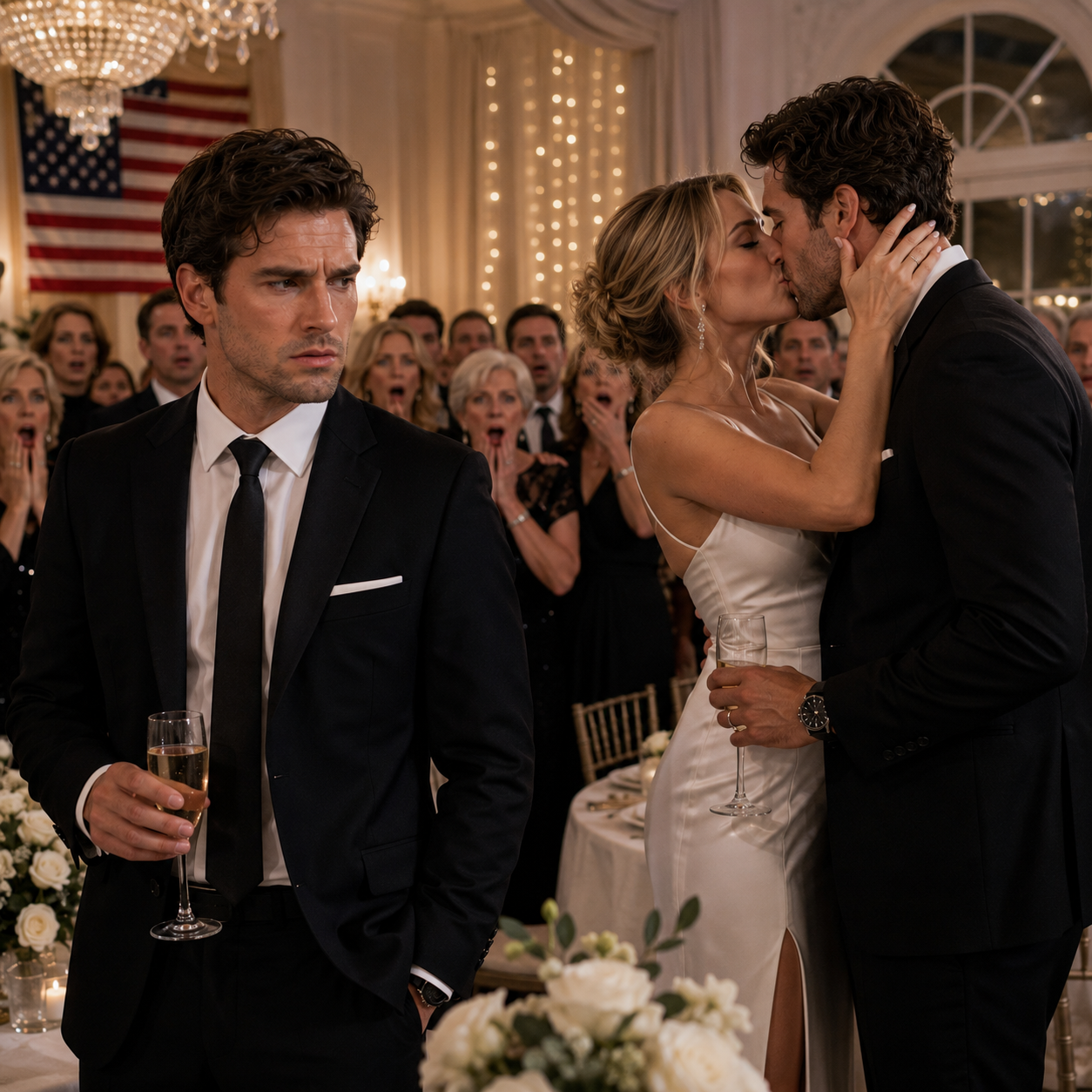
“No, you’re emotional,” Caroline said. “And you are going to calm down, put on your tuxedo, stand where you are supposed to stand, and not humiliate my daughter in front of three hundred people.”
I looked at Evelyn.
Say something, I thought.
Tell her to stop.
Tell me I matter more than the room.
Tell me I am not insane for wanting my name beside yours.
Evelyn swallowed.
“Daniel,” she said carefully, “today is too important for this.”
And that answered everything.
I nodded once.
Then I took out my phone and called my lawyer.
His name was Adrian Cole, and he was the kind of attorney who answered calls at unfortunate hours because half his clients built things for a living and disasters did not respect business schedules.
“Daniel?” he said after two rings. “You okay?”
“No,” I said. “I need you at the Emerson Grand as soon as possible.”
There was a pause. “Wedding issue?”
“You could say that.”
“Are you getting married today?”
I looked at Evelyn.
“No.”
Her face changed completely.
“Daniel,” she whispered.
Caroline stepped forward. “You hang up that phone.”
I turned away from her.
Adrian’s voice became crisp. “Do not say more in front of anyone. I’m on my way. Do not sign anything. Do not allow anyone access to your cards, business accounts, or personal safe. If there are contracts under your name, collect copies.”
“There are,” I said.
“Then get the venue coordinator in writing. I’ll be there in thirty.”
I ended the call.
For a moment, nobody moved.
Then Evelyn rushed toward me.
“You’re not serious,” she said. “You’re angry. I get it. I’m sorry. We’ll fix the programs.”
“This is not about programs.”
“I said I’m sorry.”
“No, you said I was small.”
Her eyes shone. “I was stressed.”
“You said you didn’t want to explain me.”
“I didn’t mean it like that.”
“How did you mean it?”
She looked at her mother.
Just a quick glance.
But I saw it.
I saw the instinct.
Even then, even with our wedding falling apart in front of us, she still looked to Caroline before answering me.
I took off the watch Evelyn had given me for our engagement party and placed it on the table beside the program.
“I’m going to my suite to collect my things.”
Caroline’s voice turned icy. “If you walk out now, you will destroy Evelyn.”
I stopped.
“No,” I said. “You trained her to think love was a stage. I’m just refusing to be furniture on it.”
I walked out before anyone could answer.
The groom’s suite was on the second floor, overlooking the gardens. My tux hung from the wardrobe door. My shoes were polished under the bench. My vows sat folded on the desk, written in my handwriting after three sleepless nights because I wanted them to be worthy of her.
I picked them up.
For a second, my throat closed.
I had written about the night Evelyn came to my mother’s hospital room with soup after Mom’s surgery and sat there for four hours listening to stories about my father. I had written about how she cried during thunderstorms because she was terrified of lightning but pretended she wasn’t. I had written about wanting to build a life where she never had to perform to be loved.
I had written vows for a woman who might have existed once.
Or maybe I had invented her because I needed to.
I folded the paper again and put it in my pocket.
Then I opened my laptop.
Adrian had taught me years ago to keep records clean. Contracts, payments, ownership documents, communications. Not because I was paranoid, but because business had a way of revealing character under pressure.
The Emerson Grand venue contract was under my company’s event subsidiary because the venue required proof of liquidity after Richard’s payment failed. The catering contract was under my name. The floral contract had been transferred to me. The band. The valet service. The private security. The alcohol license deposit. Even the temporary event insurance policy was mine.
The bridal suite and guest block were originally reserved under Richard’s name, but after two declined payments, I had signed the guarantee.
Everything everyone would enjoy that day existed because my name was on it.
The irony almost made me laugh.
My name did not matter on the wedding day.
Except it was the only name holding the day together.
I forwarded the documents to Adrian, then to Marcy after calling her upstairs.
She arrived quietly, closed the door behind her, and looked at me with the tired compassion of someone who had seen too many rich family implosions before lunch.
“I’m canceling the ceremony,” I said.
She nodded slowly. “I understand.”
“I need to know what happens legally if I cancel the reception.”
“As the contracting party, you can cancel services. But at this hour, most payments are non-refundable.”
“I don’t care about refunds.”
She studied me. “Are you sure?”
“No. But I’m sure I’m not paying for a party celebrating a woman who erased me.”
Marcy’s face softened. “Then we need to move quickly.”
I told her Adrian was coming. She said she would prepare copies of the contracts and pause vendor execution until legal instruction. The staff would remain professional. The guests had not started arriving yet except close family.
“Do you want security nearby?” she asked.
“Yes.”
I hated how fast I answered.
By eight-thirty, my best man, Lucas, arrived.
Lucas had been my friend since we were nineteen and stupid enough to think sleeping in a truck during winter builds character. He now managed operations for my company and had no patience for drama unless it involved machinery breaking down.
He stepped into the suite, saw my face, and said, “Who died?”
“The wedding.”
He blinked once. “Good. I never liked her mother.”
I almost smiled.
Then I handed him the program.
He read it.
His expression went flat.
“Oh, hell no.”
“It gets worse.”
“It always does with these people.”
I told him everything. The signs. The photos. The conversation. Evelyn’s words.
Lucas listened without interrupting, then picked up my tux jacket and threw it over a chair.
“Good,” he said.
“Good?”
“Yeah. Better to find out before vows than after kids.”
That simple sentence hit harder than anything else.
Before vows.
Before kids.
Before my life became legally tied to someone who thought my presence required explanation.
At eight-forty, Adrian arrived in a charcoal suit, carrying a leather folder and wearing the expression he used when someone had made his day inconvenient in an interesting way.
He read the contracts at the desk while Lucas paced.
Marcy waited by the door.
Adrian looked up after ten minutes. “Daniel, you control the event.”
“I figured.”
“No. I mean completely. The venue, food, bar, entertainment, security, guest block guarantee, event insurance, and private civil officiant fee. Her family has no contracting authority here except the bridal styling team and photographer, both paid separately through her mother.”
“So I can cancel.”
“You can. But we need to do it in a way that reduces exposure. The cleanest approach is to cancel the ceremony immediately and release the reception vendors with written notice. Offer guests access to refreshments already prepared for the next hour as a courtesy, then end the event.”
Lucas muttered, “Better than they deserve.”
Adrian continued. “There is one more issue.”
“There always is.”
He tapped a document. “You wired money to Hartwell Holdings three months ago.”
I stiffened.
Evelyn had asked me to help with a “temporary family liquidity problem” tied to the Weston project. Richard had called it a bridge loan. I had agreed only after Adrian drafted a promissory note secured against a parcel of commercial property Richard owned downtown.
The amount was one million two hundred thousand dollars.
I did not tell many people that.
Not even Lucas knew the full number.
“The note matured yesterday,” Adrian said.
I stared at him. “Yesterday?”
“Yes. You asked me to set it before the wedding so repayment would not become marital property confusion after the ceremony.”
I had forgotten. Not completely, but emotionally. In the chaos of wedding planning, I assumed Richard would ask for an extension if needed.
“He hasn’t paid,” Adrian said.
“No.”
“Then he is in default.”
Lucas stopped pacing.
“What does that mean?” Marcy asked softly.
“It means,” Adrian said, “if Daniel enforces the note, Hartwell Holdings has ten business days to cure, or Daniel can move against the collateral.”
I sat down slowly.
The downtown property.
The one Richard had bragged about at every dinner.
The one he called “the future of the Hartwell legacy.”
The one he said would restore the family.
My stomach turned.
Because suddenly I understood Caroline’s panic. The wedding was not just a wedding. It was a performance for creditors, investors, donors, and social circles. It was proof the Hartwells were still untouchable. Evelyn marrying me allowed them to access my money without admitting they needed it.
But if I walked away, the performance collapsed.
And if I enforced the note, so did the illusion.
Adrian closed the folder. “You need to decide how far you want to go today.”
Before I could answer, shouting erupted in the hallway.
Evelyn’s voice.
Then Caroline’s.
Then a security guard saying, “Ma’am, you cannot enter without permission.”
The door flew open anyway.
Evelyn stormed in wearing her robe, hair half-finished, eyes red and furious. Caroline followed behind her, and Richard came last, already dressed in a morning suit, his face dark with controlled anger.
“You brought a lawyer?” Evelyn said.
“You brought a wedding without my name,” I replied.
Her face crumpled for half a second, but Caroline stepped in front of her.
“This has gone far enough,” Caroline said. “Guests will begin arriving in ninety minutes.”
Adrian stood. “Mrs. Hartwell, I’m Adrian Cole, counsel for Mr. Pierce. This event is being canceled.”
Richard laughed once. “No, it isn’t.”
Adrian looked at him calmly. “Yes, it is.”
“You have no idea who you’re dealing with.”
“I’m dealing with individuals who do not appear to be parties to the controlling venue contract.”
Richard’s expression shifted.
Just slightly.
Adrian noticed.
So did I.
Caroline pointed at me. “Daniel, tell him to stop.”
“No.”
Evelyn moved closer. “Please. We can talk after the ceremony.”
“After?”
“Yes. We’ll fix this privately. But if you cancel now, you humiliate me in front of everyone.”
I looked at her. “You humiliated me before they even arrived.”
“That is not the same thing.”
“Why? Because no one important saw it?”
She flinched.
Richard’s voice cut through the room. “Enough. Daniel, you are upset. I understand. Weddings are emotional. But men handle emotional situations with discipline. You will go downstairs, take your place, and this will be settled like family.”
“Family?” I asked.
Richard adjusted his cuffs. “Yes. Family.”
“Was I family when you let your wife remove my name from the wedding?”
He frowned. “That was a design decision.”
“Was I family when you told people you were paying for this?”
His eyes hardened.
Caroline said, “This obsession with credit is vulgar.”
I turned to her. “No, Caroline. What’s vulgar is spending my money while pretending I’m too embarrassing to name.”
Evelyn whispered, “Daniel, stop.”
But I could not stop anymore.
Three years of swallowed insults sat in my throat like stones.
I looked at Richard. “You told everyone this was your gift to Evelyn.”
He said nothing.
“You let me cover the venue when your check bounced. You let me cover the caterer. The florist. The bar. The band. You asked for a bridge loan and put up the downtown property as collateral. Then your wife and daughter erased my name from the ceremony because I didn’t fit the picture.”
Richard’s face turned red.
Caroline looked at him sharply. “What loan?”
The room went silent.
Evelyn stared at her father. “Dad?”
Richard’s mouth tightened. “This is not the place.”
Adrian said, “The promissory note matured yesterday.”
Caroline’s champagne-glass hand lowered slowly.
“Richard,” she said.
He ignored her and looked at me with pure hatred.
“You wouldn’t dare.”
That was the final thread snapping.
“I wasn’t going to,” I said. “Not today. Not like this. But you keep mistaking kindness for weakness.”
Richard stepped toward me. Lucas moved instantly between us.
Security appeared in the doorway.
Marcy’s voice was calm but firm. “Mr. Hartwell, I need you to step back.”
Richard looked around at all of us, realizing for the first time that the room did not obey him.
Evelyn began crying.
Not soft tears. Angry, frightened tears.
“Daniel, please,” she said. “You can’t do this to me.”
I looked at her carefully.
Even then, it was still about what I was doing to her.
Not what she had done.
Not what her family had done.
Not what today revealed.
Just her consequences.
I took a breath.
“I loved you,” I said. “I was ready to build a life with you. I was ready to stand beside you in front of everyone we knew and promise you everything I had. And you spent the morning proving you only wanted the parts of me you could use without showing.”
Her face collapsed.
“I’m sorry,” she said.
Maybe she meant it.
Maybe she was sorry for hurting me.
Maybe she was sorry the hurt had become expensive.
I did not know anymore.
Adrian turned to Marcy. “Please proceed with the cancellation notice.”
Caroline gasped. “You cannot do this.”
Marcy glanced at me.
I nodded.
She left.
The next hour was the most surreal hour of my life.
Guests began arriving to find staff calmly redirecting them to the terrace for coffee, pastries, and a brief announcement. The string quartet stopped rehearsing. The florist quietly removed delicate aisle markers. The officiant, Judge Malcolm Whitaker, arrived early and was taken into a side room with Adrian.
Evelyn locked herself in the bridal suite.
Caroline called vendors and screamed until they redirected her to Marcy.
Richard disappeared for twenty minutes, then returned with two men I recognized from his business circle. He tried to pressure the venue manager into continuing the reception under “Hartwell authority.” The manager handed him a copy of the contract with my signature on it and said she could not accept instructions from non-contracting parties.
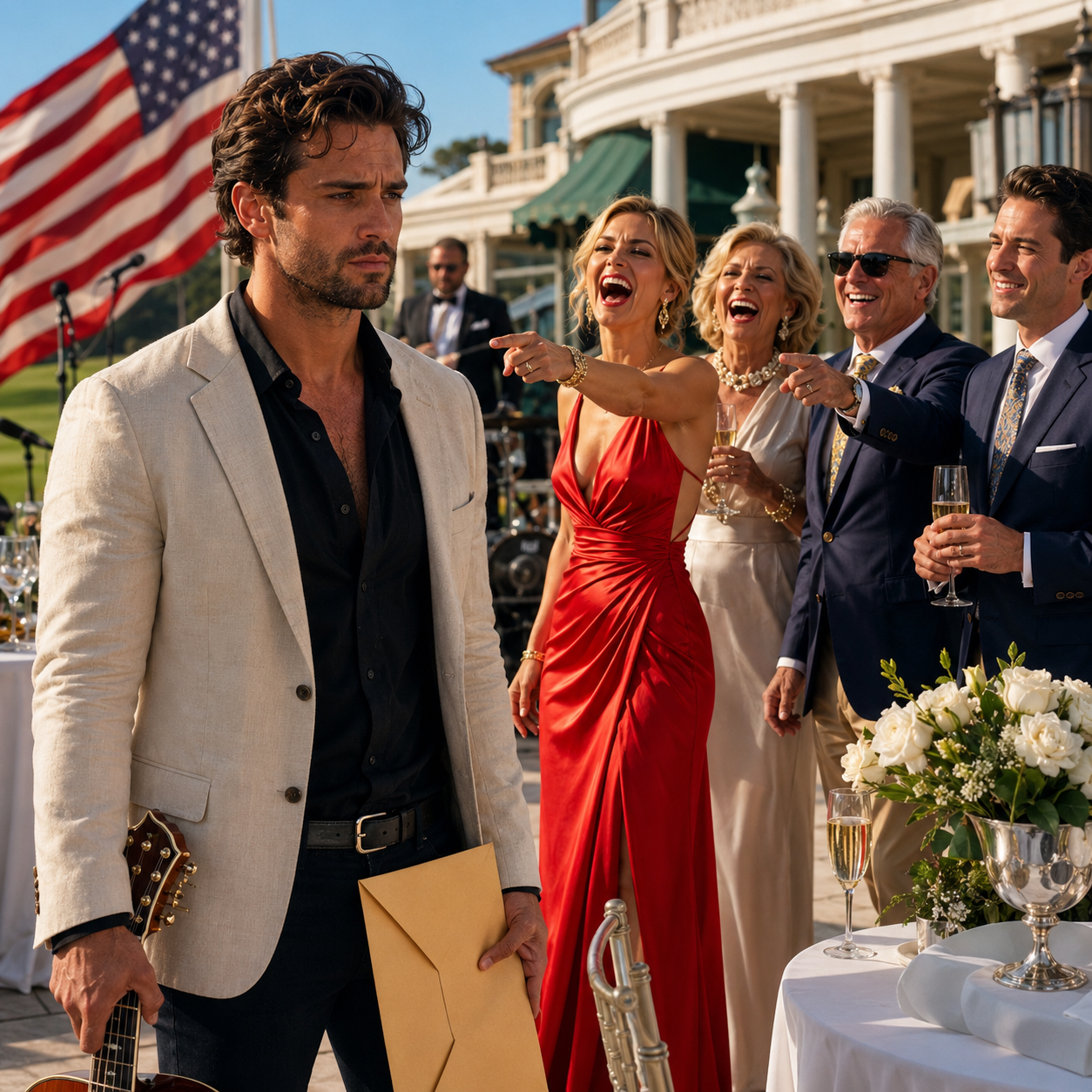
Paige posted something vague online about “certain people showing their true colors.”
Lucas showed it to me.
I told him to stop looking.
At ten-fifteen, Adrian told me Richard had threatened to sue for reputational damages.
“For canceling a wedding he didn’t pay for?” I asked.
“Yes.”
“Can he?”
“People can sue for anything. Winning is different.”
At ten-thirty, Evelyn came to my suite alone.
Her makeup was finished now, which made the red around her eyes look even more dramatic. She wore the wedding dress. Full lace sleeves, fitted bodice, long train. I had not seen it before.
She looked stunning.
And for one brutal second, I imagined the day we were supposed to have.
Music. Vows. Her smiling at me through tears. My mother crying in the front row. Lucas pretending not to. A first dance. A future.
Then I saw the program on the table.
Only her name.
The fantasy died again.
Evelyn closed the door behind her.
“I sent everyone away,” I said.
“I know.”
She stood near the window, gripping her hands together.
“I made mistakes,” she said.
I stayed quiet.
“I let my mother push too much. I should have stopped her. I should have noticed how it made you feel.”
“You noticed.”
Her eyes lifted.
I said, “You noticed. You just didn’t think it mattered enough to fight her.”
She swallowed.
“That’s fair.”
It was the first honest thing she had said all morning.
She came closer.
“I was scared,” she whispered. “My family is falling apart. Dad’s deals are bad. Mom is pretending everything is fine. Everyone keeps looking at me like I’m supposed to hold the image together. And you…” She wiped under her eye carefully. “You were the one solid thing. You always fix everything. I think I started treating you like you would absorb anything.”
I wanted those words to help.
They did not.
Because she still understood love as something that could be strained until it broke, then mourned only when it no longer held.
“You told me you didn’t want to explain me,” I said.
Her lips trembled.
“I hate myself for saying that.”
“Did you mean it?”
She looked away.
That was enough.
“I didn’t mean it the way it sounded,” she said weakly.
“What way did you mean it?”
She closed her eyes.
“I meant… with them, everything is presentation. They don’t understand you. They don’t know how to talk to someone who doesn’t need their approval. And sometimes it made me feel caught between you and them.”
“So you chose them.”
“I thought after we were married, it would change.”
“No,” I said softly. “After we were married, I would have been trapped inside it.”
She began crying again.
This time quietly.
“What happens now?” she asked.
“We don’t get married.”
She nodded like the words physically hurt.
“And my dad?”
“That depends on whether he repays what he owes.”
“Daniel…”
“I’m not discussing his debt with you.”
“He’ll lose everything.”
“He pledged collateral.”
“He didn’t think you’d enforce it.”
I almost laughed.
“There it is again.”
“What?”
“That Hartwell family belief that my signature counts when you need money, but my dignity doesn’t count when you have an audience.”
She covered her mouth.
I softened despite myself.
Not enough to go back.
But enough to stop wanting to hurt her more than the truth already had.
“Evelyn, I don’t want revenge. I want out.”
She nodded.
Then she looked at me in the dress I had been waiting months to see and said, “Did you love me this morning?”
The question nearly broke me.
“Yes,” I said. “That’s why this hurts.”
She stood there for another moment, then turned and left.
I did not see her again that day.
By noon, the wedding had become gossip across every social circle in the county. Guests received polite messages saying the ceremony had been canceled due to private circumstances. Some stayed long enough to drink coffee and whisper near the fountains. Others left immediately, grateful for a story they could pretend they were too classy to repeat.
My mother arrived after most guests had gone.
She was sixty-eight, five feet tall, and had the kind of quiet strength that made loud people nervous. She found me in the terrace garden, sitting alone under a white canopy while staff dismantled flowers behind me.
She sat beside me without asking what happened.
For a while, neither of us spoke.
Then she took my hand.
“Your father would be proud,” she said.
That did it.
I leaned forward, covered my face, and cried for the first time that day.
Not loudly. Not dramatically. Just enough that my chest finally admitted it had been holding more than anger.
My mother rubbed my back like I was eight years old again.
“I feel stupid,” I said.
“You’re not stupid for loving someone.”
“I ignored so much.”
“Yes,” she said gently. “You did.”
I laughed through my tears because only my mother could comfort me by refusing to lie.
“She was ashamed of me,” I said.
“No, sweetheart. She was ashamed of herself. People like that just hand the feeling to someone else.”
I looked at the empty chairs facing the altar that would never be used.
“I paid for all of this.”
“I know.”
“And my name wasn’t even on the sign.”
Mom squeezed my hand.
“Then maybe God saved you with stationery.”
Despite everything, I laughed.
Two weeks later, Richard Hartwell sued me.
Not for the canceled wedding directly. Adrian predicted correctly that would be too embarrassing. Instead, Hartwell Holdings filed an emergency petition claiming the promissory note tied to the downtown property was “coercive,” “predatory,” and signed under “emotional pressure” connected to my relationship with Evelyn.
The filing implied I had used my engagement to gain control over Hartwell assets.
It called me opportunistic.
Exploitative.
A social climber.
I read the petition in Adrian’s office and felt something inside me go very still.
“They’re really doing this,” I said.
Adrian leaned back in his chair. “They’re desperate.”
“Can they win?”
“No. But they can make noise.”
“Then we answer quietly.”
He smiled slightly. “That is my favorite kind of answer.”
We produced everything.
The bounced venue check.
The email from Richard requesting short-term financing.
The promissory note negotiated by both attorneys.
The collateral agreement.
The repayment deadline.
The vendor contracts proving I had funded the wedding after Hartwell funds failed.
The messages from Evelyn asking me not to tell people because her parents were embarrassed.
And, because Adrian was better at his job than most people were at anything, we also subpoenaed communications related to the wedding redesign after Caroline’s assistant refused to provide them voluntarily.
That was how we found the email.
Sent from Caroline to Evelyn two nights before the wedding.
Subject: Final Visual Corrections
The body read:
I know Daniel will fuss, but we cannot have his name dominating the day. This is still a Hartwell event. People need to remember who Evelyn is, not focus on the man funding the inconvenience. His name does not matter on the wedding day. Once the marriage is done, everything will be in place anyway.
Evelyn replied:
I’ll handle him if he notices. Just make sure the programs look elegant.
I read that email three times.
Then I put it down and walked out of Adrian’s conference room.
Lucas followed me into the hallway.
“Dan.”
“I’m fine.”
“You’re not.”
“I will be.”
He leaned against the wall beside me.
For weeks, I had been haunted by the possibility that I overreacted. That maybe if I had waited, talked privately, demanded an apology, the wedding could have been saved. Grief has a cruel way of making you question the moment you protected yourself.
That email ended the questioning.
His name does not matter on the wedding day.
Once the marriage is done, everything will be in place anyway.
Everything.
The word sat there like a loaded gun.
“What do you think she meant?” Lucas asked.
“I don’t know.”
But I did know enough.
After marriage, Evelyn would have had access. Socially. Financially. Legally in ways that could be fought, yes, but only after damage. Her family thought the ceremony was the finish line. Once I was legally tied to her, embarrassment could become leverage.
Adrian stepped into the hallway behind us.
“There’s more,” he said.
I turned.
He held another document.
“Richard’s attorneys just requested mediation before the hearing.”
“When?”
“Friday.”
“No.”
Adrian’s eyebrows lifted.
I said, “We go to court.”
The hearing took place six weeks after the canceled wedding in a county courthouse that smelled faintly of floor polish and old paper. Evelyn was there.
I had not expected her to be.
She sat behind her parents in a navy dress, hair pulled back, no jewelry except small pearl earrings. She looked thinner. Tired. Less polished around the edges.
Caroline sat rigidly beside Richard, wearing cream and resentment.
Richard looked like a man who had slept badly for a month and blamed the mattress.
Judge Whitaker presided.
The same retired judge who had been scheduled to officiate our wedding had recused himself from the private ceremony mess immediately, but the actual civil case landed before Judge Elaine Morris, a woman in her late fifties with silver hair, sharp glasses, and no visible patience for theatrics.
Richard’s attorney spoke first.
He painted a picture of a powerful businessman who became romantically involved with a vulnerable daughter of a respected family, then used that relationship to insert himself into family finances. He said the note had been signed under social pressure. He suggested I had timed enforcement vindictively after “an emotionally charged private disagreement.”
Adrian did not object much.
He let the story build.
Then he stood.
“Your Honor,” he said, “this case is not complicated. Mr. Hartwell requested a commercial bridge loan. He was represented by counsel. He offered collateral. He agreed to a repayment schedule. He defaulted. The plaintiff now asks this court to treat embarrassment as a legal defense.”
Judge Morris looked over her glasses.
That was the first time I saw Caroline’s mouth tighten.
Adrian presented the documents one by one. The loan request. The signed note. The attorney correspondence. The collateral agreement. The default notice.
Then Richard’s attorney made the mistake of saying, “Mr. Pierce’s role in the family event shows the blurred nature of these transactions.”
Judge Morris looked up. “Family event?”
“The wedding, Your Honor.”
Adrian said, “We are prepared to address that if opposing counsel intends to make it relevant.”
The judge turned to Richard’s attorney. “You opened the door. Walk through carefully.”
He should have stopped.
He did not.
He claimed the canceled wedding showed my “volatile emotional state” and “desire to punish the Hartwell family.”
That was when Adrian introduced the vendor contracts.
One after another.
Venue: Daniel Pierce.
Catering: Daniel Pierce.
Event insurance: Daniel Pierce.
Band: Daniel Pierce.
Valet: Daniel Pierce.
Security: Daniel Pierce.
Guest block guarantee: Daniel Pierce.
Then came the emails about the sign, the programs, the removed photos.
Caroline’s face turned white.
Evelyn stared at the table.
Richard whispered something angrily to his lawyer.
Judge Morris read silently for a long moment.
Then she looked up.
“Mrs. Hartwell,” she said.
Caroline stiffened. “Yes, Your Honor?”
“Did you write this email?”
Caroline’s attorney started to stand, but the judge held up one hand.
“It is already admitted. I am asking whether she disputes authorship.”
Caroline swallowed. “No.”
The judge read aloud, not theatrically, just clearly enough for the words to fill the courtroom.
“His name does not matter on the wedding day. Once the marriage is done, everything will be in place anyway.”
Nobody moved.
Judge Morris looked from Caroline to Richard, then to Evelyn, then finally back to the contracts spread before her.
Then she asked the question that made the entire room go silent.
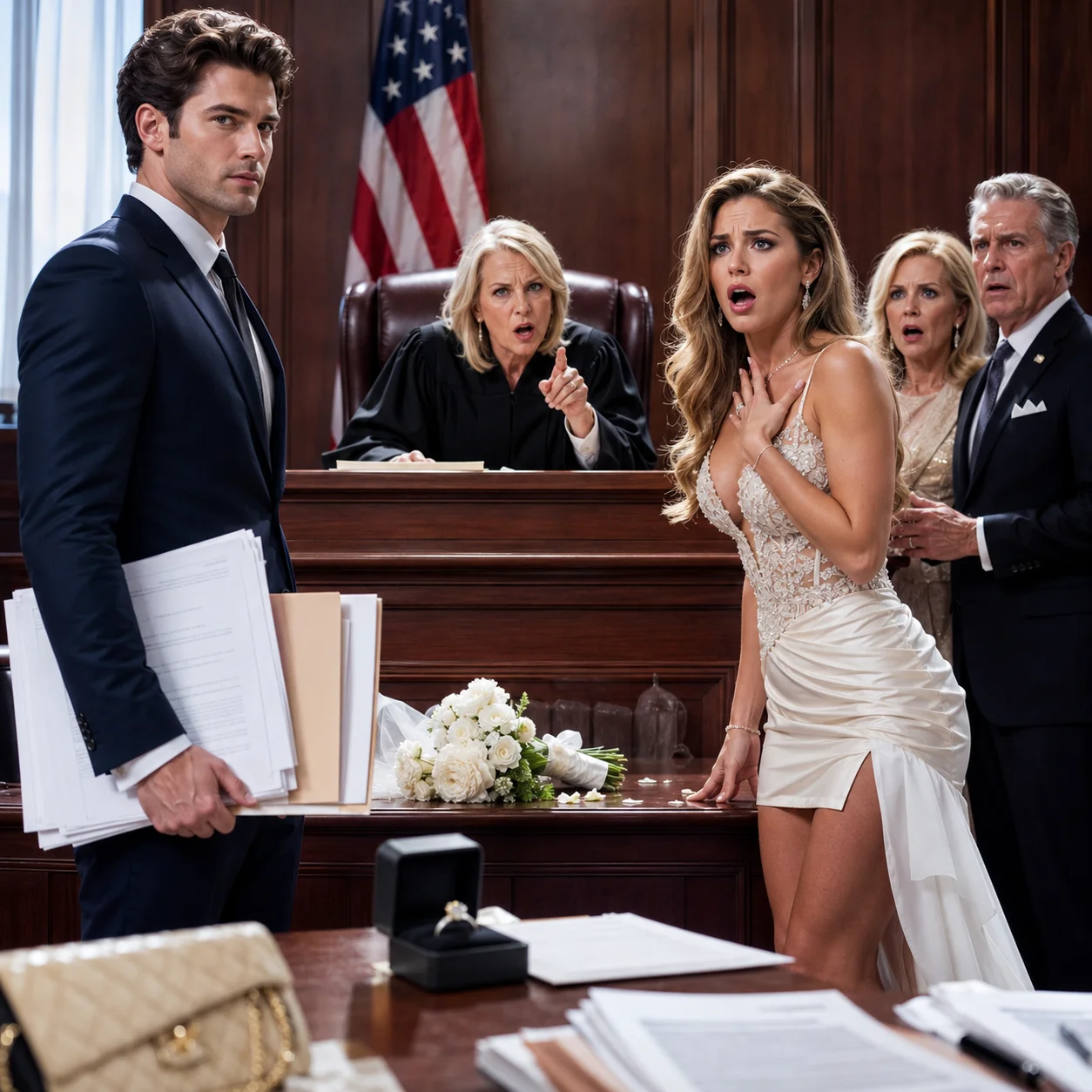
“If Mr. Pierce’s name did not matter on the wedding day, Mrs. Hartwell, why was everything in his?”
Caroline opened her mouth.
No sound came out.
Richard looked down.
Evelyn closed her eyes.
The judge waited.
There are silences that feel empty, and there are silences that feel like judgment has already happened before anyone speaks. This was the second kind.
Caroline finally said, “It was a family matter.”
Judge Morris’s expression did not change.
“It appears it was Mr. Pierce’s matter whenever payment was due.”
A murmur moved through the few people in the gallery.
The judge struck her gavel once.
“Quiet.”
Richard’s attorney tried to recover, but the damage was done. The court denied the emergency petition. The promissory note stood. The default process could proceed according to its terms. Judge Morris also warned Richard’s counsel that future filings attempting to reframe documented commercial obligations as romantic retaliation would be viewed skeptically.
It was not dramatic in the way movies make courtrooms dramatic.
No one screamed.
No one confessed.
No one fainted.
But when the judge left the bench, Richard Hartwell looked smaller than I had ever seen him.
Outside the courtroom, Evelyn approached me.
Adrian stepped close, but I shook my head.
“It’s okay.”
Evelyn stopped a few feet away.
For a long moment, she said nothing.
Then she whispered, “I didn’t know about that email until discovery.”
I looked at her.
“My reply,” she said quickly. “I know how it looks. I know what I wrote. But I didn’t understand what Mom meant by everything being in place. I thought she meant the wedding would be over, and everyone would calm down.”
“Evelyn.”
Her eyes filled. “I was wrong. About so much. I should have defended you. I should have put your name back. I should have chosen you before it ever got that far.”
“Yes,” I said.
The word was not cruel.
Just true.
She nodded and wiped her cheek.
“My father lied to us too,” she said. “About the debt. About how bad things were. Mom knew more than I did. But I still helped make you invisible.”
I did not answer.
Because forgiveness is not always a door you can open just because someone finally knocks correctly.
“I’m sorry,” she said.
This time, it sounded different.
No audience. No dress. No performance. No request attached.
Just apology.
“I believe you,” I said.
Hope flickered painfully across her face.
Then I added, “But I can’t build a life where I had to be humiliated before you saw me.”
Her hope faded.
She nodded again.
“I know.”
She looked like she wanted to say more, but Caroline called her name from down the hallway. Evelyn did not turn immediately.
That was new.
Small, but new.
Finally, she said, “You deserved your name beside mine.”
I smiled sadly.
“I deserved someone who knew that before the sign was printed.”
She cried then, silently, and walked away.
Ten business days later, Richard failed to cure the default.
Adrian began foreclosure proceedings on the collateral.
Three days after that, Richard requested a settlement.
This time, he did not call me.
His attorney called mine.
The final agreement was simple. Hartwell Holdings transferred the downtown property to a holding company controlled by me in exchange for release of the remaining debt and a confidentiality clause limited to financial terms, not conduct. I did not want to destroy Richard. I wanted the matter finished.
The property itself was half-vacant, poorly managed, and buried under deferred maintenance. Richard had bragged about it like a crown jewel, but the building had leaking windows, outdated electrical, and tenants one rent increase away from leaving.
In another life, maybe I would have sold it.
Instead, I renovated it.
Not immediately. Not emotionally. Methodically.
My company replaced the roof, updated the fire systems, cleaned the lobby, repaired the elevators, and negotiated fair leases with local businesses Richard had ignored while chasing bigger deals. A bakery moved into the corner unit. A law clinic leased the second floor at a reduced rate. A small nonprofit took the back offices.
Six months after the wedding that never happened, I stood on the sidewalk outside the building while workers installed a new sign.
Pierce Commons.
Not because I needed my name on something.
Because for once, if my name was holding something up, I was not going to pretend it wasn’t there.
My mother came to the opening ceremony wearing the same blue dress she had bought for my wedding. Lucas gave a terrible speech about load-bearing structures and emotional plumbing. Marcy, the venue coordinator, sent flowers with a note that said, “Much better signage this time.”
I laughed when I read it.
I did not hear from Evelyn for almost a year.
Not directly.
Through mutual acquaintances, I learned she moved out of her parents’ house three months after the hearing. She took a job with a nonprofit event firm, real work this time, not family-network consulting. Paige apparently stopped posting about “loyalty” after people started asking whether loyalty included unpaid vendor bills.
Caroline withdrew from most social committees.
Richard’s reputation never fully recovered, but he did not vanish. Men like him rarely do. They shrink into smaller rooms and call it strategy.
One afternoon in late spring, almost a year after the canceled wedding, I found a letter in my office mailbox.
No return address.
But I knew Evelyn’s handwriting.
I almost threw it away.
Then I opened it.
Daniel,
I don’t expect a response. I’m not writing to reopen anything. I’m writing because I’ve spent the last year realizing how many times I asked you to make yourself smaller so I could avoid becoming braver.
That sentence alone made me sit down.
The letter was three pages.
She wrote about therapy. About seeing her mother clearly for the first time. About confronting her father over the loan. About admitting she had liked the protection my love gave her but had not protected me in return. She wrote that the worst moment of her life was not the canceled wedding, not the courtroom, not the gossip.
It was reading the program afterward and realizing that if I had gone through with it, she might have smiled through a ceremony where my absence from the page matched my place in her courage.
At the end, she wrote:
You once told me love should feel like standing beside someone, not being displayed by them. I understand that now. I am sorry I learned it too late. I hope your name is on every good thing you build.
I folded the letter and sat with it for a long time.
Then I put it in a drawer.
Not the trash.
Not a frame.
A drawer.
Some things deserve acknowledgment but not resurrection.
Two years after the wedding day, Pierce Commons became one of the most stable properties in that part of downtown. The bakery expanded. The law clinic helped hundreds of tenants and small business owners. The nonprofit hosted literacy classes in the evenings, which felt like a strange full-circle joke, considering I had met Evelyn at a literacy fundraiser.
I dated slowly.
Badly at first.
It is hard to explain to someone new that you are not afraid of commitment, just allergic to being edited.
Then I met Claire Donovan at a city redevelopment meeting where she argued with me for twenty minutes about sidewalk accessibility and then apologized only for interrupting, not for being right.
Claire was an architect. Sharp, kind, funny in a dry way that snuck up on you. The first time I took her to dinner, she asked me what I did, and when I gave my usual vague answer about logistics and construction, she narrowed her eyes.
“You own Pierce Commons, don’t you?”
I braced for the shift people sometimes made when money entered the room.
But she only said, “Your elevator contractor cut corners on the west lift. I hope you fired them.”
I laughed so hard the waiter thought I was choking.
We moved carefully.
I told her about Evelyn after three months.
Not the gossip version. The real version. The missing name. The emails. The courtroom.
Claire listened without interrupting.
When I finished, she said, “That must have made it hard to trust public promises.”
I stared at her because she had named something I had not known how to say.
“Yes,” I admitted.
She nodded. “Then we won’t make public promises until the private ones feel safe.”
That was when I started to fall in love again.
Not loudly.
Not like lightning.
Like a door being opened in a house I thought I had locked forever.
When Claire and I eventually got engaged, we planned a small wedding at my mother’s church hall. Eighty people. Barbecue from a place Lucas swore was better than anything served on china. Flowers from a local shop owned by one of the tenants at Pierce Commons. No family crest. No legacy language. No gold-lettered nonsense.
Claire designed the invitations herself.
The first proof arrived while we were eating breakfast.
She slid it across the table.
At the top, in clean black lettering, it said:
Claire Donovan and Daniel Pierce invite you to celebrate their marriage.
I looked at it too long.
Claire noticed.
“Is the font wrong?” she asked.
“No.”
“The spacing?”
“No.”
“Daniel.”
I touched my name on the paper.
“It’s there,” I said quietly.
Her expression softened.
She reached across the table and took my hand.
“Of course it is.”
The wedding was on a warm Saturday in September.
No chandeliers. No three-hundred-person guest list. No photographers staging fake laughter near fountains. Just wooden chairs, white flowers, our friends, my mother crying before the music even started, and Lucas standing beside me pretending not to cry again.
When Claire walked toward me, I did not think about Evelyn.
I thought about my father.
I thought about my mother’s hands folding laundry at midnight when I was a kid.
I thought about the first truck I bought with bad brakes and too much hope.
I thought about all the places my name had appeared because people needed something from me, and all the places it had been missing because they did not want to admit it.
Then Claire reached me, smiled, and whispered, “Ready?”
I looked down at our program.
Our names stood side by side.
Equal size.
Same font.
Nothing hidden.
“Yeah,” I whispered back. “I’m ready.”
The ceremony lasted twenty minutes.
The marriage, I hoped, would last the rest of my life.
At the reception, which was really just a dinner with music and people who loved us enough not to rank the linens, my mother gave a toast.
She stood with her glass of sparkling cider and said, “When Daniel was little, he used to write his name on everything. His lunchbox, his notebooks, even the bottom of his shoes. I asked him once why he did that, and he said, ‘So nobody forgets where it belongs.’”
Everyone laughed softly.
My mother looked at me, then at Claire.
“May you both always remember where you belong. Beside each other.”
That was the only speech that made me cry.
Later that night, after the music ended and guests had gone home with leftover cake wrapped in foil, Claire and I stood alone under the string lights outside the hall.
She leaned against me, barefoot, her wedding shoes dangling from one hand.
“Good day?” she asked.
I looked through the windows at the tables where our friends had sat, at the programs still scattered around, at my mother laughing with Lucas near the kitchen.
Then I looked at the sign by the entrance.
Daniel and Claire.
Not extravagant.
Not perfect.
Just true.
“The best,” I said.
And it was.
Because I had once almost married into a world where my name only mattered when bills came due, contracts needed signatures, or someone needed saving quietly.
I had once stood in a ballroom built on my money and realized I had been erased from my own life.
I had once heard a judge ask the question everyone else avoided.
If his name didn’t matter, why was everything in his?
For a long time, I thought that question was about contracts, debt, and ownership.
It wasn’t.
It was about dignity.
It was about the difference between being used and being loved.
It was about learning that a person who wants your strength but not your presence does not want a partner. They want a foundation they never have to thank.
Claire squeezed my hand.
“You disappeared for a second,” she said.
I smiled. “No. I’m right here.”
And for the first time in years, I fully meant it.