
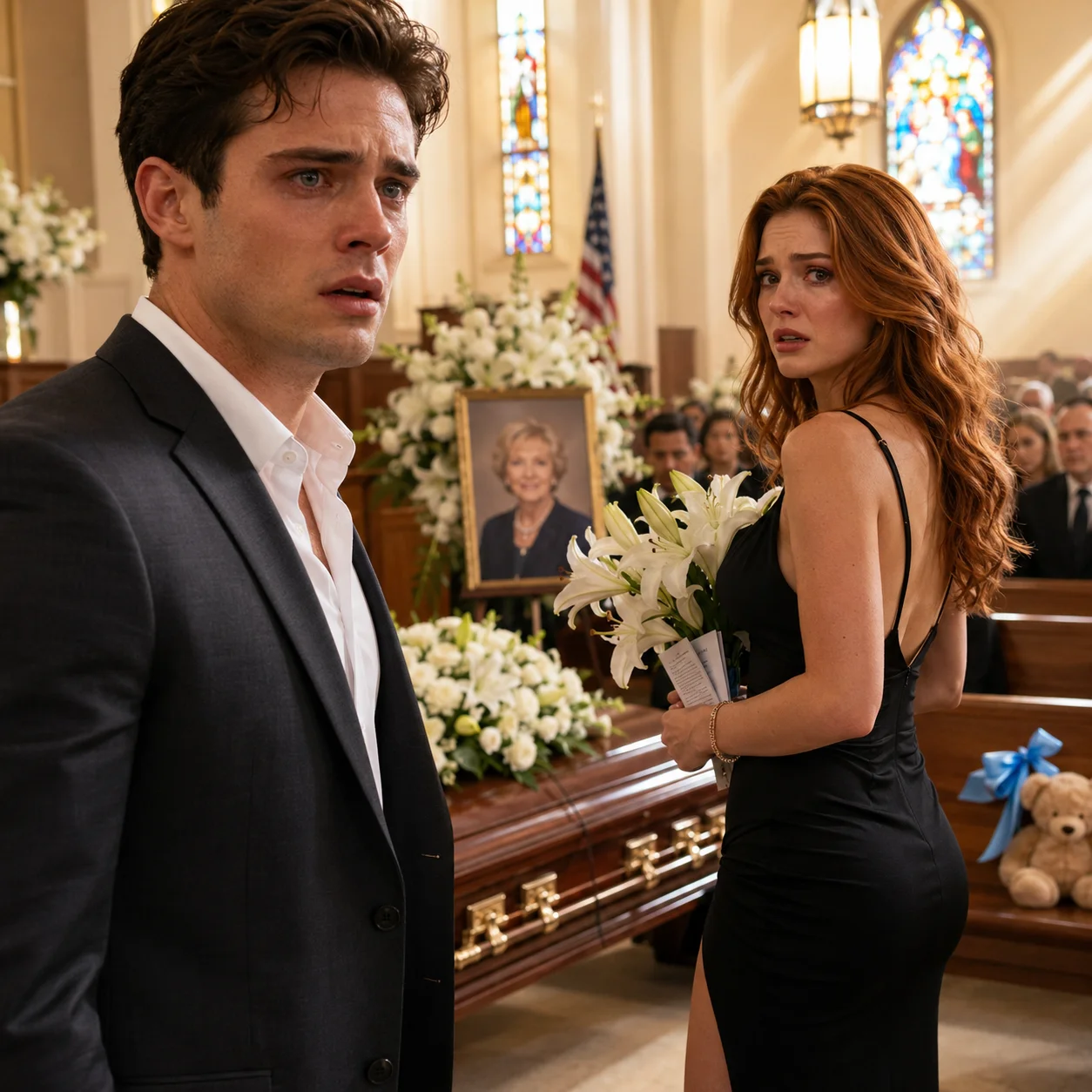
She turned away, pressing her fingers to her forehead.
“No, I’m sorry. I’m tired. Grandma had a bad weekend.”
That became the explanation for everything.
A bad weekend.
A hard visit.
A new medication.
Another fall.
Another confusion episode.
Another doctor appointment.
Another reason I could not come.
In May, I started planning to propose.
I know how that sounds now. Like I was standing in a burning house measuring curtains. But I loved Emma. I loved the version of her I believed in, and that version was kind, loyal, patient, wounded in ways I wanted to protect rather than question.
The ring was simple. Oval diamond, gold band, not flashy. Emma hated anything that looked like it was trying too hard.
I planned to propose in July during a trip to Lake Michigan. Just us, a little cottage, sunrise over the water. I even called her mother, Diane, to ask for her blessing.
That phone call changed everything, though I did not understand it at the time.
Diane answered on the fourth ring, sounding distracted.
“Daniel? Is everything okay?”
“Yes, everything’s fine. I was hoping to talk to you about something important.”
There was a pause.
“Is Emma all right?”
That should have been my first warning.
“Yes,” I said. “She’s at work. I just wanted to ask you privately.”
“Oh.” Diane exhaled. “Of course. Sorry. What is it?”
I told her I loved her daughter. I told her I wanted to marry Emma. I told her I knew family mattered deeply to Emma, especially with everything going on with her grandmother, and I wanted Diane’s blessing.
The silence on the other end lasted too long.
“Diane?”
“Yes,” she said quickly. Too quickly. “Yes, of course. You have my blessing.”
I smiled, relieved. “Thank you. That means a lot.”
“Daniel,” she said, and her voice had changed. “What did Emma tell you about her grandmother?”
I stood in my office conference room, staring through the glass wall at people moving around with coffee cups and laptops.
“She told me Evelyn’s dementia has gotten worse. That she needs help on weekends.”
Another silence.
Then Diane said, “You should talk to Emma.”
The relief inside me cooled.
“About what?”
“I can’t be the one to say it.”
“Diane, say what?”
“She needs to tell you herself.”
My mouth went dry.
“Is Evelyn worse than Emma said?”
Diane made a sound that was almost a laugh, almost a sob.
“Please talk to my daughter.”
Then she hung up.
For the next two hours, I got no work done.
I called Emma at lunch. She didn’t answer. I texted her.
Can we talk tonight?
She replied twenty minutes later.
About what?
Your mom said something weird when I called her.
Three dots appeared. Disappeared. Appeared again.
What did she say?
Just that I should talk to you about your grandmother.
This time, no answer came for almost an hour.
Then:
I’ll explain tonight.
But when tonight came, she did not explain.
She walked into the apartment looking pale and controlled, carrying groceries like nothing was wrong.
“Emma.”
She set the bags on the counter.
“My mom overreacts,” she said.
“To what?”
“She doesn’t like talking about Grandma. They have a complicated relationship.”
“That’s not what she sounded like.”
Emma took out a carton of eggs and put it into the fridge with careful precision.
“What exactly did she say?”
“She asked what you told me. Then she said you needed to tell me yourself.”
Emma closed the refrigerator door.
For a second, I thought she might finally tell me the truth.
Instead, she said, “Grandma isn’t my biological grandmother.”
I stared at her.
“What?”
“My mother was mostly raised by Evelyn, but Evelyn wasn’t technically her mother. She was a family friend. It’s messy. Mom gets sensitive about it.”
It was plausible. Again. Always plausible.
“Why wouldn’t you just tell me that?”
“Because it’s complicated and painful and not something I wanted to unpack over dinner.”
Her voice trembled at the end. I mistook that trembling for vulnerability.
I crossed the kitchen and hugged her.
“I’m not trying to push,” I said. “I just don’t want there to be things you feel like you can’t tell me.”
She pressed her face into my chest.
“There are things I don’t know how to tell you,” she whispered.
That should have been enough.
A door had opened, barely, but I was too gentle to step through.
The next weekend, she left for Briar Glen again.
I watched her from the window as she put her bag in the trunk. She wore a cream dress under a denim jacket and carried a bouquet of white lilies.
Not exactly practical clothes for caring for a confused elderly woman.
That was the first time the thought came fully formed.
She isn’t going to her grandmother.
I hated myself for thinking it.
So I did what people do when they want permission to ignore the obvious. I looked for a harmless explanation.
Maybe she was grieving the woman Evelyn used to be. Maybe she dressed nicely because her grandmother liked it. Maybe the flowers weren’t for a living room but a bedside. Maybe love looked strange when illness was involved.
But the thought stayed.
Two weeks later, it became impossible to bury.
Emma was in the shower when her phone lit up on the nightstand.
I wasn’t snooping. I was plugging in my own phone. Her screen brightened with a notification from someone saved as “M.”
One line showed before the phone went dark.
Same room this weekend?
My whole body went cold.
I stood there with her phone inches from my hand, water running behind the bathroom door, my heartbeat suddenly loud enough to fill the room.
Same room.
Not “same time.” Not “same plan.” Not “how is Grandma.”
Same room.
I did not pick up the phone.
I wanted to. God, I wanted to. But some stubborn, stupid part of me still wanted to be the man who trusted her until trust became impossible.
When she came out in a towel, I was sitting on the edge of the bed.
“You got a text,” I said.
She froze.
“From who?”
“M.”
Her hand tightened around the towel.
“What did it say?”
I looked at her carefully.
“Something about this weekend.”
She smiled, but it didn’t reach her eyes.
“That’s my cousin Maya. She stays at Grandma’s sometimes too. We coordinate sleeping arrangements.”
There it was again. Smooth. Reasonable. Immediate.
“Can I meet Maya?”
Emma looked away. “She’s private.”
“Everyone in your life is private.”
Her face changed.
“What does that mean?”
“It means I’ve been with you almost two years, and I don’t know anyone connected to this part of your life. I’ve never met your grandmother. I’ve never met Maya. I’ve never seen the house you go to every weekend. Your mom gets weird when I mention Evelyn. Your phone gets texts about rooms. And somehow I’m the bad guy if I ask questions.”
Emma sat down slowly on the bed.
“You think I’m cheating.”
The words landed between us like something dead.
I didn’t answer fast enough.
Her eyes filled.
“Wow.”
“Emma—”
“No, at least say it.”
“I don’t know what I think.”
“That means yes.”
“It means I’m confused.”
She stood and went to the dresser with shaking hands.
“My grandmother is dying, Daniel. I am trying to keep one piece of my family from falling apart, and you’re making it about your insecurity.”
The shame hit exactly where she aimed it.
“I’m sorry,” I said.
She wiped her face angrily.
“I can’t do this tonight.”
She slept on the couch.
The next morning, she left without kissing me goodbye.
For the first time, I followed her.
I am not proud of that. I wish I could say I hired someone or waited for another conversation or demanded the truth like a man with dignity. But love doesn’t always break cleanly. Sometimes it turns you into someone standing behind a gas pump at 6:37 on a Saturday morning, watching your girlfriend’s car merge onto the highway while your hands shake on the steering wheel.
She did drive toward Briar Glen.
That surprised me.
For almost two hours, I stayed several cars behind her, feeling both guilty and relieved. Maybe there was a grandmother. Maybe M was Maya. Maybe I had poisoned myself with suspicion.
Then, twenty minutes before Briar Glen, Emma exited the highway.
She drove into a town called Waverly Ridge, a pretty place with brick storefronts, hanging flower baskets, and the kind of quiet streets where people waved because there were few enough strangers to notice them.
She parked behind a small white building with a blue sign.
Haven House Family Services.
I sat across the street in my car and stared.
Emma got out with her overnight bag. No flowers this time. She walked to the back entrance and used a code to unlock the door.
A woman opened it from inside.
She was not old.
She looked about thirty-five, maybe older, with dark curly hair pulled into a messy bun. She hugged Emma tightly. Not romantically. Not casually. Desperately.
Then a little girl ran out from behind her.
She was maybe five.
Emma dropped to her knees, and the child launched herself into her arms.
My first clear feeling was not anger.
It was terror.
Because whatever this was, it was bigger than cheating.
I stayed in the car for twenty minutes, watching that back door as if answers might walk out wearing name tags. No man appeared. No secret lover. No grandmother. Just Emma, a woman, and a child who clung to her like she was oxygen.
Eventually, I drove away before she could see me.
I did not confront her that night.
When she came home Sunday, she looked exhausted and smelled faintly of crayons and antiseptic soap.
“How was Grandma?” I asked.
The lie passed through her lips without effort.
“She had a hard day Saturday but a better morning today.”
I nodded.
“What did you do?”
“Read to her. Helped Mom organize her pills. Made soup.”
Soup.
I remember that word because something inside me broke around it.
Not loudly. Not dramatically. Just a clean snap.
I looked at the woman I planned to marry and realized she could look into my face and describe an entire fake weekend without blinking.
For three days, I lived in silence with the knowledge that Emma was lying and the worse knowledge that I still loved her.
On Wednesday, her mother called me.
I almost didn’t answer.
“Daniel,” Diane said, voice shaking. “Did you talk to Emma?”
“No.”
“She’s going this weekend again, isn’t she?”
“Yes.”
Diane cursed under her breath. I had never heard her swear before.
“I can’t keep doing this,” she said.
“Doing what?”
“She made me promise. She said it wasn’t my story to tell.”
“What isn’t?”
Diane started crying.
“Evelyn has been dead for two years.”
The room tilted.
I was standing in our apartment, one hand on the kitchen counter, staring at the little calendar where Emma had drawn hearts around our planned lake trip.
“What?”
“She died two years ago,” Diane said. “Before you and Emma even moved in together.”
I couldn’t speak.
“That’s why I reacted the way I did when you called. I thought she had told you something else, but I didn’t know she was still using Evelyn as the excuse.”
Still using.
The words crawled over my skin.
“Then where does she go?”
Diane sobbed once, softly.
“I don’t know all of it. I know it has something to do with Marisol.”
“Who is Marisol?”
“She was Emma’s best friend in college.”
Was.
“What happened?”
Another pause.
“Daniel, there’s a funeral on Saturday.”
My throat tightened.
“Whose funeral?”
“Marisol’s mother. Rosa Alvarez. Emma may be there. If she is, you’ll get your answers.”
I almost laughed because nothing made sense.
“Why would I get answers at a funeral?”
“Because people there won’t know they’re supposed to lie to you.”
Saturday came with rain.
Emma told me she was leaving early because Grandma had fallen.
I watched her pack a black dress.
Not jeans. Not a sweater.
A black dress.
“Should I come with you?” I asked.
Her back was to me.
“No. Please don’t start again.”
“I’m not starting anything.”
She zipped the bag.
“Then let me go.”
After she left, I waited ten minutes, then drove to Waverly Ridge.
The funeral was held at St. Matthew’s, an old stone church with wet steps and stained-glass windows glowing against the gray morning. I parked two blocks away and sat in my car while people walked inside under umbrellas.
I told myself I would not go in.
I told myself this was wrong, invasive, cruel.
Then I saw Emma.
She was standing near the entrance in the black dress, holding the hand of the little girl from Haven House.
The child wore a navy coat and white tights. Her hair was braided carefully, with small blue ribbons at the ends. Emma bent down and whispered something to her. The child nodded, then pressed her face into Emma’s hip.
There was no lover beside them.
No secret husband.
No romantic betrayal I knew how to be angry at.
Just Emma and a child who looked like the world had taken too much from her already.
I walked into the church.
No one stopped me. Grief makes strangers invisible.
Inside, the air smelled like candle wax, damp wool, and flowers. A framed photo sat near the coffin: an older woman with silver hair and a bright red scarf, smiling like she had just told a joke. Beneath the photo was a small card.
Rosa Alvarez
1958–2026
I stood at the back.
Emma was in the second row beside the dark-haired woman from Haven House and the little girl. She didn’t see me.
The service began.
I remember almost none of the prayers. I remember the priest talking about Rosa’s strength, her work as a nurse, her devotion to her daughter Marisol and granddaughter Lily. I remember the woman beside Emma breaking down when the priest said Marisol’s name.
Then a man in a gray suit stood to give a eulogy.
He introduced himself as Thomas Reed, director of Haven House Family Services.
“Rosa Alvarez was not simply a mother,” he said. “She was a refuge. After her daughter Marisol died, Rosa became the legal guardian of her granddaughter Lily. When her health failed, she did what many people are too afraid to do. She asked for help.”
Emma lowered her head.
Thomas continued.
“For the past year, one person came every weekend. Quietly. Without asking for recognition. She cooked meals, handled paperwork, read bedtime stories, took Lily to therapy, sat with Rosa through chemo, and made sure this family was not alone. Rosa called her ‘the granddaughter my grief gave me.’”
My chest tightened.
“Emma,” he said, voice thickening, “Rosa wanted everyone here to know that you kept your promise to Marisol.”
Emma began to cry.
Not the controlled tears I had seen at home. These were silent and shaking, the kind that tear through a person from somewhere deep.
The little girl, Lily, climbed into her lap.
And I finally understood that Emma had not been visiting her grandmother.
She had been visiting a promise.
After the service, I stood frozen near the back until people began filing out.
I should have left. I should have waited for Emma to tell me in her own time. But then the dark-haired woman looked over Lily’s head and saw me.
Her eyes narrowed slightly.
“You’re Daniel,” she said.
Emma turned.
The color drained from her face so quickly I thought she might faint.
“Daniel?”
The church seemed to empty around us.
“Hi,” I said stupidly.
Lily looked between us. “Is that him?”
Emma closed her eyes.
The woman beside her touched Lily’s shoulder. “Come on, sweet girl. Let’s get some air.”
Lily hesitated. “But Emma—”
“I’ll be right there,” Emma whispered.
When they were gone, Emma and I stood alone beside a table covered in memorial cards.
“How did you know?” she asked.
“Your mom told me Evelyn died two years ago.”
Pain flashed through her face.
“So you followed me.”
“Yes.”
She nodded once, like she had expected no less and deserved no better.
“I can explain.”
“I hope so.”
She flinched at my voice.
We stepped into a side hallway where the stained glass cast red and blue shapes over the floor. Rain tapped steadily against the windows.
Emma wrapped her arms around herself.
“Marisol was my best friend,” she said. “We met freshman year. She was loud and dramatic and impossible. She used to say I was too polite for my own good and needed someone to teach me how to disappoint people.”
She laughed once, but it broke.
“She got pregnant senior year. The father disappeared before Lily was born. Rosa helped her raise Lily. Then Marisol got sick.”
“Sick how?”
“Ovarian cancer. Aggressive. By the time they found it, it had spread.”
I swallowed.
“Why didn’t you tell me?”
“Because when I met you, she had already died, and I thought I had survived talking about it.” Emma wiped her face. “But I hadn’t. And then Rosa got diagnosed with lung cancer last year. She called me and said she was scared Lily would end up in foster care if anything happened to her. Marisol had named me in a letter as the person she trusted most, but I wasn’t family. I didn’t know if I could help. I didn’t know what I was allowed to promise.”
“So you lied.”
“Yes.”
No excuse. No defense. Just yes.
“Why Evelyn?”
Emma looked down.
“Because I knew you wouldn’t question a dying grandmother.”
The honesty of it hit harder than another lie would have.
“I was going to tell you after the legal stuff was clearer,” she said. “Then Rosa got worse. Then Lily started asking if I would still come every weekend after Nana died. Then everything became more complicated, and every time I came home, the lie was already there waiting for me.”
“What legal stuff?”
Emma pressed her lips together.
“Rosa wanted me to become Lily’s guardian.”
I stared at her.
“She wanted you to adopt her?”
“Not adopt immediately. Legal guardianship first. There were papers, hearings, home studies. Haven House was helping. Marisol’s aunt, Carmen, is willing to help too, but she has three kids and works nights. Lily knows me. She trusts me.”
“And you were planning to do this without telling me?”
“No.” Her voice cracked. “I wasn’t planning anything. I was drowning.”
I felt anger rise again, hot and sharp.
“You let me plan a life with you while you were building another one every weekend.”
“I know.”
“I called your mother to ask for permission to marry you, Emma.”
Her face crumpled.
“I know.”
“No, you don’t. I was ring shopping while you were lying about where you slept.”
“I slept on a cot in Rosa’s living room half the time.”
“That’s not the point.”
“I know it’s not.”
“You made me think I was crazy for questioning you.”
That one landed.
She looked away.
“I’m sorry.”
“You let me apologize.”
“I know.”
“You saw what this was doing to me, and you still came home every Sunday and told me stories about soup and pills and a woman who was already dead.”
Emma covered her mouth with one hand.
For a moment, I thought grief might soften me.
It didn’t.
Because grief explained her secrecy. It did not excuse the way she had used my trust as storage for her fear.
“Why didn’t you trust me?” I asked.
Her answer came so quietly I almost missed it.
“Because I trusted someone before you.”
I waited.
She leaned against the wall like her legs had weakened.
“Marisol’s boyfriend. Lily’s father. His name was Adrian. When Marisol got sick, he came back pretending he wanted to help. He cried. He said all the right things. He convinced her to put his name on emergency paperwork. Then he emptied a small savings account Rosa had started for Lily and disappeared again. Marisol died thinking he would come back for their daughter.”
She looked at me then.
“I know you are not him. I knew it even then. But every time I tried to tell you, I heard Marisol saying she wished she had waited before trusting him. And then there was Lily. If you left because it was too much, I could survive that. But if Lily got attached to you and you left, I didn’t know how to explain another man disappearing.”
The anger inside me shifted, not gone, but complicated.
“You made that choice for me.”
“Yes.”
“You decided I wasn’t strong enough.”
“I decided I wasn’t strong enough to risk it.”
Outside the hallway, someone laughed softly through tears. Funeral laughter, fragile and inappropriate and human.
I looked at the woman I loved and barely recognized her.
“What happens now?”
Emma shook her head.
“I don’t know.”
“Are you taking guardianship?”
“If the court approves it.”
“When?”
“Three weeks.”
I breathed out.
“And where was I supposed to fit into that?”
Her eyes filled again.
“I wanted you beside me.”
“No, Emma. You wanted me waiting at home while you decided whether your real life was safe enough to show me.”
She did not deny it.
That was the moment I knew I could not marry her.
Not then.
Maybe not ever.
I walked out of the church without saying goodbye.
For the next five days, Emma stayed at Carmen’s house in Waverly Ridge. She texted me once.
I am so sorry. I know sorry is not enough. I’ll give you space.
I did not answer.
The apartment became a museum of things I didn’t know how to touch. Her mug by the sink. Her gray cardigan over the chair. The lake cottage confirmation on my laptop. The ring hidden in a shoebox in the closet.
My mother called twice. I didn’t answer. Diane called once. I didn’t answer her either.
On Thursday night, I took out the ring.
I opened the box and stared at it for a long time.
Then I closed it and put it in my desk drawer.
Not because I hated Emma.
Because love is not only what you feel when someone is crying in front of you. It is also what remains when you count the damage.
Emma came home the following Sunday.
She looked thinner, as if a week had passed through her like weather. She stood in the doorway with her overnight bag and did not step inside until I moved back.
“Lily is with Carmen,” she said. “I didn’t want to bring her into this.”
I nodded.
We sat at opposite ends of the couch.
For almost a minute, neither of us spoke.
Then Emma said, “I wrote everything down.”
She handed me a folder.
Inside were copies of documents. Rosa’s medical records. Marisol’s letter naming Emma as Lily’s preferred guardian. Emails from Haven House. Court dates. Notes from a family services attorney. A printed schedule of every weekend Emma had been away.
There were photos too.
Emma sitting beside Rosa in a hospital chair. Emma helping Lily decorate cupcakes. Emma asleep on a couch while Lily leaned against her shoulder with a picture book open in her lap. Rosa in a headscarf, smiling weakly at the camera.
A whole life.
A life Emma had hidden from me.
“I’m not giving this to you as proof so you forgive me,” she said. “I’m giving it to you because you deserved the truth a long time ago.”
I closed the folder carefully.
“Why now?”
“Because hiding it ruined the thing I was trying to protect.”
I looked at her.
She took a breath.
“I love you, Daniel. I wanted a future with you. I still do. But I also made a promise to a dying woman and to my best friend. Lily needs someone who will not treat her like an obligation. If I become her guardian, my life changes. Completely. I should have told you that before I let you love a version of me that was easier.”
The mature thing would have been to say something graceful.
Instead, I said, “You humiliated me.”
Her face folded.
“I know.”
“I thought you were cheating on me.”
“I know.”
“I questioned my instincts because you made me feel cruel for having them.”
“I know.”
“I was going to propose.”
Her eyes shut.
“I know.”
That was all she could say.
And maybe that was the first honest conversation we had ever had.
Not because the truth was beautiful, but because it had no decoration.
We talked for four hours.
She told me about Marisol, how they had shared cheap dorm-room ramen and studied on the library floor. How Marisol had once driven six hours to pick Emma up after a panic attack during finals. How Lily had been born during a thunderstorm, tiny and furious, while Emma held one of Marisol’s legs and screamed encouragement like a coach at a championship game.
She told me about Adrian stealing money. About Rosa calling her at midnight because Lily had asked whether people could die from being too sad. About the first time Lily called Emma “my almost-aunt.” About the lawyers, the caseworker, the fear that one wrong move could send Lily into a system that did not have enough beds or enough gentle hands.
I listened.
Then I told her what her lies had done to me.
Not angrily. Not all at once. But honestly.
I told her I had felt stupid. I told her I had started checking exits in conversations with her, trying to see where the next lie might be hidden. I told her that every time she said “Grandma,” she was asking me to participate in a funeral that had already happened.
Emma cried through most of it.
But she did not interrupt.
At midnight, she asked, “Can this be repaired?”
I wanted to say yes.
Instead, I said, “Not quickly.”
She nodded.
“I’ll move out.”
I looked at her, surprised.
“You don’t have to decide tonight.”
“I do,” she said softly. “Not because I want to leave. Because you need your home to feel honest again.”
The next morning, Emma packed two suitcases and went back to Waverly Ridge.
We did not break up in a dramatic fight. There was no screaming, no slammed door, no final accusation thrown like a knife. She kissed my cheek at the door and whispered, “Thank you for loving me before I knew how to tell the truth.”
I said, “I hope Lily gets the life she deserves.”
Emma’s mouth trembled.
“So do I.”
For six weeks, we barely spoke.
I went to work. I canceled the lake trip. I returned the ring, then sat in my car outside the jewelry store for half an hour feeling like I had buried a future no one else knew had died.
Emma updated me once after the guardianship hearing.
It was approved.
Lily would live with her.
I stared at the text for a long time before replying.
I’m glad she’s safe.
Emma answered:
Thank you.
That could have been the end.
Maybe in a simpler story, it would be. I would move on, meet someone new, and Emma would become the woman I referenced at parties with a strange laugh: “My ex lied about visiting her grandmother, but it turned out she was secretly trying to save a child.”
But real life is rarely clean enough to become a lesson immediately.
Three months later, I saw Lily in the cereal aisle at a grocery store.
I had moved to a different neighborhood by then. Not far, just far enough to stop seeing ghosts at every coffee shop. It was a Saturday morning, and I was comparing two brands of granola like that mattered when I heard a small voice say, “You’re Daniel.”
I turned.
Lily stood beside a cart, holding a box of strawberry cereal against her chest.
She looked smaller than I remembered.
“Hi,” I said gently. “You’re Lily.”
She nodded.
Emma appeared at the end of the aisle a second later and stopped so abruptly the cart bumped her hip.
For a moment, none of us moved.
Then Lily said, “Emma says you’re a good man who got hurt.”
Emma closed her eyes in horror.
“Lily.”
“What? You did say that.”
Despite everything, I almost smiled.
Emma looked at me helplessly.
“I’m sorry.”
“It’s okay.”
Lily studied me with the seriousness only children and judges can manage.
“Did you leave because of me?”
The question struck so hard I had to grip the cart handle.
Emma crouched immediately.
“No, sweetheart. We talked about this.”
“But he was there at Nana’s funeral, and then you cried a lot.”
I lowered myself slightly so I wasn’t towering over her.
“No,” I said. “I didn’t leave because of you.”
“Then why?”
Emma looked like she wanted the floor to open.
I chose my words carefully.
“Because grown-ups sometimes make mistakes when they’re scared. And sometimes other grown-ups need time to heal from those mistakes.”
Lily thought about that.
“Emma was scared.”
“I know.”
“She still is sometimes.”
“I know that too.”
Lily hugged the cereal tighter.
“She doesn’t lie anymore.”
Emma’s face broke.
I looked at her then, really looked.
She was different. Still beautiful, but tired in a new way. Not the secretive exhaustion she used to carry home on Sundays. This was honest exhaustion. Parent exhaustion. The kind that came from school forms, nightmares, therapy appointments, grocery budgets, and learning how to braid hair because a little girl cared about blue ribbons.
“I’m glad,” I said.
Lily seemed satisfied.
Then she held out the cereal box.
“This one has marshmallows, but Emma says it’s basically candy.”
“She’s right.”
Lily frowned. “Do you work for her?”
I laughed before I could stop myself.
“No. But I agree with her on that.”
Emma smiled through tears.
It was the first real smile I had seen from her in months.
We did not get back together that day.
That matters.
Forgiveness did not arrive in the cereal aisle with a soundtrack and perfect lighting. I did not suddenly decide the lies didn’t matter because the reason behind them was noble. Emma did not deserve instant absolution simply because her secret involved sacrifice instead of betrayal.
But that day, something hardened inside me began to loosen.
A week later, Emma emailed me.
No pressure to respond. Lily started therapy with a trauma specialist. School is going okay. She asked if “Daniel from the cereal” likes dogs because her class is voting on a pet project. I hope you’re well.
I replied two days later.
Daniel from the cereal likes dogs. Especially golden retrievers. I’m glad school is going okay.
It became that at first.
Emails.
Small updates.
Careful boundaries.
No romance.
No late-night emotional confessions.
No pretending trust could be rebuilt by missing each other.
Emma started therapy too. Not because I demanded it. Because, as she wrote once, “I confused secrecy with protection for too long.”
I dated someone briefly that winter. Her name was Claire. She was kind, funny, and uncomplicated. After our fourth dinner, she said, “You’re here, but part of you keeps listening for another conversation.”
She was right.
I apologized.
She smiled sadly and said, “I hope you finish it.”
In January, I drove to Waverly Ridge for Lily’s school art show.
Emma had invited me with careful wording.
Lily asked if you could come. I told her I would ask, but no pressure.
I went because a child had asked, not because I had decided anything about Emma.
The art show was held in a cafeteria that smelled like crayons and pizza sauce. Lily’s painting showed three stick figures standing beside a huge purple dog. One figure had brown hair and a green dress. One was small with blue ribbons. One was tall with glasses.
I stared at it longer than I should have.
Emma stood beside me.
“She added you yesterday,” she said quietly. “I told her she should only draw people who are really in her life.”
“What did she say?”
“She said, ‘He came back in the grocery store.’”
My throat tightened.
Across the room, Lily waved both arms like she was directing an airplane.
I waved back.
Emma did not reach for my hand. She did not lean into me. She had learned, finally, not to make emotional claims she had not earned.
That was why I stayed after the art show and helped carry poster boards to her car.
That was why, when Lily asked if I could come for pancakes someday, I said, “Maybe.”
That was why maybe eventually became Sunday breakfast once a month.
Then twice.
Then, in spring, Emma and I sat on a park bench while Lily played on the swings, and Emma said, “I need to tell you something before it becomes something I should have told you sooner.”
I looked at her.
She took a breath.
“Adrian contacted me.”
The name hit me like cold water.
“What does he want?”
“Money, I think. Or control. He heard about the guardianship through someone connected to Rosa’s family. He sent a message saying Lily is his daughter and he has rights.”
“Does he?”
“Legally, complicated. Practically, he abandoned her. My lawyer says we document everything and do not engage outside legal channels.”
“Are you scared?”
“Yes.”
The old Emma would have hidden it until the fear became a second life.
This Emma handed me the truth while it was still shaking in her hands.
“What do you need?” I asked.
“Nothing you’re not willing to give.”
“That’s not an answer.”
She looked at Lily on the swings.
“I need witnesses. Stability. People who won’t disappear when it becomes inconvenient.”
I nodded slowly.
“I can be a witness.”
Emma’s eyes filled, but she smiled.
“Thank you.”
Adrian appeared two weeks later.
Not at Emma’s house, thank God. At Haven House.
He showed up demanding information, claiming he was Lily’s father, accusing Emma of “stealing his kid.” Thomas called the police. Emma called her lawyer. Then she called me.
Her voice was calm, but I could hear the old panic underneath.
“Can you pick Lily up from school? Carmen is at work, and I don’t want Emma—” She stopped, almost laughing at herself. “I don’t want me showing up looking like I’ve been crying.”
“I’ll get her.”
The school required authorization. Emma had added me weeks earlier after asking if I was comfortable being an emergency contact. At the time, it had felt like a small administrative detail. That day, it felt like trust made visible.
Lily came out wearing a backpack shaped like a fox.
“Where’s Emma?”
“Handling grown-up paperwork.”
Lily narrowed her eyes. “That sounds fake.”
“It is fake, but boring fake, not scary fake.”
She considered this acceptable.
At my apartment, she ate grilled cheese and told me about a boy named Mason who put glue on his own sleeve “for science.” Emma arrived two hours later with red eyes and a folder under one arm.
She stopped in the doorway when she saw Lily asleep on my couch, fox backpack at her feet.
For a moment, we were back at the beginning of something.
But this time, there was no lie between us.
Adrian’s challenge failed.
His history of abandonment, theft, and instability came out faster than he expected. Rosa had documented everything. Marisol’s letter was powerful. Emma’s months of weekend care, the very thing she had hidden from me, became part of the evidence that secured Lily’s placement.
At the final hearing, Emma asked if I wanted to come.
Not because she needed me to rescue her.
Because she wanted no more secret rooms in her life.
I sat behind her in court while Lily stayed with Carmen. Adrian arrived late, smelling like cigarettes and expensive cologne he probably couldn’t afford. He looked bored until the judge began reading.
By the end, he looked furious.
Emma was granted permanent guardianship.
Adrian was denied unsupervised contact.
When the judge finished, Emma covered her mouth with both hands. Carmen sobbed. Thomas shook my hand. I stood there feeling something I had not expected.
Not victory.
Peace.
Outside the courthouse, Emma turned to me.
“I should have let you know her from the beginning.”
“Yes,” I said.
“I should have trusted you.”
“Yes.”
“I’m sorry.”
“I know.”
This time, I believed the words because they were no longer trying to erase the damage. They were simply standing beside it.
A year after I walked into Rosa Alvarez’s funeral, I walked into a different church.
Not for a funeral.
For Lily’s school choir concert.
She wore a yellow dress and sang half the words too loudly and the other half a second late. Emma sat beside me, trying not to cry before the first song even ended.
Afterward, Lily ran up with a paper cup of punch and asked, “Did you hear me?”
“Everyone heard you,” I said.
She beamed.
Emma laughed, and for a second, the sound was the same one I had fallen in love with years earlier, before secrets, before suspicion, before the dead grandmother who had never been waiting in Briar Glen.
Later that night, after Carmen took Lily for a sleepover, Emma and I walked slowly through the church parking lot.
Snow had started falling, soft and thin under the streetlights.
“I still have nightmares sometimes,” Emma said.
“About Marisol?”
“About lying. About looking at you and saying Grandma had a better morning.”
I tucked my hands into my coat pockets.
“I still think about it too.”
“I know.”
“I don’t think trust comes back the way it was.”
She nodded.
“I don’t either.”
“But maybe that’s not always bad.”
Emma looked at me.
I searched for the right words.
“What I trusted before was the idea that you would never hurt me. That was naive. People hurt each other, even when they love each other. What I need now is to trust that when things get hard, you won’t build another life in secret.”
“I won’t,” she said.
I smiled faintly.
“That has to be proven over time.”
“I know.”
She looked down at the snow collecting on the pavement.
“I’m willing to spend as long as it takes.”
That was the closest we came to a new beginning.
No ring. No dramatic kiss. No promise that erased the past.
Just two people standing in the cold, old enough now to understand that love is not proven by never breaking anything. Sometimes it is proven by what you do after you finally admit what you broke.
Six months later, I moved to Waverly Ridge.
Not into Emma’s house.
Into an apartment ten minutes away.
People had opinions. My mother thought I was being cautious to the point of torture. My father said caution was how bridges were built when the first one collapsed. Diane cried when I visited and said she had failed both of us by keeping Emma’s secret. I told her she had been a mother trying to protect her daughter, and mothers are human too.
Emma and I dated again from the beginning.
Real dates.
Coffee after Lily’s bedtime with Carmen babysitting. Walks in the park. Dinner where we talked about budgets, guardianship, fear, resentment, and what it meant to become part of a child’s life responsibly.
I learned Lily hated peas but loved pea soup because, according to her, “soup peas are different citizens.” I learned Emma sang when she washed dishes. I learned Marisol’s favorite song and Rosa’s chicken recipe and the exact face Lily made when pretending not to be sleepy.
Two years after Rosa’s funeral, Lily asked if she could call me something other than Daniel.
Emma nearly dropped a plate.
I crouched in the kitchen doorway.
“What do you want to call me?”
Lily twisted one blue ribbon around her finger.
“Not Dad,” she said quickly. “Because I had one, but he was bad at it.”
My chest tightened.
“Okay.”
“And not Uncle Daniel because that sounds like you bring weird gifts.”
“Fair.”
She thought seriously.
“Maybe Dan.”
Emma laughed so hard she cried.
So I became Dan.
It was not the title I expected.
It was better because Lily chose it without anyone telling her what it had to mean.
Three months after that, I proposed to Emma.
Not at sunrise by a lake. Not with the old ring. That ring belonged to a future built on incomplete truth, and I had long ago let it go.
I proposed in Rosa’s garden.
Emma had kept the little house in Waverly Ridge after the court allowed her to use funds from Rosa’s estate for Lily’s benefit. The garden had been neglected during Rosa’s illness, but Emma revived it slowly. Tulips, carnations, white lilies.
For Grandma, she used to say.
Now I knew which grandmother she had meant all along.
Lily helped me hide the ring box inside a packet of wildflower seeds, then forgot the plan and almost told Emma three times before lunch.
When Emma opened the packet and found the box, she stared at it like it might vanish.
I knelt in the dirt beside a row of lilies.
“I loved you before I knew the truth,” I said. “Then I learned the truth and had to decide whether love could survive it. I won’t pretend the lie didn’t hurt me. It did. But I’ve watched you choose honesty every day since. I’ve watched you become the safe place you once tried to create alone. And I don’t want to stand outside your life anymore.”
Emma was crying before I opened the box.
“Will you marry me?”
Lily shouted, “Say yes before he gets mulch on his pants!”
Emma laughed through tears.
“Yes,” she said. “Yes.”
Our wedding was small.
Carmen stood beside Emma. My father cried and denied it. Diane held Lily’s flowers. Thomas from Haven House gave a toast about chosen family and paperwork, which somehow made everyone laugh and cry at the same time.
At the reception, there was one empty chair with a white lily on it.
For Marisol.
Beside it, another with a red scarf.
For Rosa.
During dinner, Lily tapped her glass with a spoon until everyone looked at her.
“I have a speech,” she announced.
Emma whispered, “Oh no.”
Lily unfolded a paper covered in stickers.
“Emma used to be sad on weekends. Then Daniel found out why. Then everyone cried a lot, but now we have cake. So I think telling the truth is better because cake comes after.”
The room erupted.
I looked at Emma across the table, and she looked back at me with that same trembling, impossible smile.
There are people who think forgiveness means returning to who you were before.
They are wrong.
Forgiveness, real forgiveness, does not take you backward. It does not rebuild the old house exactly as it stood. It walks through the ruins, salvages what can be saved, throws out what was rotten, and admits the new foundation will need deeper anchors.
Emma lied to me.
That will always be part of our story.
But it is not the whole story.
The whole story is also a dying woman who loved her granddaughter enough to ask for help. A best friend who left behind a letter stronger than blood. A child who survived too many goodbyes and still believed people could come back. A woman who made a terrible choice out of fear and then spent years becoming someone who no longer hid behind noble excuses.
And me?
I learned that truth can arrive looking nothing like you expected.
Sometimes it does not come as betrayal in a hotel room or a lover’s name on a phone. Sometimes it comes in a church, at the funeral of a woman you never knew, revealing that the person you loved had been carrying a whole secret world because she was terrified that honesty would cost her everything.
Emma once told me she was visiting her grandmother every weekend.
Then I attended the funeral of a woman who had been dead for two years.
I went there expecting to find the end of us.
Instead, after a long and painful road, I found the beginning of the family we were meant to become.
![[FULL STORY] My Wife Chose Her Sister’s Baby Over Our Marriage—Now She Regrets It](https://social-media.rabedo.com/thumbnails/1777457233_7.png)
![[FULL STORY] My wife filed for divorce the day she became a doctor, so I vanished and built a better life while she realized I was the only thing keeping her afloat.](https://social-media.rabedo.com/thumbnails/1777185203_C9.png)

![[FULL STORY] My Fiancee Forced Me To Meet Her Ex To "Prove My Trust" While They Mocked Me, But She Didn't Know I Was Recording Their Entire Downfall.](https://social-media.rabedo.com/thumbnails/1777358289_B24.png)