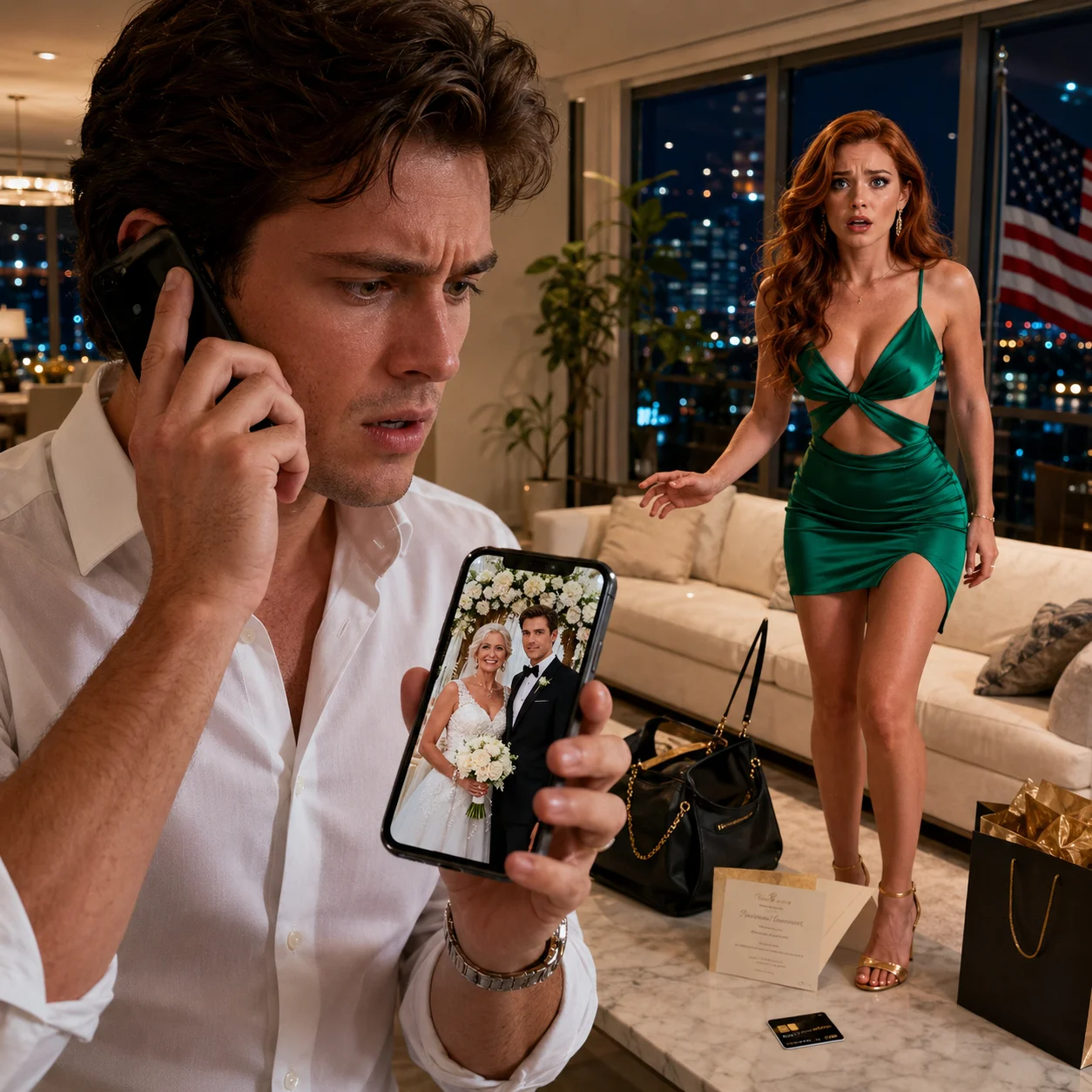
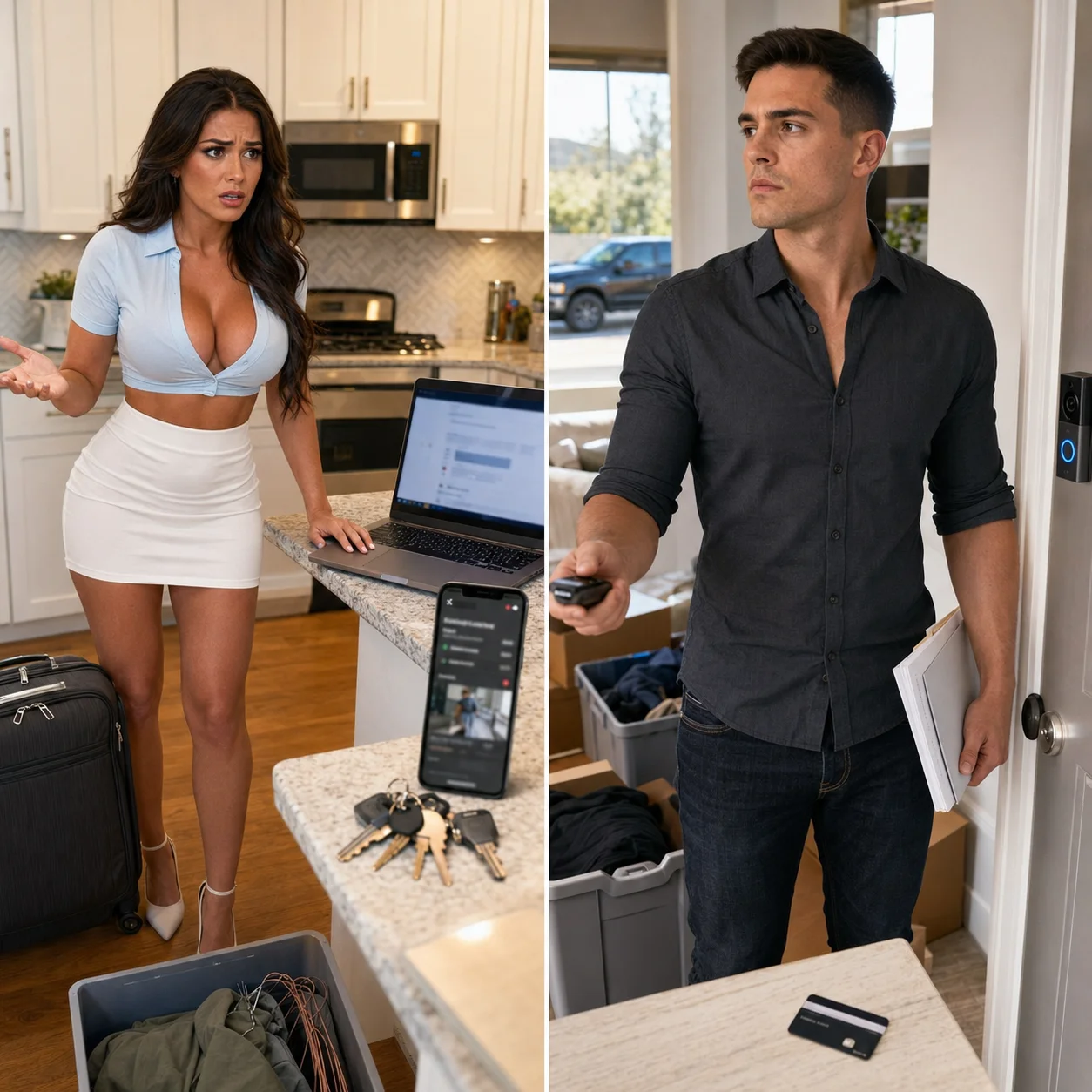
My girlfriend told me, “Secrets keep relationships safe.”
I said, “Then keep yours without me.”
At first, she called me dramatic. She said I was insecure, controlling, and unable to understand healthy boundaries. Then the hidden apartment lease, the bank transfers, the doorbell footage, and the emails turned her secret into evidence. By Sunday, her friends were apologizing, her mother was crying, and I was changing the locks for good.
My name is Owen. I’m thirty-two, and this is about Melanie, my girlfriend of almost three years. She was twenty-eight when everything fell apart. We had been living together for eight months in my rented townhouse in Tampa. The lease was in my name. The utilities were in my name. Most of the furniture was mine because I had already lived there for a year before she moved in.
Melanie was charming in the beginning. Warm, funny, bright in a way that made people lean toward her when she spoke. She could walk into a room and make strangers feel like they had known her for years. She remembered birthdays. She brought soup when someone was sick. She made simple grocery runs feel like little dates, turning the cereal aisle into a debate about childhood memories and the produce section into some kind of comedy routine.
I loved that about her.
But Melanie also had this habit.
She called everything private.
Not private in the normal, healthy sense. Not the kind of privacy where two adults still have personal space, independent thoughts, and conversations that don’t require surveillance. Melanie used “private” as a shield for anything she didn’t want questioned.
If I asked why she suddenly had a second phone charger in her purse, she said, “Owen, privacy is healthy.”
If I asked why she muted conversations when I walked into the room, she said, “You’re acting insecure.”
If I asked why she was taking calls outside at eleven at night, she said, “Not every conversation belongs to you.”
I tried to be reasonable. I did not check her phone. I did not follow her. I did not demand passwords or location sharing or constant explanations. I wanted to believe I was being mature. I wanted to believe trust meant accepting that not everything had to be mine to know.
But there is privacy, and then there is secrecy wearing a nicer outfit.
For months, I felt the difference but couldn’t prove it. Melanie became harder to reach when she was out. She started taking “errands” that stretched into hours. She kept her laptop angled away from me. She talked more about needing independence, space, and safety, but somehow all of those words only appeared when I asked a normal question.
The final argument started on a Thursday evening.
I came home from work early because our warehouse inventory system crashed, and my manager sent everyone home while IT handled it. I’m a logistics coordinator at Gulf Line Supply, so early days almost never happen. Usually, if I’m home before six, it means something has gone wrong somewhere.
When I walked in, Melanie was in the kitchen with her laptop open.
She looked up too fast.
Then she closed it.
Not minimized it. Not switched tabs. Closed it.
I set my keys on the counter. “Everything okay?”
“Yes,” she said quickly.
“That looked serious.”
She smiled, but it didn’t reach her eyes. “It’s just private.”
That word again.
I stood there for a second, waiting to see if she would say anything else. She didn’t. So I went upstairs, changed clothes, and came back down to grab water.
Her laptop was still on the counter.
She had closed it too fast, but she had not logged out of her email. I did not open anything. I did not touch it. But the notification preview was right there on the screen.
Lease agreement signed — Bayshore Palms Apartments.
My stomach dropped.
We lived together.
She had signed a lease somewhere else.
I looked at Melanie, who had gone very still.
“Why did you sign an apartment lease?” I asked.
The color left her face for half a second. Then she recovered.
“It’s not what you think.”
“What do I think?”
“You think everything is about betrayal because you don’t understand boundaries.”
“Melanie,” I said slowly, “you signed a lease.”
She crossed her arms. “Secrets keep relationships safe.”
The sentence was so strange that for a moment, I almost missed the meaning.
Then something inside me settled.
“Then keep yours without me.”
She blinked.
Then she laughed. Not because it was funny. Because she thought I was bluffing.
“You’re ending a three-year relationship over me having a backup plan?”
A backup plan.
That was the first honest thing she said.
“Who is on the lease with you?” I asked.
“No one.”
“Who helped you move boxes last Saturday?”
Silence.
Last Saturday, she had told me she was helping her friend Amber set up for a baby shower. But our doorbell camera had caught a man in a gray pickup helping her load two plastic storage bins from our garage. At the time, I thought maybe it was Amber’s brother. Maybe a cousin. Maybe someone helping with decorations.
Now, I knew better.
I opened the banking app for our shared emergency account. It was supposed to be for house expenses. Plumbing problems, storm repairs, medical emergencies. We each put two hundred dollars a month into it.
There were three transfers I did not recognize.
Nine hundred dollars.
Nine hundred dollars.
Three hundred twenty-five dollars.
All sent to Bayshore Palms for a deposit, first month’s rent, and application fee.
She had used our emergency fund to pay for a secret apartment.
I placed my phone on the counter and showed her.
She stared at the screen, then said, “I was going to tell you.”
“When?”
“When I felt safe.”
I looked at the transfers again.
“You felt safe enough to spend my money.”
That was when the performance started.
First, she cried. Then she got angry. Then she told me I was financially controlling because I expected transparency from an account we both contributed to. Then the apartment became “just for space.” Then she said she wasn’t moving out. Then she said maybe she was moving out if I kept acting like this.
I nodded.
“Good. Start now.”
She stared at me.
“Pack what you need tonight,” I said. “I’ll arrange the rest.”
“You’re cruel.”
“No,” I said. “I’m organized.”
And I was.
While she stormed upstairs, I downloaded every bank statement. I took a photo of the lease notification. I copied the doorbell clip from Saturday. I screenshotted the transfers. I changed the shared account password and moved my half of the remaining balance into my personal checking.
At 10:30 that night, Melanie left with one suitcase and a dramatic goodbye.
I did not chase her.
I locked the door.
Then I changed the keypad code.
By Friday morning, Melanie had rewritten the entire story.
Amber texted me first.
“I don’t know what happened, but Melanie said you threw her out because she wanted independence. That’s not okay.”
I replied once.
“She signed a secret apartment lease using our shared emergency account and lied about it. Please don’t contact me again.”
Amber responded almost immediately.
“Wait, what apartment?”
That told me Amber had not been part of the baby shower lie.
I sent her the screenshot of the lease notification.
Amber wrote back, “She told me that was for her cousin.”
“Apparently, I paid her cousin’s deposit,” I replied.
No answer.
Then Melanie’s sister Kayla messaged me on Instagram.
“You better not keep her belongings hostage. She’s scared of you.”
I sent Kayla a photo of the guest room. Everything was boxed neatly. Clothes folded. Shoes paired. Makeup bag sealed. Laptop charger in a labeled envelope.
I wrote, “She can pick up her belongings Saturday from two to four with one person present. Doorbell camera stays on.”
Kayla replied, “Why are you recording her?”
“Because your sister called secrets safety, and I call footage protection.”
Then I blocked her.
Saturday came. Melanie arrived at 2:17 with Kayla and the man from the doorbell footage.
His name was Trevor.
I learned that because Kayla said, “Trevor, grab the bins,” like this was all perfectly normal.
Trevor avoided eye contact, which made him the smartest person in the driveway.
I kept the chain lock on and passed boxes through the door one by one. Kayla filmed me like she was gathering evidence for a documentary about oppressed sisters and evil ex-boyfriends. I looked directly at her phone and said, “Melanie’s belongings returned in good condition Saturday, 2:23 p.m.”
Kayla stopped filming.
Melanie whispered, “You’re embarrassing yourself.”
“Documentation rarely feels flattering,” I said.
That annoyed her more than yelling would have.
Then she asked for the TV.
“My receipt,” I said. “Bought before you moved in.”
She asked for the couch.
“My receipt.”
She asked for the air fryer.
“Gift from my brother.”
Finally, she snapped, “Fine. Keep your sad little life.”
“That is the plan.”
Trevor smirked.
Melanie saw it and turned on him. “Don’t laugh.”
Interesting moment.
Very revealing.
After they left, I checked the guest room and found two small boxes remaining. Books, winter clothes, and a framed photo of Melanie with her mother. I texted Melanie from my work phone because she had blocked my regular number after sending twenty-seven messages.
“Two boxes left. Schedule pickup by next Friday.”
She replied, “You don’t get to control my timeline.”
“After Friday, they go to storage at your cost.”
“Touch my things and I’ll call police.”
So I did the opposite of reacting.
I paid one hundred four dollars for a small storage unit, first month free with a promo, and moved the boxes there after Friday passed. I photographed every item. I sent her the address, unit number, and access code.
Then I blocked the work phone too.
That night, Melanie’s mother called.
Her name was Denise. She had always liked me. She once told Melanie at Thanksgiving, “Owen is steady. Don’t mess that up.”
This time, she sounded furious.
“Owen, what is this about you throwing my daughter’s belongings into storage?”
“Denise,” I said, “did Melanie tell you about the apartment?”
Silence.
“Did she tell you Trevor helped her move bins from my garage while she said she was helping Amber?”
A longer silence.
Then Denise asked, very quietly, “Who is Trevor?”
Unexpected ally number one.
I sent Denise the clean version. The lease screenshot. The bank transfers. The doorbell still. The pickup messages.
Thirty minutes later, she texted.
“I am sorry. I did not know.”
I believed her.
Melanie did not appreciate that.
After Denise apologized, Melanie escalated.
First came the social media post. Black background. White text.
“Some people punish you for having a private life because they wanted ownership, not love.”
The comments were exactly what you would expect.
“Proud of you.”
“Escape is brave.”
“He sounds scary.”
I said nothing.
Then she posted a photo of the Bayshore Palms pool with the caption, “Peace looks like choosing yourself.”
I did laugh at that one, mostly because peace apparently cost $2,125 from our emergency fund.
Two days later, she came to my job.
Gulf Line Supply has a front office with a receptionist named Marcy who has worked there for twenty years and treats drama like a weather report. Marcy called my desk.
“There’s a Melanie here,” she said. “Says she needs to pick up medication from your truck.”
“She has no medication in my truck,” I said. “Please ask her to leave.”
“She is crying.”
“I’m sorry, Marcy.”
“Don’t be,” Marcy said. “I’ve raised teenagers.”
My manager, Curtis, walked with me to the lobby. Melanie stood there holding an empty pharmacy bag.
“I just need my anxiety medication,” she said.
“There is no medication in my truck.”
Curtis stepped forward. “Ma’am, do you have proof the medication is here?”
Melanie looked offended. “You’re really going to make me prove my medical needs?”
“At a workplace,” Curtis said, “yes.”
That was the first time I almost smiled.
She left, but not before saying, “You’re going to regret making me look unstable.”
I documented it.
Date, time, witness statement.
Two days after that, I received an email from Bayshore Palms.
“Hello Owen, we received your maintenance request for Unit 3B.”
I had not submitted any maintenance request.
Melanie had listed me as an emergency contact and co-occupant contact without permission.
That mattered. If rent went unpaid or damages happened, I did not want my name floating anywhere near that lease. I called the leasing office. The assistant manager, Priya, was surprisingly helpful. She said my name was on the contact sheet but not on the lease.
I asked her to remove it.
She said she needed written confirmation.
I sent a formal email stating I did not live there, had not authorized my name to be used for the unit, and would not accept responsibility for the apartment.
Priya replied within an hour confirming removal.
I saved that too.
Then came the fake crisis.
At 12:48 a.m. on a Tuesday, Amber texted from a new number.
“Melanie is having a panic attack and keeps saying she needs you. Please just call her.”
I replied, “If Melanie is having a medical emergency, call 911.”
“She doesn’t need police. She needs closure.”
“Closure is not an emergency.”
The next morning, Denise called again, not angry this time. Just tired.
“Melanie told me you ignored her while she was in crisis.”
“Was she in crisis?”
Denise sighed. “She was at brunch with Trevor an hour later. Amber posted a picture by mistake.”
Unexpected ally number two.
That same week, Trevor came to my townhouse alone. The doorbell camera caught him standing there with his hands in his pockets like he had rehearsed being casual.
I spoke through the speaker.
“Can I help you?”
“Man, I don’t want trouble,” he said. “Melanie says you’re holding her passport.”
“Her passport was in the blue document folder she picked up Saturday. I have footage of her taking it.”
He looked down.
Then he said, “She said you were dangerous.”
“Then why would she send you here alone?”
He actually looked embarrassed.
I sent the footage to his phone after he gave me his number. He watched it on my porch, his expression changing with every second.
Then he said, “I’m sorry, man. I didn’t know.”
“You should probably start asking why she needs everyone else to retrieve things she already has.”
He nodded and left.
Twenty minutes later, Melanie called from a blocked number screaming that I had manipulated Trevor.
I saved the voicemail.
That was enough.
I paid an attorney named Rachel three hundred ninety dollars to send a cease and desist letter. No contact. No third-party contact. No workplace visits. No sending people to my home. No using my name on apartment paperwork.
Melanie responded by taping an envelope to my front door.
Inside was a printed photo of us from our first beach trip in Clearwater. On the back, she had written, “You’ll miss the secrets when all you have left is silence.”
I read it once.
Then I added it to the protective order file.
The hearing happened seven weeks after the envelope.
Melanie showed up in a pale blue dress with her hair curled. She brought Kayla. I brought Rachel and a binder thick enough to make Kayla stop glaring when it hit the table.
The judge asked why I wanted a protective order.
Rachel kept it simple.
“Melanie secretly signed an apartment lease, used shared emergency funds for the deposit, misrepresented Owen as connected to the lease, appeared at his workplace, used third parties to contact him, sent someone to his home, left unwanted items on his door, and continued contact after a cease and desist letter.”
Melanie’s argument was that I was weaponizing privacy.
She said she needed the apartment because she felt controlled. She said Trevor was only helping her become independent. She said the emergency fund was relationship money. She said the workplace visit was for medication. She said the envelope was closure.
The judge asked, “Was there medication in his truck?”
Melanie said, “I believe there was.”
Rachel asked, “Do you have a prescription label, message, or witness showing medication was left there?”
Melanie said, “No.”
The judge asked, “Why was his name on your apartment paperwork?”
Melanie replied, “It was just emergency information.”
Rachel showed Priya’s email confirming my name had been listed as a co-occupant contact without permission.
Then came the doorbell footage.
Trevor helping her move bins.
Melanie trying the old door code after pickup day.
Trevor returning for a passport she already had.
The envelope being taped to my door at 11:36 p.m.
Then the voicemail.
“You’ll regret turning everyone against me.”
The judge granted the order for one year.
No contact. No third-party contact. Stay away from my home and workplace. Any remaining property issues had to go through Rachel.
Melanie cried when the order was read. Kayla cried too.
Denise was not there, but she texted me that afternoon.
“I’m sorry. I hope you find peace.”
I replied, “Thank you. I hope she does too.”
Then I blocked her number, because peace sometimes needs boundaries even with kind people.
Three months later, life is quiet.
Beautifully quiet.
I got promoted to route operations lead at Gulf Line Supply. Curtis said I had become weirdly calm under pressure. I did not tell him that after Melanie, warehouse delays felt relaxing.
I closed the shared emergency account and opened a new one by myself. First deposit: four hundred dollars. Real emergency money this time. Not secret apartment money.
I bought a new couch because the old one had too many memories of Melanie sitting sideways on it, explaining why honesty was less important than emotional safety. I rearranged the living room, changed the curtains, and put a small table by the window where her plants used to be. The townhouse started feeling less like the place where everything fell apart and more like the place I returned to myself.
I also started seeing someone named Tessa.
She is thirty, works as a dental hygienist, and once told me, “I’m private, but I’m not mysterious.”
That line alone almost made me propose on the spot.
Kidding. Mostly.
The first time she had to cancel plans, she said, “My sister needs help moving. Here’s what’s going on. I’ll call you tonight.”
No drama. No disappearing. No making me feel guilty for understanding basic reality.
That was when I realized how tired I had been.
Secrets are not always betrayal. Everyone deserves privacy. Everyone deserves a life that is not inspected under a flashlight. Nobody should have to prove every conversation, every thought, every feeling to a partner who claims to love them.
But secrecy is different.
Secrecy changes the locks on truth.
Secrecy spends shared money, hides apartment leases, sends other people to lie for you, and then calls your questions control.
Privacy says, “This part of me is mine.”
Secrecy says, “I want the benefits of your trust while I remove your right to know what I’m doing with it.”
The last trace of Melanie came in the form of a certified letter from Rachel’s office confirming there were no remaining property claims. The two storage boxes had finally been collected. The Bayshore Palms paperwork had been corrected. My name was nowhere near her lease, her apartment, or her future.
I read the letter in my kitchen, standing in the afternoon light with the new couch still smelling faintly like fabric store and cardboard. For the first time since that Thursday evening, there was nothing pending. No unanswered accusation. No open loop. No box. No code. No envelope taped to my door.
Just silence.
And this time, silence did not feel like punishment.
It felt like freedom.
Melanie said secrets keep relationships safe.
I learned secrets keep liars comfortable.
And I was done paying rent on her comfort.
![[FULL STORY] She Chose a “Spiritual Journey”… So I Built My Own Reality Without Her](https://social-media.rabedo.com/thumbnails/1776762176_be803838-9c70-49f8-9554-879f2b64a2c4.png)
![[ FULL STORY ] She Called Me “Just a Roommate”… So I Started Living Like One](https://social-media.rabedo.com/thumbnails/1777567294_fd8f9300-cac6-4894-a862-4213f17f3bd4.png)