My mother, trying to be helpful, said, “I think the roses are already beautiful. Sometimes simple is more elegant.”
Patricia smiled at her as if she had just heard a child explain economics.
“That’s a sweet thought, Elaine,” she said. “But this is not exactly a backyard wedding.”
My father’s jaw shifted.
I saw it.
He was a patient man, but patience was not the same thing as weakness. He had built his life quietly, brick by brick, never bragging, never asking for applause. But he loved my mother with a steadiness that made silence dangerous when someone disrespected her.
“Mom has good taste,” I said.
Madison’s eyes flicked toward me. “Evan, please.”
“Please what?”
“Don’t make this weird.”
I stared at her. “I’m not the one making it weird.”
Patricia gave a delicate laugh. “We’re all on the same side. Weddings are emotional. Elaine, I’m sure your ideas come from a good place.”
My mother swallowed and nodded. “Of course.”
We continued the walkthrough.
At the cocktail terrace, Robert began talking about the guest list. His family had invited business partners, donors, board members, and people Madison called “family friends” even though I had never seen them at a birthday, holiday, or dinner. My side of the list was smaller. Cousins, a few old friends, my parents’ neighbors, my college roommate, and some people who had watched me grow up.
Madison had already tried to cut it twice.
“Do we really need your dad’s fishing friend?” she had asked one night.
“Uncle Ray?”
“He’s not actually your uncle.”
“He carried my mom into the hospital when her car broke down before I was born.”
Madison had rolled her eyes. “That’s sweet, but this wedding is already crowded.”
Now, standing on the terrace, Patricia held the seating chart and frowned.
“The Bennett tables are too close to the front.”
My mother blinked. “I’m sorry?”
Patricia looked up as though surprised she had said it aloud. “Only because we need to think about photography. The front tables should look cohesive.”
“Cohesive,” my dad repeated.
Madison stepped in quickly. “She means the color palette, Tom.”
My father looked at her. “People don’t have color palettes.”
Robert chuckled uncomfortably. “Let’s not get sensitive. Pat just has an eye for presentation.”
My mother closed her folder.
That small motion hit me harder than if she had cried.
My mom had come prepared with questions. She had wanted to be involved. She had wanted to feel like she belonged in the room where her only son’s wedding was being planned.
And now she was folding herself smaller.
I looked at Madison, waiting for her to defend them.
She did not.
Instead, she touched my sleeve and whispered, “Can you talk to them? They’re making everything tense.”
That was when something inside me changed.
Not shattered. Not exploded.
Just shifted.
Like a lock turning.
We moved into the reception hall.
The hall was the pride of Willow Creek Estate. High ceilings, exposed beams, floor-to-ceiling windows, a grand stone fireplace, and chandeliers that looked like suspended constellations. Madison loved that room. She had chosen her entire wedding aesthetic around it. Champagne linens, white florals, gold accents, classical quartet during dinner, jazz trio for cocktails, and a custom cake tall enough to require structural planning.
“This room,” Madison said, softening for the first time all afternoon, “is why I chose this estate.”
Patricia smiled. “It’s the one place in this region that feels truly refined.”
My father walked slowly near the windows, looking out at the lake.
Celeste watched him with quiet respect.
That respect bothered Madison. I could see it.
She noticed every social signal in a room. She noticed who got greeted warmly, who got ignored, who was served first, who had to ask twice. And Celeste’s warmth toward my parents did not fit Madison’s understanding of the world.
“Celeste,” Madison said suddenly, “how long have you worked here?”
“Seven years,” Celeste replied.
“And the estate has always hosted weddings?”
“Not always. The property has been in private hands for a long time. Weddings became a major part of the business about six years ago.”
Patricia lifted her chin. “The owners must be doing very well.”
Celeste smiled politely. “They’re very dedicated to preserving the estate.”
“Do they live nearby?” Robert asked.
“Yes,” Celeste said.
“Old family money?” Patricia asked.
My mother looked embarrassed by the question.
Celeste’s smile did not move. “They value privacy.”
Patricia gave a knowing hum. “The truly wealthy usually do.”
I almost laughed.
My dad turned from the window and met my eyes. His expression was calm, but I knew him well enough to read the question there.
Are you sure about this?
I looked away.
Because I was no longer sure.
We reached the bridal suite near the end of the tour. Madison brightened again as Celeste opened the double doors. The room was soft and expensive, with cream furniture, gold mirrors, a private balcony, and a marble bathroom large enough to fit my first apartment.
Madison stepped inside like she already owned it.
“This is perfect,” she said.
Patricia followed, scanning the room. “The girls will love this.”
My mother stood near the doorway, hesitant.
Madison noticed.
For one second, I thought she might invite her in warmly.
Instead, she said, “Elaine, the mothers won’t really need to be in here while we’re getting ready. It’ll be crowded with my bridesmaids, makeup team, photographer, and Mom.”
My mother’s face went still.
“I understand,” she said.
I turned to Madison. “My mother isn’t allowed in the bridal suite?”
Madison exhaled. “That’s not what I said.”
“That is exactly what you said.”
“Evan, don’t do this here.”
“Do what? Ask why my mother is being treated like a stranger at our wedding?”
Patricia stepped forward, her voice cool. “No one is treating anyone like a stranger. But there are traditions, and frankly, Elaine may feel more comfortable with the other guests.”
“My mother is not ‘the other guests.’”
Madison’s cheeks flushed. “You’re twisting everything.”
My dad put a hand lightly on my shoulder. “Son.”
That one word stopped me.
Not because I was wrong, but because he knew I was close to saying something that could not be unsaid.
Celeste looked uncomfortable. Robert checked his phone. Patricia pressed her lips together. Madison stared at me like I was embarrassing her.
Then she did the thing that ended us, even though neither of us knew it yet.
She turned to my parents.
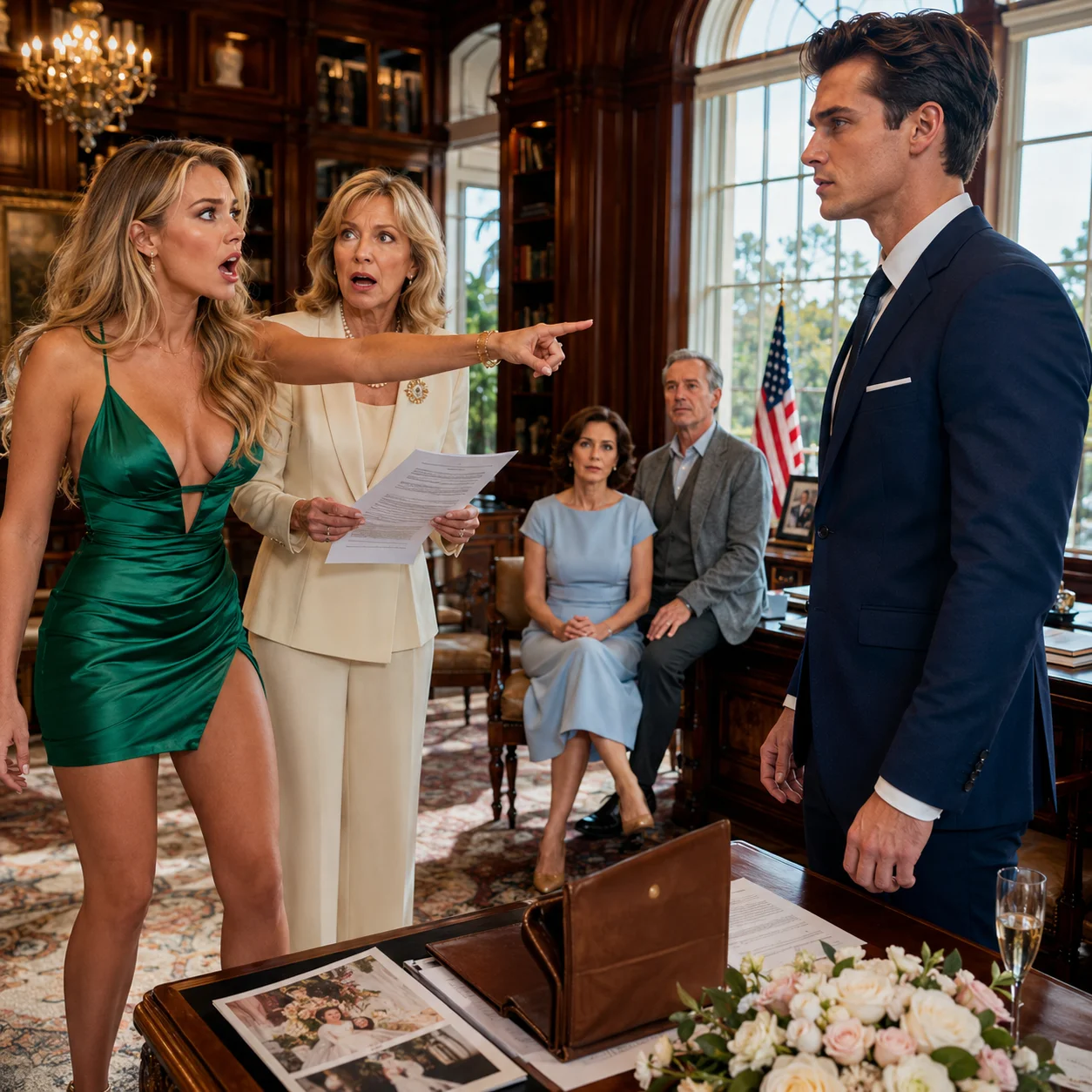
“I’m sorry,” Madison said, though her tone carried no apology. “But honestly, your son and I have worked really hard to create a certain kind of wedding. My family has put a lot into this. This is a very exclusive venue, and most people would be grateful just to attend an event here.”
Silence fell so sharply it felt physical.
My mother’s eyes widened.
My father’s hand dropped from my shoulder.
Madison continued, because people who believe they are being reasonable often cannot hear themselves becoming cruel.
“I don’t mean that badly,” she said. “I just mean this is a once-in-a-lifetime experience. Not everyone gets access to a place like Willow Creek. So maybe instead of criticizing every decision, we can all just appreciate the opportunity.”
My ears rang.
I stared at the woman I had planned to marry.
The woman who had cried when I proposed. The woman who had said she wanted a life with me. The woman who had kissed my mother’s cheek at Christmas and told my dad his homemade apple pie was amazing.
Now she was standing in a bridal suite paid for by a lie she had invented in her own head, telling my parents they should be grateful to be allowed inside.
My mother said nothing.
My father looked at Madison for a long moment.
Then he smiled.
Not warmly.
Not kindly.
Just calmly.
“Madison,” he said, “you’re right about one thing. Not everyone gets access to this place.”
Patricia gave a small satisfied nod, clearly mistaking his tone for agreement.
Then my father turned to Celeste.
“Would you mind giving us a few minutes in the library?”
Celeste did not hesitate.
“Of course, Mr. Bennett.”
Madison’s head snapped toward her.
Mr. Bennett.
Not Tom.
Not the groom’s father.
Mr. Bennett.
Patricia noticed too.
A tiny crease appeared between her eyebrows.
“The library?” Patricia asked. “Why would we need the library?”
My father looked at her. “Because I think this conversation should happen sitting down.”
No one moved for a second.
Then Celeste stepped into the hallway and gestured with professional grace.
“This way, please.”
The library was my favorite room at Willow Creek. Dark wood shelves, leather chairs, a long antique table, and tall windows looking out toward the oldest oak on the property. It smelled faintly of cedar and paper. As a kid, I had curled up in that room during summer storms while my mother handled invoices and my father met with architects, lawyers, groundskeepers, and conservation officers.
But Madison had never known that.
I had told her my parents owned “some property.” I had told her they worked in “land management and restoration.” I had told her I grew up near Willow Creek, not in it, because my parents had always separated our private home from the public business.
The estate itself had once belonged to a steel family, then sat abandoned for almost a decade until my parents bought it when I was twelve. Not with inherited money. Not with luck. With twenty years of careful investments, my mother’s genius for historic preservation grants, my father’s work restoring neglected farmland, and one risky decision that nearly bankrupted them before it made them wealthy.
They restored Willow Creek slowly.
They did not put their name on billboards.
They did not appear in wedding magazines.
They hired staff, created a trust, built a business structure, and let the estate become known for elegance rather than ownership.
That was their way.
Quiet did not mean small.
It never had.
We entered the library one by one.
Madison’s confidence had begun to flicker.
Patricia looked irritated now, the way powerful people look when a script changes without their permission. Robert finally put away his phone.
My mother sat beside my father. I remained standing behind them.
Madison stood across the table from us.
“Evan,” she said, forcing a laugh. “What is happening?”
I did not answer.
Celeste stood near the door, hands folded.
My father looked at her. “Could you ask Martin to bring the file?”
“Yes, sir.”
The air changed again.
Sir.
Robert looked at me. “Evan?”
I met his eyes. “Let’s wait.”
Patricia’s smile had disappeared. “Wait for what?”
No one answered.
A minute later, Martin Hale, the estate’s general manager, entered the library carrying a leather folder. He was in his sixties, tall, silver-haired, and elegant in the way old professionals become when they have spent decades solving disasters quietly. He had known me since I was a kid with muddy shoes running through restricted hallways.
He nodded to my parents.
“Thomas. Elaine.”
Then to me.
“Evan.”
Madison stared.
Martin placed the folder in front of my father.
My father did not open it immediately.
Instead, he looked at Madison.
“I want to be clear,” he said. “We did not intend for this to be a conversation today. Elaine and I believed this was your wedding. We wanted you and Evan to enjoy the estate without feeling like you owed us anything.”
Madison’s mouth opened slightly.
Patricia stiffened. “Owed you?”
My mother spoke softly.
“Willow Creek belongs to our family.”
For three seconds, no one made a sound.
Then Patricia laughed.
It was sharp and disbelieving.
“I’m sorry?”
My father opened the folder and slid a document across the table.
“The estate is held under Bennett Heritage Properties. Elaine and I are the principal owners. Evan has a future interest in the trust, but day-to-day decisions are ours.”
Patricia stared at the document without touching it.
Robert leaned forward first.
He read the top page.
His face changed.
Not dramatically. Not like in movies where someone gasps and clutches their chest. His expression simply drained, one layer at a time, until all that remained was calculation and dread.
“Pat,” he said quietly.
Patricia snatched the page from the table.
Her eyes moved quickly.
Then slower.
Then stopped.
Madison whispered, “No.”
My father’s voice remained calm.
“Yes.”
Madison turned to me. “You knew?”
“I grew up here.”
Her face twisted with confusion, embarrassment, and anger. “Why didn’t you tell me?”
“I did tell you my parents owned property.”
“You said property! You made it sound like farmland!”
“It was farmland too.”
“That’s not the same thing!”
I looked at her. “Would it have changed how you treated them?”
She went silent.
That silence answered more honestly than any words could.
Patricia lowered the document, her fingers tight on the edge.
“This is highly inappropriate,” she said.
My mother blinked. “What is?”
“This entire situation. Concealing ownership while we planned a wedding here?”
My father tilted his head. “The contract was reviewed and signed like any other event agreement. You received the standard family discount through Evan. We did not interfere with your choices.”
“Family discount?” Robert said.
Martin answered. “The venue fee was reduced by seventy percent.”
Patricia looked like she might be sick.
Madison turned to her mother. “You said your friend got us preferred pricing.”
Patricia’s lips parted, but nothing came out.
Robert stared at his wife. “Patricia.”
She lifted her chin. “I made calls.”
Martin cleared his throat politely. “Mrs. Caldwell, your calls were received. The accommodation was approved by ownership because Mr. and Mrs. Bennett requested that their son’s wedding be supported discreetly.”
Supported discreetly.
The words hung in the air with devastating elegance.
My mother looked down at her hands again, but this time I knew it was not shame.
It was restraint.
Madison took a step toward me.
“Evan, I didn’t know.”
“No,” I said. “You didn’t.”
Her eyes filled quickly. Madison could cry beautifully. I had once thought that meant she felt deeply. Now I wondered how often tears had simply worked for her.
“I never would have said that if I had known,” she whispered.
And there it was.
Not I should never have said that.
Not I’m sorry I hurt them.
I never would have said that if I had known.
My father heard it too.
His expression did not change, but my mother closed her eyes.
I looked at Madison, and for the first time since I had met her, I saw the full shape of what I had ignored.
She was not sorry for humiliating my parents.
She was sorry she had misidentified them.
Patricia recovered faster than everyone else. People like her always did.
“Well,” she said, smoothing the front of her silk blouse. “This has clearly been an emotional misunderstanding. Elaine, Thomas, I’m sure you can understand how wedding stress creates tension. Madison adores Evan. We all do. There is no reason for this to become unpleasant.”
My father looked at her. “It became unpleasant when your daughter told my wife she should be grateful to attend our son’s wedding.”
Patricia’s cheeks flushed. “That was poorly worded.”
“It was clearly worded,” my mother said.
Everyone turned to her.
My mother was not loud. She had never needed to be. But when she spoke then, the room settled around her.
“I have spent this entire engagement trying to be kind,” she said. “I ignored the way you corrected my suggestions. I ignored the seating changes. I ignored being excluded from dress appointments, planning lunches, and the bridal suite. I told myself Madison was overwhelmed, and I told myself Patricia was protective of her daughter.”
Madison wiped at her cheek. “Elaine—”
My mother held up one hand.
“Please let me finish.”
Madison stopped.
My mother’s voice trembled once, then steadied.
“I would have loved you like a daughter. I tried to. I thought maybe once the wedding was over, once the pressure passed, we would find our way as family. But today you did not speak from stress. You spoke from belief. You believe people deserve respect only when they impress you.”
The room went completely still.
My mother looked at Patricia.
“And you taught her that.”
Patricia’s mouth tightened. “I will not be insulted.”
My father gave a dry smile. “Then you may understand how Elaine felt.”
Robert rubbed both hands over his face.
For the first time, he looked exhausted rather than arrogant.
“Thomas,” he said carefully, “what are you proposing?”
My father looked at me.
That was the moment I realized he was not going to decide for me.
He could have canceled everything. He could have removed the Caldwells from the estate with one call. He could have told Martin to terminate the contract for cause or let the wedding proceed and charge them full price.
But he looked at me because it was my life.
My mistake.
My decision.
Madison saw that too.
She rushed toward me and grabbed my hand.
“Evan, please. I was wrong. I said something awful. I know I did. But we can fix this. We love each other.”
I looked at her hand on mine.
Three weeks earlier, that touch would have softened me.
Now it felt like a performance.
“Do we?” I asked.
Her face crumpled. “How can you ask that?”
“Because I’m not sure you love me. I think you loved the version of me that didn’t challenge your image.”
“That’s not fair.”
“Isn’t it?”
She shook her head. “I was stressed. My mom has been pressuring me. The wedding has been so much. I made a mistake.”
I glanced at my parents.
My mother’s eyes were wet now. My father’s hands were folded in front of him.
I thought about all the little moments I had dismissed. Madison asking if my parents could “dress appropriately” for the engagement party. Madison suggesting we keep speeches short because my dad “wasn’t used to formal crowds.” Madison telling me not to mention my mother’s canning hobby in front of her friends because “they won’t get it.” Madison laughing when my parents gave us a handmade quilt, then calling it “cute in a rustic way” after they left.
A wedding does not create a person’s character.
It reveals where the cracks already were.
I gently removed my hand from hers.
“I need everyone except my parents to leave the room,” I said.
Madison stared at me. “What?”
“I need to talk to them.”
Patricia stepped forward. “Absolutely not. We are not being dismissed like staff.”
Martin’s voice cut through smoothly. “Mrs. Caldwell, this is a private family matter.”
Patricia turned on him. “Do you know who you’re speaking to?”
Martin looked at her with almost bored politeness. “Yes.”
That single word was enough.
Robert stood.
“Patricia,” he said. “Come on.”
“We are not leaving.”
“Yes,” Robert said quietly. “We are.”
Madison looked at him, panicked. “Dad?”
Robert’s eyes softened, but his voice stayed firm.
“Give him a minute.”
Patricia left first, stiff-backed and furious. Robert followed. Madison remained frozen until Celeste gently touched the doorframe and said, “Miss Caldwell.”
Madison looked at me one last time.
“Evan, don’t do this because of one sentence.”
I almost laughed, but it would have come out broken.
“It wasn’t one sentence.”
She left.
The door closed.
For a while, I just stood there.
Then my mother rose and came to me.
“I’m sorry,” she whispered.
That undid me.
I had watched her get insulted, excluded, belittled, and humiliated, and she was apologizing to me.
“No,” I said, pulling her into a hug. “Mom, no.”
Her arms wrapped around me, and for a moment I was twelve years old again, muddy from the lake trail, hiding in the library after breaking a vase I thought would get me in trouble. She had found me then too. She had never led with anger.
My father put a hand on my back.
“Son,” he said quietly, “you don’t have to decide everything in this room.”
“I think I already have.”
My mother pulled back, searching my face.
“Are you sure?”
I looked toward the closed door.
I thought about the wedding invitations already sent, the deposits paid, the guests expecting celebration, the humiliation that would follow. I thought about Madison crying, apologizing, maybe convincing me that she could change. I thought about marrying into a family where my parents would always be evaluated by usefulness and appearance.
Then I thought about my mother standing outside the bridal suite, being told she did not belong.
“Yes,” I said. “I’m sure.”
My father nodded once.
No celebration. No dramatic smile.
Just recognition.
“What do you want to do?” he asked.
“I want to cancel the wedding.”
My mother’s eyes filled again, but this time she nodded.
“Then we’ll help you do it properly.”
That was my parents.
Even in heartbreak, there was a process.
Martin returned after my father called him in. Celeste came too. I asked them what needed to happen. Celeste explained the vendor notifications. Martin explained the estate contract. Since ownership was family-held and the event was three weeks out, they could release vendors quickly and minimize damage. Some deposits would be lost. Some could be transferred. The guest list would need formal notification.
My father offered to cover any cancellation fees that fell on my side.
I refused.
He did not argue.
He just said, “Then we’ll review the numbers together.”
When we finally stepped out of the library, Madison was waiting in the hallway.
Her makeup was perfect except for the tears. Patricia stood behind her, arms crossed, expression carved from stone. Robert was near the window, staring at the lake.
Madison rushed forward.
“Evan?”
I stopped a few feet away.
“I’m canceling the wedding.”
Her face went blank.
“No.”
“I’m sorry.”
“No,” she said again, louder. “You don’t get to do this. Not like this. Not three weeks before the wedding.”
I nodded. “I know the timing is terrible.”
“The timing?” She laughed, sharp and disbelieving. “My entire family is invited. My friends. My coworkers. People are flying in.”
“I understand.”
“You understand?” Her voice cracked. “You’re humiliating me.”
That word.
Humiliating.
I looked at her for a long moment.
“Madison, you humiliated my parents in a room full of people today. You humiliated them quietly for months. The difference is, they never cared about social embarrassment. They cared about being treated like family.”
Her mouth trembled.
“I said I was sorry.”
“No. You said you wouldn’t have done it if you’d known they owned the estate.”
She flinched.
Patricia stepped forward. “This is emotional blackmail.”
My father’s eyes sharpened.
I held up a hand before he could speak.
“No, Mrs. Caldwell. Emotional blackmail would be using the estate to force your daughter into respect. I’m doing the opposite. I’m removing myself from a marriage where respect depends on status.”
Robert spoke then.
“Evan.”
I turned.
He looked older than he had that morning.
“I owe your parents an apology.”
Patricia snapped, “Robert.”
He ignored her.
He walked toward my mother and father, stopping a respectful distance away.
“Elaine. Thomas. I am sorry. I should have said something before today. I saw more than I admitted.”
My mother nodded, but her expression remained guarded.
“Thank you,” she said.
Patricia stared at her husband as if he had betrayed a blood oath.
Madison looked between all of us.
“Dad, what are you doing?”
Robert turned to her, and for once, there was no indulgence in his face.
“I’m telling the truth.”
Madison shook her head. “You’re taking their side?”
“I’m not taking sides,” Robert said. “I’m recognizing conduct.”
Patricia laughed coldly. “Conduct. Wonderful. Now we’re all morally enlightened because the Bennetts turned out to be rich.”
My father’s voice dropped.
“Patricia, you still don’t understand.”
“Oh, I understand perfectly.”
“No,” he said. “You think this is about money. It isn’t. If Elaine and I had arrived today in that truck with nothing but our names and our son’s love, your daughter’s words would have been just as ugly.”
Patricia opened her mouth, then closed it.
For once, she had no clean response.
Madison wiped her face. “So that’s it? You’re just done?”
I looked at her.
“I hope someday you understand why.”
Her eyes hardened.
“There it is,” she whispered. “You think you’re better than me now.”
“No,” I said. “That’s the difference between us. I never needed to.”
I gave Celeste permission to begin cancellation procedures. Madison made one more attempt to pull me aside, but I refused to separate from my parents. Patricia demanded copies of every contract. Martin provided them. Robert asked for a private moment with my father about outstanding vendor obligations. My father agreed.
It was strange how quickly a wedding could become paperwork.
Three hours earlier, Willow Creek Estate had been Madison’s dream.
By sunset, it was the place where the truth had caught up with us.
The next few days were brutal.
There is no graceful way to cancel a wedding three weeks before it happens. People ask questions. Some because they care, some because they are bored, and some because disaster tastes sweet when it belongs to someone else.
Madison posted first.
She wrote a long message about “unexpected betrayal,” “private pain,” and “choosing herself after being blindsided.” She did not mention what she had said to my parents. She did not mention Willow Creek. She did not mention the library.
Her friends flooded the comments.
You deserve better.
He showed his true colors.
So cruel to do this before the wedding.
My phone lit up for two days straight.
Some messages were kind.
Some were confused.
Some were ugly.
Madison’s bridesmaid Lauren texted me: You could’ve handled this like a man.
I almost replied.
Then I deleted the message.
My mother cried once when she thought I could not hear her. My father spent most evenings on the porch, quiet and angry in the way men of his generation often become when they know violence is not an option and words are insufficient.
On the third day, Robert called me.
I nearly did not answer.
But something told me to.
“Evan,” he said. “I won’t keep you long.”
“It’s okay.”
“I wanted you to know I spoke with Madison.”
I waited.
“She’s not ready to hear it,” he said. “But I told her she owes your parents a real apology. Not because of the estate. Because of what she said.”
I leaned against my kitchen counter.
“Thank you.”
He sighed. “Patricia is furious.”
“I assumed.”
“She’s telling people your family misled us.”
“My family gave you a discounted wedding at one of the best estates in the state.”
“Yes,” he said quietly. “I know.”
There was a pause.
Then Robert said, “I also wanted to apologize to you. I let Patricia run too much of our lives for too long. Madison learned things from us that I should have corrected when she was young.”
I did not know what to say to that.
So I said the only honest thing.
“I loved your daughter.”
“I know,” he replied. “I think part of her loved you too. But part of her loved the wedding more.”
That hurt because it was true.
A week after the cancellation, Madison came to my house.
I saw her through the doorbell camera before she knocked. She looked different without the wedding glow around her. Still beautiful, but tired. Her hair was loose, her face pale, her eyes swollen.
I opened the door but did not invite her in.
She noticed.
“I guess I deserve that,” she said.
I said nothing.
She crossed her arms around herself.
“My mom has been calling everyone. She’s making it worse.”
“I know.”
“I told her to stop.”
“Did you?”
Her eyes flashed. “Yes, Evan. I did.”
I nodded.
She looked past me into the house we had planned to share after the wedding. Her side of the closet was still empty now. The framed engagement photo was gone from the hallway. I had taken it down two nights earlier, then stood there holding it like an idiot, unable to throw it away.
“I came to apologize,” she said.
I waited.
She swallowed.
“What I said to your parents was horrible. Not because of who they turned out to be. Because they’re your parents, and they were kind to me. Your mom was always kind to me.”
My chest tightened.
“That’s true.”
Madison’s eyes filled.
“I hated feeling like your side was smaller,” she admitted. “Less polished. Less… impressive. And I know how awful that sounds.”
“It does sound awful.”
She flinched but nodded.
“My whole life, my mother taught me that presentation protects you. That people respect you when everything looks perfect. I didn’t realize how much I believed it until I saw your parents and thought they didn’t fit the picture.”
“Madison.”
“I know.” She wiped her cheek. “I know. That’s not an excuse.”
For the first time, she sounded less like someone trying to win and more like someone who had finally heard herself.
But hearing herself did not undo what had happened.
“I appreciate you saying that,” I told her.
Her lips trembled.
“Is there any way back?”
I looked at the woman I had almost married.
I wished the answer felt complicated.
But it did not.
“No.”
She closed her eyes.
I continued, gently but clearly.
“I hope you grow from this. I mean that. I hope you become someone who never makes another person feel small because they don’t match the room. But I can’t marry you while you’re learning that lesson.”
She cried silently.
Then she nodded.
“I’m sorry, Evan.”
“I know.”
She turned to leave, then stopped.
“Will you tell your mom I’m sorry?”
“You should write to her yourself. Not text. A real letter. No excuses.”
Madison nodded again.
“I will.”
And she did.
Three days later, my mother received a handwritten letter. She did not show it to me at first. Later, she told me it was imperfect, but sincere. Madison apologized for the bridal suite, the seating chart, the comments, the assumption that kindness was weakness and simplicity was failure.
My mother kept the letter in a drawer.
Not because all was forgiven.
Because she believed evidence of someone trying to become better should not be thrown away carelessly.
The wedding date arrived anyway.
That is the cruel thing about canceled weddings. The calendar does not care that your life changed. The day still comes, bright and ordinary, wearing the shape of what should have happened.
I woke up early that morning with a hollow feeling in my chest.
By noon, I could not stay in my house.
I drove to Willow Creek.
The estate was quiet. No florist trucks. No valet signs. No string quartet tuning under the oak trees. The ceremony garden was empty except for the white rose arch, which my mother had decided to leave up for a charity event the following weekend.
I walked down the aisle alone.
At the front, near the lake, my father was fixing a loose board on the small wooden platform where Madison and I would have stood.
Of course he was.
The man owned an estate worth more than most people could imagine, and he was still out there with a toolbox on a Saturday morning.
He looked up when he heard me.
“Hey, son.”
“Hey.”
He tightened one last screw, then stood.
For a while, we watched the lake.
Finally, I said, “I feel stupid.”
Dad wiped his hands on a cloth.
“For loving her?”
“For not seeing it sooner.”
He nodded slowly.
“Love makes people generous with explanations.”
“That’s one way to put it.”
He smiled faintly.
I looked at him. “Were you upset I didn’t tell her about the estate?”
“No.”
“Really?”
“No,” he said. “Your mother and I raised you to know people without leading with money. You did that. Madison told you who she was when she thought money wasn’t in the room.”
The words landed hard.
“But I should’ve protected Mom.”
Dad’s expression softened.
“You did.”
“I didn’t.”
“You did when it counted.”
“That feels late.”
“Sometimes it is,” he said. “But late is better than never.”
My mother found us a few minutes later carrying three cups of coffee from the estate kitchen. She handed one to me and kissed my cheek.
“No sad faces,” she said, though her own eyes were soft. “This is still a beautiful day.”
I looked around the empty garden.
“Doesn’t feel like it.”
“It will,” she said.
And somehow, standing between my parents under the arch where I had expected to become someone’s husband, I believed her.
In the months that followed, life became quieter.
The story made its way through our social circles, of course. The public version changed depending on who told it. Madison’s friends said I had blindsided her. Patricia’s friends said the Bennetts had “hidden their wealth” in a way that felt manipulative. Robert, to his credit, corrected people when he heard lies.
My own friends were less diplomatic.
My college roommate, Adam, showed up with beer and takeout and said, “So your villain origin story is that your secret-rich parents got insulted at their own wedding estate?”
I laughed for the first time in weeks.
“Pretty much.”
“Man,” he said, shaking his head. “Some people fumble generational wealth and emotional stability at the same time.”
I nearly choked on my drink.
Slowly, I started feeling human again.
I went back to work. I ran in the mornings. I helped my father repair fencing on the north side of the property. I helped my mother plan the charity event that replaced the wedding on the estate calendar.
That event turned out to be for a local children’s hospital.
The same reception hall that had been prepared for Madison’s perfect wedding filled instead with doctors, nurses, donors, and families whose children had survived things no child should ever face. My mother wore the pale blue dress she had planned to wear to my wedding. My father wore the same gray jacket.
This time, no one made them feel small.
At one point in the evening, I saw my mother standing near the fireplace, speaking with a young couple whose son had been treated at the hospital. The woman was crying. My mother held both her hands and listened with her whole face.
That was elegance.
Not chandeliers.
Not imported orchids.
Not seating charts arranged by social value.
Elegance was my mother making a stranger feel seen in a room full of wealthy people.
Across the hall, my father helped an elderly guest fix the wheel on her walker. He crouched in his dress shoes, tightening a bolt with a tool he had somehow produced from his jacket pocket.
That was refinement.
Not pretending to be above practical things, but being secure enough to kneel when someone needed help.
I thought about Madison then, but not with anger.
With sadness.
She had stood so close to something real and mistaken it for something beneath her.
Near the end of the night, Robert Caldwell arrived.
Alone.
I saw him at the entrance speaking with Celeste. For a moment, I considered avoiding him, but then he spotted me and walked over.
“Evan.”
“Robert.”
He looked around the hall. “Your parents did something good tonight.”
“They usually do.”
He nodded. “I made a donation.”
“You didn’t have to.”
“I know.”
We stood in silence for a moment.
Then he said, “Madison moved out of her mother’s house.”
I looked at him.
“She’s staying with a friend. Started therapy. Got a job with a nonprofit event planner.”
That surprised me.
Robert smiled faintly. “Yes. Actual work. Less glamorous than bridal tastings.”
I did not know how to feel.
“I hope she’s doing okay,” I said, and meant it.
“She’s trying,” he said. “I think losing you hurt her. But realizing why she lost you hurt more.”
I looked across the room at my parents.
“That’s probably the part that matters.”
Robert followed my gaze.
“You know,” he said quietly, “when Patricia found out your parents owned the estate, she was angry because she felt tricked. I was angry because I realized we had been tested without knowing it.”
“You weren’t tested.”
“No,” he said. “But character always feels like a test when you fail it.”
I did not answer.
He extended his hand.
I shook it.
After he left, my mother came up beside me.
“Was that all right?”
“Yeah,” I said. “It was.”
She looked toward the entrance where Robert had disappeared.
“People can change.”
“Do you think Madison will?”
My mother considered that.
“I think pain can open a door. But people still have to walk through it.”
A year passed.
Willow Creek became busier than ever. Ironically, the canceled wedding brought attention to the estate after gossip leaked, though Martin handled inquiries with his usual discretion. My parents refused interviews. Patricia’s social circle eventually moved on to newer scandals. Madison never contacted me again after sending my mother the letter, except once, eight months later, to mail back a box of old photos and a note wishing me peace.
I kept the note.
Not because I wanted her back.
Because it reminded me that endings do not have to be hatred to be final.
On the anniversary of what would have been our wedding weekend, my parents hosted Sunday dinner at the farmhouse. Not the estate. The farmhouse. The place the Caldwells would have dismissed in ten seconds if they had seen it without context.
My mother made roast chicken, green beans, mashed potatoes, and apple pie. My father opened a bottle of wine someone had given him years earlier that he had saved for “a day that deserves it.”
“What day is that?” I asked.
He shrugged. “Today.”
We ate on the back porch while the sun went down over the fields.
No chandeliers.
No imported flowers.
No one arranging people by status.
Just my parents, me, and the quiet comfort of being loved without needing to prove why I deserved it.
After dinner, my mother brought out a small envelope.
“What’s this?” I asked.
She smiled. “Something your father and I should have given you sooner.”
Inside was a copy of updated trust documents.
I stared at the pages.
“Mom.”
“Don’t panic,” Dad said. “We’re not retiring tomorrow.”
My mother laughed. “He wouldn’t know how.”
Dad ignored that. “But we’ve officially added you as operating successor for Willow Creek. Martin will still run daily management, and nothing has to change quickly. But when the time comes, it should be clear.”
I looked down at the documents, then back at them.
“I don’t know what to say.”
Dad leaned back in his chair.
“Say you’ll remember what the estate is for.”
I swallowed.
“What is it for?”
My mother reached across the table and touched my hand.
“Not impressing people,” she said. “Welcoming the ones who know how to respect it.”
That stayed with me.
Two years later, I stood again under the white rose arch at Willow Creek.
But this time, I was not the groom.
Not yet.
I was officiating my cousin’s wedding because she had insisted no one else could tell their story properly. The ceremony was small, joyful, and beautifully imperfect. Someone’s toddler cried halfway through the vows. The groom’s grandmother dropped her program. My father forgot to silence his phone, and the ringtone played three notes of an old country song before he managed to shut it off.
Everyone laughed.
No one looked embarrassed.
After the ceremony, as guests moved toward the terrace, I stayed behind for a moment.
The lake shimmered gold in the evening light.
The rose arch swayed gently in the breeze.
I thought about the version of myself who had once stood there heartbroken, convinced that a canceled wedding meant failure. I wished I could tell him the truth.
Sometimes losing the wedding saves the marriage you would have had with regret.
Sometimes humiliation is not the moment someone else makes you look small, but the moment you realize how long you were willing to shrink the people who loved you just to keep someone beside you.
And sometimes, the greatest inheritance your parents give you is not land, or money, or an estate with a lake and chandeliers.
Sometimes it is the quiet certainty that love without respect is not love at all.
My parents were standing near the reception hall when I walked back.
Dad had one arm around Mom’s shoulders. She was laughing at something Uncle Ray had said, her face bright and open and completely at home.
For years, I had thought Willow Creek was the most beautiful thing they owned.
I was wrong.
The most beautiful thing they owned was the way they never needed to prove their worth to anyone.
And because of them, neither did I.
![[FULL STORY] My Girlfriend Framed Me As A Creep After I Caught Her Cheating On Her Own Security Cameras That I Installed For Her Safety.](https://social-media.rabedo.com/thumbnails/1776925520_8.png)
![[FULL STORY] My fiancée said at her bachelorette party: "One last night of freedom, then get ready to settle for](https://social-media.rabedo.com/thumbnails/1776913066_15.png)
![[FULL STORY] She Left Our Friend’s Party With Another Guy And Texted Saying It Just Happened. I Replied Okay ...](https://social-media.rabedo.com/thumbnails/1777223905_C20.png)