I forced a smile.
“Right.”
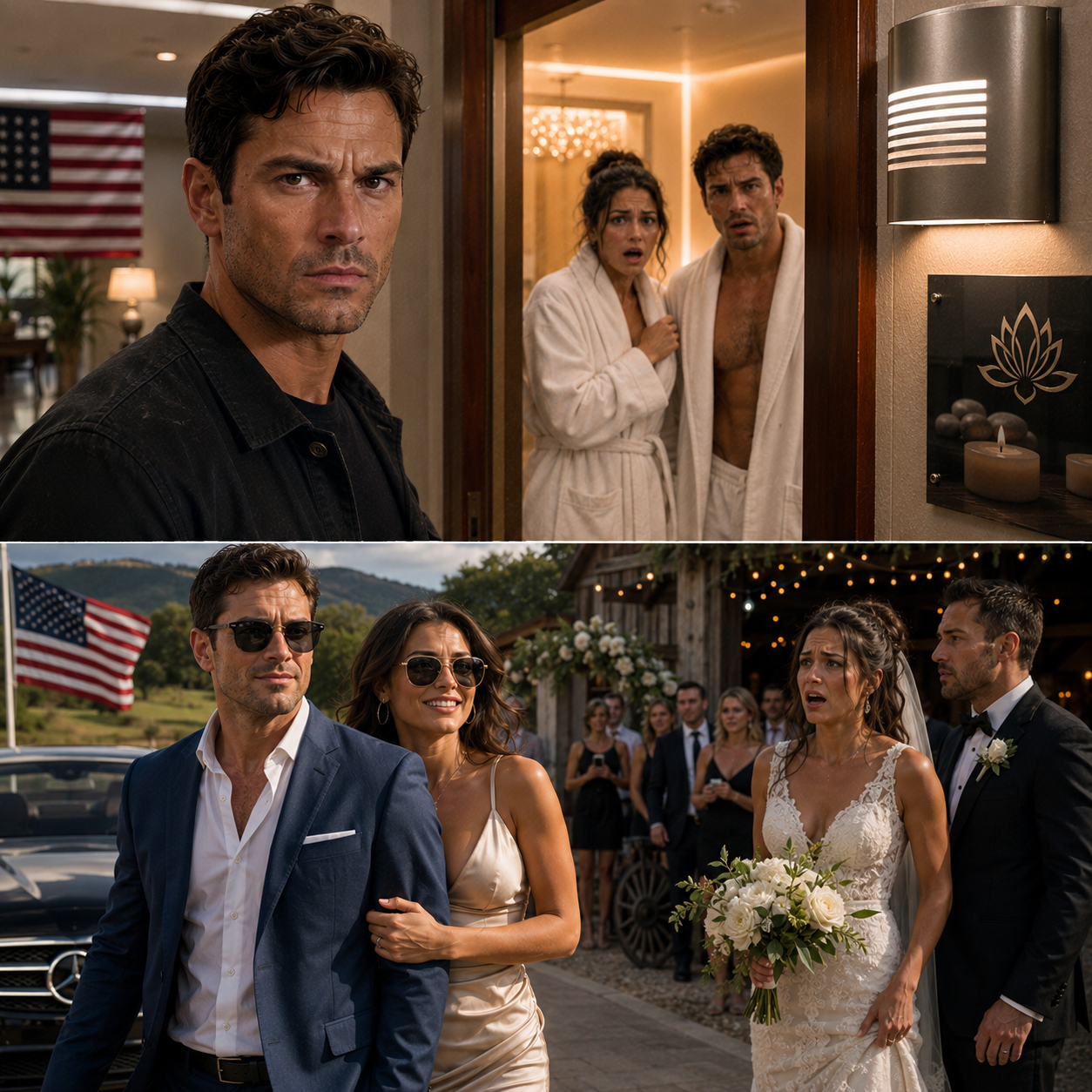
She kissed me and reached for her phone. For one second, when she saw the notification, her face changed.
It was fast.
Too fast for someone who was not watching.
But I was watching.
Her eyes flicked up to mine. Then back down. Then she locked the screen.
“Everything okay?” I asked.
“Yeah. Just work.”
“On a Friday night?”
“Client drama. Nothing I can fix right now.”
I nodded.
She left twenty minutes later.
I stood at the window and watched her car pull out of the lot. For the first time in three years, I felt something cold and ugly crawl under my ribs.
Suspicion is not a lightning strike. Not at first. It is more like a small leak under the sink. You notice the dampness, then convince yourself it is nothing, then one day the cabinet floor is rotting.
That night, I almost called her.
I almost asked who D.M. was.
Instead, I sat on my couch with the television on mute and told myself not to be that man. Not jealous. Not insecure. Not the boyfriend who turns one message into an accusation.
At 8:51 p.m., she texted.
Made it. Grandma’s awake tonight, so I may not answer much. Love you.
I typed, Love you too.
Then I deleted it.
Then I typed it again and sent it.
The next morning, I did something I had never done before.
I searched Margaret Whitmore online.
At first, I felt disgusting. Like I had crossed some invisible line. But I told myself it was harmless. I just wanted to know more about the woman who had taken so many weekends from our life.
Margaret Whitmore Ashford Crossing Virginia.
The first results were property records and an old church newsletter. Then a local gardening club page from years ago. Then a newspaper archive with a small article about a fundraiser.
Nothing unusual.
No obituary.
I felt relieved and ashamed.
I closed the laptop.
But the leak under the sink kept spreading.
Two weeks later, Olivia forgot her charger at my place.
She had already left for Ashford Crossing when I noticed it plugged into the wall beside the bed. Her phone battery was terrible; she complained about it constantly. I called her.
No answer.
I texted.
You forgot your charger. Want me to overnight one or drop it somewhere tomorrow?
No reply for almost two hours.
Then:
It’s okay, Mom has one.
That was not strange.
But then, at 11:38 p.m., my friend Marcus sent me a photo.
He was at a rooftop bar downtown with his girlfriend and a group of coworkers. The photo showed six people around a fire pit, glasses raised, city lights behind them.
His message said:
Isn’t this Olivia’s friend from work? The redhead?
I zoomed in.
The redhead was Olivia’s coworker Tessa.
Sitting beside Tessa, half-turned away from the camera, was a woman in a black dress with curled dark blonde hair and small gold earrings.
Not Olivia.
No, I told myself immediately.
It only looked like her.
The angle was bad. The lighting was low. Lots of women had blonde hair and gold earrings.
But my hands went cold anyway.
I typed:
Where is this?
Marcus replied:
Monroe rooftop. Why?
I stared at the woman again.
Then I called Olivia.
Straight to voicemail.
I called a second time.
Voicemail.
At 12:06 a.m., she texted.
Grandma finally settled. I’m going to sleep. Everything okay?
I looked at the photo.
Then at her message.
Then back at the photo.
Yeah, I replied. Just checking on you.
I did not sleep that night.
The next day, Olivia came home with peach cobbler.
She looked exhausted. No makeup. Hair in a messy bun. Sweatshirt, leggings, sneakers. She dropped her bag in the hallway and leaned into me.
“I’m so tired,” she murmured.
I smelled lavender lotion.
I almost asked her about Monroe rooftop.
But she looked so convincingly worn down that my courage collapsed.
Instead, I kissed her forehead and said, “Go shower. I’ll heat dinner.”
For another month, I lived in that miserable space between trust and proof.
I became someone I did not like.
I noticed everything. How long she took to answer texts. Whether her hair was freshly washed when she came back. Whether her stories repeated too neatly. Whether the mileage on her car matched a trip to Ashford Crossing.
I did not install trackers. I did not go through her phone. I did not follow her.
But I thought about it.
That alone made me feel sick.
The end began with my mother.
It was a Wednesday evening. I was at her house fixing a loose cabinet hinge when she said, “By the way, are you and Olivia going to that funeral on Saturday?”
I looked up from the screwdriver.
“What funeral?”
Mom frowned. “For Margaret Whitmore.”
The room changed shape around me.
“What did you say?”
“Margaret Whitmore,” she repeated. “Isn’t that Olivia’s grandmother? I saw something on the Ashford Crossing community page. A Whitmore family funeral. I assumed that was her.”
My mouth went dry.
“When?”
“This Saturday, I think. At some funeral home near Main Street.”
I forced myself to breathe.
“Can you show me?”
Mom pulled out her phone and found the post. It was not an obituary exactly. More like a community announcement from a church page.
Memorial service for Mrs. Evelyn Whitmore, beloved sister of the late Margaret Whitmore, Saturday at 11 a.m.
The late Margaret Whitmore.
Late.
As in dead.
My mother did not notice my face at first.
Then she did.
“Honey?”
I took the phone from her and read it again.
Beloved sister of the late Margaret Whitmore.
Maybe it was another Margaret.
Maybe Olivia’s grandmother had the same name as a dead relative.
Maybe I had misunderstood.
Maybe.
That is the thing about denial. It does not need strong evidence. It only needs a maybe.
I went home and searched again, this time deeper.
Margaret Evelyn Whitmore Ashford Crossing obituary.
Nothing.
Then I searched only:
Margaret Whitmore obituary Virginia.
There it was.
A funeral home page.
Margaret Anne Whitmore.
Born 1944.
Died May 17, two years earlier.
Survived by her daughter, Diane Parker, and granddaughter, Olivia Parker.
My girlfriend.
The obituary had a photo of an elderly woman in a pale blue blouse, smiling beside a hydrangea bush.
I stared at that photo until my vision blurred.
Olivia’s grandmother had been dead for two years.
Two full years.
Long before the Friday visits began.
Long before Olivia cried in my kitchen about not being recognized.
Long before she came home carrying peach cobbler supposedly baked by a woman buried in Ashford Crossing Cemetery.
I do not remember standing up.
I only remember finding myself in the bathroom, gripping the sink with both hands, staring at my reflection like it belonged to someone else.
My phone buzzed.
Olivia.
Hey baby. Long day. Can I come over tonight?
I almost laughed.
I almost threw the phone against the mirror.
Instead, I replied:
Sure.
She arrived at eight with takeout Thai food and a smile. She kissed me like nothing in the world had shifted.
“You’re quiet,” she said while unpacking noodles at the kitchen island.
“Long day.”
“Want to talk about it?”
I looked at her.
Really looked.
This woman had slept beside me. She had met my parents. She knew the names of my childhood dogs. She had held my hand in the hospital when my father had a heart scare. She knew I wanted two kids and a house with a porch. She knew I was saving for a ring.
And every weekend, she had looked me in the eye and used a dead woman as her alibi.
“No,” I said. “Not tonight.”
She studied me for a moment, then smiled too brightly.
“Okay. Then let’s just relax.”
That weekend, I told her I had to help my mother with something Saturday morning, so I could not see her before she left.
Olivia seemed relieved.
“Grandma’s been bad this week anyway,” she said. “I’ll probably need to stay focused.”
“Of course.”
On Saturday morning, I put on a dark suit and drove to Ashford Crossing.
I told myself I was going to the funeral for answers.
Not to make a scene. Not to confront her in public. Not to humiliate anyone. Just to find the truth.
The funeral home was a white colonial building with black shutters and a circular driveway. A small American flag moved gently near the entrance. Cars lined the street. People in dark clothes walked slowly toward the doors, speaking in low voices.
I parked two blocks away because my hands were shaking too badly to pull into the lot.
Inside, the air smelled like lilies, carpet cleaner, and old wood. A framed portrait of Evelyn Whitmore sat near the guest book. She looked like an older version of the woman from Margaret’s obituary.
I signed my name because I did not know what else to do.
A woman in her sixties greeted me near the entrance to the viewing room.
“Thank you for coming,” she said.
“I’m sorry for your loss.”
“Were you a friend of Evelyn’s?”
I hesitated.
“I’m connected to the family through Olivia Parker.”
Her expression changed.
Not dramatically. Just enough.
“Oh.”
That one syllable told me more than I wanted to know.
“You know Olivia?” I asked.
The woman looked past me, as if checking whether anyone was listening.
“I’m her aunt. Diane’s sister-in-law. I’m Carol.”
“I’m Daniel,” I said. “Olivia’s boyfriend.”
Carol’s face went very still.
“Boyfriend?”
The word landed between us like a dropped glass.
Before I could answer, a man near the doorway turned his head.
He was around thirty-five, tall, dark-haired, wearing a black suit that fit like it had been tailored for him. He had one hand resting lightly on the shoulder of a woman I recognized from Olivia’s old family photos as her mother, Diane.
Then the man looked directly at me.
His expression tightened.
He knew who I was.
I had never seen him before in my life, but he knew me.
Carol whispered, “Oh, Lord.”
My heartbeat became painfully loud.
“Who is that?” I asked.
Carol’s eyes filled with something like pity.
“That’s David Miller.”
D.M.
The text.
Can’t wait for tonight. Same room?
The floor seemed to tilt.
“Who is David Miller?” I asked, though some part of me already understood.
Carol pressed her lips together.
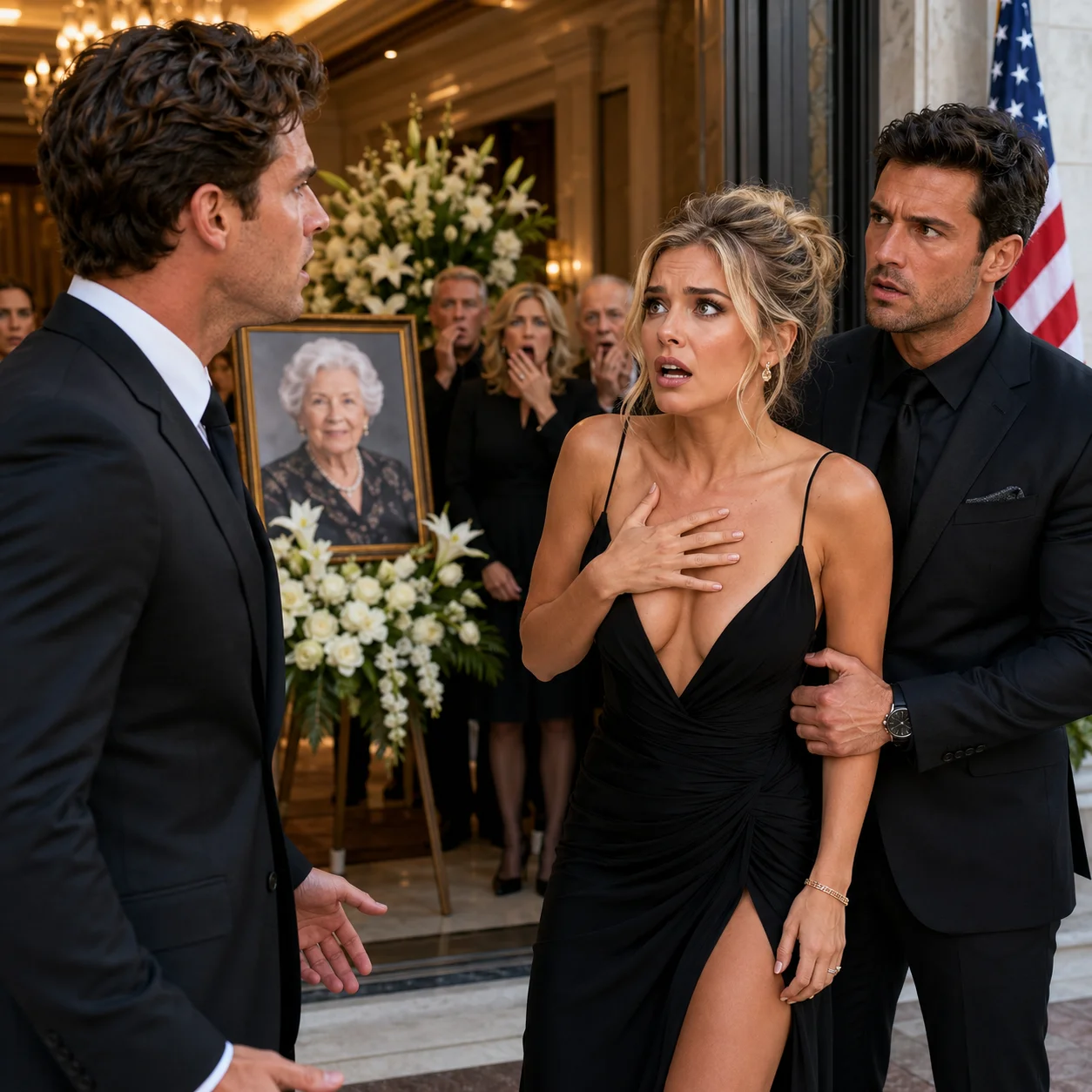
Before she could answer, Olivia walked into the room.
She was wearing a black dress I had never seen before. Elegant. Fitted. Her hair was pinned low at her neck. She looked composed, grieving, beautiful.
And when she saw me, every bit of color drained from her face.
Not surprise.
Terror.
“Daniel,” she whispered.
People turned.
David Miller looked from her to me.
Diane, her mother, closed her eyes like she had been waiting for this collision and could not stop it.
I did not yell. I did not move toward her. I did not even raise my voice.
I simply said, “Your grandmother died two years ago.”
The silence that followed was so complete I could hear someone crying softly in the next room.
Olivia’s mouth opened, then closed.
“Daniel, please,” she said.
“Please what?”
“This is not the place.”
I looked around the funeral home. At the flowers. At the grieving relatives. At the portrait of Evelyn Whitmore, whose funeral I had crashed because the woman I loved had built a lie around her dead sister.
“You’re right,” I said quietly. “This is not the place.”
Then David stepped forward.
“I think you should leave.”
It was such a stupid thing for him to say that I almost smiled.
“And you are?”
His jaw tightened.
“Someone who actually belongs here.”
Olivia flinched.
That flinch was the confirmation.
Not the obituary. Not the text. Not the rooftop photo. That tiny involuntary movement told me everything.
I looked at her left hand.
No ring.
Then I looked at David’s.
Wedding band.
My stomach dropped again.
Carol murmured, “David, don’t.”
But he kept staring at me like I had invaded his life.
His life.
That was when I understood the full shape of the betrayal.
Olivia had not just been cheating.
She had been with a married man.
Maybe for months. Maybe longer.
And his family knew enough to recognize me as the fool who had not been told.
I turned to Olivia.
“How long?”
Her eyes shone with tears.
“Daniel.”
“How long?”
She looked at David. He gave the smallest shake of his head, like warning her not to answer.
That made something inside me go cold and clear.
I took out my phone.
Olivia’s eyes widened.
“What are you doing?”
“Calling your mother’s number,” I said.
Diane opened her eyes.
“Daniel, wait.”
I looked at her.
“You knew?”
She started crying.
That was answer enough.
I lowered the phone.
Nobody said anything for several seconds.
Then Diane whispered, “She told me she was ending it.”
David’s wife was there.
I did not know that until the woman standing near the first row turned around.
She was maybe thirty-three, with auburn hair tucked behind her ears and a pale face that had gone completely blank. She held a folded program in both hands. On her left hand was a wedding ring.
“Ending what?” she asked.
David’s whole posture changed.
“Megan,” he said.
The woman looked at Olivia.
Then at me.
Then at her husband.
“Ending what?” she repeated.
No one answered.
I had not meant to expose the affair in front of a grieving family. I had not come for revenge. But lies have a way of choosing their own stage when too many people are holding pieces of the same secret.
Megan walked toward us slowly.
“David,” she said, her voice trembling. “What is she talking about?”
David reached for her arm. “Let’s step outside.”
She pulled away.
“No. Say it here.”
Olivia covered her mouth.
And there it was. The scene I never would have chosen, unfolding under funeral home lights beside a dead woman’s flowers.
I felt suddenly exhausted.
I looked at Megan and said, “I’m sorry.”
She stared at me. “Who are you?”
“Olivia’s boyfriend.”
Her lips parted.
Then she laughed once, sharply, like someone had hit her.
“Boyfriend?”
I nodded.
“For three years.”
Megan’s face broke.
David said, “This is not what you think.”
That sentence should be illegal. No one says it unless things are exactly what you think.
Megan looked at Olivia.
“Were you with my husband?”
Olivia was crying now, silently, beautifully, uselessly.
“I’m sorry,” she whispered.
Megan staggered back as if the apology had physical weight.
Carol rushed to her side. Diane sobbed into a tissue. David kept saying Megan’s name. Olivia kept looking at me like I was the cruel one for being there.
I left before it got worse.
Outside, the sun was too bright.
I walked to my car, loosened my tie, and sat behind the wheel without starting the engine. My hands shook so badly I had to press them against my knees.
My phone buzzed before I made it out of Ashford Crossing.
Olivia.
Then again.
Then again.
By the time I got home, she had called twelve times and sent seven messages.
Please let me explain.
I never wanted you to find out like that.
I was going to tell you.
It’s complicated.
I love you.
I stared at the last one for a long time.
Then I did the first smart thing I had done in months.
I did not reply.
Instead, I opened my laptop.
We did not live together officially, but Olivia had keys to my apartment, clothes in my closet, and access to several parts of my life she no longer deserved. She was an authorized user on one of my credit cards because I had added her when her own card got “temporarily frozen” during a supposed fraud issue. She had the password to my streaming accounts, my apartment gate code, and a spare key to my car because she borrowed it whenever hers was “acting weird.”
Love makes practical men impractical.
By the end of that night, I had changed every password, removed her from the card, canceled the spare key access through my car app, and emailed my leasing office that my personal key had been compromised and I needed the locks rekeyed.
Then I packed everything she owned.
I did not throw it into trash bags. I did not destroy anything. I folded her clothes. Wrapped her makeup in towels. Put her books, shoes, hair tools, and jewelry into boxes. The whole time, my phone kept lighting up.
Around midnight, Megan messaged me on Facebook.
I stared at her name for almost a minute before opening it.
I’m sorry to contact you. This is Megan Miller. I think we both deserve the truth. Could we talk tomorrow?
I replied:
Yes.
Then I sat on the edge of my bed and looked at the empty drawer where Olivia’s clothes had been.
That was when the grief finally hit.
Not anger. Not shock. Grief.
Because the woman I had loved had not died, but something had. Some imagined future. Some version of my life where trust had not been turned into a weapon.
I cried then.
Harder than I expected.
Quietly, because I hated the sound of it.
The next morning, Olivia came to my apartment.
I knew because the new lock camera showed her standing outside my door at 9:17 a.m., wearing yesterday’s black dress under a beige coat, mascara smudged beneath both eyes.
She knocked.
Then knocked again.
“Daniel,” she called through the door. “Please. I know you’re in there.”
I did not answer.
She tried her key.
It did not work.
Her face changed.
She looked directly into the camera.
“You changed the locks?”
I watched from the living room, phone in hand, feeling my chest tighten.
“Daniel, please open the door.”
I spoke through the camera.
“Your things are boxed. I’ll have them delivered to your mother’s house.”
She looked stunned by the sound of my voice.
“No. No, don’t do this through a camera. Let me talk to you.”
“You can email me anything important.”
“Email you?” she repeated, as if I had insulted her. “We were together for three years.”
“Yes,” I said. “And your grandmother was dead for two of them.”
She flinched.
Then her face crumpled.
“I know how bad it looks.”
“It looks like you used a dead woman as cover to sleep with a married man.”
She began to cry.
“It wasn’t like that.”
I almost laughed.
“How was it?”
She looked over her shoulder, embarrassed that a neighbor might hear.
“Can I please come inside?”
“No.”
“Daniel.”
“No.”
Her expression shifted then. The tears did not disappear, but something defensive sharpened beneath them.
“So that’s it? You don’t even want to hear my side?”
“I heard enough at the funeral.”
“You humiliated me in front of my family.”
I stared at the screen.
That was the first moment I truly understood that remorse and panic are not the same thing.
“You lied to me for months,” I said. “You humiliated Megan in front of her family. You dragged your dead grandmother into it. And you are standing outside my door worried that I embarrassed you?”
Her mouth tightened.
“I was going to end it.”
“When?”
She did not answer.
“Before or after I bought the ring?”
Her face went blank.
I had not meant to say that.
But once it was out, I was glad.
“Yes,” I said quietly. “I was looking at rings.”
For a moment, she looked genuinely devastated.
Then she whispered, “Daniel, I love you.”
“No,” I said. “You loved being loved by me. That’s different.”
She stood there for another minute.
Then she wiped her face, turned, and walked away.
I had her belongings delivered to her mother’s house the next day. I paid movers because I wanted no contact and no accusations. I photographed every box before it left. I included a printed inventory. Practical. Clean. Final.
At least, I wanted it to be final.
It was not.
Megan and I met at a coffee shop two days later.
She looked like someone who had not slept. No makeup. Hair pulled back. Wedding ring still on her finger, though she kept twisting it like it burned.
She thanked me for coming.
I told her I was sorry again.
She shook her head. “You didn’t do this.”
Neither of us knew where to begin, so we started with dates.
That was how we built the timeline.
David owned a small commercial photography business and did contract work for events, real estate, and marketing campaigns. Olivia’s design firm had hired him eighteen months earlier for a client launch. Megan said David began traveling more on weekends around the same time.
“He told me he had private shoots,” she said. “Weddings, engagement sessions, corporate retreats.”
Olivia’s grandmother visits began six months ago.
But Megan showed me older evidence.
Hotel charges.
Airbnb receipts.
A photo from a winery where Olivia appeared in the background wearing sunglasses.
A Venmo transaction from David to Olivia marked “consulting help.”
I showed her the D.M. text I had seen, the rooftop photo from Marcus, the messages Olivia sent pretending to be in Ashford Crossing.
Megan pressed both hands over her mouth.
“My God,” she whispered. “They made fools of both of us.”
That sentence stayed with me.
Because it was true.
I had thought I was the only one standing in the wreckage. But across from me was another person whose life had been rearranged without consent.
Megan told me David and Olivia had known each other before the design contract. That part came from one of David’s cousins after the funeral disaster. They had dated briefly years earlier, before David married Megan. Olivia had attended the wedding as a “family friend.”
I felt sick.
“She told me she’d never been serious with anyone before me,” I said.
Megan gave a sad smile.
“David told me Olivia was unstable and obsessed with him in college.”
We sat quietly.
Different lies. Same purpose.
By the end of that conversation, Megan had decided to speak with a divorce attorney. I told her I would send anything she needed, as long as it was factual and legal. She did the same for me, though there was no divorce for me to file. Only a relationship to bury.
The next few weeks were ugly.
Olivia swung between apology and blame.
Some days, she sent long emails saying she hated herself, that David manipulated her, that she felt trapped, that her grandmother’s death had broken something in her, and that she kept the lie going because she did not know how to stop.
Other days, she accused me of being cold, unforgiving, obsessed with punishment.
You act like you never made mistakes.
You’re enjoying this.
Megan ruined everything by making a scene.
That last one told me all I needed to know.
I blocked her number after the fourth email and created a folder where everything went automatically. I did not read most of it. My friend Marcus stayed with me for a weekend, not because I asked, but because he showed up with beer, takeout, and the firm insistence that “silent apartments make men stupid.”
He was right.
My mother cried when I told her the full story.
My sister wanted to drive to Olivia’s office and “explain morality with volume.” I convinced her not to.
Work became a refuge. Spreadsheets made sense. Deadlines did not lie. Clients did not kiss you goodnight and invent dying relatives. I threw myself into projects, stayed late, woke early, ran until my lungs hurt.
Still, grief came in ambushes.
The half-empty cabinet where her mug used to sit.
A song she loved playing in a grocery store.
The jeweler calling to ask whether I was still interested in the oval diamond.
That call broke me more than I expected.
I sat in my car during lunch, listening to Mr. Klein politely explain that the ring I had liked was still available, and I had to grip the steering wheel until my knuckles went white.
“No,” I said. “Thank you. I won’t be needing it.”
There was a pause.
Then the old jeweler said gently, “I’m sorry to hear that.”
I was too.
Not sorry I found out.
Sorry that the life I had been building only existed in my head.
A month after the funeral, Olivia came to my office.
Security called first.
“There’s an Olivia Parker here to see you.”
My stomach tightened.
“Tell her I’m unavailable.”
“She says it’s urgent.”
“Still unavailable.”
Five minutes later, my phone buzzed with a message from an unknown number.
I’m downstairs. I need ten minutes. David left me. I have no one.
I stared at it.
There it was.
The sentence that explained more than any apology had.
David left me.
Not I lost you.
Not I hurt you.
Not I destroyed us.
David left me.
I did not go downstairs.
That evening, Megan called me.
Her voice was steady for the first time since I had met her.
“I thought you should know,” she said. “David tried to come back home.”
I closed my eyes.
“And?”
“I changed the locks.”
Despite everything, I smiled.
“Good.”
“He told me Olivia was a mistake.”
“She came to my office today and said he left her.”
Megan laughed softly, but there was no humor in it.
“They always downgrade love to a mistake when the consequences arrive.”
That line stayed with me too.
Megan filed for divorce two weeks later.
David’s business suffered, partly because Ashford Crossing was a small enough place that funeral home scandals traveled faster than official announcements. Olivia resigned from her design firm after HR received complaints connected to client misconduct. I did not send those complaints. Megan did not either, as far as I know. But people talk. Actions echo.
Olivia’s mother sent me one letter.
Not an email. A real letter, written in blue ink on cream paper.
Daniel,
I am ashamed of what my daughter did and ashamed that I helped hide parts of it. She told me she was confused, that she was ending things, that telling you would destroy you. I see now that silence was not kindness. It was cowardice. Margaret loved Olivia deeply, and using her memory this way would have broken her heart.
You deserved better from all of us.
I am sorry.
Diane
I read the letter twice, then placed it in the folder with everything else.
It mattered, but it did not heal me.
Healing came more slowly.
It came when I stopped checking whether Olivia had emailed.
It came when I rearranged the apartment and bought new sheets.
It came when I went to my cousin’s wedding alone and survived the pitying looks.
It came when my mother stopped saying Olivia’s name like she was afraid it would shatter me.
It came when I realized an entire Saturday had passed without me wondering where she was.
Three months after the funeral, I drove to Ashford Crossing again.
Not for Olivia.
For myself.
I went to the cemetery where Margaret Whitmore was buried. It was a quiet place behind a small white church, with oak trees and uneven rows of headstones. I found her grave near the back, beneath a stone angel darkened by weather.
Margaret Anne Whitmore.
Beloved mother and grandmother.
I stood there for a while with my hands in my coat pockets.
“I’m sorry,” I said finally.
It felt strange apologizing to a woman I had never met.
But I was sorry.
Sorry her name had been used as camouflage.
Sorry her memory had been dragged through motel rooms, lies, and weekend alibis.
Sorry I had believed stories about her final months that had never happened.
A cold wind moved through the trees.
Before leaving, I placed a small bunch of white flowers near the stone.
Then I drove home.
Not quickly. Not angrily. Just steadily.
The last time I saw Olivia was almost five months after the funeral.
I was walking out of a grocery store on a rainy Tuesday evening when I heard my name.
She stood under the awning near the carts, holding a paper bag against her chest. She looked thinner. Her hair was shorter, cut just above her shoulders. No makeup. No jewelry.
For a second, I saw the woman I had loved.
Then I saw the woman who had lied.
Both were real. That was the hardest part.
“Hi,” she said.
“Hi.”
We stood there while rain hit the pavement between us.
“I won’t keep you,” she said quickly. “I just… I wanted to tell you I started therapy.”
I nodded.
“That’s good.”
“And I’m not with David.”
“I know.”
She looked embarrassed. “Of course you do.”
I said nothing.
She swallowed.
“I did love you, Daniel.”
Maybe once, that sentence would have undone me.
Now it only made me tired.
“I know you think that,” I said.
Her eyes filled.
“I know I don’t deserve anything from you. Not forgiveness. Not a conversation. Nothing. But I need you to know that I hate what I did.”
I believed that.
But hating what you did after you lose everything is not the same as choosing honesty when you still have something to lose.
“I hope you become someone who never does it again,” I said.
She cried then. Quietly.
“I’m sorry,” she whispered.
I nodded once.
Then I walked to my car.
She did not follow.
That night, for the first time, I deleted the folder.
Not because I forgot.
Not because I forgave everything.
Because I no longer needed evidence to prove my own pain had been real.
A year later, I bought a house.
Small place. Brick front. Two bedrooms. A porch just wide enough for two chairs and a potted fern. My sister helped me paint the kitchen. Marcus helped me move, complained the entire time, and then fell asleep on my couch like he owned it. My mother cried when she saw the porch because she said it looked like “a place where life can restart.”
She was right.
Megan and I stayed loosely in touch. Not romantically. People always assume betrayal should bond victims into some poetic new love story, but real life is not that tidy. We were two people who had met in the blast radius of the same explosion. We respected each other. We checked in occasionally. When her divorce finalized, I sent flowers. When I closed on the house, she sent a bottle of wine and a card that said, To honest rooms and locked doors that only keep out the rain.
I kept that card on my fridge for months.
As for Olivia, I heard fragments.
She moved out of Richmond for a while. Her mother sold the Ashford Crossing house after Evelyn’s funeral. David tried to rebuild his business under a different name. Megan kept the house and the dog. These details reached me through mutual acquaintances, unwanted but no longer sharp enough to wound.
Sometimes people ask how I missed it.
The dead grandmother. The weekends. The texts. The signs.
The honest answer is that I did not miss all of it.
I saw pieces.
I just explained them kindly because I loved her.
And that is the lesson I carried from it. Not that trust is foolish. Not that love makes you weak. I refuse to become that bitter. Trust is necessary. Love is still worth the risk.
But trust should not require you to silence your own instincts.
Love should not make you afraid to ask simple questions.
And someone who turns your compassion into a hiding place is not confused. They are counting on your goodness to protect their secrets.
Olivia once told me I made life feel safe.
For a while, I thought that was love.
Now I know safety is not something one person gives while the other quietly sets fires behind the walls. Safety is built by two people telling the truth, especially when the truth costs them something.
The woman in the graveyard taught me that, strangely enough.
Margaret Whitmore, who never met me.
Margaret Whitmore, whose name opened the door to a truth everyone else had tried to keep buried.
My girlfriend said she was visiting her grandmother every weekend.
Then I attended the funeral of a woman who had been dead for two years.
And that was how I learned that sometimes the dead are not the ones haunting you.
Sometimes it is the living who refuse to let the truth rest.

![[FULL STORY] My Fiancée Called Me “Boring” at Her Bachelorette Party — So I Canceled the Wedding and Left 200 Guests Shocked](https://social-media.rabedo.com/thumbnails/1776412246_fe315bda-056a-4f6d-9453-ab5e194b1b2a.png)
![[FULL STORY] My girlfriend’s best friend shocked me with a phone call at the exact moment when I had finished all](https://social-media.rabedo.com/thumbnails/1776929710_27.png)
![[FULL STORY] My Wife Said I Was a Burden — But Her Father’s Question at Sunday Dinner Destroyed Everything](https://social-media.rabedo.com/thumbnails/1776420389_673883898_980389477846588_1087884873175658372_n.jpg)
![[FULL STORY] My Girlfriend Framed Me As A Creep After I Caught Her Cheating On Her Own Security Cameras That I Installed For Her Safety.](https://social-media.rabedo.com/thumbnails/1776925520_8.png)