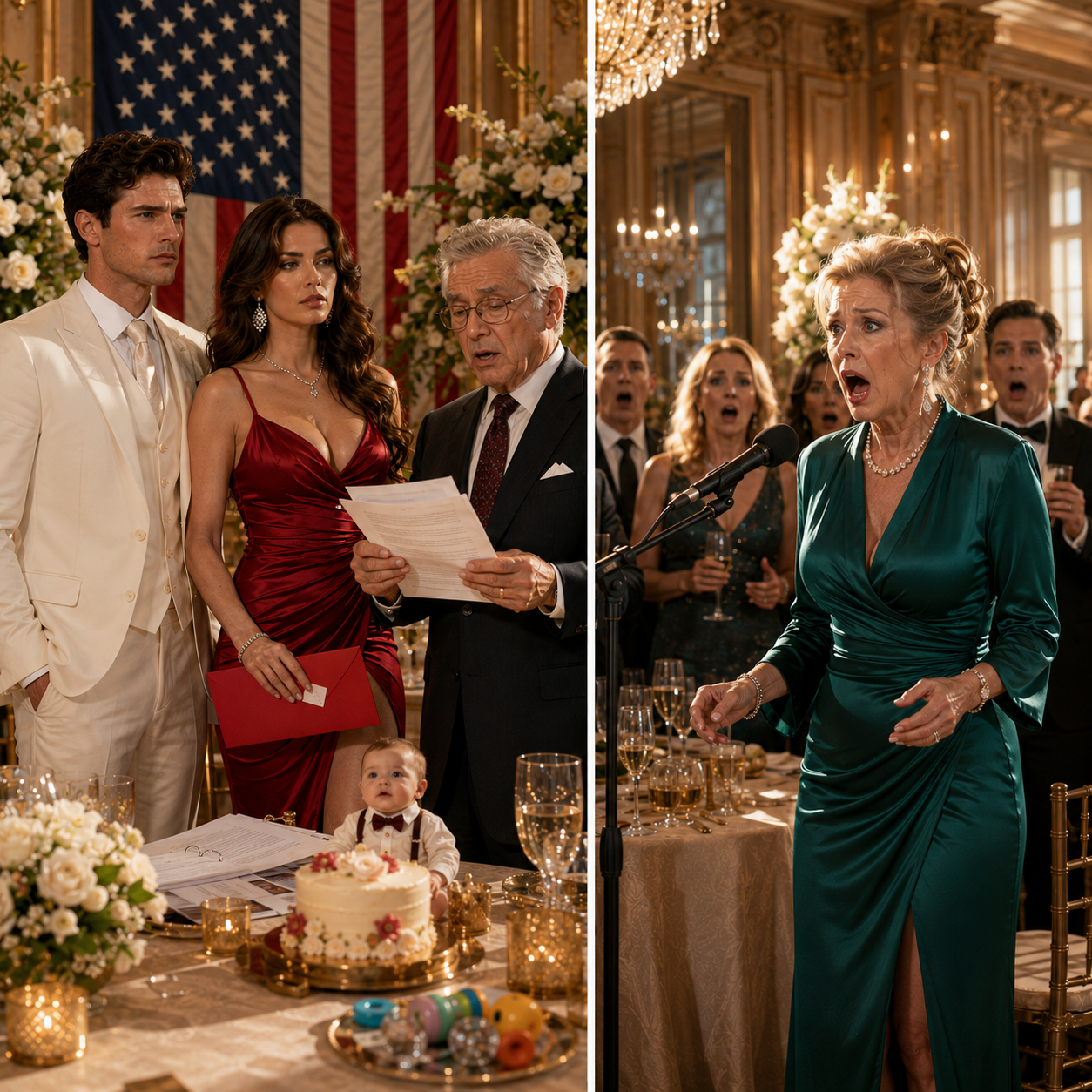
Marissa insisted we hire a man named Victor Lane. She said she had worked with him at several events and he was reliable, professional, and “not one of those DJs who thinks every wedding is his personal nightclub.”
Victor was in his late forties, friendly, balding, and organized. During our first meeting, he asked about special songs. First dance, father-daughter dance, mother-son dance, reception entrance, cake cutting, last dance.
Marissa answered almost everything before I could.
“Our first dance will be ‘Beyond the Years,’” she said.
I looked at her. “I thought we were choosing together.”
Her smile froze for half a second.
“We talked about that song,” she said.
“We did?”
“At Brian’s wedding,” she said smoothly. “You said you liked it.”
I vaguely remembered saying something like that about a song playing during dessert at a wedding months earlier. It had been pretty, slow, romantic. I did not care enough to argue.
Victor glanced between us, then wrote it down.
“Great choice,” he said. “Classic.”
There was something about the way he said classic that made Marissa’s shoulders tense.
After the meeting, as we walked to the car, she was quiet.
“You okay?” I asked.
“Wedding stress,” she said.
“You sure?”
She stopped beside the passenger door and looked at me with those green eyes that had made me trust her from the start.
“I just want the day to be perfect,” she said.
I kissed her forehead.
“It doesn’t have to be perfect.”
She leaned into me and whispered, “Yes, it does.”
The week before the wedding, I found a small ivory envelope tucked inside one of the boxes of decorations in our spare bedroom.
I was looking for extra stamps. Marissa had asked me to mail a few last-minute thank-you notes to vendors. The envelope slipped from between two fabric swatches and landed face down on the carpet.
There was no name on the front.
I picked it up and saw that it was already open. Inside was a photograph.
At first, I thought it was from a styled shoot because Marissa had thousands of wedding images for work. But this one felt different.
The picture showed Marissa standing in a wedding dress.
Not the dress she had chosen for our wedding.
This one was simpler, with lace sleeves and a narrow satin belt. Her hair was shorter, curled around her face. She looked younger. Beside her stood a man with blond hair and one hand on her waist.
The photo had been torn down the middle at some point and taped back together.
My stomach tightened.
I turned it over.
On the back, written in faint ink, were three words.
M + Adrian, 2018.
I stared at it for a long time.
Then I heard Marissa’s keys in the front door.
I put the photograph back in the envelope, slid it into the box exactly where I had found it, and stood there like a guilty man even though I had done nothing wrong.
She walked in carrying garment bags and a coffee.
“Hey,” she said. “Why do you look like you saw a ghost?”
I almost asked her right then.
I should have.
But weddings create their own kind of pressure. Families had flights booked. Deposits were paid. My mother had already cried over her dress twice. My nephews were practicing walking down the aisle with rings tied to a pillow. Everything was moving, moving, moving, and I told myself there could be an explanation.
Maybe it was a costume.
Maybe she had modeled for a wedding shoot.
Maybe Adrian was the serious ex, and the photo meant more to her than she had admitted, but not marriage.
The lie I told myself was simple.
I told myself I trusted her.
So I said, “Just tired.”
She kissed me quickly and said, “Almost there.”
Almost there.
The rehearsal dinner was held in a private room at an Italian restaurant. My family was loud and emotional. Marissa’s family was smaller and quieter. Her mother kept watching her like she was waiting for a glass to fall off a table.
Her father, Thomas, had come from Oregon. He was polite but distant. He shook my hand, told me I seemed like a good man, and spent most of the evening drinking sparkling water near the windows.
At one point, I went to the restroom and saw Thomas and Elaine speaking in the hallway.
They stopped when they saw me.
Thomas looked uncomfortable.
Elaine looked frightened.
“Everything okay?” I asked.
Thomas nodded. “Just family things.”
I smiled because I did not know what else to do.
When I walked away, I heard Elaine whisper, “Not tonight.”
That night, lying beside Marissa in bed, I could not sleep.
She was on her side facing away from me. Her breathing was steady, but I knew she was awake.
“Marissa,” I said softly.
“Yes?”
“Is there anything you need to tell me before tomorrow?”
Silence.
It lasted long enough that my heart started beating harder.
Then she rolled over and looked at me.
“What do you mean?”
“I mean anything. Anything from the past. Anything you’re scared I’ll find out later.”
Her face softened in a way that almost convinced me.
“Daniel,” she whispered, touching my cheek. “I love you. I’m marrying you tomorrow. That’s all that matters.”
“That’s not really an answer.”
Her hand dropped.
“What is this about?”
I could have mentioned the photograph.
I could have said Adrian.
I could have said 2018.
Instead, I looked at the woman I loved and saw panic behind her eyes, and I made the same mistake people make when they want peace more than truth.
“Nothing,” I said.
She moved closer and rested her head against my chest.
“I’ve never wanted anything the way I want this life with you,” she whispered.
I held her.
And I believed the part I wanted to believe.
The wedding day was beautiful.
That is one of the cruelest parts of the memory. It was not ruined from the beginning. It was perfect in all the ways Marissa had wanted.
The hotel ballroom glowed with soft gold light. The flowers were ivory and pale blush. The chairs were arranged beneath tall windows overlooking the city. My mother cried before the ceremony even started. Claire squeezed my shoulder and told me I looked terrified but handsome.
When Marissa appeared at the end of the aisle, everyone turned.
She looked breathtaking.
Her dress was sleek and elegant, fitted through the waist with a long train that moved behind her like water. Her veil caught the light. Her eyes were shining.
For one moment, all my doubts went quiet.
I watched her walk toward me, and I thought, This is the woman I choose. Whatever came before, this is where we begin.
When she reached me, her hands were cold.
“You okay?” I whispered.
She nodded.
The ceremony went smoothly. We said our vows. Mine were honest and nervous. Hers were beautiful. She spoke about safety, second chances, and how love sometimes finds you after you have stopped believing you deserve it.
Second chances.
I remember Claire’s eyes shifting when Marissa said that.
But I was too overwhelmed to think.
When the officiant pronounced us husband and wife, the room applauded. Marissa kissed me hard, almost desperately, and everyone cheered.
For about two hours, I was happy.
Truly happy.
We took photos. We hugged relatives. We signed the marriage license. We entered the reception to loud music and applause. The food was excellent. The speeches were emotional. My best man, Marcus, told a humiliating story about me attempting to cook salmon and setting off the smoke alarm in three apartments at once.
People laughed. Marissa laughed. I laughed.
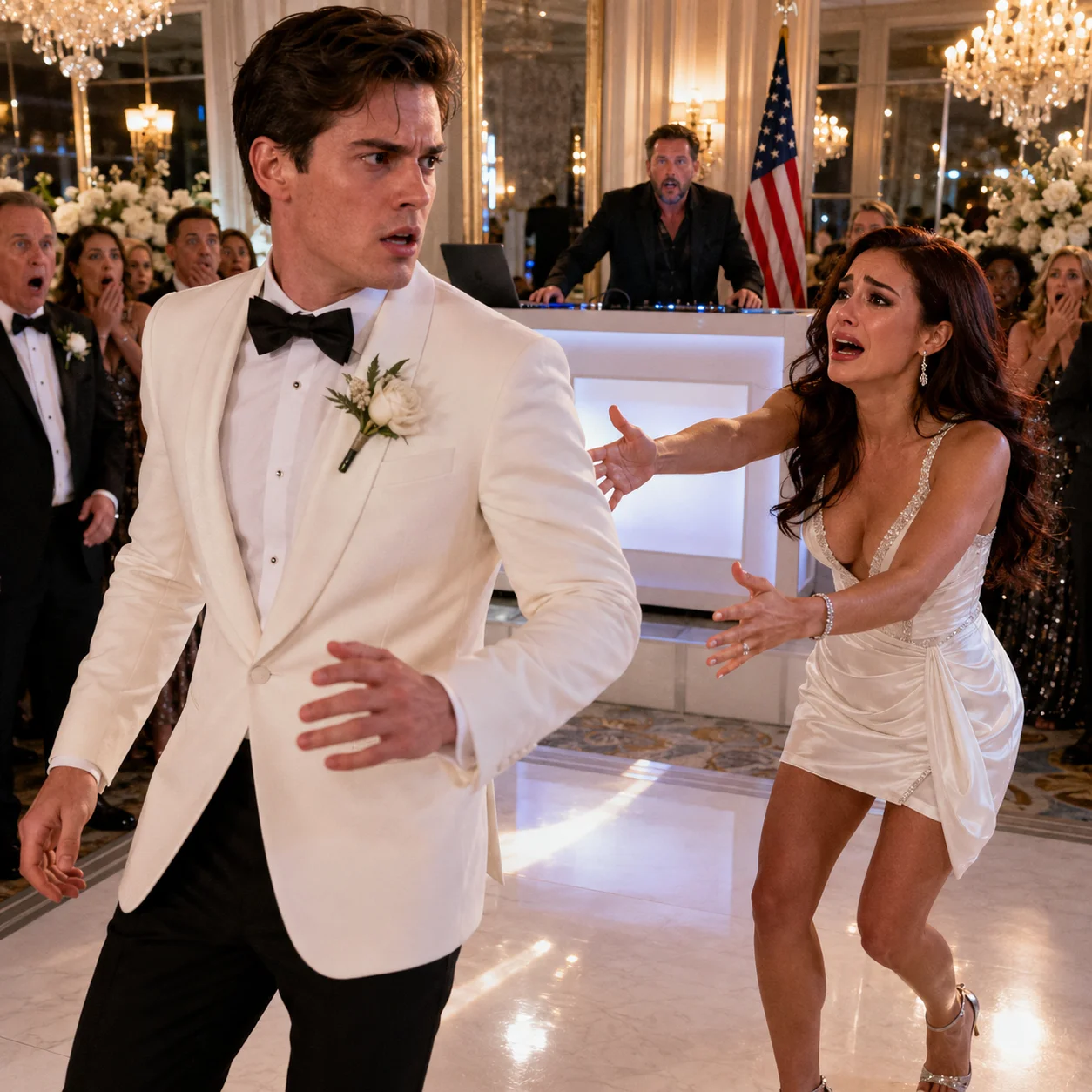
Then came the first dance.
Victor announced us as Mr. and Mrs. Harper.
Everyone gathered around the dance floor.
Marissa’s fingers tightened around mine.
“You’re crushing my hand,” I whispered playfully.
She laughed, but her eyes darted toward the DJ booth.
The music began.
For the first few seconds, I did not recognize it.
A soft piano intro filled the ballroom. Then strings came in, slow and aching.
Marissa stopped moving.
Not slowed.
Stopped.
Her face went white.
I looked at her, confused.
“Marissa?”
Around us, people were smiling, phones raised, waiting for us to dance.
Then I heard someone gasp.
Not loudly, but sharply enough that I turned my head.
Elaine had one hand over her mouth.
Thomas was standing frozen beside her.
Across the room, one of Marissa’s aunts whispered, “Oh my God.”
I looked back at Marissa.
“What is it?”
She shook her head, but she was not looking at me. She was staring at Victor.
The song continued.
Then Victor leaned into his microphone with a cheerful voice, clearly unaware that the room had shifted.
“And now, for the bride’s special first dance request, a song that apparently means a lot to her—‘When I Found You Again.’”
Again.
That word landed like a stone dropped in water.
Marissa’s lips parted.
“Stop it,” she whispered.
I was close enough to hear her. No one else was.
“What?”
“Stop the song.”
I turned toward Victor, but before I could say anything, an older woman from Marissa’s side of the room stood up so fast her chair scraped the floor.
“Victor, no!” she shouted.
Now everyone heard.
The music cut off abruptly.
The ballroom fell into a silence so deep I could hear the clink of a glass being set down somewhere behind me.
Victor looked confused, then pale. He glanced at his laptop, then at Marissa, then at Elaine.
“I’m sorry,” he said into the microphone before realizing it was still on. “I must have pulled the wrong file. I thought this was from the previous—”
He stopped.
Previous.
The word hung there.
My chest felt tight.
I looked at Marissa.
“What previous?”
She shook her head slowly, tears filling her eyes.
“Daniel, not here.”
Not here.
Not “I don’t know what he means.”
Not “this is a mistake.”
Not “there was no previous.”
Only not here.
A coldness moved through me that I had never felt before. It was not anger yet. It was something cleaner and sharper. The body’s way of making room for a truth too large to enter all at once.
I stepped back from her.
“Were you married before?”
Her face crumpled.
The silence in that ballroom changed. It became alive. Hungry. Terrified.
Marissa reached for me, but I moved away.
“Daniel, please.”
“Were you married before?” I asked again, louder this time.
My voice carried.
Her mother began crying.
Claire stood slowly from her chair.
My mother whispered, “Daniel?”
Marissa looked around at the guests, at the flowers, at the candles, at the perfect room she had created.
Then she looked at me and said, “Yes.”
One word.
Three letters.
Enough to split my life in half.
The room erupted in whispers.
I stared at her.
“You told me you had never been married.”
“I know.”
“You told me more than once.”
“I know.”
My ears were ringing.
“Who was Adrian?”
Her eyes widened.
So she knew exactly what photograph I had found.
Behind her, Elaine closed her eyes.
Marissa swallowed hard. “My ex-husband.”
Ex-husband.
Even though I already knew, hearing it from her mouth felt like being shoved backward.
“How long were you married?”
She wiped at her face with shaking fingers. “Daniel, please, can we go somewhere private?”
“No,” I said. “You made me marry you in public while hiding the fact that you had already done this before. So answer me.”
Her voice broke. “Eleven months.”
A murmur moved through the room.
I laughed once, but there was no humor in it.
“Eleven months.”
“It was a mistake.”
“You said you had never been married.”
“I was ashamed.”
“Of being divorced?”
She looked down.
I stepped closer, lowering my voice, but the room was so quiet I knew people could still hear.
“Or of why?”
That was when her expression changed.
Not guilt.
Fear.
Real fear.
And suddenly, I understood that the marriage itself was not the whole secret.
There was more.
Victor, still at the DJ booth, looked like he wanted to crawl under the table. He had removed his headphones and was whispering frantically with one of the hotel coordinators.
I turned toward him.
“Victor,” I said.
He froze.
“Why did you have that song?”
Marissa grabbed my arm. “Daniel, don’t.”
I pulled away.
Victor looked at Marissa, then at me. “I’m sorry. I didn’t realize this was… I thought the file was mislabeled.”
“What file?”
He swallowed.
“I DJ’d her first wedding.”
There it was.
The sentence that made even the whispering stop.
My own wedding DJ had worked my wife’s first wedding, and no one had thought I deserved to know.
I looked at Marissa’s parents.
“You knew?”
Elaine sobbed harder.
Thomas looked down.
I turned to Marissa’s bridesmaids. Two of them were crying. One could not look at me.
“You all knew?”
No one answered.
Claire stepped onto the edge of the dance floor.
“Daniel,” she said carefully, “come with me.”
But I could not move yet.
Because once the first lie came out, every small strange moment rearranged itself in my mind.
Her reaction to the invitation joke.
Her mother almost saying “this time.”
The photograph.
The rehearsal dinner whispers.
Her obsession with perfection.
The first dance song she had chosen without me.
No.
Not chosen.
Reused.
My stomach turned.
“This was your first dance song with him,” I said.
Marissa covered her mouth.
“You chose the same song?”
“No,” she whispered. “I changed it. I told Victor to use ‘Beyond the Years.’ He must have—”
“Why did he even have your old wedding playlist connected to our wedding?”
Victor spoke weakly. “She sent me reference files. From the previous event. I assumed she wanted some of the same structure but different songs. I didn’t realize—”
“You sent him files from your first wedding?”
Marissa looked like she was going to faint.
“It was easier,” she whispered. “I had the timeline already.”
I stared at her.
The flowers, the lighting, the schedule, the DJ, maybe even the layout.
“How much of this wedding is copied from your first one?”
She did not answer.
That was answer enough.
I looked around the room and suddenly the beauty of it became grotesque. The ivory flowers. The gold light. The mirrored walls. The first dance. It was not our beginning. It was a remake.
A second attempt at a scene she had already performed with another man.
My mother was crying now.
Not loudly. Just quietly, with one hand pressed to her chest.
That hurt more than anything.
I had brought my family here to celebrate a lie.
I turned back to Marissa.
“Why?” I asked.
It came out softer than before, which somehow made it worse.
She took one step toward me.
“Because I loved you,” she said. “Because I knew if I told you everything, you’d look at me differently.”
“I asked if you had been married.”
“I know.”
“You could have told me.”
“I was scared.”
“Scared of what?”
Her lips trembled.
Thomas spoke before she could.
“Tell him, Marissa.”
She turned sharply. “Dad, don’t.”
Thomas’s face was tired and hard. “This has gone far enough.”
Elaine cried, “Thomas, please.”
“No,” he said. “He deserves to know before any more papers are signed, before any more lies become his problem.”
Before any more papers are signed.
My skin went cold again.
“What does that mean?” I asked.
Marissa shook her head. “Nothing.”
Thomas looked at me.
“Her divorce from Adrian was finalized three years ago,” he said. “But there was a civil judgment attached to it.”
Marissa’s voice cracked. “Stop.”
Thomas did not stop.
“She forged his signature on a business loan.”
The ballroom seemed to tilt.
I stared at him, not understanding at first.
“What?”
Thomas looked ashamed, though I was not sure whether it was shame for his daughter or shame for having hidden it.
“Adrian owned a small design studio. Marissa wanted to expand it into event planning. He refused to take on debt. She signed his name anyway. When the business failed, the lender came after both of them.”
Marissa was crying openly now.
“It wasn’t like that,” she said. “He promised me he’d support it.”
“But he didn’t sign,” Thomas said.
My breath felt shallow.
I looked at my new wife.
“Is that true?”
She whispered, “It was complicated.”
I almost laughed again.
Complicated.
A word people use when the truth sounds too ugly.
“How much debt?” I asked.
No one answered.
I turned to Thomas.
“How much?”
He hesitated. “Originally, one hundred and eighty thousand. With fees and settlement terms, less now, but still significant.”
My mind started moving in a different direction.
Financial analyst instincts. Legal exposure. Marriage. Debt. Assets. Shared liability. Timing.
I looked at Marissa.
“Were you planning to tell me after the wedding?”
She reached for me again. “Daniel, I was going to handle it.”
“With what money?”
Her silence told me more than I wanted to know.
I thought about the joint account she had suggested opening after the honeymoon.
The condo search she had pushed for because “married people should build something together.”
The way she had asked me whether my bonus came before or after taxes.
My hands went numb.
“Was this wedding about me,” I asked, “or about finding someone stable enough to clean up your past?”
Her face twisted like I had slapped her.
“How can you say that?”
“Because I just found out you lied about a marriage, reused pieces of that wedding, hid a financial judgment, and let me sign a marriage license without knowing any of it.”
“I love you.”
“You keep saying that like love cancels fraud.”
Claire was beside me now. She did not touch me, but her presence steadied me.
“Daniel,” she said quietly, “you don’t have to do anything in this room.”
Marissa looked at Claire with sudden anger.
“Stay out of this.”
Claire’s eyes sharpened. “No.”
The word was calm, but it cut.
“You don’t get to lie to my brother until the reception and then tell everyone else to stay out of it.”
Marissa’s bridesmaid, Lila, spoke from near the head table. “Marissa, just explain it.”
Marissa spun around. “You knew too, Lila. Don’t act innocent now.”
Lila flinched.
Marcus stepped forward from my side of the room, jaw tight. “Daniel, man, let’s go.”
But I looked at Marissa one more time.
I thought about leaving right then. Walking out without another word. But there was one question I needed answered, even though part of me already knew.
“Was the wedding legal?” I asked.
She blinked. “What?”
“The license. The paperwork. Did you disclose your previous name, previous marriage, divorce status, whatever needed to be disclosed?”
Her face went pale again.
Thomas looked sharply at her.
Elaine whispered, “Marissa?”
I felt sick.
“What did you do?” I asked.
Marissa shook her head. “It’s legal.”
“That’s not what I asked.”
Her hands trembled. “I used my current legal name.”
“And marital history?”
“It didn’t ask the way you think—”
“Marissa.”
She broke.
“I didn’t want your family to see it on anything,” she cried. “I didn’t want questions.”
My heart sank.
I did not know the legal implications in that moment. I did not know whether our marriage was valid, voidable, complicated, or perfectly legal despite her lies. But I knew enough to understand that I needed a lawyer before I needed a honeymoon.
I slowly removed my wedding ring.
A sound moved through the room. Someone gasped. Someone whispered my name.
Marissa stared at the ring in my hand.
“Daniel, please don’t do this.”
“You did this.”
She shook her head violently. “No. No, we can fix this. We’re married. We made vows.”
“You made vows on top of lies.”
“I was going to tell you.”
“When?”
She cried harder.
“When my name was attached to your debt?”
“No.”
“When I sold my condo?”
“No.”
“When we had children?”
Her silence returned.
That silence was the final thing I needed.
I placed the ring on the nearest table, beside a glass of champagne no one had touched.
Then I turned and walked out of my own wedding reception.
Marissa screamed my name behind me.
I did not look back.
The hallway outside the ballroom was bright and quiet, with patterned carpet and framed abstract art on the walls. It felt obscene that the world outside the ballroom could remain so normal while mine collapsed.
Claire and Marcus followed me.
My mother came next, crying softly.
I kept walking until I reached a small lounge near the elevators. Then I sat down because my legs were no longer trustworthy.
For a few minutes, no one said anything.
Then Claire knelt in front of me.
“Breathe,” she said.
I had not realized I was barely doing that.
Marcus paced like he wanted to hit someone.
My mother sat beside me and took my hand.
“I’m so sorry,” she whispered.
That broke something in me.
Not loudly. I did not sob or scream. I just bent forward, elbows on my knees, and covered my face.
The humiliation came in waves. Then grief. Then anger. Then disbelief.
I had married her.
I had stood before everyone and promised my life to someone who had deliberately hidden hers.
After maybe ten minutes, Thomas appeared at the edge of the lounge.
Marcus stopped pacing.
“Don’t,” he said.
Thomas raised both hands. “I’m not here to defend her.”
I looked up.
He seemed older than he had during the ceremony. Tired, ashamed, hollowed out.
“I should have told you,” he said.
“Yes,” I said.
He accepted that like a sentence.
“I wanted to. Elaine begged me not to. Marissa said she had told you enough. I didn’t know she had denied the marriage entirely until tonight.”
“Did you know about the DJ?”
“No.”
“Did you know she reused parts of the old wedding?”
His mouth tightened. “I suspected.”
I looked away.
He stepped closer but kept a respectful distance.
“Adrian was not a perfect man,” he said. “But what happened to him was wrong. He lost his business. He spent two years cleaning up the financial damage. Marissa convinced herself she was the victim because he left after the truth came out.”
“And you let her do it again.”
Thomas closed his eyes.
“Yes.”
That honesty was the only reason I did not tell him to leave.
“Did she marry me for money?” I asked.
He looked pained.
“I don’t know. I believe she loves you in the way she understands love. But Marissa has always confused rescue with commitment. When things go badly, she attaches herself to someone steady and calls that safety.”
It was not an excuse.
Somehow, that made it worse.
Because part of me knew he was right.
Marissa did love me, maybe. But she loved me as an exit route, as proof she could rewrite herself, as a man stable enough to absorb the consequences she refused to face.
Thomas took an envelope from inside his jacket.
“I brought this because I was going to give it to her after the wedding,” he said. “Now I think you should have copies before she changes the story.”
Claire stood.
“What is it?”
“Divorce decree. Civil judgment summary. Settlement documents I had access to. Not everything, but enough to start.”
He held it out.
I did not take it.
Claire did.
“Thank you,” she said coldly.
Thomas nodded once.
“I am sorry, Daniel. Truly.”
Then he left.
That night, I did not go home.
Marcus drove me to his place. Claire went to my condo with our cousin and collected my laptop, passport, financial files, and a bag of clothes because she did not trust Marissa not to show up there first.
She was right.
By midnight, my phone had seventy-three missed calls.
Texts came in so fast I stopped reading them.
Daniel please.
Please answer me.
You’re humiliating me.
We need to talk as husband and wife.
Don’t let your sister poison you.
I made one mistake.
I LOVE YOU.
You promised forever.
Then the tone changed.
You can’t just abandon me at our wedding.
Do you know what people are saying?
This is cruel.
You’re acting like I cheated.
You’re punishing me for having a past.
That one almost made me reply.
Because having a past had never been the problem.
Lying about it was.
Hiding a marriage was.
Hiding debt tied to forgery was.
Letting me make legal and emotional vows without informed consent was.
But I did not text back.
At 2:14 a.m., she sent a photograph.
It was of her sitting on the floor in her wedding dress, mascara streaked down her face, veil crumpled beside her.
Under it, she wrote:
Look what you did to me.
I blocked her until morning.
The next day was supposed to be the first day of our honeymoon in Napa.
Instead, I sat in a family law attorney’s office wearing Marcus’s old hoodie and yesterday’s dress shoes.
The attorney’s name was Evelyn Ross. She was in her fifties, direct, calm, and completely unimpressed by drama.
Claire had found her through a friend before I even woke up.
Evelyn listened while I explained everything. The lie about never being married. The DJ. The old wedding song. The civil judgment. The possible paperwork issues. The marriage license. The ring. The fact that we had not gone on the honeymoon and had not merged finances yet.
She took notes without interrupting.
When I finished, she leaned back.
“First,” she said, “do not communicate with her directly. Everything goes through counsel if possible.”
I nodded.
“Second, depending on the jurisdiction and exact license information, we may look at annulment based on fraud, or divorce if annulment is not available. Fraud has a specific legal meaning. Not every lie qualifies. But concealment of prior marriage, financial liabilities, and potentially intentional misrepresentation before entering marriage may be relevant.”
“Am I responsible for her old debt?”
“Generally, debt incurred before marriage remains separate, but creditors and marital asset issues can get complicated if you commingle funds, refinance, co-sign, or use marital property. You have not done those things, correct?”
“No.”
“Good. Keep it that way.”
I felt the first tiny bit of air enter my lungs.
Evelyn continued. “You will secure your accounts, change passwords, freeze joint plans if any, and document everything. Save messages. Save vendor contracts. Save proof that she misrepresented her history. Do not delete anything.”
Claire placed Thomas’s envelope on the desk.
Evelyn opened it and scanned the documents.
Her eyebrows rose slightly.
“Well,” she said. “This is useful.”
By the end of that meeting, I had a plan.
Not a revenge plan.
A survival plan.
Cancel the honeymoon. Notify vendors not to release refunds to anyone except the original payer. Freeze any wedding gift funds until ownership could be clarified. Change my condo locks because Marissa had a key. Separate our belongings with a third-party present. File for annulment if legally viable; otherwise immediate dissolution.
The following week was the ugliest week of my life.
Marissa came to my condo twice. The first time, she cried in the hallway until my neighbor called me. I told the neighbor not to let her in and called building security.
The second time, she arrived with Elaine.
I watched through the doorbell camera as Elaine pleaded with her to leave.
Marissa kept saying, “He’s my husband. This is my home.”
It was not.
She still had her apartment because she had planned to break the lease after the honeymoon. For once, her need to control timing worked in my favor.
Her messages became longer and more desperate.
She said Adrian had manipulated the story.
She said the business loan had been for both of them.
She said she hid the marriage because men judge divorced women.
She said she reused wedding plans because she had already paid for some templates.
She said the song was Victor’s fault.
She said her father had betrayed her.
She said Claire had always hated her.
She said I was throwing away love over paperwork.
Then, three days later, Adrian called me.
I almost did not answer. I did not know the number, but Evelyn had told me to document everything and avoid emotional conversations. I answered on speaker with Marcus in the room.
“Daniel Harper?” the man asked.
“Yes.”
“My name is Adrian Cole. I was married to Marissa.”
Hearing his voice made the whole thing feel more real.
He sounded calm, but tired in a way I recognized.
“I’m not calling to insert myself,” he said. “I heard what happened through Victor. He feels awful, by the way. I just wanted to tell you that if she starts saying I abused her or trapped her or ruined her, be careful. She said similar things about me.”
I closed my eyes.
“What do you want?”
“Nothing. I’ll send whatever documents your attorney requests through proper channels. I just wish someone had warned me.”
That sentence stayed with me.
I just wish someone had warned me.
“Did she love you?” I asked before I could stop myself.
Adrian was quiet for a moment.
“I think she loved the version of herself she got to be with me,” he said. “Until reality interrupted it.”
I thanked him and ended the call.
That was the closest I ever came to pitying him and myself at the same time.
Marissa’s version of events began spreading through our social circle by the end of the week.
According to her, I had abandoned her because I could not handle her being divorced. I had humiliated her publicly. I had let my family attack her. I had overreacted to a DJ mistake. The financial issue was “old legal drama” that had nothing to do with me.
Some people believed her at first.
People like simple stories, and “man cruelly rejects bride over past marriage” sounded simpler than “woman hides prior marriage, reused wedding details, concealed civil judgment tied to forgery, and got exposed by a DJ.”
Claire wanted to go nuclear online.
I told her not to.
“Truth does not need to be screamed,” Evelyn said when I asked. “It needs to be documented.”
So we documented.
When mutual friends asked, I sent one calm message.
Marissa told me multiple times that she had never been married. At our reception, I learned she had previously been married and had concealed financial legal issues connected to that marriage. I am handling this privately through an attorney. I wish her healing, but I won’t discuss it further.
That message did more damage than any rant could have.
Because it sounded like the truth.
Within days, people began reaching out quietly.
One bridesmaid apologized. She said Marissa had told them I knew about the first marriage but did not want it mentioned because my family was “traditional.”
I was not from a traditional family. My cousin had been divorced twice and everyone adored her.
Another friend admitted Marissa had joked months earlier that “men don’t need full disclosure if the final product is good.”
That one made me feel physically ill.
Victor sent a formal apology and refunded his entire fee. He said Marissa had uploaded a folder labeled Reception Flow Reference and that the old first dance song file had been inside it. He had clicked the wrong file during the transition because the titles were similar.
“I know it does not fix anything,” he wrote, “but I am deeply sorry my mistake caused pain. I also believe you deserved the truth before that moment.”
The hotel offered partial refunds for unused late-night services. The honeymoon company gave travel credit. Wedding gifts were returned with polite notes, except for a few from close family who insisted I keep them because “you’ll need new towels after this nightmare.”
Humor arrived before healing did.
Barely.
Two weeks after the wedding, Marissa finally contacted me through an attorney.
Her first request was not reconciliation.
It was spousal support.
Evelyn laughed once when she read the letter.
Not because it was funny, but because some things are so shameless they become absurd.
“She wants temporary support based on a marriage that lasted several hours before separation?” I asked.
“She can request anything,” Evelyn said. “That does not mean she will get it.”
Marissa also wanted reimbursement for “emotional damages” caused by my public abandonment.
Evelyn’s expression turned icy.
“She may want to be careful using the word damages,” she said. “Discovery works both ways.”
The annulment petition was filed on the grounds available to us, including fraudulent inducement. Evelyn warned me not to expect a movie-style courtroom confession. Legal proceedings were slow, technical, and often unsatisfying. But she also said we had stronger documentation than most people in my position.
The hearing took place nearly four months later.
By then, I had started sleeping again, though not well. I had returned to work. I had packed Marissa’s things with a neutral moving company and stored them for thirty days before her attorney arranged pickup. I had replaced my mattress because grief makes strange things unbearable.
My family stopped mentioning the wedding unless I brought it up.
Claire came over every Thursday with dinner and pretended it was casual.
Marcus dragged me to the gym.
My mother mailed me handwritten notes that said things like, You are not foolish for trusting someone. The shame belongs to the person who used that trust.
I kept that one on my refrigerator.
Marissa looked different in court.
Not dramatically. She was still beautiful. But the softness had hardened. She wore a navy dress, minimal makeup, and an expression that shifted between wounded and angry depending on who was looking at her.
When she saw me, her eyes filled with tears.
I looked away.
The hearing itself was not like people imagine. There were no gasps, no dramatic music, no one shouting objection. There were documents, questions, timelines, and careful language.
Evelyn presented messages where Marissa had denied ever being married. She presented wedding planning emails showing Marissa had reused vendor materials from the prior wedding while representing everything as newly chosen. She presented the civil judgment summary. She presented the DJ’s written statement. She presented witness statements from her father and one bridesmaid.
Marissa’s attorney argued that her prior marriage was emotionally painful and that hiding it did not invalidate her genuine intention to marry me. He said the financial judgment was separate and not my responsibility. He said embarrassment and shame were not fraud.
Evelyn stood and said, very calmly, “This is not about embarrassment. This is about informed consent. My client asked a direct material question before entering marriage. The respondent gave a knowingly false answer. She then concealed related financial and legal matters while encouraging my client to merge assets after marriage. The pattern matters.”
Pattern.
That word landed harder than fraud.
Because that was what it had been.
Not one lie.
A structure.
When Marissa testified, she cried.
She said she loved me. She said she panicked. She said Adrian had made her feel like damaged goods. She said she wanted one day untouched by the past. She said she meant to tell me after the honeymoon when things were calmer.
Evelyn asked, “Did Mr. Harper ask you before the wedding whether you had ever been married?”
Marissa hesitated.
“Yes.”
“What did you say?”
“I said no.”
“Was that true?”
“No.”
“Did you tell him about the civil judgment related to your prior marriage?”
“No.”
“Did you intend to tell him before combining finances?”
Marissa’s attorney objected to speculation, and the judge narrowed the question.
Evelyn rephrased.
“Before the wedding, had you discussed opening a joint account with Mr. Harper?”
“Yes.”
“Had you discussed purchasing property together?”
“Yes.”
“Had you disclosed the judgment before those discussions?”
“No.”
“Why?”
Marissa looked down.
“Because I was afraid he would leave.”
Evelyn let the silence sit for a moment.
Then she said, “So you understood the information might affect his decision to marry you.”
Marissa began crying again.
“I just wanted to be loved.”
For the first time in months, I felt something shift in me.
Not forgiveness.
Not sympathy exactly.
But a sad, quiet recognition.
Marissa had wanted love without accountability. She wanted the warmth of being chosen without the risk of being known. She had mistaken concealment for protection, and by the time the truth came out, there was nothing left to protect.
The judge did not rule that day.
We received the decision three weeks later.
The annulment was granted.
Legally, the marriage was treated as invalid based on the specific findings and evidence. There were no spousal support obligations. Assets remained separate. Wedding-related financial disputes were settled through negotiated agreements, mostly refunds and returned gifts.
When Evelyn called to tell me, I was sitting in my car outside a grocery store.
I thanked her.
Then I sat there for twenty minutes, staring through the windshield at people pushing carts, loading bread and milk and ordinary lives into their trunks.
I expected to feel victory.
I did not.
I felt tired.
But beneath the tiredness, there was relief.
A clean line had been drawn.
A few days later, a letter arrived at my condo.
No return address, but I recognized Marissa’s handwriting.
I almost threw it away.
Instead, I opened it.
Daniel,
I know I have no right to ask you to read this. I am not writing to get you back. I am writing because my therapist said an apology that still tries to control the outcome is not an apology.
I lied to you. Not because you were unsafe, but because I wanted to avoid consequences. I told myself I was protecting our future, but I was protecting the version of myself I wanted you to see.
You asked me a clear question, and I gave you a false answer. I let you stand in front of your family and make vows without knowing who you were marrying. I understand now that this was not love. It was fear wearing the clothes of love.
I am sorry for what I did to you.
I am sorry for what I did to your family.
I am sorry I made your wedding day another person’s nightmare.
You deserved the truth.
Marissa
I read it twice.
Then I folded it and placed it in the drawer with the annulment papers.
I did not reply.
Some apologies are real.
That does not mean they reopen doors.
A year passed.
Not quickly, but steadily.
I moved to a different condo six months after the annulment, partly because the old one had too many ghosts and partly because I wanted a balcony with better light. Claire helped me decorate and made fun of me for having strong opinions about lamps.
Marcus got married that fall in a small outdoor ceremony. I nearly skipped it because weddings still made my chest tight, but he asked me to stand beside him, and I did.
During the reception, when the first dance began, I had to step outside for air.
Marcus found me leaning against a fence under string lights.
“You okay?” he asked.
“Yeah,” I said. “Just needed a minute.”
He nodded and stood beside me.
After a while, I said, “I hate that she took this from me.”
“She didn’t take it,” Marcus said. “She damaged it. There’s a difference.”
I looked at him.
He shrugged. “Damaged things can be repaired. Stolen things are gone.”
That stayed with me.
I started therapy because I was tired of pretending betrayal was something you could outthink. My therapist, Dr. Levin, helped me understand that humiliation had been one of the deepest wounds. It was not only that Marissa lied. It was that I found out in front of everyone. My private trust had become public entertainment, even if no one I loved treated it that way.
For months, I flinched at being celebrated. Compliments felt suspicious. Romantic attention felt like a setup. Anytime a woman was too charming too quickly, I heard Claire’s voice: she edits herself.
Eventually, I learned that caution was not the same as cynicism.
I could ask questions.
I could verify.
I could move slowly.
Trust did not have to mean handing someone the keys to every room before they had earned the right to enter.
Almost two years after the wedding that wasn’t, I ran into Thomas at a bookstore.
He looked surprised to see me.
Older, again. But lighter somehow.
We stood in an aisle between history books and travel memoirs, both unsure whether to pretend we had not seen each other.
Finally, he said, “Hello, Daniel.”
“Thomas.”
He asked how I was.
I said I was well.
Then, after a pause, he said, “Marissa moved back to Oregon.”
I did not ask, but he continued.
“She’s working for a nonprofit now. Not event planning. She’s… trying, I think.”
“I hope she gets better,” I said.
I meant it.
Thomas nodded, eyes damp.
“She talks about you as the person she hurt, not the person who hurt her. That’s new for her.”
I did not know what to say.
He extended his hand.
“I am sorry again,” he said. “For my part in it.”
This time, I shook his hand.
“I appreciate that.”
As I walked away, I realized something important.
The story no longer made my hands shake.
It was still sad. Still ugly. Still part of me.
But it no longer owned the room.
Three years after Marissa, I met someone named Nora.
Not dramatically. Not under string lights. Not at a fundraiser. Not in a cinematic rainstorm.
I met her in a tax seminar, which is the least romantic sentence ever written.
She was an accountant with a dry sense of humor and an alarming love of black coffee. She wore simple clothes, laughed quietly, and did not try to make every moment magical. At first, I found that almost confusing.
Nora did not perform mystery.
If I asked a question, she answered it.
If she did not want to answer yet, she said, “I’m not ready to talk about that, but I’m not going to lie to you.”
The first time she said that, something in me relaxed.
We dated slowly.
Painfully slowly, according to Claire, who liked Nora immediately and kept telling me not to “spreadsheet the woman to death.”
After six months, I told Nora the whole story.
Not the polished version. The real one. The wedding. The song. The ring on the table. The annulment. The humiliation. The letter.
She listened without interrupting.
When I finished, she said, “That must have made love feel unsafe.”
I nodded.
She reached across the table, palm up, not grabbing, not demanding.
“Thank you for telling me.”
That was all.
No dramatic promise that she would never hurt me. No speech about destiny. No attempt to turn my wound into proof that she was different.
Just presence.
A year later, when we talked about marriage, she brought a folder to my apartment.
I stared at it.
She smiled gently. “Before you panic, it’s not scary. It’s just my divorce papers.”
I blinked.
She had mentioned being married briefly in her twenties. She had told me early. Still, she brought documentation without me asking.
“I don’t need to see those,” I said.
“I know,” she replied. “But I want there to be no shadows.”
No shadows.
That was when I knew I loved her.
Not because she had no past.
Because she did not ask me to live inside the dark parts of it without a map.
When Nora and I got married, we did it at the courthouse with fourteen people and one very confused flower girl who kept asking if judges were princesses.
There was no DJ.
At dinner afterward, Marcus jokingly offered to play music from his phone.
I told him if he valued his life, he would keep Spotify closed.
Everyone laughed, including me.
Later that night, Nora and I danced in our living room to a song we chose together ten minutes before playing it. We were barefoot. The lighting was terrible. There were takeout containers on the counter because we had been too tired to cook.
It was imperfect.
It was ours.
And that made it beautiful.
I sometimes think about that ballroom. The old song. The way Marissa’s face changed when the first notes played. For a long time, I believed that moment destroyed my life.
Now I understand it saved me.
Not gently.
Not kindly.
But completely.
Because one accidental song revealed what months of love had hidden.
It showed me that a wedding can be staged, vows can be rehearsed, flowers can be copied, and smiles can be practiced.
But truth has its own timing.
And when it finally starts playing, everyone in the room hears it.

![[FULL STORY] I Came Home Early and Found My Wife Wearing My Shirt — But I Had Already Ended It](https://social-media.rabedo.com/thumbnails/1777867089_c8a5a6f3-dec4-4299-88de-257f3dca198e.png)
![[FULL STORY] She Said: "He's Just A Coworker. If You're Jealous Just Because He Drove Me Home At 2 A.M., Then We](https://social-media.rabedo.com/thumbnails/1777367256_25.png)