That night, I went home alone. The nursery light was still on because I had left in a hurry when Clara’s contractions started. A stuffed elephant sat in the crib. A stack of diapers was arranged on the changing table with ridiculous precision because I had been nervous and needed something to control. On the dresser was a framed ultrasound photo Clara had given me for Father’s Day. She had written, “Already loved by Daddy” in silver marker beneath it. I picked it up and felt my knees weaken. I did not cry in the hospital. I did not cry in front of her family. But alone in that nursery, surrounded by proof of a life I thought we were building, I broke.
The next morning, I hired a lawyer named Rebecca Sloan. She was not warm, which I appreciated. Warmth would have made me collapse. She was direct, calm, and sharp enough that I could hear paper cuts in her voice. After I explained everything, she asked, “Were you married at the time of birth?”
“Yes.”
“Then legally, in most circumstances, you are presumed to be the father unless challenged. The fact that they are trying to get you to sign separation documents immediately tells me they know that.”
“They said she isn’t mine.”
“People say many things when they want control,” Rebecca replied. “We will petition for a court-admissible DNA test. Until then, do not sign anything, do not threaten anyone, do not send emotional messages, and do not leave written evidence that can be twisted against you.”
“She won’t even answer my calls.”
“Then stop calling. Send one calm message requesting information about the baby’s health and stating that you want all communication in writing.”
So I did. I wrote: “Clara, I want to know how the baby is doing. I am requesting a legally admissible paternity test. Until this is resolved, please keep communication about the baby in writing. I will not sign any separation documents without counsel.”
She read it. She did not respond.
Evelyn responded instead from Clara’s phone. “The baby is fine. Clara needs peace. If you care about her at all, stop making this harder.”
I sent it to Rebecca.
For three days, I was allowed no meaningful access. The hospital staff gave me limited updates because I was still legally the husband, but Clara’s family hovered around her like guards. When I came to the hospital, Richard stepped into the hallway and told me Clara did not want visitors. I asked if he had that in writing from her. He said, “Be a man and walk away.”
I said, “Being a man is exactly why I’m not.”
On the fourth day, Clara and the baby went home, but not to our house. She went to her parents’ place, a large brick colonial in the expensive part of town where every lawn looked professionally embarrassed by nature. I found out through Rebecca, not through my wife. That same day, Clara finally texted me.
“I’m sorry it happened this way.”
I stared at those words for a long time.
Not “I’m sorry I hurt you.” Not “I’m sorry I lied.” Not “I’m sorry my family brought papers into the hospital.” Just, “I’m sorry it happened this way,” as if our life had been damaged by weather.
I wrote back, “Who are you claiming is the father?”
No response.
Then, ten minutes later: “It doesn’t matter.”
But it did matter. It mattered because there was a child at the center of it. It mattered because Clara had not just confessed to betrayal; she had presented betrayal like a verdict everyone had already accepted except me. It mattered because every time I pictured my daughter’s hand closing around my finger, I felt something ancient and immovable rise in me.
The first court hearing was scheduled two weeks later. During those two weeks, I learned how fast people choose sides when given an incomplete story by someone confident enough to tell it first. Clara’s family told everyone that I was refusing to accept reality. They said Clara had made one mistake during a “difficult period” in our marriage. They said I had been emotionally distant. They said I was obsessed with ownership. Marissa told mutual friends that I was “trying to force paternity” because my ego could not handle rejection. Richard told people at his country club that I was harassing his daughter. Evelyn told Clara’s church friends to pray for “a young mother escaping a painful marriage.”
The strange thing was, until then, I had never thought of Clara’s family as dangerous. Controlling, yes. Snobbish, definitely. They had always treated me like a man Clara had brought home from a lower shelf than the one they had prepared for her. Richard owned a chain of medical supply companies. Evelyn chaired charity committees and had a talent for making kindness look like a social weapon. Marissa was the golden younger daughter who had never held a job longer than six months but had opinions about everyone else’s ambition. They never said outright that I was not good enough for Clara, but they had a hundred polished ways of placing me beneath them.
At our wedding, Evelyn told me, “Clara has always had expensive taste, but I suppose love teaches compromise.” Richard gave a toast where he joked that I was “proof a public school education could still produce a decent handshake.” People laughed. I laughed too, because back then I thought taking a joke was the price of being accepted. Clara squeezed my hand under the table and whispered, “Ignore him.” I did. I ignored a lot.
I ignored the way Evelyn called every morning during our first year of marriage. I ignored the way Richard questioned every financial decision I made, even though I paid my bills and had built a stable career as a commercial project manager. I ignored the way Marissa dropped by unannounced and wandered through our house as if checking whether her sister had fallen into poverty. I ignored it because Clara always apologized afterward. “They’re just protective,” she would say. “They don’t mean it the way it sounds.” I loved her, so I believed her.
But now, reading messages from people who had been told I was unstable, I began to understand something. Clara’s family had not suddenly become cruel. They had simply stopped hiding it.
The DNA test was performed at a court-approved clinic. Clara arrived with Evelyn. She would not look at me in the waiting room. The baby, whom Clara had named Lily without discussing it with me, slept in a carrier at her feet. Lily. I had suggested that name months earlier because my grandmother, the woman who raised me after my mother died, had loved lilies. Clara had smiled then and said, “Maybe.” Now she had given our daughter the name alone, as if it had never come from me.
When the nurse called us back, Clara finally glanced up. Her face was pale. She looked thinner than she had before the birth, and despite everything, a part of me wanted to ask if she was eating, if she was sleeping, if she was afraid. That was the cruelest part of loving someone who hurts you. Your care does not shut off simply because your trust does.
The test itself took minutes. A cheek swab from me. A cheek swab from Lily. Clara watched every movement like the cotton swabs were loaded weapons. Evelyn stood outside the glass door, arms folded. When it was over, the nurse told us the results would take several business days.
In the parking lot, Clara stopped beside her mother’s car and said my name.
I turned around.
For a second, she looked like my wife again. Not the cold woman in the hospital bed. Not Evelyn’s daughter. My wife. She said, “When the results come back, please don’t make this public.”
I frowned. “Why would I make my child’s DNA test public?”
Her lips trembled. “Just promise me.”
“What are you afraid of?”
Evelyn appeared beside her. “Clara, get in the car.”
I kept my eyes on my wife. “What are you afraid of?”
Clara opened her mouth, but Evelyn gripped her elbow. Not violently. Not enough that anyone else would notice. But enough. Clara looked down and got into the car.
That moment stayed with me.
The results came nine days later.
Rebecca called me at 8:17 in the morning. I remember the exact time because I had been sitting in my truck outside a job site, unable to go inside, watching rain slide down the windshield in crooked lines. When her name appeared on my phone, my body went numb.
I answered. “Tell me.”
Rebecca’s voice was steady. “Nathan, you are the biological father.”
I closed my eyes.
“The probability of paternity is 99.9998 percent,” she continued. “The report is legally admissible.”
For several seconds, I could not speak. I pressed my forehead against the steering wheel and made a sound I had never heard from myself before. It was not relief exactly. Relief is too gentle a word. It was grief, vindication, rage, love, and devastation all colliding in my chest. My daughter was mine. My daughter had always been mine. And my wife had looked me in the eye on the day our child was born and told me she could not possibly be.
Rebecca let the silence sit for a moment, then said, “Nathan, listen carefully. This result is good, but it also raises questions. Their behavior makes less sense now, not more.”
“I know.”
“If Clara knew there was a possibility you were the father, why the certainty? Why the legal papers? Why the refusal to identify another man?”
I looked out at the rain. “Because someone convinced her.”
“Or because someone needed you gone.”
That sentence opened a door in my mind.
Needed me gone.
Not wanted. Needed.
After the results were filed, everything shifted. Clara called me crying within an hour. I did not answer. She called again. Then came the messages.
“Nathan, I’m sorry.”
“Please call me.”
“I didn’t know what to believe.”
“My mother said there was proof.”
“I was scared.”
I read that last one three times.
My mother said there was proof.
Rebecca told me not to respond emotionally, so I wrote: “All communication about Lily should go through attorneys until custody is addressed.”
Clara replied: “Please don’t punish me by taking her.”
I almost threw the phone across the room. Taking her? I had been the one pushed out of the hospital. I had been the one told to disappear. I had been the one denied updates, denied dignity, denied the right to hold my own daughter without being watched like a thief. But somehow, in Clara’s mind, consequences still felt like something happening to her.
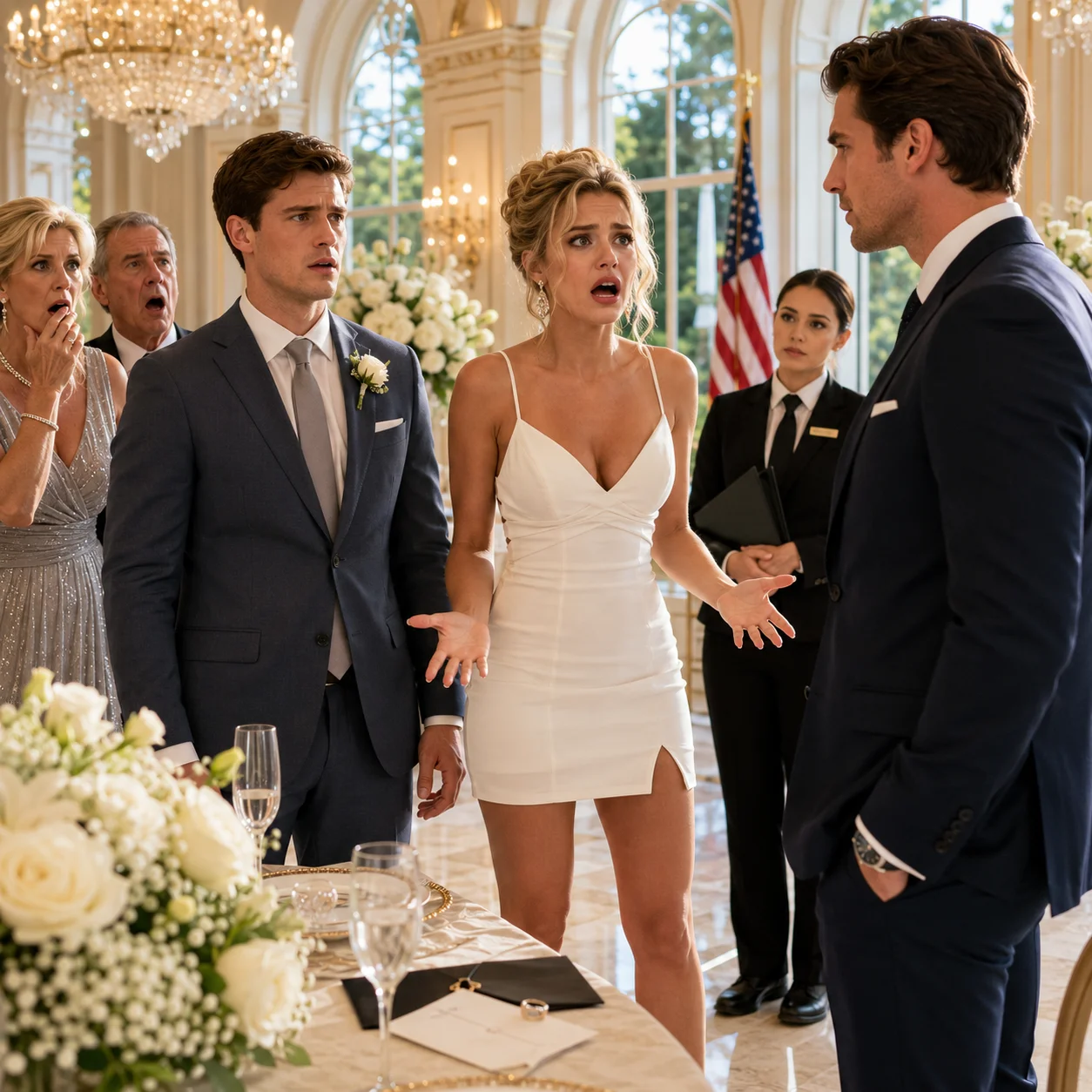
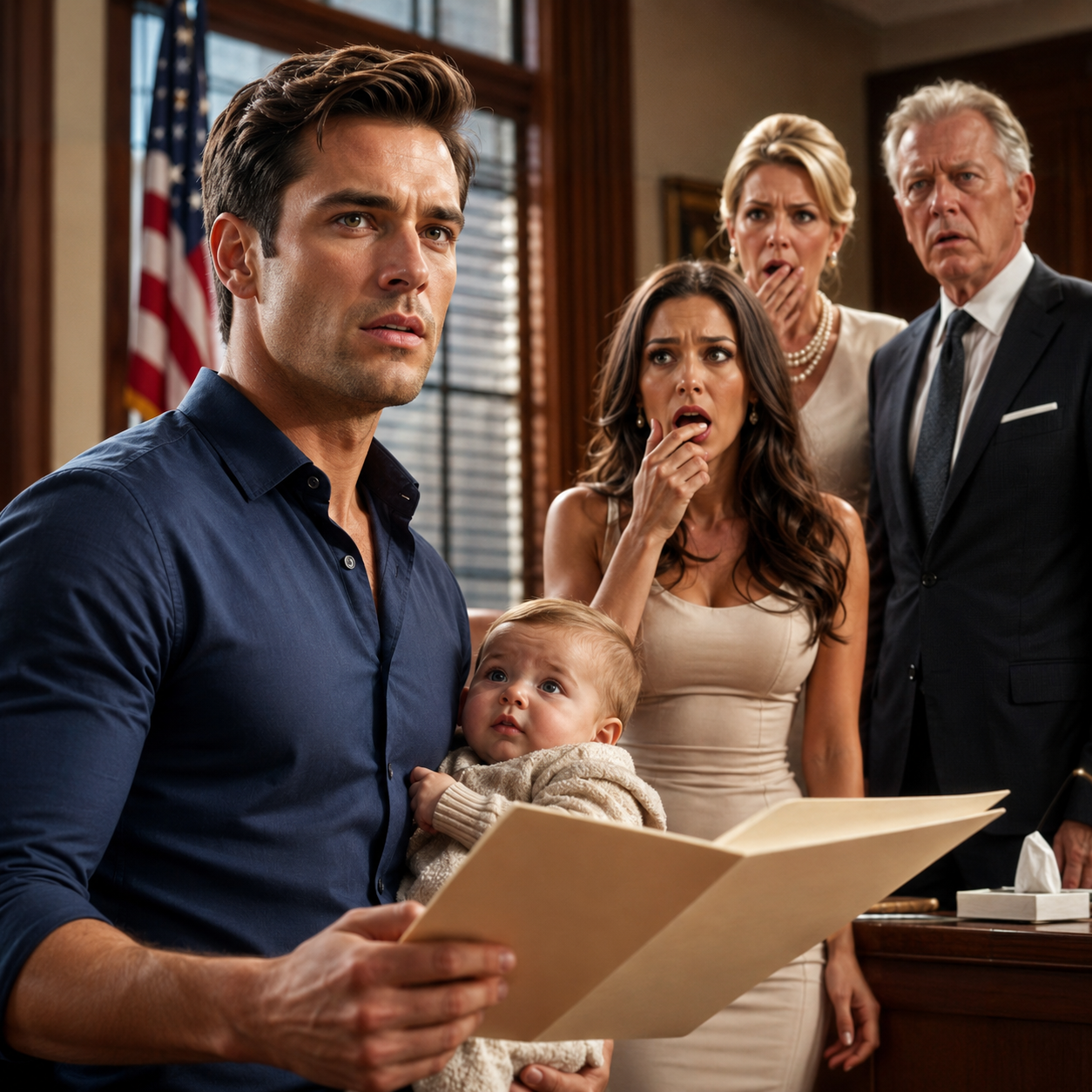
The emergency custody hearing happened three days later. Clara’s family came dressed like they were attending a funeral for my reputation. Richard wore a navy suit. Evelyn wore pearls. Marissa wore an expression of bored sympathy. Clara looked exhausted and terrified. I came with Rebecca and a folder full of printed messages, call logs, and screenshots. I had learned quickly that pain is useless in court unless it is organized.
The judge reviewed the DNA result first. There was no dramatic gasp. Real life rarely gives you music at the moment of truth. The judge simply read the report, adjusted his glasses, and said, “Paternity is established.”
I looked at Clara. She was crying silently.
Rebecca stood and calmly explained that I had been excluded from my daughter’s life based on false claims, that separation documents had been presented in the hospital, and that Clara’s family had interfered with communication. She requested temporary shared custody and a communication order requiring both parents to use a parenting app.
Clara’s attorney tried to soften everything. He said Clara had been emotionally vulnerable after childbirth. He said she had received information that caused her to question paternity. He said she regretted the way things unfolded.
The judge asked, “What information?”
Clara’s attorney hesitated. “Your Honor, my client was led to believe Mr. Walker could not be the biological father.”
Rebecca stood. “Led to believe by whom?”
Clara’s attorney looked at his notes. “Her family.”
The judge turned toward Clara. “Mrs. Walker, is that accurate?”
Clara wiped her face. “Yes.”
Evelyn’s head snapped toward her.
The courtroom became very still.
The judge asked, “What exactly were you told?”
Clara looked at her mother, then at me. Her voice broke. “I was told Nathan had a medical condition. That he knew about it before we got married. That he had hidden it from me. My mother said he couldn’t have children.”
I stared at her.
Rebecca’s voice sharpened. “Did Mr. Walker ever tell you that?”
“No.”
“Did a doctor tell you that?”
“No.”
“Did you see verified medical records?”
Clara hesitated.
The judge leaned forward. “Mrs. Walker.”
She whispered, “I saw papers.”
Rebecca asked, “What papers?”
Clara looked like she might be sick. “A lab report. My mother said she got it from someone who used to work at Nathan’s clinic.”
My clinic. Years earlier, before Clara and I started trying seriously, I had gone for a routine fertility evaluation because we wanted to be proactive. Everything had been normal. I had told Clara that. We had even joked afterward about how awkward the appointment was. The idea that Evelyn had produced some fake document from my private medical history made my skin crawl.
Rebecca asked, “Do you have that report?”
Clara nodded slowly. “My mother does.”
Every eye moved to Evelyn.
Evelyn sat perfectly upright, but the color had drained from her face.
The judge ordered the report produced.
That was the first crack.
The second came later that week, when Clara sent the document through the parenting app. It was a scanned lab report with my name, my date of birth, and a diagnosis that made it appear I was sterile. At first glance, it looked official. The clinic name was real. The formatting was close enough to fool someone who wanted to believe it. But Rebecca had it reviewed by the actual clinic, and within forty-eight hours, they confirmed in writing that the document was not authentic. The doctor listed had retired before the date on the report. The patient ID number belonged to someone else. The signature was copied from a public document.
Forgery.
But that still did not answer the biggest question. Why? Why would Evelyn forge a medical report to convince her daughter that her husband could not be the father of her baby? Why would Richard bring separation papers? Why would Marissa help spread the story? Why would they risk something so cruel and so stupid when one DNA test could destroy it?
The answer came from a place none of them expected: Marissa.
Not because she confessed out of guilt. Marissa did not have enough guilt to confess. She confessed by accident.
Two weeks after the custody order gave me scheduled time with Lily, I was sitting in my living room with my daughter asleep on my chest when my phone buzzed. It was a message from an unknown number.
“You don’t know me, but Marissa has been talking. You should ask about the trust.”
That was all.
I showed Rebecca. She told me not to engage with the sender but to preserve the message. Then she started digging.
The “trust” turned out to be real.
Clara’s maternal grandfather, Howard Bell, had died eight months before Lily was born. He had been wealthier than most people knew, the kind of old quiet money that did not need to announce itself because buildings, scholarships, and plaques did the talking. His will created a family trust with several conditions. The most important one involved Clara. Howard had apparently adored her and distrusted Richard. According to the trust language, if Clara had a biological child while legally married, that child would become a direct beneficiary. But if Clara divorced before the child’s birth or if the child’s legal paternity was successfully disestablished, control of Clara’s share would remain under a family management provision overseen temporarily by Evelyn and Richard.
In plain language, Lily being legally mine limited Richard and Evelyn’s control over Clara’s money.
I read the documents twice before the full ugliness settled into me. This had never been about morality. It had never been about protecting Clara from betrayal. It had never been about shame. It was about money and control. If they could convince Clara that I had lied about being sterile, then convince me the baby was not mine, then pressure me to sign separation papers and disestablish paternity quickly, they could keep controlling Clara’s inheritance through legal confusion and emotional chaos.
But why would Clara believe them so easily?
That question haunted me until she finally answered it herself.
It happened during a custody exchange at a supervised family center. Lily was six weeks old by then. She had started making little faces in her sleep that looked almost like smiles. I had learned how to warm bottles, how to swaddle her the way she liked, how to walk slow circles around my kitchen at two in the morning while humming whatever song came to mind. Fatherhood had not arrived the way I dreamed, but it had arrived, and every hour with her stitched something inside me back together.
Clara arrived early that day. She looked different without Evelyn beside her. Smaller, somehow. Less polished. More human. She handed me Lily’s diaper bag and said, “She likes the blue pacifier now.”
“I know,” I said. “She used it all weekend.”
Clara nodded, embarrassed. “Right.”
I started to leave, but she said, “Nathan, can I tell you something?”
I should have said no. Rebecca would have told me to keep communication documented. But Lily was asleep in my arms, and Clara looked like a person standing at the edge of a cliff she had built herself.
I said, “Briefly.”
Clara took a breath. “When I found out I was pregnant, I was happy. I swear to you, I was happy.”
I said nothing.
“Then my mother started asking questions. She said the timing was strange. She said you seemed too calm about how long we had been trying. She told me men sometimes hide things because they’re ashamed. I told her she was wrong. Then she showed me the report.”
“The fake report.”
“I didn’t know that then.”
“You could have asked me.”
“I know.” Her voice cracked. “That’s the part I can’t forgive myself for. I should have asked you.”
“Why didn’t you?”
She looked down at her hands. “Because she didn’t just say you were sterile. She said you knew. She said everyone in your family knew. She said if I confronted you, you would manipulate me. She said you would cry, make me feel guilty, and convince me to stay quiet. And then Marissa said she had heard rumors.”
“Rumors from who?”
Clara’s mouth tightened. “From herself, probably.”
I almost smiled, but there was no humor in it.
Clara continued, “They kept saying they were protecting me. That if the baby wasn’t yours and you found out later, you’d destroy me in court. That the only way to protect Lily was to handle it before you got attached.”
I stared at her. “Before I got attached?”
She started crying. “I know.”
“No, Clara. I was talking to her through your stomach every night.”
“I know.”
“I built her crib.”
“I know.”
“I chose her name.”
At that, Clara covered her mouth.
I stepped closer, keeping my voice low. “You let them make me a stranger to my own child.”
She whispered, “I was scared.”
“So was I. But I didn’t lie.”
She looked at Lily in my arms. “I don’t know who I am without them telling me what to think.”
That sentence was the closest thing to truth Clara had given me since the hospital. It did not excuse what she had done. But it explained the machinery behind it. Clara had been raised inside a family where love came with instructions. Approval was oxygen. Disobedience was exile. Evelyn did not need to scream to control her daughters. She simply made them believe that fear was wisdom and dependence was loyalty.
The investigation expanded from there. Once the trust became part of the custody and divorce proceedings, Richard’s confidence started to crack. Bank records were subpoenaed. Emails were requested. The forged medical report became evidence not just of family manipulation, but potentially of fraud. The private attorney who had prepared the hospital papers claimed Richard had represented that I was aware of the paternity issue and willing to cooperate. That was a lie. The attorney, eager to protect himself, produced emails from Richard and Evelyn.
One email from Evelyn read: “We need him to sign before the test becomes an option. Once he asks for testing, the situation becomes harder to contain.”
Another from Richard read: “Clara is emotionally weak right now. Push the medical angle. If she believes he deceived her, she will not defend him.”
Then there was Marissa. She had texted a friend: “Mom says if Nate is out before the birth certificate stuff is final, Clara’s trust stays under Dad’s control for a while. Finally some good news.”
Finally some good news.
I stared at that line in Rebecca’s office and felt whatever pity I had left for Marissa evaporate.
But the worst email was from Evelyn to Richard, sent three weeks before Lily was born.
“Clara keeps wavering. She still loves him. We need to make the hospital moment decisive. If he sees the baby and bonds with her, we lose leverage.”
If he sees the baby and bonds with her.
That was my daughter they were talking about. My first breath as a father. My first chance to hold her without suspicion in the room. They had planned to poison that moment because my love was inconvenient to their control.
When Clara saw the emails, something in her finally broke clean. She called Rebecca’s office and asked to give a statement. Rebecca told her to speak through her own attorney, but Clara insisted on providing written documentation for the custody case. She admitted that her family had pressured her. She admitted that the medical report came from Evelyn. She admitted Richard told her I might become dangerous if allowed near the baby. She admitted Marissa had created rumors among friends to isolate her from anyone who might question the story.
For the first time, Clara stopped protecting them.
Evelyn reacted exactly the way people like Evelyn react when control fails. She became the victim. She told relatives Clara was unstable from postpartum hormones. She claimed I had brainwashed her. She said Richard was being persecuted by an ungrateful son-in-law. Richard stopped speaking to Clara entirely. Marissa sent her a message that said, “Hope he’s worth losing your real family.”
Clara showed me that message during a custody mediation. Her hand shook as she held the phone.
I said, “They are not angry because you lied. They are angry because you stopped lying for them.”
She looked at me for a long time. “How do you know how to say things like that?”
“Because I had six weeks alone in a nursery to think.”
She cried then, quietly, not asking me to comfort her. I appreciated that. There had been a time when her tears would have pulled me across any room. Now I could feel compassion without surrendering my boundaries. That was new for me.
The divorce became inevitable. Clara asked once if there was any chance we could repair the marriage. We were sitting across from each other in a conference room with lawyers outside, Lily sleeping in a stroller between us like the world’s smallest witness.
I wanted to say yes. A weaker, older version of me might have said yes because I missed the life I thought we had. I missed Sunday mornings. I missed the way Clara used to sing off-key while making coffee. I missed believing we were a team. But love without trust is just memory wearing perfume.
I told her the truth. “I can forgive you someday as Lily’s mother. I don’t think I can be your husband again.”
She closed her eyes. “Because of what I believed?”
“Because of what you did with what you believed.”
That was the difference. Doubt can happen. Fear can happen. Families can manipulate. But Clara had not simply been afraid in private. She had participated in my public humiliation. She had allowed legal papers at the hospital. She had denied me access. She had let our daughter’s first days become a battlefield because she trusted the people controlling her more than the man who had stood beside her.
The final custody agreement gave us shared legal custody and a gradual physical custody schedule that expanded as Lily grew older. Clara moved out of her parents’ house and into a small rental apartment across town. For the first time in her life, she paid her own utilities, bought her own groceries, and ignored three out of every four calls from her mother. She started therapy. I knew because she told me through the parenting app, not as an excuse, just as information. I respected that.
The trust case turned uglier. Richard resigned from two boards after the forged document became part of a civil complaint. Evelyn lost her position in the charity foundation she had treated like a throne. Marissa’s friends slowly learned that the “family protection” story was really an inheritance-control scheme with a newborn baby used as leverage. People did not abandon them all at once. Families like that rarely fall in one dramatic crash. They lose invitations first. Then allies. Then the benefit of the doubt. Eventually, they are left with only the version of themselves they used to hide behind polished smiles.
One afternoon, almost a year after Lily was born, I took her to the park. She was walking badly by then, in that adorable unsteady way toddlers walk, like tiny drunk philosophers. She kept pointing at birds and saying “Da” to everything, which I chose to interpret as genius-level emotional attachment to me. I was kneeling in the grass, helping her collect leaves, when I saw Clara standing near the path.
She had come for the scheduled exchange, but she was early. She watched us for a moment before approaching. There was sadness in her face, but not the desperate kind anymore. More like the sadness of someone finally looking at a house after the fire is out.
“She looks like you,” Clara said.
I picked Lily up and brushed grass from her pants. “I know.”
Clara gave a small, painful smile. “My mother used to get so angry when people said that.”
“I bet.”
Lily reached for Clara, and I handed her over. Clara kissed her cheek, then looked at me. “I never said thank you.”
“For what?”
“For fighting for her.”
I looked at my daughter, now grabbing at Clara’s necklace. “I was fighting for me too.”
“I know. But you could have hated me enough to walk away.”
That sentence stayed in the air between us.
I said, “No, Clara. I could hate what you did and still love my daughter more.”
She nodded. “I’m learning that two things can be true.”
That was the closest we ever came to peace.
People sometimes ask whether the DNA test saved my family or destroyed it. The answer is neither. The DNA test revealed what kind of family had already been built around us. It proved Lily was mine, yes. But more than that, it exposed the architecture of control Clara had mistaken for love. It showed me that Richard and Evelyn did not see their daughter as a person, but as an asset. They did not see their granddaughter as a child, but as leverage. And they did not see me as a husband or father, but as an obstacle to be removed.
For a while, I was ashamed that I had not seen it sooner. I replayed every dinner, every insult disguised as humor, every moment Clara looked to her mother before answering a question. But shame is a useless inheritance. I refused to pass it down to Lily.
So I built a different kind of home.
In my house, love does not require obedience. In my house, nobody uses silence as punishment. In my house, when Lily asks questions someday, I will answer them carefully but honestly. I will not tell her that her mother was evil, because Clara was not evil. Weak, yes. Afraid, yes. Conditioned to obey people who hurt others and called it protection, yes. But not evil. I will tell Lily that adults sometimes make terrible mistakes when they confuse fear with loyalty. I will tell her that truth matters even when it breaks things. I will tell her that she was wanted from the beginning, no matter who tried to rewrite that story.
The framed ultrasound photo still sits in my house. For a long time, I kept it in a drawer because looking at the silver words hurt too much. Already loved by Daddy. Eventually, I put it on a shelf in Lily’s room. Not because it reminded me of Clara, but because it told the truth. Before the hospital. Before the accusation. Before the forged report. Before the lawyers and hearings and emails. Before anyone tried to erase me, I loved my daughter.
And no DNA test created that.
It only proved what my heart already knew.
![[FULL STORY] My Fiancee Told Me To Get Out Of Her Way During Her "Survival Mode" While My Father Was In Surgery, So I Deleted Our Future.](https://social-media.rabedo.com/thumbnails/1777351613_B14.png)