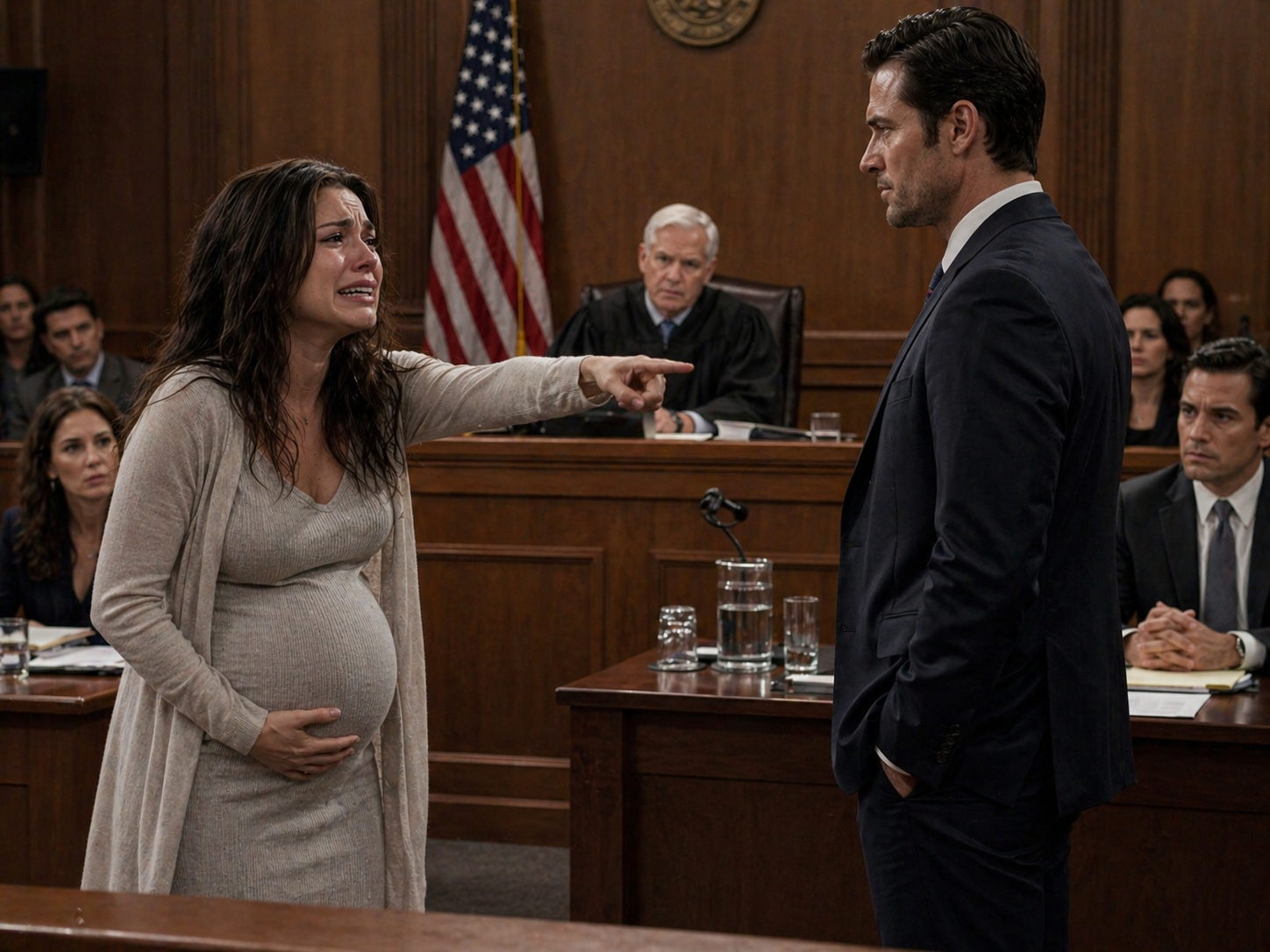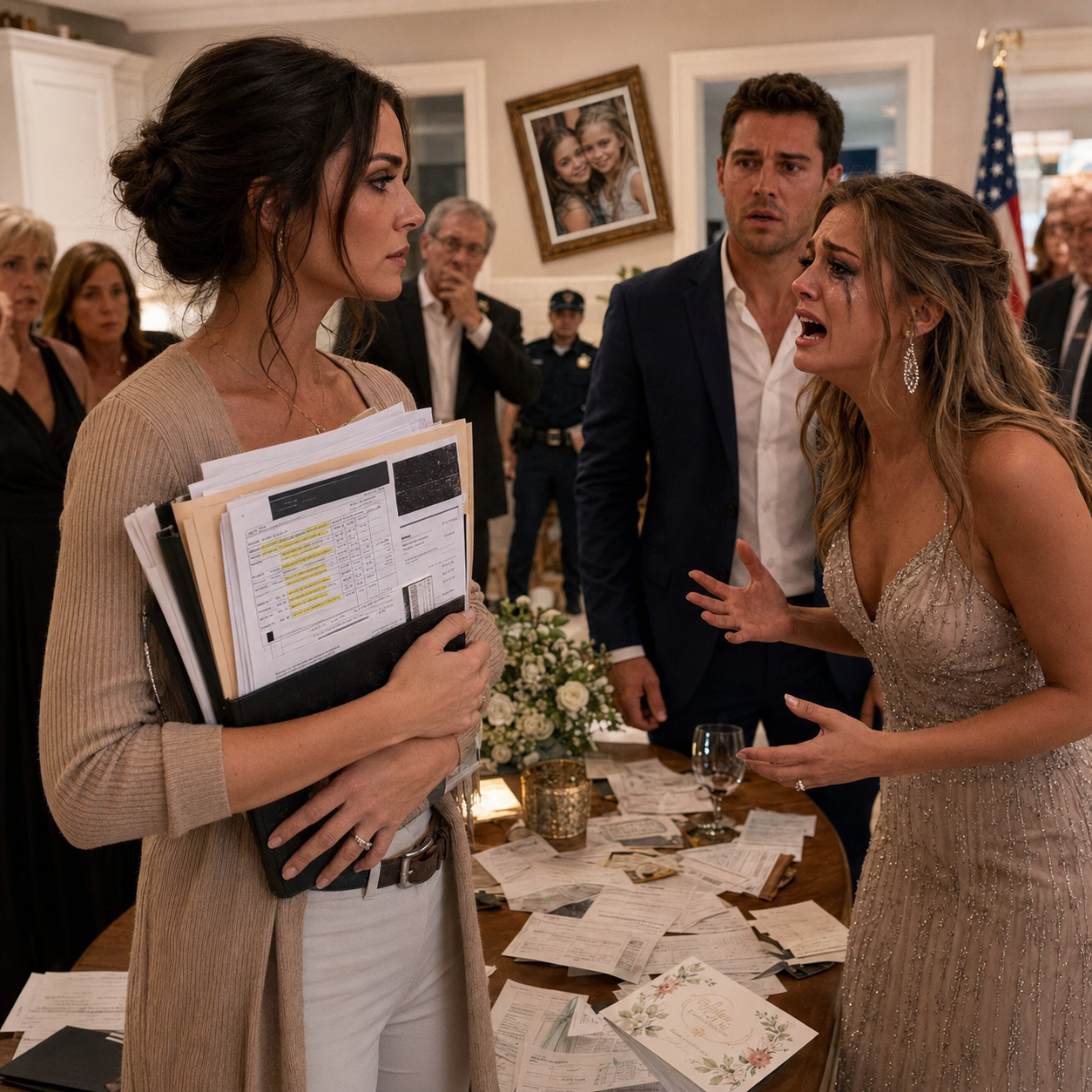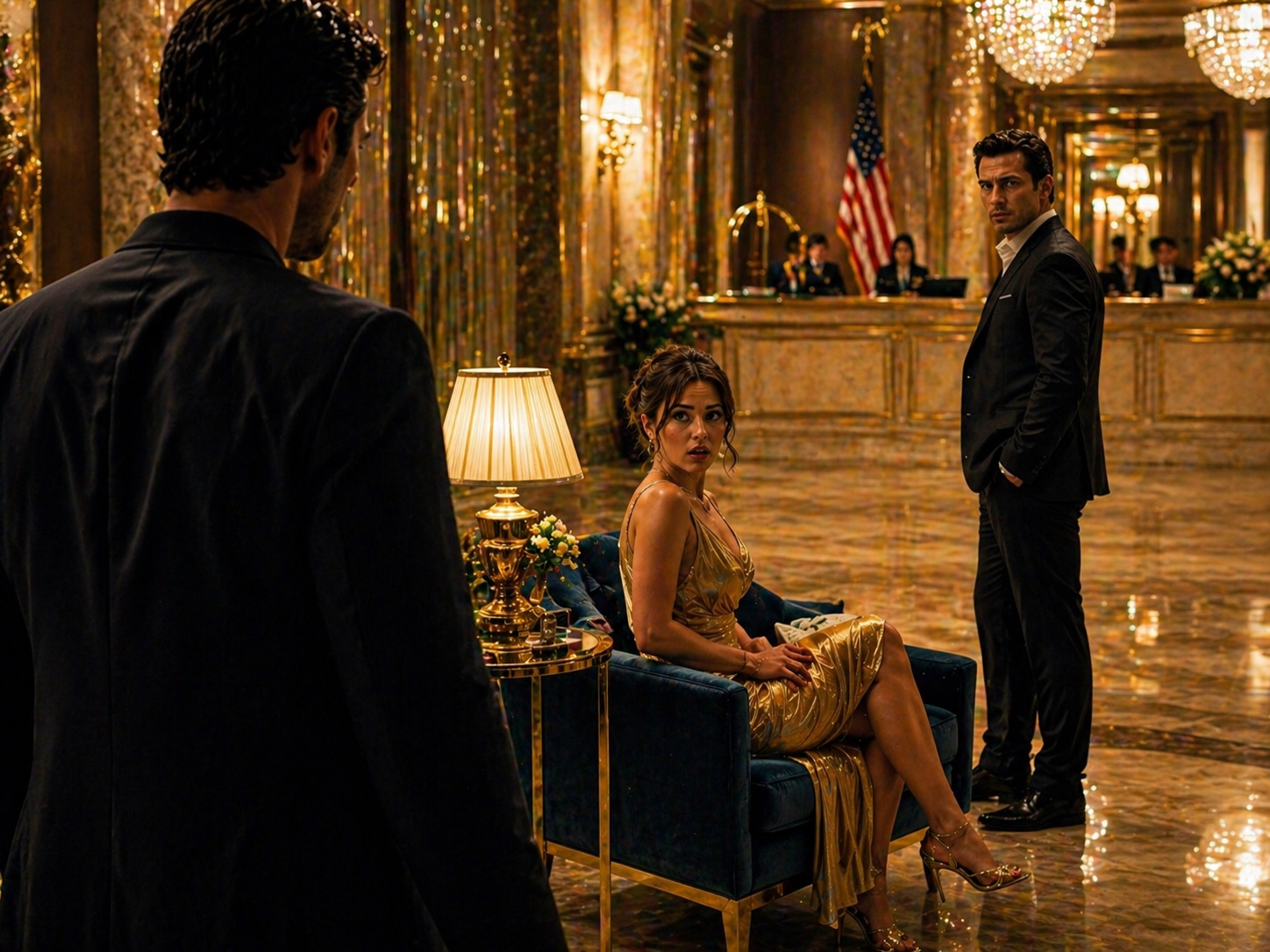
At my wife's company event, her co-worker smirked, "How's it feel being a loser living off his wife?" Everyone laughed, including her. So, I turned to the CEO and asked, "How's it feel knowing this loser owns 90% of your company?" His face went white. All right, Reddit. This one's a wild ride. My wife's co-worker called me a loser at her company dinner party.
Everyone laughed, including my wife. So, I dropped a bomb that changed everything. Grab some popcorn because this gets messy. I'm Blake, 42 male, and for the past 15 years, I've been living what most people would call a pretty chill life. No corporate job, no crazy schedule, just me managing investments and staying out of the spotlight.
My wife, Rachel, 40 female, works as a VP of sales at NextEra Solutions, this mid-size tech company in Seattle. She's good at what she does, climbing that corporate ladder like her life depends on it. We live in a nice apartment in downtown Seattle with floor-to-ceiling windows overlooking the sound. I spend my mornings reading financial reports over coffee, afternoons working on personal coding projects, or meeting with my financial advisor, evenings cooking dinner, and waiting for Rachel to come home from another 12-hour work
day. To the outside world, I look like a classic kept man living off his successful wife's income. The neighbors in our building definitely think so. I've overheard them whispering in the elevator, seen the looks they give me when I'm coming back from the gym at 2:00 p.m. on a Tuesday while they're rushing back from lunch breaks.
"Must be nice," one of them said to me once in the mail room, "having all that free time while your wife works." I just smiled and nodded, not bothering to correct their assumptions. Rachel's friends are even worse. At dinner parties, they ask me with barely concealed contempt what I do all day. When I say I manage investments, they exchange knowing glances that say they think I'm just day trading with Rachel's money and calling it a career.
Her college roommate, Jennifer, actually said to me once, "It's so great that Rachel supports your hobbies." Hobbies. Like managing a multi-million dollar investment portfolio is something I do to kill time between video game including Rachel for most of our marriage. I'm not some unemployed guy living off his successful wife.
I'm actually the majority owner of the company she works for. Yeah, you read that right. The company where she built her entire career, where she networked and politicked her way up the ladder, where she spent 60-hour weeks trying to impress the CEO, I own 90% of it. Let me back up and explain how we got here because this story doesn't make sense without understanding where I came from.
15 years ago, I was a completely different person, fresh out of MIT with an engineering degree and a headful of ideas that actually worked. Not pie-in-the-sky concepts, but practical solutions to real problems that companies were facing. I'd done my thesis on data integration systems, and during my research, I realized the entire industry was approaching the problem wrong.
Everyone was trying to create one-size-fits-all solutions, but what companies actually needed was modular, scalable systems that could adapt to their specific infrastructure. So, I started building exactly that in my tiny studio apartment in Cambridge. Those first 3 years were brutal. I'm talking 18-hour days, living on instant noodles and coffee, coding until my eyes burned and my fingers cramped.
My apartment looked like a command center from a hacker movie. Three monitors on my desk, whiteboards covering every wall, cables snaking across the floor. I had a sleeping bag in the corner because I couldn't be bothered to make my bed when I was only sleeping 4 hours a night anyway.
My college friends thought I was insane. They'd landed comfortable jobs at Google and Microsoft, pulling six-figure salaries, working reasonable hours, enjoying their 20s. Meanwhile, I was eating ramen for the third meal in a row and debugging code at 3:00 a.m. on a Friday night. But, I believed in what I was building.
The company was called Quantum Systems, and we developed software that revolutionized how enterprise companies handled data integration. Not in a flashy, sexy way that gets headlines, but in a practical, profitable way that saved companies millions of dollars in operational costs. The breakthrough came when I landed my first major client, a Fortune 500 manufacturing company that was hemorrhaging money because their different systems couldn't talk to each other.
Their inventory management didn't sync with their supply chain, which didn't sync with their retail operations. They were making purchasing decisions based on data that was weeks out of date. I built them a custom solution in 6 months. Their COO called it the most elegant piece of software engineering he'd ever seen. More importantly, they saved $12 million in the first year alone.
Word spread fast in those circles, and suddenly, I had more clients than I could handle. By 25, I had three full-time employees working out of a shared office space in downtown Boston. By 26, we'd moved to proper offices, and I had 15 people on payroll. By 27, I had something truly valuable, not just a concept or a prototype, but actual revenue, actual clients, actual tangible value that couldn't be ignored.
By the time I was 27, I had something real, not just a concept or a prototype, but actual revenue, actual clients, actual value. Then NextEra came knocking. They were struggling, bleeding money, facing bankruptcy. They needed what I'd built, and they knew it. NextEra had been a promising tech company in the early 2000s, but they'd made some catastrophically bad decisions, over-hired during the boom, overextended on real estate, and most damaging, built their entire infrastructure on outdated systems that couldn't scale. They were paying
millions in licensing fees for software that didn't work properly, and every attempt to modernize had failed spectacularly. Their CEO, Philip Hammond, reached out through a mutual connection. We met at a coffee shop in Seattle, and I could see the desperation in his eyes before he even started his pitch.
NextEra needed what Quantum Systems had built. More specifically, they needed it yesterday, or they'd be bankrupt by the end of the quarter. Philip tried to play it cool, talking about strategic partnerships and synergistic opportunities. I let him finish his pitch, then laid out what I already knew from my own research. NextEra had about 3 months of runway left.
Their biggest client was threatening to leave, and their board was ready to fire Philip if he couldn't turn things around immediately. "Let me save us both some time," I told him. "You need my technology. I need Honestly, I don't need much, but we can work something out." The negotiations took 6 weeks. Philip wanted a standard merger where NextEra would acquire Quantum Systems, I'd get a nice payout and maybe a VP title, and everyone would go back to business as usual.
That wasn't happening. I wanted 90% ownership with full control over major decisions, while NextEra kept their brand name, their existing client relationships, and Philip stayed on to manage day-to-day operations. Basically, I was acquiring them, but letting them keep their dignity and their jobs.
Philip's board fought me hard on the terms. They couldn't believe some 27-year-old engineer was dictating terms to their established company. One board member actually said during a meeting, "We're NextEra Solutions. We don't answer to some kid with a startup." I stood up, gathered my things, and walked to the door. "Then enjoy bankruptcy.
I've got three other companies interested in licensing my technology, and none of them are as desperate as you are." Philip called me back before I reached the elevator. We had a deal by end of week, so we worked out a merger. The structure was complex, but elegant. I became the silent majority owner through an LLC with multiple layers that kept my name completely off public records.
Philip stayed on as CEO to manage daily operations, while I stepped back into the shadows. NextEra got the technology that saved them from bankruptcy. I got financial security and freedom. Why did I do it? Honestly, I was exhausted, burnt out, completely drained. Building a startup from nothing had consumed every ounce of energy I had.
I'd poured my entire 20s into creating something valuable, and now I just wanted to breathe. I didn't want the spotlight, the media attention, the corporate politics, the constant pressure to perform and grow and expand. I'd watched other tech founders burn themselves out chasing unicorn valuations and IPO dreams. That wasn't me.
I just wanted to build something valuable, secure my financial future, and then live my life in peace on my own terms. So, we structured everything through a complex web of LLCs and holding companies, keeping my name completely off the public records. NextEra's press releases about the merger mentioned acquiring cutting-edge technology from a private firm, but never mentioned me by name.
Perfect. The first year after the merger was surreal. I went from working 80-hour weeks managing a growing startup to suddenly having nothing but free time. I traveled for a few months, slept for what felt like a year, and slowly rediscovered what it meant to live without constant pressure. I met Rachel about a year after the merger at a mutual friend's housewarming party in Seattle.
I'd moved to the city because I liked the tech scene, but wanted to stay away from the Bay Area craziness. She was working in sales at a smaller firm, ambitious and driven, with this energy that made every room feel more alive when she entered it. We talked for 3 hours that first night, standing in the kitchen while the party raged around us.
She told me about her plans to break into a bigger company, about the career she wanted to build, about her frustrations with bosses who didn't see her potential. I told her about my consulting work and investment management, which was technically true, just missing a few zeros. She was gorgeous, funny, sharp as hell, and seemed genuinely interested in me as a person, not as a paycheck, not as a status symbol, just as Blake.
I fell hard and fast. When we started dating, I didn't tell her about NextEra. Call it a test, call it paranoia, call it whatever you want. My dad had warned me my whole life about people who love your money more than they love you. When we started dating, I didn't tell her about NextEra. Call it a test, Call it paranoia.
Call it whatever you want. My dad had warned me my whole life about people who love your money more than they love you. My dad was a mechanical engineer who done well for himself. Nothing crazy, but comfortable. He'd watched three of his closest friends get absolutely destroyed in divorces by women who'd married them for their money.
One friend lost his house, his business, and his relationship with his kids. All because his ex-wife had been more interested in his bank account than his personality. "Blake," my dad told me over dinner when I was maybe 19, "the moment people know you're rich, everything changes. They see dollar signs instead of the person. Every interaction becomes transactional.
Every relationship has this underlying calculation. You'll never know if someone likes you or likes your wallet." Those words stuck with me. So, when I met Rachel, I wanted her to fall for me, not my bank account. I wanted to know that if everything disappeared tomorrow, if NextEra went bankrupt, if I lost every investment, if I was truly broke, she'd still want to be with me.
I kept it quiet, telling her I did consulting work and managed some investments. Technical truth, just missing about eight zeros. She seemed satisfied with that explanation, never pressed too hard for details. Maybe that should have been a red flag, too, but I chose to see it as respect for my privacy. Two years into our relationship, Rachel got a job offer from NextEra.
She came home one evening practically vibrating with excitement, waving the offer letter like it was a winning "Blake, you're never going to believe this. NextEra Solutions just offered me a position. Senior Sales Associate with a clear path to management." She was bouncing on her toes, grinning ear to ear. "This is exactly the break I've been waiting for.
" I looked at the offer letter, keeping my face carefully neutral. The salary was good, not great, but the stock options and bonus structure were solid. Should be, since I'd approved the compensation framework myself about 6 months earlier. "That's amazing, babe," I said, hugging her. "You should definitely take it." "Really? You don't think it's too risky?" "It's a pretty big company, lots of competition.
You'll crush it. You're the best salesperson I know." She did crush it. Rachel was genuinely talented at sales, had this natural ability to read clients and close deals. She could walk into a room full of skeptical executives and walk out with signatures on contracts. Within her first year at NextEra, she'd brought in three major clients and exceeded her quota by 40%.
I watched her career develop from the sidelines, occasionally meeting Philip for quarterly reviews where he'd mention that impressive new hire in sales without realizing he was talking about my wife. It was surreal and kind of fascinating watching her build her identity around a company I owned without her having any idea. As time went on, I figured I'd tell her eventually.
Any day now, I'd sit her down and explain the whole situation. But then weeks turned into months. She got her first promotion, and the longer I waited, the weirder it became to bring up. "Hey, honey, remember that company where you've built your entire career for the past 3 years? Yeah, funny story about that.
" The timing never felt right. After her first promotion to account manager, she was riding this incredible high, finally feeling validated in her career. How do you interrupt that moment with, "By the way, I own your company"? After her second promotion to senior account manager, she was already planning her climb to VP. Telling her then would have made every achievement feel tainted, like she'd only succeeded because of her connection to me.
So, I kept quiet, and the years stacked up. Five years turned to seven, seven turned to 10. The secret became this massive weight I carried everywhere, getting heavier with every passing day, but somehow impossible to put down. The arrangement worked for me in most ways. I had passive income from NextEra's success, healthy dividends that funded our lifestyle without Rachel ever questioning where the money came from.
I managed other investments on the side, played the stock market, did some angel investing in other startups. Kept busy enough that I didn't feel useless, but free enough that I could live life on my own terms. No boss breathing down my neck, no office politics to navigate, no performance reviews where someone who knew less than me would critique my work, no mandatory fun at corporate retreats, just freedom to read, to learn, to work on personal projects, to exist without someone else's expectations hanging over my head.
Rachel climbed the ladder fast. Within 5 years, she'd made VP of sales. I was genuinely proud of her. Watching her evolve from an ambitious junior salesperson to a confident executive who could command a boardroom, even if she sometimes made comments that stung, little digs about my lack of ambition, jokes about me being content with mediocrity, offhand remarks about how I was wasting my potential by not pursuing a traditional career.
They hurt, but I told myself she didn't mean it, that she was just stressed from work, that this was just her way of processing her own insecurities about being the primary earner. But those comments became more frequent as she climbed higher. The more successful she became at NextEra, the more she seemed to resent my lifestyle.
She'd come home from closing a major deal, energized and proud, and I'd congratulate her enthusiastically. But behind her smile, I could see this flicker of resentment, like she was thinking, "Where's your big win? What did you accomplish today?" Her friends picked up on it, too, and they were way less subtle.
At dinner parties, they'd ask me condescending questions about my work with air quotes around the word. One of her college friends, Jennifer, straight-up said to me at a barbecue, "Must be nice having a sugar mama. What do you even do all day?" Rachel didn't defend me, just laughed it off like it was harmless teasing between friends.
That hurt worse than the insult itself. The real problem started about 3 years ago when Brett joined her sales team. Brett was everything I wasn't, loud, flashy, constantly name-dropping and playing corporate politics like it was an Olympic sport. The kind of guy who'd mention he was wearing a Rolex before you could even notice it, who'd casually reference his business school friends working at Goldman Sachs, who treated every conversation like a networking opportunity.
He was also a complete jerk who seemed to have made it his personal mission to take shots at me whenever we crossed paths. At company events, he'd zero in on me like a shark smelling blood in the water, making these passive-aggressive comments designed to humiliate me in front of an audience. At company events, Brett would make these passive-aggressive comments about me being Rachel's househusband or joking about how nice it must be to not have to work for a living.
And Rachel would laugh it off, never defending me, just treating it like harmless office banter that I should be cool enough to handle. The first time it happened was at NextEra's summer company picnic. Brett walked up to Rachel and me while we were in line for food, looked me up and down and said, "So, Blake, what do you do again? Besides spending Rachel's paycheck?" His tone was joking, but his eyes were cruel.
"I manage investments," I said calmly. "Oh, investments, like day trading?" He laughed loud enough to draw attention. "That's adorable. My cousin does that, too. Lost his shirt last year trying to time the market." Rachel giggled. Actually giggled, like Brett was the funniest comedian she'd ever seen instead of a bully in expensive shoes.
"Not quite the same thing," I replied, keeping my tone neutral even though I wanted to tell him my portfolio was worth more than his annual salary times 20. "Sure, sure," Brett said with a patronizing smile. "We all need hobbies, right?" I bit my tongue. Every single time. The incidents escalated over the years. At the winter holiday party, Brett made a toast to all the hard-working people at NextEra who actually earn their paychecks while looking directly at me.
At the spring team-building retreat, he loudly asked Rachel if she was hiring someone to clean the apartment since Blake probably has his hands full watching daytime TV. Every time, Rachel would either laugh along or tell me later that I was being too sensitive and Brett was just joking around.
Never once did she tell him to back off. Never once did she defend me publicly. Never once did she make it clear that disrespecting her husband wasn't acceptable. That should have been my wake-up call. That should have been when I sat her down and explained everything. But I kept thinking things would get better, that once the novelty of Brett's humor wore off, he'd move on to other targets. I was wrong. I was.
Then came the annual company dinner last month, the event I'd been dreading for weeks because I knew Brett would be there, knew he'd have an audience, knew it was going to be bad. The dinner was held at the Hilton downtown, one of those massive ballrooms with crystal chandeliers and white tablecloths that cost more than most people's monthly rent.
NextEra went all out for this event, open bar, five-course meal, live jazz band, the whole corporate celebration package. Everyone dressed up, trying to out-corporate each other with their designer suits and expensive watches and shoes that cost more than my first car. I wore a simple navy suit I'd bought years ago, nothing flashy, and stood next to Rachel, who looked absolutely stunning in this emerald green dress that hugged her curves perfectly.
She'd spent 3 hours getting ready, doing her hair and makeup, trying on four different dresses before settling on the green one. I'd told her she looked beautiful, and she'd kissed me absentmindedly while checking her phone, already mentally preparing for the networking she'd do at the event. "You remember people's names, right?" she'd asked in the car on the way there.
"Philip Hammond is the CEO. Diana Chen is the VP of Operations. Brett works on my team. Robert in Accounting handles the expense reports." "I remember," I'd said, amused despite myself. Little did she know I'd approved most of their salaries personally during budget reviews. The ballroom was packed when we arrived, maybe 200 people total, employees, their spouses, a few major clients who'd been invited as a courtesy.
The energy was buzzing, that particular corporate electricity that comes from people trying to see and be seen, networking while pretending they're not networking, jockeying for position while acting like they're just there to have fun, Rachel was immediately in her element, working the room like a professional politician, shaking hands, remembering names, laughing at jokes that weren't funny, playing the game she'd mastered over years at NextEra.
I trailed behind her like a loyal puppy, smiling and nodding while people mostly ignored me, or made assumptions about who I was based on my relationship to her. I was just Rachel's husband, the quiet guy, the one who didn't work, the accessory she brought to these events to show she was a normal person with a normal life outside the office.
I grabbed a glass of sparkling cider from the bar and found our assigned table. Sat down next to Rachel's empty chair, watching her work the room, feeling more and more like furniture with every passing minute. About an hour into the dinner, Brett walked over with a group of Rachel's colleagues. He had this smug grin on his face that immediately put me on edge.
"Blake, good to see you, buddy," he said, way too loud for the setting. "Enjoying the free food and drinks?" I forced a smile. "It's a nice event. Must be great for you, right? Getting to attend these fancy parties without actually having to do any of the work to earn them." He laughed, looking around at the others for validation.
A few people chuckled uncomfortably. Rachel appeared at my side, slipping her arm through mine with that practiced smile she'd perfected. "How's the trophy husband life treating you?" Brett continued, clearly enjoying himself now that he had an audience. "I mean, seriously, what do you even do all day while Rachel's out here crushing it?" Philip Hammond, the CEO, was standing nearby and tried to intervene.
"Brett, maybe we should" "No, I'm genuinely curious," Brett interrupted, his voice getting louder. More people were turning to watch now. "Must be nice having someone else pay all the bills, right?" The words hung in the air for a second, and then he dropped the bomb. "What's it feel like being a loser?" Brett asked, that smug grin spreading wider.
"Having your wife as the breadwinner? Must be pretty strange, huh?" The table erupted in laughter. Not uncomfortable chuckles anymore, but genuine laughing. People from neighboring tables turned to see what was so funny. And standing right next to me, arm still linked with mine, was Rachel, laughing. Not a polite, uncomfortable laugh, not a sympathetic, "I'm so sorry" laugh, but a real, genuine, amused laugh, like Brett had just told the funniest joke she'd ever heard.
That moment crystallized everything for me. 15 years of marriage, and my wife was laughing while her co-worker called me a loser in front of dozens of people. People who had no idea what I'd built, what I'd sacrificed, or what I was capable of. Something cold settled in my chest. Not anger exactly, but clarity.
The kind of clarity you get when you finally stop lying to yourself about what's right in front of you. I stood there for a few seconds, letting the laughter wash over me. Then I smiled. Not the forced smile I'd been wearing all evening, but a genuine one that probably looked a little unsettling given the circumstances. The laughter started dying down as people noticed my expression.
"You know what, Brett?" I said, my voice calm and steady. "You're absolutely right. It must seem pretty strange from where you're sitting." I turned to Philip Hammond, who was looking increasingly uncomfortable as he sensed the shift in the room's energy. "Philip," I continued, still smiling that same unsettling smile. "How does it feel to know that this loser owns 90% of your company?" The silence that followed was absolute.
You could have heard a pin drop in that massive ballroom. Philip's face went white. His glass stopped halfway to his lips, frozen in midair like someone had hit pause on a video. Rachel's arm fell away from mine as she stared at me with her mouth slightly open, confusion and disbelief written all over her face. Brett looked like someone had just told him Santa Claus wasn't real.
His smug grin melted away as he tried to process what I'd just said. "What?" Rachel whispered, her voice barely audible over the sudden tension. I looked around the table at all these people who had been laughing just seconds ago, enjoying my humiliation, treating me like some kind of joke. Now they were all staring at me like I just revealed I was an alien.
"Did I stutter?" I asked, my voice still perfectly calm. "NextEra, remember? That little tech startup that merged with this company 5 years ago? The one that basically saved NextEra from bankruptcy?" I paused, watching realization dawn on Philip's face. "Yeah, that was mine. Still is, actually. Quantum Systems.
I built it, sold it in a merger, and kept 90% ownership. Check your corporate structure if you don't believe me." Rachel's wine glass slipped from her fingers and shattered on the floor. Red wine spread across the white tablecloth like blood. The sound seemed to break whatever spell had fallen over the room, and suddenly everyone was talking at once.
Whispered conversations, urgent questions, the scraping of chairs as people leaned in to hear better, but I was done. I'd said what I needed to say. I straightened my tie, took one last look at my wife's stunned face, and walked away from the table. As I headed toward the exit, I could hear the chaos erupting behind me. Philip's panicked voice trying to restore order.
Rachel calling my name. Brett demanding to know if what I'd said was true. I didn't look back. I got in my car and drove home, feeling lighter than I had in years. The apartment was quiet when I walked in. Just me and the city lights visible through the windows. I poured myself some water, sat on the couch, and waited.
Rachel came home about 2 hours later. I heard her key in the lock, then her footsteps in the hallway. She appeared in the living room doorway, still wearing that emerald dress, but now she looked small and uncertain instead of confident and radiant. "Blake," she said quietly, "we need to talk." "Yeah, I figured." She sat down on the chair across from me, not next to me on the couch like she normally would.
That small distance told me everything I needed to know about where we were. "Is it true?" she asked, "what you said at the dinner?" "Every word." "You own NextEra?" "90% of it, yeah." She stared at me like I was a stranger. "For how long?" "Since before we met. The merger happened about a year before I asked you out." "And you never told me?" "Nope.
" "Why?" Her voice cracked on the word. "Why would you keep something like that from me? From your wife?" I leaned back against the couch, studying her face. "Because I wanted to know who you'd be if you thought I was nobody. Turns out, I got my answer tonight." "That's not fair." "You laughed, Rachel.
" I cut her off, my voice still calm but harder now. "Your co-worker called me a loser in front of dozens of people, and you stood there and laughed." "I didn't know." "You didn't know I owned the company. Fine. But you did know he was insulting your husband, and you found it funny." She opened her mouth to argue, then closed it again.
Tears started rolling down her cheeks, but I felt nothing watching them. No urge to comfort her, no desire to make her feel better, just cold, clinical observation. "For 15 years," I continued, "I've listened to you make little comments about my lack of ambition, about how I don't contribute enough, about how embarrassing it is that I don't have a real job like your colleagues.
"I never meant" "Yes, you did. You absolutely meant it, and tonight proved it. The moment you thought you were the successful one, and I was just some deadweight husband, you had no problem letting people mock me." Rachel was full-on sobbing now, but I couldn't bring myself to care. Too many years of small cuts, too many jokes at my expense, too many times she'd chosen her corporate image over defending her husband.
"What happens now?" she asked through her tears. "Now?" I stood up and walked to the window, looking out at the city. Now I go to work. Properly this time, not just behind the scenes, because I just realized that being the silent partner has been letting way too much garbage fester in my company." "Your company," she repeated bitterly. "God, I feel like such an idiot.
" "You should." The next morning, I called Philip Hammond's office and scheduled a meeting. His assistant sounded nervous when she recognized my voice, probably having heard about the dinner disaster. "Mr. Sterling would like to see you Monday morning at 9:00 a.m.," I told her. "Clear his calendar. This isn't a request.
" Monday morning, I showed up at NextEra headquarters for the first time in years. Not as Rachel's quiet husband, but as Blake Sterling, the guy who'd been pulling the strings all along. Philip was already in the conference room when I arrived, looking like he'd aged 10 years over the weekend. He stood up when I walked in, his hand extended.
"Blake, I had no idea." "Save it, Philip. We've got bigger problems than your ignorance." I dropped a folder on the table, filled with documentation I'd been compiling over the past few months. Financial irregularities, nepotistic hiring practices, toxic workplace culture reports, all the things I'd been observing from the sidelines while Philip ran the company into the ground through sheer incompetence.
"What is this?" he asked, flipping through the pages. "This is your termination package. You're done, Philip, effective immediately." His face went red. "You can't just" "I can, and I am. Check your contract. As majority owner, I have the authority to remove you with or without cause.
This," I tapped the folder, "is definitely with cause." "After everything I've done for this company" "You've been coasting on my technology and my investment for 5 years while creating a toxic environment where guys like Brett feel comfortable humiliating people for fun. That ends now." Philip tried to argue, tried to negotiate, tried to threaten, but we both knew he had no leverage.
By noon, he was cleaning out his office. By end of day, I'd promoted Diana Chen from VP of Operations to interim CEO. Diana was everything Philip wasn't. Competent, empathetic, and actually interested in building something meaningful instead of just protecting her own territory. I'd been watching her for years, noting how she handled conflict, how she treated people, how she thought about problems.
"Diana," I said during our first meeting, "you're going to transform this place. I'll give you the resources and authority you need. All I ask is that you build a culture worth being proud of." She nodded, eyes bright with determination. "You won't [music] regret this, Mr. Sterling." "Blake. Just call me Blake.
" The next few weeks were a whirlwind. Diana hit the ground running, implementing changes that should have happened years ago. Open door policy, weekly all-hands meetings, reviews of every contract and vendor relationship. The toxic culture that had festered under Philip's leadership started evaporating. Brett tried to sue for wrongful termination when Diana fired him for the contract manipulation schemes we'd uncovered.
His lawyers took one look at the evidence >> [music] >> and advised him to settle quietly and disappear. Last I heard, he took a job with some mid-tier firm in Portland, probably telling everyone who'd listen about how he'd been railroaded by corporate politics. Rachel took a leave of absence. [music] "I need time to process everything," she told me one morning, her voice hollow and distant.
"I need to figure out who I am if I'm not climbing the corporate ladder at NextEra." [music] I didn't argue. Honestly, it was probably for the best. Having her around the office would have been awkward for everyone involved, especially since half the employees now knew she was married to the owner.
But, the real game-changer was the foundation I established, the Sterling Foundation for Engineering Education. For years, I'd been writing quiet checks to various charities, anonymous donations that nobody knew about. Now, I was putting my name and my story behind something that mattered. >> [music] >> The first scholarship reception was held in NextEra's main conference room.
25 kids from inner-city schools, their parents, teachers, and mentors all gathered to celebrate possibilities. >> [music] >> These weren't rich kids with connections and safety nets. These were hungry, brilliant young people who just needed someone to believe in them. I used to hide in the shadows, writing checks and staying anonymous.
Now, I showed up, shook hands, listened to stories, and showed these kids that hard work and respect could actually lead somewhere meaningful. The sweetest revenge wasn't punishment. It was building something better than what came before. Three months after the dinner disaster, I found myself back in the same Hilton ballroom where this whole journey had started.
But, everything was different now. The corporate awards night that Diana had organized felt like stepping into an alternate universe, one where respect [music] actually meant something and success was measured by impact rather than politics. "Ladies and gentlemen," Diana announced [music] from the podium, looking confident and radiant in her role as CEO, "please welcome Blake Sterling, the visionary who believed in NextEra before anyone else did and who's helping us build something truly meaningful.
" The applause that filled the room was genuine, warm, and completely different from the mocking laughter that had echoed in this same space just a few months ago. I stood up and walked to the front, passing tables full of employees who actually knew who I was now, who understood that the quiet guy they'd occasionally seen at company events was the reason they all had jobs.
No more whispered jokes about Rachel's unemployed husband. No more smirks about the loser who didn't contribute anything meaningful. These people had seen what I could build when I stopped hiding in the shadows. Rachel sat quietly in the third row, wearing a simple black dress instead of her usual power suit.
We were still married, technically, but everything between us had fundamentally shifted. She'd started volunteering at the foundation, slowly learning to see me as something other than an accessory to her corporate ambitions. Maybe it was too late for us. Maybe it was just in time. That remained to be seen. "Thank you," I said into the microphone, looking out at faces that reflected respect instead of ridicule.
"Three months ago, some of you learned something that surprised you about the man standing here tonight. But, the real surprise isn't that I owned this company all along." I gestured toward Diana, who was beaming with pride. "The real surprise is what we've built together since then. Under Diana's leadership, NextEra has remembered what it means to actually solve problems instead of just talking about solving them.
We've created an environment where good ideas matter more than good connections, where hard work gets recognized, and where respect isn't just a buzzword we throw around in mission statements. The foundation had funded its first class of scholarship recipients, 15 bright kids who were already showing incredible promise in their first semester of college.
The mentorship program had paired NextEra employees with students from underprivileged backgrounds, creating bridges between dreams and opportunities. As I looked around that ballroom, I realized the sweetest revenge had never been about punishment at all. It was about building something better than what came before. It was about showing people that power used with purpose could transform everything it touched.
The laughter had finally stopped, replaced by something infinitely more valuable, a legacy worth leaving behind. Later that night, after the ceremony ended and people started filtering out, Rachel approached me near the entrance. "That was a beautiful speech," she said quietly. "Thanks." "I've been doing a lot of thinking these past few months," she continued, "about who I became, about what I valued, about how I treated you.
" I waited, not making it easy for her. "I was so caught up in climbing the ladder, in proving myself to people like Brett and Philip, that I forgot the most important thing. You're my partner, not my accessory, not my embarrassment, but my partner." "Rachel." "Let me finish," she interrupted gently. "I laughed that night because I was insecure, because deep down I knew those people saw me as someone who'd married beneath her station, and part of me believed it, too.
I let their judgment become my judgment, and I'm so, so sorry." Tears were rolling down her face again, but this time they looked different, more genuine, less performative. "I don't know if we can fix this," she said. "I don't even know if you want to, but I want you to know that I finally see you, the real you, the man who built something incredible and stepped back because he valued peace over ego, the man who's changing lives through that foundation, the man who could have destroyed everyone who laughed at him, but chose to build something better
instead." I looked at this woman who'd shared my bed for 15 years, who'd built her entire professional identity without realizing it was all connected to me, who'd laughed at jokes about my failures while living off my success. "I don't know either," I admitted, "but we've got time to figure it out.
" She nodded, wiping her eyes. "That's all I can ask for." Six months later, Rachel returned to NextEra in a completely different role, not VP of sales trying to prove herself through cutthroat tactics, but director of the Sterling Foundation, working directly with the scholarship kids and mentorship programs. She was good at it, better than she'd been at sales, honestly.
She had a way of connecting with the students, of understanding their struggles in a way she'd never understood mine. Maybe because she'd finally experienced what it felt like to have everything you thought you knew pulled out from under you. We were rebuilding slowly, not the same marriage we had before, but something new and hopefully stronger, built on actual knowledge of who we both were, not the personas we'd been performing for each other.
Diana was crushing it as CEO. Company profits were up 40% from last year. Employee satisfaction was at an all-time high. And we just landed three major contracts that would set us up for massive growth. The foundation had expanded to cover 50 students now, with plans to double that next year.
Some of our early scholarship kids were already interning at NextEra, bringing fresh perspectives and hungry energy to the company. And me? I was finally comfortable stepping into the light, not because I needed the recognition or the power, but because I'd learned that hiding in the shadows only lets darkness fester.
![[FULL STORY] My Ex-Wife And Her New Husband Demanded Triple Child Support So They’d “Never Worry About Money.”...](https://social-media.rabedo.com/thumbnails/1777179933_R5.png)

.jpeg)