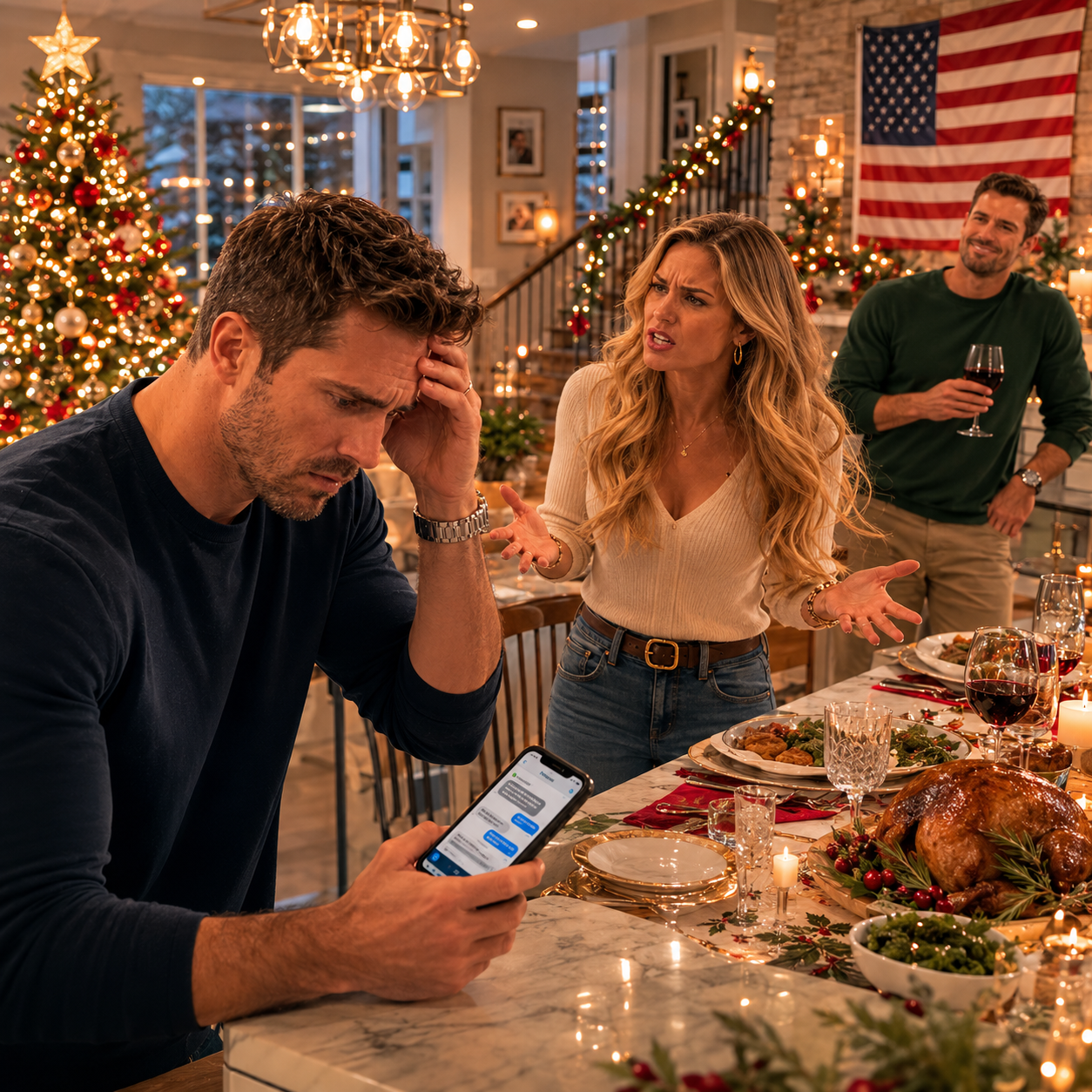

My girlfriend looked me dead in the eyes and said, “I’m blocking you for a week so you learn to appreciate me.”
I looked back at her and said, “Take a month.”
That was the moment her face changed. Not because she was hurt, but because the script had broken. She had expected panic. She had expected me to reach for her hand, apologize, promise to be better, and beg her not to disappear from my life. That was the game she had been playing for months. Silent treatments. Fake breakups. Dramatic exits. Blocks, unblocks, accusations, tears, and then the smug satisfaction of watching me chase her.
But that night, I didn’t chase.
I was twenty-seven, she was twenty-five, and we had been together for about a year and a half. For the last eight months, she had lived in my apartment. Not our apartment. Mine. My name was on the lease. I paid the rent. I bought the furniture. She moved in slowly at first, then completely, until her clothes filled half my closet and her moods filled the whole place.
At the beginning, I thought she was passionate. That was the word I used because I didn’t want to admit the truth. She wasn’t passionate. She was controlling. She didn’t want love as much as she wanted proof of power. If I didn’t text back quickly enough, I was neglecting her. If I went quiet after a long day, I was emotionally unavailable. If I disagreed with her, I was invalidating her feelings. Every small problem became a courtroom, and somehow I was always on trial.
That Tuesday night, the argument started over nothing. I had been in a meeting for two hours, my phone on silent, and when I came out, I saw six missed calls and a chain of angry texts. When I got home, she was waiting in the living room with her arms crossed, already furious before I had even opened my mouth.
“You never prioritize me,” she snapped.
“I was in a work meeting,” I said.
“You always have an excuse.”
“It’s not an excuse. It’s what happened.”
She paced the room like a woman giving a speech to an invisible jury. Then she pulled out her phone and raised it like a weapon.
“You know what? I’m done. I’m blocking you for a week. Maybe then you’ll learn to appreciate what you have.”
I stared at her. For months, I had feared this version of her. The coldness. The punishment. The withdrawal of affection like I was a child being disciplined. But that night, something inside me went calm.
Not angry.
Done.
“Make it a month,” I said.
She blinked. “What?”
“A week isn’t enough. Make it a full month. I need time to really reflect.”
Her expression twisted with confusion. She wanted me frightened. Instead, I sounded almost polite.
“Fine,” she said finally. “A month. Maybe you’ll learn your lesson.”
Then she blocked me right in front of my face, grabbed her purse, and walked out to stay with a friend.
The door closed behind her.
I stood in the silence for maybe thirty seconds.
Then I started packing.
By midnight, her clothes were out of my closet. By two in the morning, her bathroom products, books, decorations, throw pillows, and little personal items were boxed. By sunrise, I had rented a small climate-controlled storage unit across town. I wasn’t careless. I wasn’t cruel. I folded what needed folding, wrapped what could break, labeled boxes, and stacked everything neatly.
She wanted a month of silence.
I used the first forty-eight hours to reclaim my home.
I rented a van, moved every box into unit 37, paid the storage through the end of the following month, and left the space organized enough for her to collect everything easily. Then I changed the locks. That cost me one hundred twenty dollars and gave me the first real breath of peace I had taken in months.
The apartment felt different without her things in it. Quieter. Cleaner. Lighter. I rearranged the furniture, washed the sheets, scrubbed the kitchen, and realized how much of my daily life had become defense. I had been walking on eggshells for so long that silence felt suspicious at first.
By the end of the first week, I slept better.
By the second, I knew I didn’t want her back.
By the third, I understood that what she called love had mostly been control with better lighting.
On day twenty-eight, my phone buzzed from an unknown number.
Do you miss me?
I knew immediately.
She had unblocked me early because she couldn’t stand not knowing whether her punishment had worked.
I sent back the storage facility address, the unit number, and the access code.
“Your belongings are in unit 37. It’s paid through the end of next month. After that, it’s your responsibility. We’re done.”
Then I blocked her.
Three minutes later, another number called.
Then another.
Texts flooded in from her friends. Her sister. People who had only heard her version, the one where I cruelly threw her out with no warning. I didn’t defend myself to everyone. I had learned that people committed to misunderstanding you are not looking for facts. They are looking for ammunition.
Her sister showed up at my door a week later.
“You kicked her out like trash,” she said.
“She left on her own and blocked me for a month,” I replied. “I just took her seriously.”
“She lived here.”
“She was not on the lease. She paid no rent. She had no legal claim to this apartment.”
“You’re heartless.”
“No,” I said. “I’m finished.”
I closed the door while she was still talking.
Then her father came.
That conversation was different.
He arrived angry, but I invited him in and showed him the screenshots. The message where she said she was blocking me to teach me a lesson. My reply telling her to take a month. Her agreement. He read everything in silence, and by the time he looked up, the anger was gone.
“She didn’t tell me that part,” he said.
“I know.”
He rubbed his face. “She’s done this before.”
That didn’t surprise me.
“She keeps saying you’ll come around,” he added.
“I won’t.”
He nodded slowly. “Then maybe this is the lesson she actually needed.”
He apologized before leaving.
She tried one final dramatic move by showing up at my workplace crying in the lobby. People stared. Security came. She begged, accused, apologized, and demanded all in the same breath. I stood there calmly and told her to leave.
“You can’t just throw away what we had,” she cried.
“You threw it away when you turned love into a test,” I said.
After that, I hired a lawyer to send a cease and desist letter. It cost three hundred fifty dollars and was worth every cent. The message was clear: no calls, no texts, no third-party harassment, no workplace visits, or legal action would follow.
The silence after that felt earned.
Eventually, she let the storage unit lapse. I had paid for two months. She had the address. She had the code. She had time. Instead of collecting her things, she chose to complain that I was responsible for them forever. When the facility warned me the unit would be auctioned if unpaid, I told them nothing inside belonged to me.
Her friends called me cruel.
Maybe they expected me to keep storing the remains of a relationship she had weaponized.
But I had already given her more than she gave me: clarity, time, and a clean exit.
Months later, I’m living with someone who doesn’t test me, punish me, or turn silence into a weapon. We split rent. We communicate directly. If something bothers her, she says it. If I make a mistake, we talk like adults instead of staging emotional hostage situations.
Sometimes people ask if I feel guilty about how it ended.
I don’t.
The moment she said she was blocking me to teach me a lesson, she showed me exactly what she thought love was. To her, love meant control. It meant fear. It meant making someone prove devotion by suffering through punishment.
So I let her teach her lesson.
Just not the one she intended.
She wanted me to learn how much I needed her.
Instead, I learned how peaceful life became without her.
.jpeg)