The first time I became content, I didn’t even know the camera was on.
My name is Mark, and until Helena, I never understood how terrifying it could be to date someone who needed strangers to validate every emotion she had. I thought relationship arguments were supposed to be private. Messy sometimes, uncomfortable sometimes, but still something two people handled between themselves like adults. I didn’t know a disagreement over money could be cut into fifteen seconds, covered with sad piano music, and served to half a million strangers as proof that I was some controlling monster.
It started in our kitchen.
Helena wanted to book a luxury trip to Bali. Not a modest trip. Not a carefully planned vacation we could afford. She wanted ocean-view villas, private tours, spa packages, the kind of trip influencers post about while pretending it was spontaneous. I told her we had just bought a car, we still had payments to manage, and it made more sense to wait until our finances were stable.
That was all I said.
I didn’t insult her. I didn’t yell. I didn’t control her money. I just said, “It’s not smart right now.”
Two days later, my friend Kevin sent me a link.
Dude, is this you?
I clicked it and felt my stomach drop.
There I was on Helena’s TikTok, standing in our kitchen, but the clip had been cut perfectly to make me look cold and aggressive. It only showed the moment I raised my voice slightly over the dishwasher and said, “It’s just not going to happen right now.” Then it cut to Helena looking wounded, whispering, “I just feel like you never listen to what I want.”
The caption read:
Finally standing up for myself. It’s hard when he doesn’t see your worth.
The comments were brutal.
Girl, leave him.
That’s financial control.
He sounds dangerous.
You deserve Bali and a man who supports you.
I stared at the screen, feeling something inside me go very still. Helena hadn’t just recorded me. She had edited reality. She had taken a normal conversation, removed the context, polished her tears, and turned me into the villain of a story I didn’t even know I was starring in.
When I walked into the living room, she was on the couch reading the comments with a little smile on her face.
“My friend sent me your video,” I said.
She didn’t even pretend to be ashamed.
“It’s kind of blowing up,” she said. “I’m sharing my truth.”
My truth.
That phrase told me everything.
Not the truth.
Her truth.
The version where context didn’t matter as long as strangers applauded.
I wanted to yell. I wanted to tell her to take it down. I wanted to ask what kind of person turns private conflict into entertainment. But then I looked at her phone, her thumb scrolling through comments, her face glowing with attention, and I understood something important.
If I yelled, she would record that too.
So I stayed silent.
And that silence was the beginning of the end.
After that first video went viral, Helena changed. Validation became a drug. Suddenly every disagreement was potential content. I started finding her phone in strange places, propped behind fruit bowls, tucked between books, angled from the mantle, hidden beside picture frames. She wanted another reaction. Another clip. Another fifteen seconds of me looking angry so strangers could call her brave.
So I became calm.
Not weak.
Calm.
Whenever she baited me, I answered carefully. When she accused me of not helping around the house, I apologized and washed the dishes. When she said I didn’t care about her feelings, I asked what she needed from me. When she tried to escalate, I lowered my voice.
It drove her insane.
Her new videos became boring. Her followers started noticing.
He seems reasonable here.
What exactly did he do wrong?
This feels edited.
That made her more desperate.
The real turning point came when her mother and sister came over for dinner. Helena had prepared the whole thing like a stage play. Her phone sat near the salt shaker, camera angled perfectly.
Halfway through dinner, her mother Brenda looked at me with fake sadness and said, “Mark, I saw Helena’s video about the money. I’m worried you’re being controlling.”
I looked at Brenda calmly.
“I understand why you’d think that if you only saw the clip. Here’s the full context. Last month, over two thousand dollars was transferred from our joint savings into Helena’s personal account and spent at a designer store. That money was supposed to go toward our house fund. I was trying to discuss that with her before we talked about Bali.”
The table went silent.
Helena’s face went pale.
Her sister Jess looked at her slowly.
For once, there was nothing Helena could edit. I hadn’t yelled. I hadn’t insulted her. I had simply placed the missing truth back into the room.
After they left, Helena exploded.
“You tried to embarrass me in front of my mother.”
“No,” I said, clearing the plates. “I added the part you cut out.”
That was when I knew she wouldn’t stop. She didn’t want understanding. She wanted control of the narrative.
So I prepared for the moment she went too far.
We had security cameras in the apartment because a neighbor had been robbed months earlier. Helena knew about them, but she was so focused on hiding her own phone that she forgot the apartment itself was recording everything clearly.
Then came the party.
I had been out of town visiting my parents. While I was gone, Helena threw a loud party in our apartment until three in the morning. The next-door neighbor sent the landlord doorbell footage showing people coming and going all night. There was a cigarette burn in the hallway carpet. Ashley, Helena’s best friend, had even posted an Instagram story from inside our living room at 2:47 a.m., showing people drinking, smoking, and laughing under our lease violation.
When I brought it up, Helena saw her chance.
Her phone was already hidden behind a stack of books.
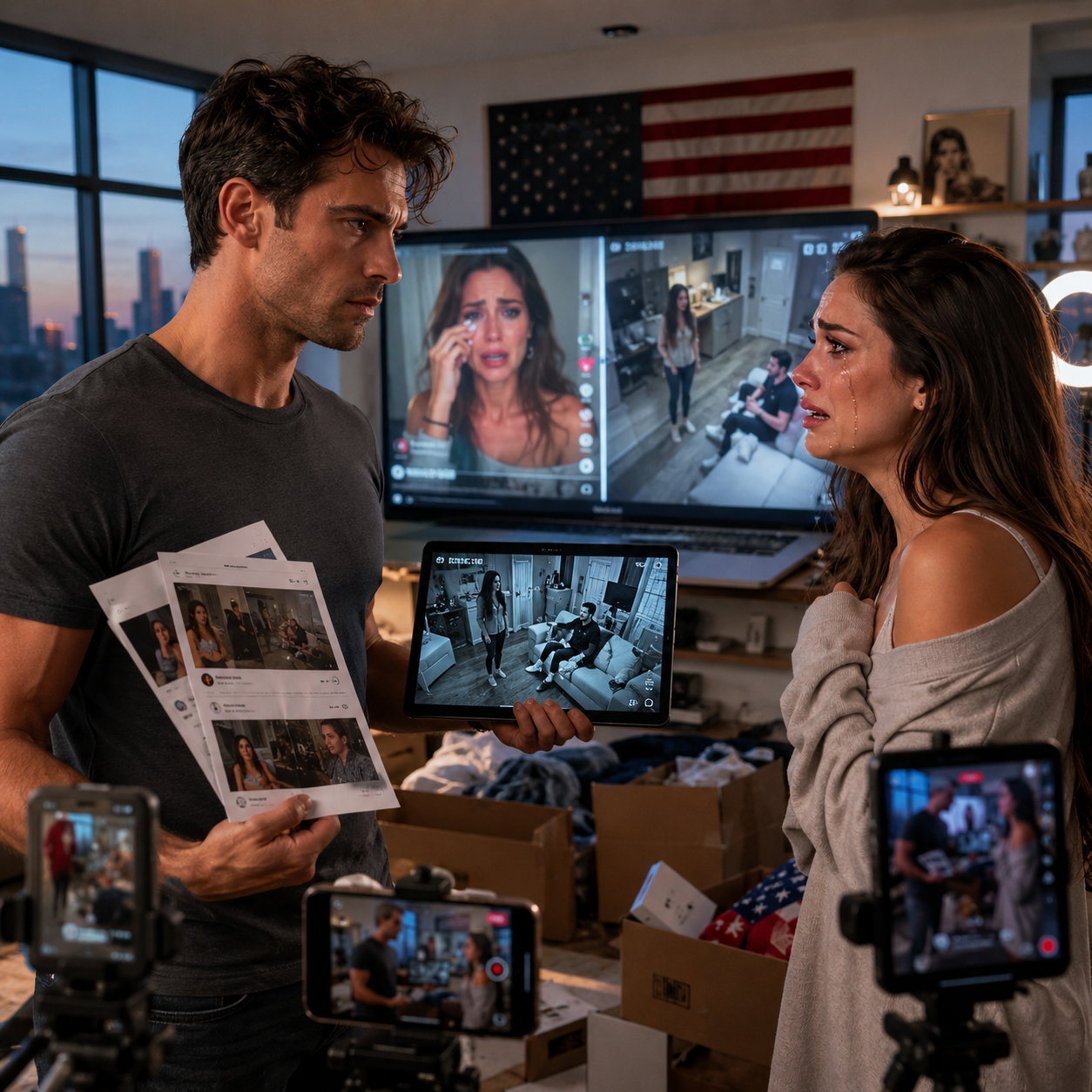
She launched into a performance. Fake tears. Shaking voice. Accusations that I blamed her for everything, controlled her friendships, isolated her, made her feel unsafe.
I let her talk.
I stayed quiet.
Then I said, “The landlord is sending the carpet repair bill.”
And I walked away.
The next morning, she posted the edited version.
She cut out the landlord complaint, the party evidence, the cigarette burn, the Instagram screenshot—everything. All that remained was her crying while I stood there looking cold.
The caption read:
Sometimes emotional abuse is worse than anything else. I feel so alone.
It became her biggest video yet.
But she had made one mistake.
My sister Sarah had seen enough.
Sarah created a new TikTok account called The Other Side and uploaded one video. It was a split screen. On one side was Helena’s edited clip. On the other side was the raw security footage showing the entire conversation from beginning to end.
No music.
No captions.
No manipulation.
Just truth.
It showed me calmly explaining the landlord’s complaint. It showed Helena denying everything. It showed the evidence. It showed her switching instantly into fake tears the moment she remembered the camera was recording.
At the end, Sarah added Ashley’s party screenshot with the timestamp.
The final text on screen said:
Who is the real victim here?
She didn’t tag Helena.
She didn’t need to.
The internet found her.
Within hours, Helena’s world collapsed.
The same followers who had praised her began tearing through every old video. They noticed the cuts, the missing context, the sudden tears, the way every argument somehow began in the middle. Her comment sections turned from support into outrage.
You lied to us.
He was calm the whole time.
This is manipulation.
You weaponized abuse language for views.
The fake crying is scary.
Helena disabled comments on every video.
Then she deleted several.
Then she made one final apology video that somehow blamed “online pressure,” “relationship trauma,” and “being misunderstood.”
Nobody bought it.
Two days later she came home looking empty.
“You did this,” she said.
I shook my head.
“No. I stayed silent. You did this. You just recorded yourself doing it.”
For once, she had no comeback.
There was no audience left to perform for.
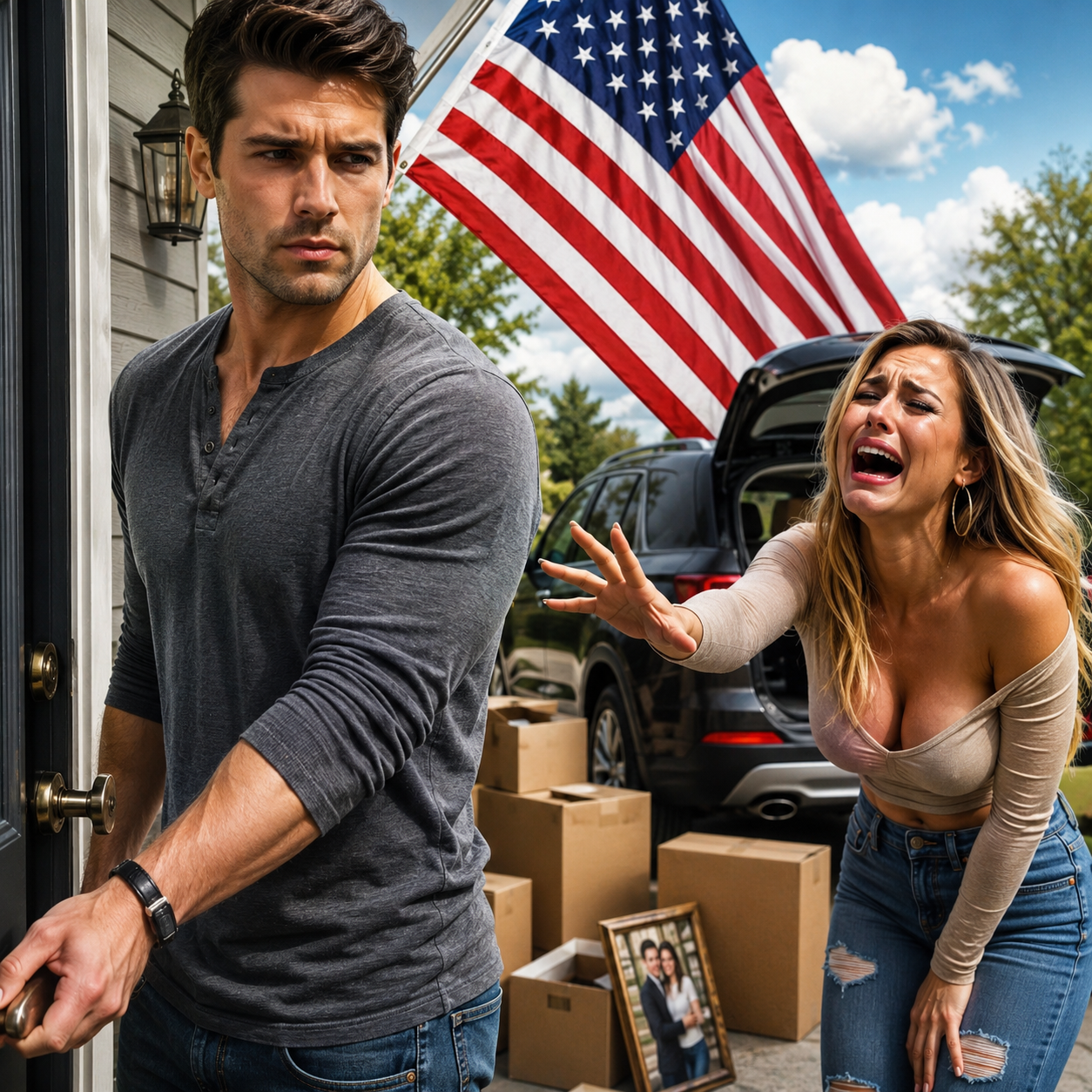
“I think you should pack your things,” I said.
She nodded.
No screaming. No dramatic collapse. No final monologue. She packed her clothes, her ring light, her phone stands, her tripod, and all the little tools she had used to turn our relationship into a courtroom for strangers.
When she left, I stood by the window and watched her load the last box into her car.
Then I walked through the apartment slowly.
Bookshelf.
Kitchen counter.
Mantle.
Bedroom shelf.
One by one, I found the little phone stands she had hidden around our home.
I threw them all in the trash.
And for the first time in months, the apartment was quiet.
Not tense quiet.
Not dangerous quiet.
Peaceful quiet.
That was when I realized the opposite of being heard by strangers is not silence.
It is finally being safe in your own life again.



![[FULL STORY] My Fiancée Said: "If You Loved Me, You'd Fight For Me." I Replied: "I Love You Enough To Let You Go.](https://social-media.rabedo.com/thumbnails/1777351921_B15.png)