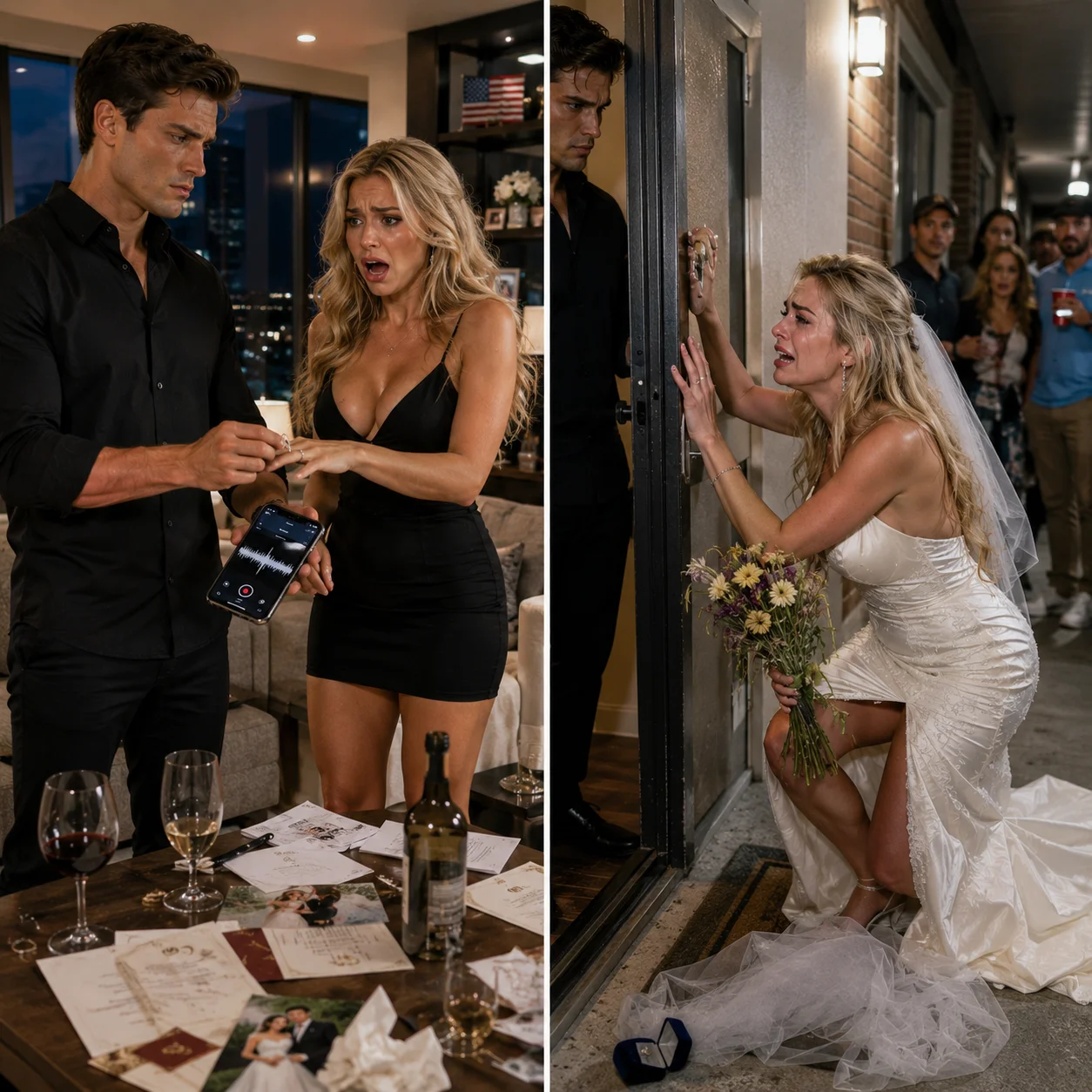

She smiled when she slid the pre-nup across the table. Thought she had me trapped. What my fiance didn't know I'd spent 6 months building a legal fortress specifically designed to survive her betrayal. When her elite lawyer called the next day, his voice was shaking. What did you do with the estate? My name is Vincent Barrett.
I'm 62 years old and I've spent 38 years as an asset protection strategist. That's a polite way of saying I help rich people keep their money away from other people who want it. The irony isn't lost on me. I learned my lesson the hard way 23 years ago when my first wife Caroline took half of everything I'd built. Stood in that courtroom and swore I'd never let it happen again.
Then 15 years back, my daughter Emma died in a car accident. Drunk driver, 8-year sentence, served four. After that, I stopped believing in much of anything except work. Then I met Isabella Whitmore 3 years ago at a charity event in Boston. She was 34, smart, successful in commercial real estate. Had her own place in Back Bay, her own money.
We talked about wine and architecture. She made me laugh for the first time in years. Maybe that's why I ignored the warning signs. We dated for 2 years. I proposed at Martha's Vineyard, same beach where Emma and I used to collect shells. Isabella said yes. I thought I'd finally gotten it right this time. The meeting was supposed to be about wedding details.
Thursday afternoon, her lawyer's office in downtown Boston. Just a formality. Isabella had said that morning. Every modern couple does this. I should have known better. The conference room overlooked the harbor, all glass and expensive furniture. Isabella sat next to a man in a navy suit with a briefcase that screamed money. Derek Hutchinson.
He introduced himself. Harvard Law, 20 years of experience. That practiced my lawyers use before they ruin your day. Isabella's smile was different. Satisfied. Like she'd been waiting for this moment. "Vincent," she said, voice sweet. "Derek thought we should cover one thing before the wedding. Just to protect both of us.
" A cream folder slid across the table. I knew what it was before I touched it. 38 years in my business, you develop instincts. "Standard prenuptial agreement," Hutchinson said smoothly. "Very reasonable terms. Just clarity about separate property." I opened it. First page, fine. Second page, not fine. By the third page, my jaw was tight.
Every single clause protected Isabella. Her condo, her accounts, her family trust. Everything stayed hers. Then I hit page seven, the forfeiture clause. If I challenged any provision of this agreement, I'd forfeit everything. Not just what was mine, but any equity in property we'd acquired together, including the Napa vineyard we'd been planning to buy. I looked up.
Isabella was watching me with that same smug expression, waiting to see if I'd sign away my future. I closed the folder, stood up. "Enjoy your meeting," I said. Then I walked out. No yelling, no speeches, no arguments. Just silence. Because of my line of work, I'd learned something important. When someone shows you who they really are, you don't negotiate. You leave.
The elevator doors closed behind me and I felt something I hadn't felt in years, relief. Isabella didn't know it yet, but she'd just made the biggest mistake of her life. Because while she'd been planning this little ambush, I'd been planning something else entirely. You don't survive 40 years protecting assets without learning to protect yourself first.
The call started before I even reached my car. I didn't answer. Didn't even look at the screen. Just got in my Mercedes, turned off my phone, and drove north toward Cape Cod. I needed distance, not from the city, but from the noise I knew was coming. Isabella hated being ignored. Control was her drug and silence was the one thing she couldn't manipulate.
I'd seen it before in smaller ways. When I'd take too long to respond to a text, she'd send three more. When I need space after a long day, she'd follow me around the house asking what was wrong until I'd give in just to stop the interrogation. But this time, there would be no giving in.
My beach house in Chatham had been in my family for 40 years. Small place, three bedrooms, right on the water. Emma loved it there. We'd spend entire summers fishing off the dock, grilling on the deck, watching sunsets that turn the Atlantic in a liquid gold. After she died, I couldn't sell it. Couldn't even rent it out.
It was the last place where her memory felt alive. I spent the evening on that same deck, whiskey in hand, watching the waves roll in. My phone stayed off. Whatever Isabella and Hutchinson were saying to each other in that conference room, I didn't need to hear it. What they didn't know, what they couldn't know, was that I'd seen this coming 6 months ago.
Not the pre-nup specifically, but the shape of it. The questions about my estate. The casual mentions of financial planning. The way Isabella's eyes would linger on documents when I brought work home. She thought she was subtle. She wasn't. So I made a call to an old friend, Clayton Rhodes.
We met 20 years ago when I was restructuring assets for a client going through an ugly divorce. Clayton had been an investigator who'd uncovered the wife's hidden accounts and offshore shell companies. Turned out, before becoming a private investigator, Clayton had spent 15 years with the CIA doing financial intelligence work. The man could find money hidden in places most people didn't know existed.
"I need you to look into someone," I'd told him over drinks at a quiet bar in Cambridge, "discreetly." Clayton had raised an eyebrow. "The fiance?" "Just background. Family finances. Past relationships. Anything that doesn't add up." Three weeks later, Clayton handed me a folder. What was inside confirmed every instinct I'd been ignoring.
Isabella's uncle's trust. It existed, but she wasn't the beneficiary. Her brother was. And he'd cut her off 2 years ago after she'd tried to contest their father's will. The condo in Back Bay. Mortgaged to the ceiling. Payments 3 months behind. Her successful real estate career. She'd been fired from her last firm for falsifying client documents.
Isabella Whitmore wasn't protecting her assets with that pre-nup. She was protecting her lies. And now, sitting on my deck watching the sun disappear into the ocean, I knew exactly what I needed to do next. Because I hadn't just walked out of that meeting. I'd walked into the final phase of a plan I'd been building for months.
I returned to Boston Monday morning. Three days of silence had done its work. My assistant, Sophie Mooney, met me at the office with coffee and a knowing look. Sophie was 27, sharp as a tack, and had survived her own financial abuse from an ex-boyfriend 2 years ago. I'd helped her escape that situation, helped her rebuild.
She understood what predators looked like. "She's called the office 12 times," Sophie said, handing me a stack of messages. "Mr. Hutchinson called six. They're getting nervous." "Good," I said. "Let them sweat." I sat at my desk and opened my secure email. Clayton had sent an encrypted file overnight.
I downloaded it, read through the contents, and smiled for the first time in days. Isabella had been busy while I was gone. She called her bank, tried accessing the joint vineyard account we discussed opening. The one she thought was already active. It wasn't because it never existed. What did exist was a decoy account I'd set up 3 months ago.
Just enough information to look real in casual conversation. Just enough documentation to seem legitimate if she went snooping through my home office. But when she called the bank, they told her exactly what I'd instructed them to say. "That account is under restricted access pending administrative review." Clayton's report showed she'd called four different banks trying to find it.
Each one gave her the same answer. On the fourth call, according to the transcripts Clayton had obtained, her voice had started to shake. She was realizing something was wrong. She just didn't know how wrong yet. I picked up my phone and called my estate attorney. Not some fancy downtown firm, but a quiet office in Beacon Hill run by a 70-year-old woman named Margaret Shun who'd been structuring bulletproof trusts since before I graduated law school.
"Margaret," I said when she answered, "it's time to execute phase two." "The full restructure?" she asked. "Everything. I want to file by end of business today." "Vincent, this is irreversible. Once we file these documents, there's no going back." "I know," I said. "That's the point." Six months ago, Margaret and I had begun quietly restructuring my entire estate.
Real estate, investment accounts, the family trust, even intellectual property rights from some consulting work I'd done years ago. Everything was being transferred into a newly formed private foundation, the Barrett Legacy Foundation, dedicated to preventing financial abuse and supporting families who'd lost children to drunk driving.
Emma's memory would live on, protected by legal structures so complex that even the best attorneys couldn't penetrate them. Isabella's name wasn't mentioned anywhere in the 200 pages of documentation. Not as a beneficiary, not as a potential spouse, not even as an acquaintance. As far as the law was concerned, Isabella Whitmore didn't exist in my world.
By 5:00, Margaret called back. "It's done. Filed with the state. Registered with the IRS. Locked and sealed." "And the trigger clause?" "Active as of the moment she presented you with that prenuptial agreement. The system recognized it as adversarial intent. Everything shifted automatically." I hung up and looked out my window at the Boston skyline.
Isabella had thought she was protecting herself. Instead, she'd activated a trap I'd spent months building. Tuesday morning, my phone rang at 7:15. Unknown number. I answer on the third ring. "Mr. Barrett." The voice was male, tight, barely controlled. "Derek Hutchinson speaking." I said calmly.
"We need to talk about what you've done." His voice wasn't smooth anymore. It was strained, almost shaking. "What the hell did you do with the estate?" There was the moment I'd been waiting for. "I'm not sure what you mean, Mr. Hutchinson." I said, leaning back in my chair. "Could you be more specific?" "Don't play games with me." Hutchinson snapped.
Isabella's voice was in the background, high-pitched, frantic. I couldn't make out words, just panic. "We've been trying to access information about your assets for a preliminary disclosure, and everything's been blocked. Not just blocked, it's disappeared. What did you do?" "I restructured my estate." I said simply.
"Perfectly legal, perfectly transparent, filed with all appropriate authorities." "You restructured?" He trailed off. I heard papers shuffling, then his voice came back harder. "You moved everything into a foundation. When?" "The process began 6 months ago. Final filings were completed yesterday." Silence.
Long enough that I thought he might have hung up. "Then, 6 months ago, before the pre-nup." "Well before." I agreed. "That's That's" He was sputtering now. "Isabella is entitled to disclosure. We have a right to understand your financial position before the marriage." "You absolutely do." I said pleasantly. "My financial position is simple.
I'm the founder emeritus of a charitable foundation. I draw a modest salary. I own no real estate personally, hold no investment accounts in my name, and have no assets subject to marital property law." "You're lying." "I'm not. Feel free to verify with the Massachusetts Secretary of State's office.
Everything's public record." More silence. Then Isabella's voice, closer now, demanding the phone. Hutchinson must have put her on speaker. "Vincent." "What the hell is this?" Isabella's voice was shrill, all pretense of sweetness gone. "You can't just hide everything in some fake charity." "It's not fake." I said.
"It's a fully registered 501c3 organization dedicated to preventing financial abuse and supporting families affected by drunk driving, in Emma's memory." I heard her breath catch. Using Emma's name had been calculated. A reminder that she'd pretended to care about my daughter's memory while planning to rob me.
"You did this on purpose." Isabella said, voice dropping to something cold and hateful. "You set me up." "No, Isabella." I said quietly. "I protected myself. There's a difference. You wanted a pre-nup to secure your assets. I simply ensured mine were already secured, permanently." "This is fraud." Hutchinson was back, trying to regain control.
"We'll file an injunction. We'll freeze everything until we can force full disclosure." "You can try." I said. "But you'll find the foundation isn't subject to prenuptial discovery. It's not my personal estate. It's a separate legal entity with its own board of directors. I'm just one voice among five." "Who are the other directors?" Hutchinson demanded.
"My sister, my estate attorney, a federal judge, and Clayton Rhodes, former CIA financial intelligence officer." A pause. "Good luck intimidating that board, counselor." The line went dead. I set my phone down and looked at Sophie, who'd been listening from the doorway. She was smiling. "That" she said, "was beautiful.
" Isabella made one last desperate move. She called in her mentor. Professor Daniel Wright had taught Isabella at Boston University Law School 15 years ago. He was 71 now, semi-retired, but still held considerable weight in estate litigation circles. >> [snorts] >> He'd written three textbooks on trust law and had testified as an expert witness in dozens of high-profile divorce cases.
Isabella thought he'd be her secret weapon. Sophie intercepted the email Wright sent to my office Wednesday afternoon. It was polite, professional, asking if I'd be willing to discuss the recent restructuring with him as a neutral third party. I agreed immediately, invited him to my office Thursday morning. Wright arrived at 9:00 sharp, carrying a leather briefcase worn soft with age.
He was tall, thin, with white hair and sharp eyes that had probably intimidated countless law students over the decades. "Mr. Barrett." He said, shaking my hand. "Thank you for seeing me." "Professor Wright." I said. "Coffee?" "Please." We sat in my office. I poured coffee from the French press I kept on the credenza. Wright opened his briefcase and pulled out a folder.
I recognized the Barrett Foundation documents inside. "I've reviewed the restructuring." Wright said carefully. "It's remarkably thorough. Thank you." "Isabella asked me to examine it for vulnerabilities." He continued. "Potential grounds for challenge." "And did you find any?" I asked, though I already knew the answer.
Wright was quiet for a long moment, studying me over his coffee cup. Then he said something I didn't expect. "Mr. Barrett, do you know what I taught Isabella in my estate planning course?" "I couldn't say." "I taught her that trusts are only as strong as the attorney who builds them." He tapped the folder. "This isn't just strong.
This is architectural. You didn't just move assets. You created a legal ecosystem designed to survive any challenge." "Is there a question in there, Professor?" Wright smiled, but it wasn't friendly. "Why didn't she see this coming?" "Because she thought she was smarter than me." I said simply. "She saw a man 25 years older, recently retired, probably lonely, easy target.
" "But you saw her first." "I did." Wright closed the folder. "I can't help her. Not legally. Everything you've done is not just legal, it's brilliant. The foundation structure, the trigger clause tied to adversarial intent, even the timing." He paused. "You wrote part of title 12, section F, didn't you? Estate restructuring framework for federal policy advisers." I didn't answer.
Didn't need to. Wright stood, extended his hand. "I told Isabella I'd review the documents. I have. My professional opinion, she challenged an architect with a blueprint. There's no winning that fight." After he left, Sophie came in. "He's going to tell her it's hopeless." She said. "Good." I said. "Maybe she'll finally understand.
" But I knew Isabella better than that. She wouldn't accept defeat. She'd escalate. And I was ready for that, too. Friday afternoon, something appeared online that changed everything. Sophie saw it first. She knocked on my door, tablet in hand, face pale. "Vincent, you need to see this." It was a legal blog post published an hour ago.
The title, "Revocable Trusts and Revocable People, a Cautionary Note." My byline was underneath. Except I hadn't written it. I read the first paragraph, and my blood went cold. Then I read it again, slower, and realized what was actually happening. It wasn't my writing. It was better, cleaner, more precise. Margaret had written it.
I called her immediately. She answered on the first ring, sounding entirely too pleased with herself. "Before you say anything." Margaret said. "I cleared every word with your foundation's board of directors. This is official foundation business." "Margaret, what did you do?" "I published a professional observation." She said calmly.
"About the importance of transparency in partnership formation, about how some relationships require full honesty before trust can be offered, and about how trust, legally speaking, remains revocable when that honesty is absent." I read again. Not a single name was mentioned. Not Isabella's, not mine, not even the foundation's.
Just careful, clinical language about estate planning, relationship dynamics, and the legal concept of revocability. But anyone in Boston's legal community would know exactly what it was about. "This is going to spread." I said. "It already has." Margaret replied. "It's been shared on four legal forums, three estate planning newsletters, and someone posted it to the Massachusetts Bar Association discussion board.
" She was right. By evening, my phone was getting calls from colleagues I hadn't spoken to in years. Not asking questions, just expressing quiet support. A federal judge I'd worked with sent a two-word text, "Well played." Isabella's world was collapsing in slow motion. Her LinkedIn went quiet. The real estate firm where she claimed to work changed her status to former employee.
Invitations to industry events disappeared. I didn't gloat, didn't celebrate. This wasn't about destroying her. It was about making sure she could never do this to anyone else. Saturday morning, I drove to Mount Auburn Cemetery. Emma's grave was in the old section, under a maple tree that turned gold every autumn.
I'd had fresh flowers delivered the day before. "I kept my promise, sweetheart." I said, kneeling beside the headstone. "No one's taking what we built. The foundation is going to help a lot of families, families like ours." The wind moved through the maple branches, and for just a moment, I could almost hear Emma's laugh.
I stayed for an hour, then drove home. There was still work to do. Isabella's world continued to crumble, and I watched it happen from a distance. Sophie kept me updated. The Back Bay condo went into foreclosure proceedings. The bank had finally lost patience with 3 months of missed payments. Isabella tried to fight it, but without proof of income or assets, she had and leverage.
The real estate firm where she claimed to work issued a statement confirming she'd been terminated 18 months ago for ethical violations. The statement was brief, professional, and absolutely devastating. It appeared on their website for exactly 24 hours before being quietly removed, but screenshots lived forever on the internet.
Her family trust uncle, the one she claimed would be leaving her millions, gave an interview to a financial publication about protecting family assets from irresponsible relatives. He never mentioned Isabella by name. He didn't need to, but the hardest blow came from someone I hadn't expected. Caroline, my first wife, the woman who'd taken half of everything 23 years ago, called me on a Tuesday afternoon.
"Vincent," she said when I answered, "I heard what happened." "Did you?" I kept my voice neutral. "I'm calling to say I'm sorry." I was quiet, waiting. "I did to you what she tried to do," Caroline continued. "I took advantage. I convinced myself I deserved it because marriage was hard, because you worked too much, because of a dozen reasons that didn't matter.
But the truth is, I was greedy and selfish." "Why are you telling me this now?" "Because I saw the article, the one about revocable trust and revocable people, and I realized you could have done to me what you did to her. You had the knowledge, the skill, the experience even back then, but you didn't." She was right.
I could have fought harder in our divorce, could have hidden assets, complicated the proceedings, made her legal fees astronomical, but I'd been too heartbroken to be strategic. You let me win," Caroline said softly, "because despite everything, you still had honor. That's what she didn't understand about you. You're not weak.
You're principled until someone crosses a line so completely that principle becomes survival." "Why does this matter now?" I asked. "Because I want you to know that I've spent 20 years regretting what I did. And because Isabella deserves everything that's happening to her. But you, Vincent, you deserve better than revenge. You deserve peace.
" After we hung up, I sat at my desk for a long time thinking about what peace actually meant. The next morning, an envelope arrived at my office, hand delivered, no return address. Inside was a single sheet of paper. A cashier's check for $100,000. The memo line read, "New Beginning Fund. No strings. You earned your freedom.
" It wasn't signed, but I recognized the account number. It came from a legal trust I'd helped establish years ago for my foundation work. Someone who'd survived financial abuse and rebuilt their life. They were paying it forward. I called Sophie in. "Add this to the foundation's emergency fund," I said, handing her the check, "for people trying to escape situations like Isabella tried to create.
" Sophie smiled. "Emma will be proud." She was right. Three weeks after the article published, Derek Hutchinson called again. His voice was different this time, tired, defeated. "Mr. Barrett," he said, "I'm calling on behalf of Isabella. She'd like to discuss a potential resolution." "What kind of resolution?" I asked.
"She's willing to sign a complete release, no claims against you, your estate, or the foundation. In exchange, she's asking for financial assistance to relocate and restart her life. $100,000." I leaned back in my chair. "Let me make sure I understand. Isabella tried to trap me in a pre-nup designed to steal everything I built.
When that failed, she attempted to challenge my estate restructuring. And now she wants me to pay her to go away." "Mr. Barrett, I understand how this sounds, but" "How much does she owe?" I interrupted. Silence. "I'm sorry. Her debts, the condo foreclosure, credit cards, legal fees. How much?" More silence. Then, "Approximately 220,000.
" "So, 100,000 wouldn't even cover her obligations." "No, sir, it wouldn't." I thought about Emma, about the foundation, about all the people who'd been trapped by predators like Isabella and had no way out. "Here's my counteroffer," I said. "I'll give her $50,000, not as a payment, but as a loan through the Barrett Legacy Foundation.
Zero interest, 10-year repayment term. The money goes directly to a financial counselor who will help her create a genuine budget and debt repayment plan." "She won't accept that," Hutchinson said immediately. "Then she gets nothing," I replied. "But Derek, you should tell her something else.
Tell her I've documented everything. Every lie she told, every falsified document, every attempt to access accounts that didn't exist. If she tries to file any legal action against me or the foundation, I'll turn all of it over to the Massachusetts Bar Association and the Attorney General's Office." "That sounds like a threat.
" "It's a promise," I corrected. "I'm offering her a chance to rebuild honestly. If she refuses, she deals with the consequences of her choices alone." Hutchinson was quiet for a long moment. "I'll relay your offer." "You do that." He called back 6 hours later. Isabella had refused. She wanted money without conditions, without oversight, without accountability.
She wanted what she'd always wanted, something for nothing. "Tell her the offer expires in 72 hours," I said. "After that, she's on her own." Sophie, who'd been listening on speaker, shook her head after I hung up. "She's not going to take it," Sophie said. "I know," I replied, "but at least I tried." "Why? After everything she did?" "Because I'm not like her," I said simply.
"I won't become cruel just because someone tried to hurt me. Emma taught me that. Even when the world is unfair, even when people are terrible, you still do the right thing." Sophie nodded. "And if she still refuses?" "Then she learns what it's like to face consequences without a safety net." The 72 hours passed. Isabella never called.
Eight months after I walked out of that conference room, an envelope arrived at my office. The return address was from a small town in Oregon I'd never heard of. The handwriting was careful, deliberate, like someone who'd practiced what they wanted to say before putting pen to paper.
Inside was a single sheet of lined notebook paper. "Mr. Barrett," it began, "you don't know me, but 5 years ago, you helped structure my grandmother's estate after my uncle tried to manipulate her into changing her will. You probably don't remember. It was just another case for you. But saved our family. When my grandmother passed last year, everything was protected exactly as she'd wanted.
My uncle got nothing. Justice prevailed because you knew how to build walls he couldn't climb. I'm writing because I saw the article about your situation. I'm a paralegal now, working in estate law, because of what you taught me about protecting people. I want you to know that what you did, walking away from that woman, restructuring everything to protect your daughter's legacy, that wasn't cold.
That was love, the purest kind. Thank you for showing me what integrity looks like, even when it's painful. You changed my life. I hope knowing that brings you some peace." It was signed Sarah Mitchell, Portland, Oregon. I read it three times, then folded it carefully and put it in my desk drawer next to Emma's last birthday card to me.
Sophie noticed my expression when she brought in the afternoon mail. "Good news?" she asked. "Reminder," I said, "that doing the right thing matters, even when no one's watching." That evening, I drove to Chatham. The beach house felt different now, lighter somehow. I sat on the deck with a glass of wine and watched the sunset paint the Atlantic in shades of amber and rose.
My phone buzzed. Clayton Rhodes. "Thought you'd want to know," he said. "Isabella left Massachusetts. Moved to Florida last week." "Good for her," I said, and meant it. "You're not curious about what she's doing?" "No," I said simply. "She made her choices. I made mine. We're both living with the consequences.
" Clayton was quiet for a moment. "You know, most people in your position would want revenge, want to see her suffer." "I'm not most people," I said. "Emma taught me that anger only hurts the person carrying it. Isabella's gone. The foundation is thriving. I'm free. That's enough.
" After we hung up, I thought about what freedom actually meant. Not just freedom from Isabella, but freedom from bitterness, from a need to control outcomes, from the weight of trying to fix people who didn't want to be fixed. The sun disappeared below the horizon, and the first stars appeared. I raised my glass to the sky.
"We did it, Emma," I said quietly. "Your legacy is safe. And I finally learned what you tried to teach me, that the strongest walls aren't built from stone and steel. They're built from knowing your own worth." 14 months after walking out of that conference room, I met someone new. Her name was Rachel Porter. She was 58, a high school English teacher from a small town in New Hampshire.
We met at a bookstore in Portsmouth where I'd gone to find a first edition of Emma's favorite novel. Rachel was looking for the same book. We laughed about the coincidence, got coffee, talked about literature and life and loss. She'd been widowed 7 years ago. Her husband had been a firefighter died saving three children from a burning building.
"He was a hero," she said simply. "And I spent years angry at him for being brave, for choosing strangers over staying alive for me. Then I realized, that's who he was. I didn't fall in love with someone who played it safe." We dated slowly, carefully. No games, no performances, just two people who'd survived grief and learned to be honest about their scars.
Three months in, over dinner at a quiet restaurant in Maine, Rachel asked me about my estate planning. I tensed immediately, old instincts firing. She noticed. "I'm asking." Rachel said gently, "because I want you to know I don't care about any of it. I have my teacher's pension, my small house, and that's enough. Whatever you've built, whatever you're protecting, it's yours.
I'm here because I like who you are, not what you have." "I need to tell you something." I said. I told her everything. Isabella, the pre-nup, the foundation, the restructuring, all of it. Rachel listened without interrupting. When I finished, she reached across the table and took my hand. "You protected your daughter's memory." she said.
"That's not cold, Vincent. That's beautiful." We were married 8 months later. Small ceremony, just family and close friends, on the beach in Chatham, where Emma used to collect shells. No pre-nup, no contracts, no lawyers. Just two people who'd learned that real love doesn't need contracts, because it's not built on possession. Sophie was my best man.
Clayton gave a toast about how sometimes the best defense is knowing when you don't need one anymore. The Barrett Legacy Foundation continued to grow. We'd helped 23 families escape predatory relationships, funded grief counseling for parents who'd lost children to drunk drivers, and established a scholarship in Emma's name at Boston University.
Caroline sent a donation, anonymous, but I recognized the amount. Exactly what she'd taken in our divorce, adjusted for inflation. Some debts, apparently, were never forgotten. I never heard from Isabella again. Clayton told me she'd remarried in Florida, some real estate developer who didn't do background checks. I wished her well, and meant it.
On the anniversary of Emma's death, Rachel and I drove to the cemetery together. We planted new flowers, sat on the bench, and I told him about the foundation, about Rachel, about how life had surprised me by getting better when I'd stopped expecting it to. "Your dad's happy.
" Rachel said softly, touching the headstone. "I promise I'll take good care of him." The wind moved through the maple tree, and somewhere a cardinal sang. We drove home as the sun set, and for the first time in 15 years, I felt something I'd forgotten existed. Peace. Not the absence of pain, but the presence of purpose.
And that, I realized, was Emma's final gift to me.

![[FULL STORY] My Brother Secretly Married My Girlfriend — Then My Family Demanded I Forgive Them](https://social-media.rabedo.com/thumbnails/1777386370_21313a5c-8efd-4312-8821-45bc0c70d8c6.png)