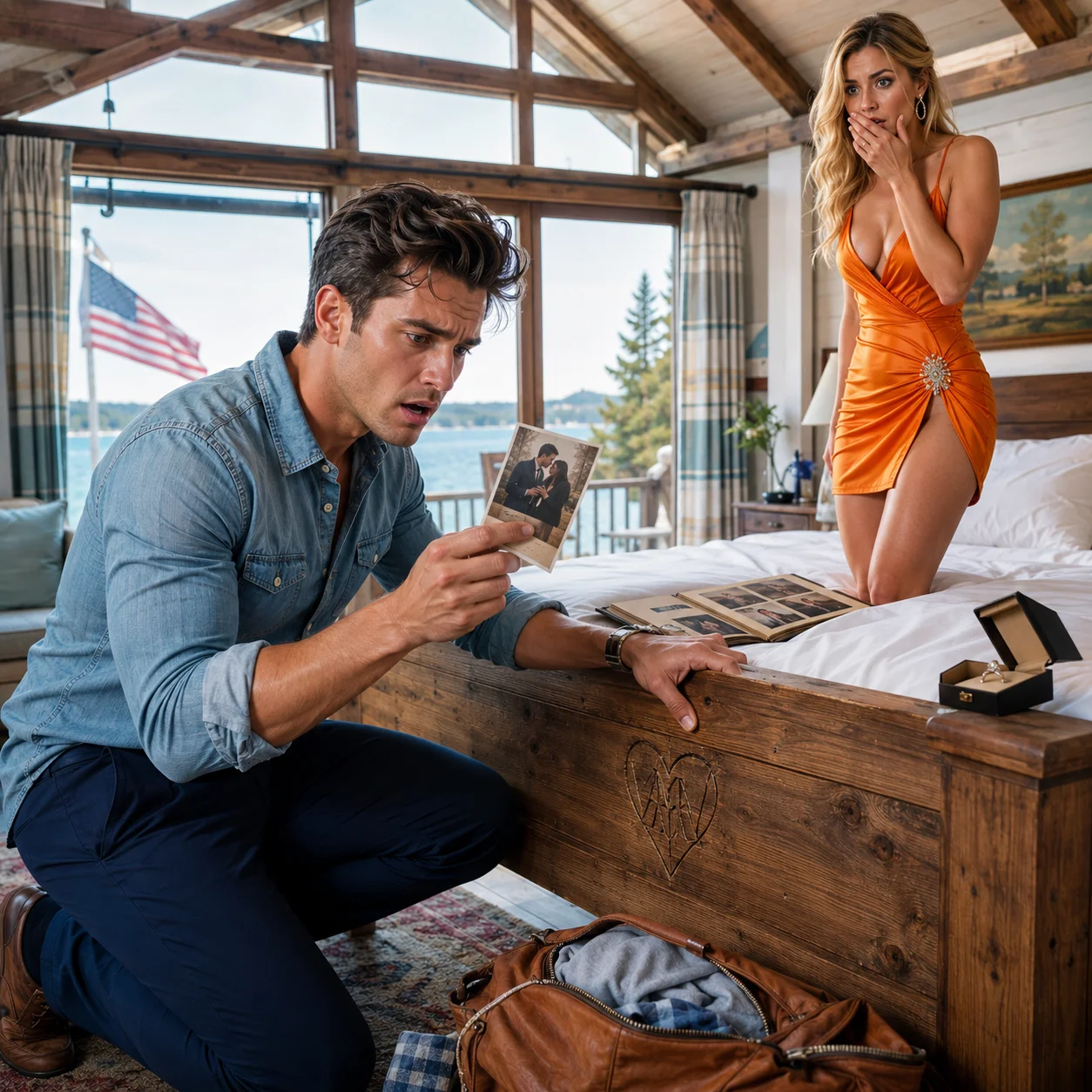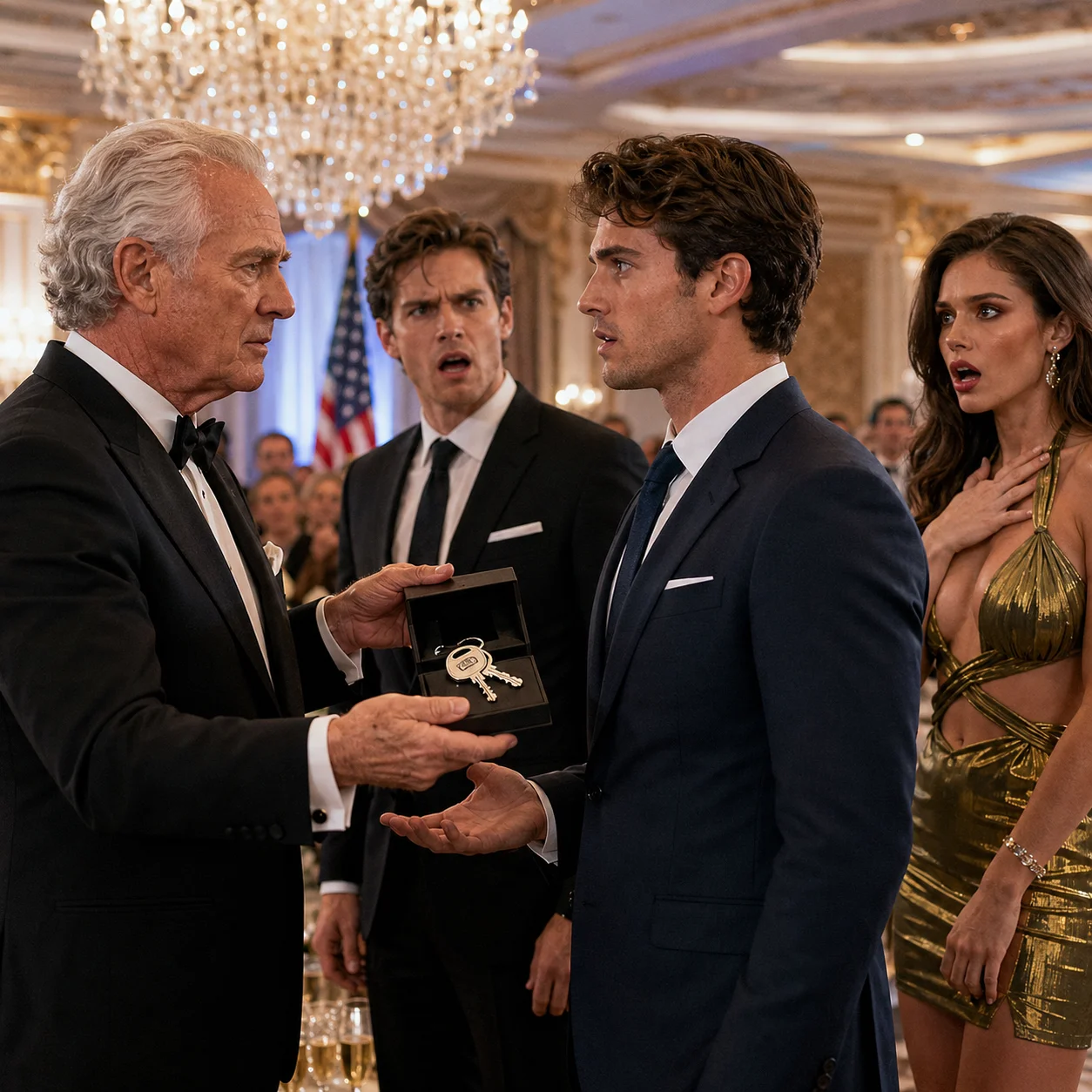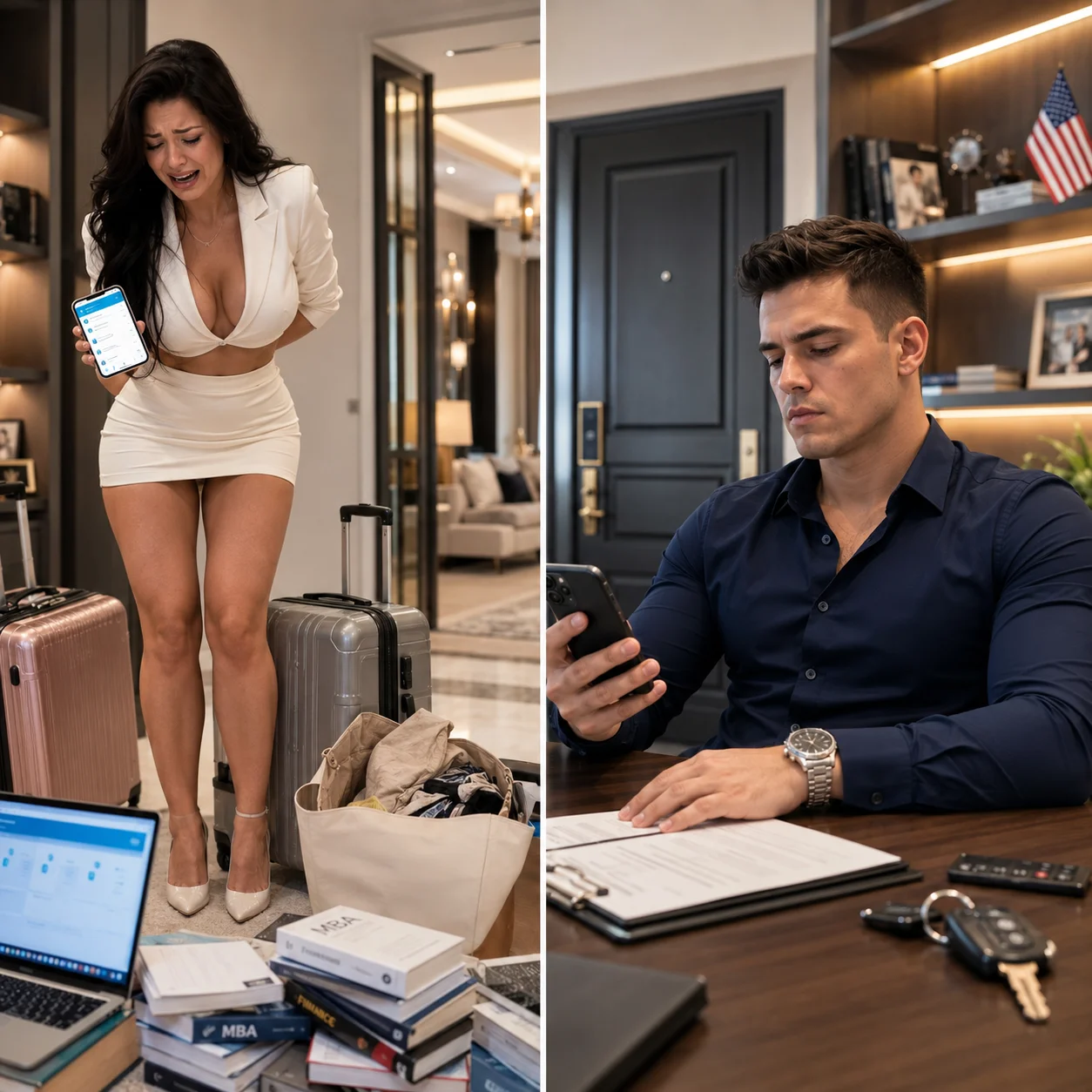
"Nathan, don't do that."
Those four words were the soundtrack to my relationship with Paige Whitmore. Whenever I noticed a pattern, whenever I called out a boundary being stepped over, whenever I pointed out that her "male best friend" Elliott was treating our engagement like a long-running joke—Paige would tilt her head, give me that practiced, marketing-director smile, and say: "Nathan, don't do that. Don't be that guy. Don't be insecure."
For two and a half years, I listened. I stayed in my lane. I was the "stable" one. The "reliable" one. The man who handled the spreadsheets, the vendor deposits, and the logistics so Paige could shine. I’m a financial operations manager in Charlotte. My whole life is built on spotting discrepancies—the tiny errors in a ledger that signal a massive systemic failure. I should have applied that logic to my personal life much sooner.
Paige was the kind of woman who didn't just walk into a room; she curated it. She knew lighting, she knew angles, and she knew how to present a relationship to the world that looked like a Pinterest board come to life. And for a long time, I was happy to be the frame that held her picture.
Then there was Elliott Vale. Elliott was the "chaotic" college friend. The man who lived in the gray areas of "basically family." He was tall, lean, and carried himself with the unearned confidence of someone who had never been told "no" by a woman in his life. He called me "Spreadsheet Ken." He called me "The Safe Investment." And every time he did, Paige laughed. Not a cruel laugh, but an automatic one. Like she was conditioned to reward his disrespect.
The first time I felt the cold realization that I was a character in a play I hadn't written was about four months before the wedding. We were at a brewery. I’d just finished a grueling week at the medical supply company, closing out a quarter. I was tired, but I was there, buying the rounds, being the "good fiancé."
Elliott leaned over, smelling like expensive cologne and arrogance. "So, Ken," he said, loud enough for the table to hear. "I saw the seating chart you emailed out. Very... organized. Do you have a color-coded legend for when Paige gets bored and needs me to take her out for real drinks?"
The table chuckled. Paige smiled into her IPA.
"It's just about making sure the families are comfortable, Elliott," I said, my voice flat.
"Of course," he smirked. "God forbid anyone has an unscripted moment. You really are the perfect husband, Nathan. You’re like a high-yield savings account. Boring as hell, but we all know you’ll be there when the market crashes."
I looked at Paige. I was waiting for her to say, “Hey, that’s my future husband you’re talking about.” Instead, she patted my arm. "He’s just teasing, Nathan. Don’t do that. Don't get all serious."
That was the pattern. I was the "Safe Choice." The "Porch Light." The man who made the mortgage happen so she could have the "Fireworks" with Elliott.
I didn't find out the truth because I was looking for it. I found it because Paige’s brand of perfection had a single, technical flaw: an old iPad Pro.
Three weeks before the wedding, the house was a war zone of ivory ribbons and welcome bags. Paige was in the shower, and she’d left her iPad on the kitchen island. The shuttle company for the wedding guests was calling my phone, needing the final headcount. Paige had the master list on her iPad.
I unlocked it—she’d given me the code months ago—and opened the spreadsheet. But as I was scrolling, a notification banner dropped from the top of the screen.
Elliott: “Did Spreadsheet Ken approve my speech yet?”
My heart didn't race. It did something worse. It went very, very still. I looked at the group name at the top of the message: "Final Paige Project."
I shouldn't have opened it. A "better man" would have put the iPad down. But I’m a man of records and approvals. I need the full data set before I make a decision. So, I opened the chat.
It went back months. It included Paige, Elliott, her sister Tessa, and two of her bridesmaids, Lauren and Sophie. It was a digital burn book, and I was the primary subject.
Lauren: “Honestly, Nathan is like a human Xanax. He’s so stable it’s almost offensive.” Tessa: “Hey, at least he’s paying for the open bar. Let’s keep ‘Ken’ happy until the checks clear.” Elliott: “Paige has always loved adventure, so naturally she’s marrying a man who schedules his spontaneity three weeks in advance.” Paige: “Stop it! You guys are terrible 😂 but seriously, the spreadsheet for the rehearsal dinner menu has three different tabs for dietary restrictions. I can’t.”
I kept scrolling. I felt like I was reading a post-mortem of my own life. I saw screenshots Paige had taken of our private texts—times I’d told her I was proud of her, or times I’d asked if she was okay—sent to the group for a laugh.
Then, I reached the messages about the rehearsal dinner speech.
Elliott: “I’m going to give a toast that makes everyone realize who the real main character is. I’ll make him sound useful, don’t worry.” Paige: “Be careful, Nathan’s family is conservative. They might not get the joke.” Elliott: “That’s the point. They need to know what they’re getting. Besides, after the wedding, she’ll still call me when she wants to feel alive.”
I waited for Paige’s defense. I waited for her to say “That’s too far” or “I love him, stop.”
Paige: “You are impossible. 😂😂😂”
The shower upstairs stopped running. I heard the water draining through the pipes. I heard the bathroom door open.
In that moment, I didn't feel like a husband. I didn't even feel like a person. I felt like a vendor. I was the caterer, the venue, and the bank account, all rolled into one "Safe Investment."
I took my phone out. I didn't shake. I didn't cry. I simply took photos of every single relevant screen. The "Feel Alive" comment. The "Checks Clear" comment. The "Spreadsheet Ken" jokes. I sent them to my private cloud drive and deleted the outgoing images from my phone’s trash.
When Paige walked down the stairs, wrapped in a fluffy white towel, smelling like expensive shampoo, she looked at me and smiled.
"Did you get the shuttle list, honey?" she asked.
"Yeah," I said, my voice sounding like it was coming from someone else. "I got everything I needed."
"You're the best," she said, kissing my cheek. "I don't know what I'd do without you to keep me organized."
"I'm sure you'd find a way," I replied.
For the next three weeks, I played the part. I went to the final fittings. I confirmed the floral arrangements. I even sat through a grueling three-hour lunch with her mother, Eleanor, where she talked about how "blessed" Paige was to find someone so "steady."
I watched Paige. I watched her interact with Elliott at our "couples' night" two weeks out. I watched her lean into him when he made a joke about my "retirement-age soul." I saw the looks they exchanged—the secret language of people who think they are smarter than everyone else in the room.
But what Paige forgot was that you can't manage the "presentation" of a relationship if the person holding the camera decides to turn it around.
The night of the rehearsal dinner arrived. Maribel’s in Uptown Charlotte. It was beautiful—exposed brick, candlelight, the kind of "warm, sophisticated" vibe Paige specialized in. Our families were there. My parents, who had worked forty years in trade jobs to give me a head start. Her parents, who looked at me like a solid, if unexciting, addition to the family portfolio.
As Elliott stood up, champagne glass in hand, grinning like he was about to deliver a masterpiece, he looked at me and winked. He thought he was about to humiliate me in front of everyone I loved, and that I would just sit there, take it, and then pay for his drinks afterward.
He began his speech, the "Safe Choice" jokes landing like soft punches. I felt my brother Marcus stiffen beside me. I felt my father’s hand go still on the table.
I waited until the very end. I waited until Elliott said the word "Alive."
I stood up, smiled at the room, and pulled my phone out.
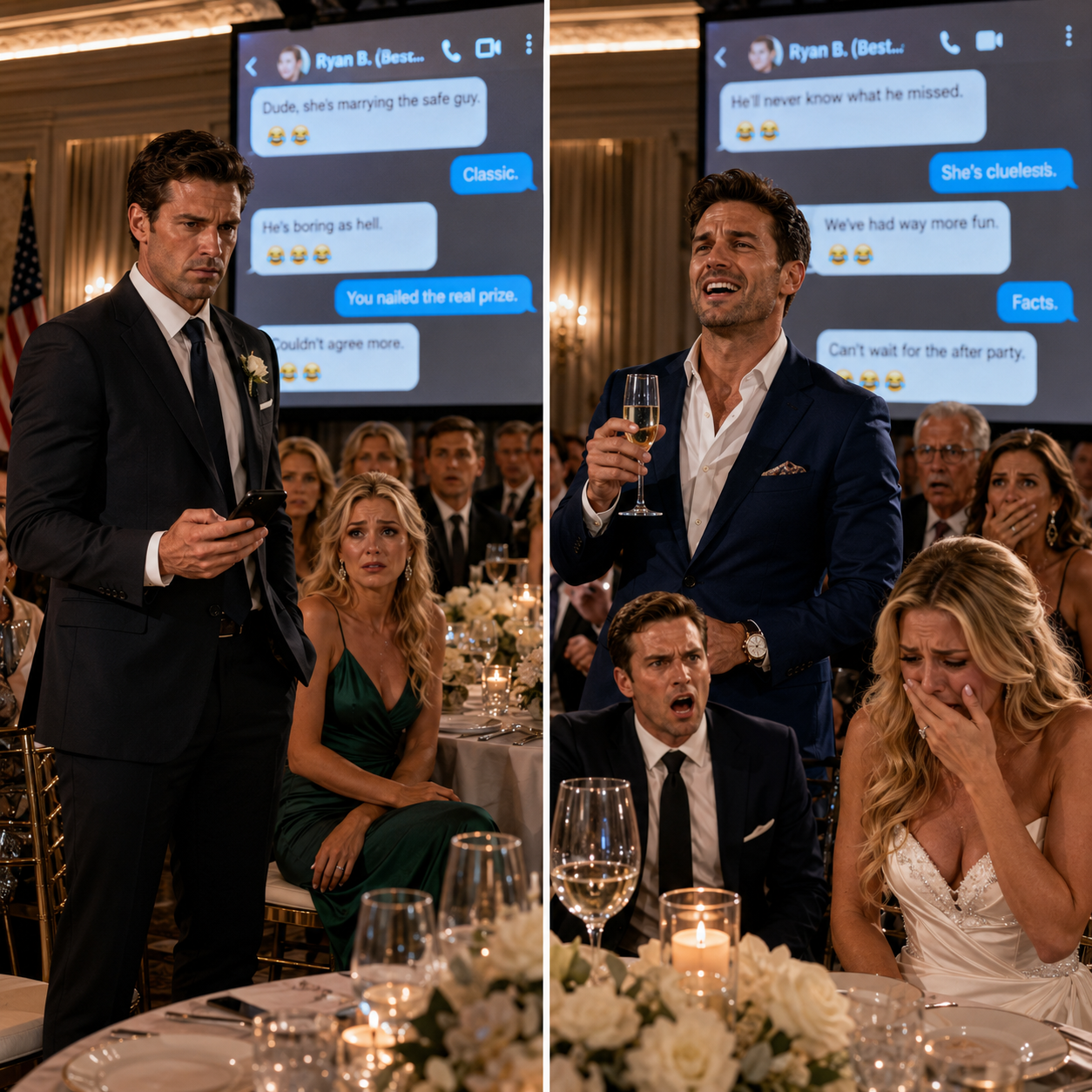
"That was a great speech, Elliott," I said, my voice echoing in the sudden silence. "But I think the guests deserve to see the 'Director's Cut' of our relationship."
I walked over to the manager and asked her to switch the screen input. Paige’s face went from a smile to a mask of pure, unadulterated terror in three seconds.
"Nathan," she whispered, her voice cracking. "What are you doing?"
I didn't answer her. I looked at the screen as the first image flickered to life. And I realized that in a room full of people, I had never felt more alone—or more ready to burn it all down.
But the real shock wasn't what was on the screen; it was what Paige did the moment the first message was read aloud.
![[FULL STORY] My Fiancée Declared: "I Won't Agree to a Prenup Either You Believe in Me, or We're Done](https://social-media.rabedo.com/thumbnails/1776740751_9.png)
![[FULL STORY] I Found Her Secret Messages, Then Exposed the Affair at Her Own Company Event](https://social-media.rabedo.com/thumbnails/1777479341_91407628-8522-43ba-ba48-84d212419b35.png)