My name is Ben Mercer, and I learned the truth about my girlfriend in the middle of a public park while holding her coffee.
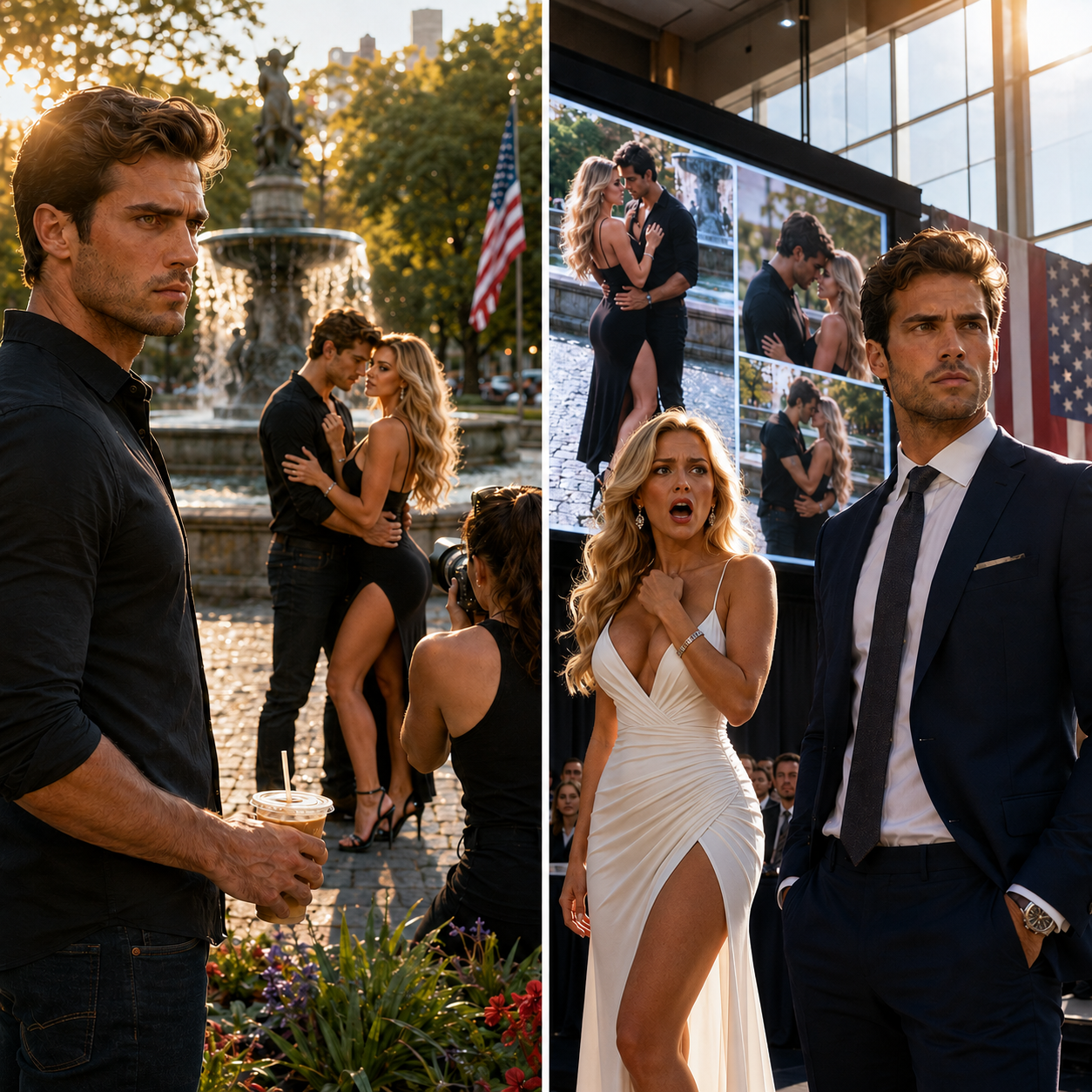
Not during some dramatic midnight confession. Not by finding secret messages. Not because someone warned me. I saw it with my own eyes, framed perfectly beneath soft afternoon light, while her friend circled with a camera and my girlfriend smiled in another man’s arms like she had been waiting for someone better to step into the picture.
Beth had told me her friend Zoe needed help with a love story photoshoot for her photography portfolio. She made it sound harmless, almost sweet. A few romantic poses, maybe some walking shots near the fountain, something simple to help a friend build her business. I had been buried in work for months, finalizing the acquisition of my cybersecurity app by a major tech company, and I barely had time to breathe, let alone spend my Saturday pretending to be comfortable in front of a camera.
But Beth seemed excited.
So I agreed.
That was the kind of boyfriend I tried to be. Present when I could be. Reliable even when I was tired. Thoughtful in small ways because I believed small things mattered.
That Saturday, I arrived five minutes early at Whitman Park with her usual coffee in hand. Almond milk latte, one pump vanilla. I remember that detail clearly because it was such a boyfriend thing to do, the kind of quiet care that only matters when the other person values it.
Beth did not value it.
As I approached the fountain, I saw her.
She was already posing.
Not alone.
Not waiting for me.
She was wrapped in the arms of a tall, perfectly styled man wearing expensive casual clothes and the relaxed confidence of someone who had never wondered whether he belonged in a room. Zoe moved around them with her camera, giving directions, adjusting angles, capturing Beth as she laughed up at him like they were the couple in the story.
For a few seconds, my mind tried to protect me from what I was seeing.
Maybe this was a test shot.
Maybe I was early.
Maybe he was just helping Zoe check the lighting.
But Beth’s hand was resting on his chest. His arm was around her waist. Zoe was telling them to look at each other like they were in love.
And Beth was doing it beautifully.
I walked over slowly.
Beth saw me and, instead of looking guilty, looked annoyed.
That was the first real cut.
She whispered something to the man, and he stepped away, checking his phone like my arrival was a small delay in his afternoon.
“What’s going on?” I asked.
Beth took the coffee from my hand automatically, like even in that moment she still expected me to provide what she liked.
Then she pulled me aside, just far enough away from Zoe and the model that she could pretend this was private.
“Look,” she said, “it’s not a big deal.”
That sentence always comes before something that absolutely is a big deal.
“Zoe needed couples photos,” she continued, “and honestly, you’re not exactly camera material.”
She gestured vaguely at me.
Not at my shirt.
Not at my hair.
At all of me.
“Brandon is a model. Zoe knows him. I just didn’t want it to feel like cheating, but it’s just photos.”
Then she smirked.
“Relax. It’s not personal. It’s aesthetic.”
Something inside me went completely still.
For eight months, I had ignored the little comments. The jokes about how I could “clean up nicely if I tried.” The suggestions that I should dress more like the men in her hotel circle. The way she would look me over before events as if deciding whether I was acceptable enough to stand next to her.
I had told myself she was just image-conscious because of her job. Beth worked as an event coordinator for a luxury hotel chain, and appearances were her whole world. Perfect lighting. Perfect clothes. Perfect guest lists. Perfect angles.
I convinced myself she cared about presentation.
That day, I understood she cared about status.
And to her, I was useful but not impressive.
Stable but not photogenic.
Successful but not stylish enough to display.
So I didn’t argue.
I didn’t ask if she heard herself.
I didn’t insult Brandon.
I didn’t embarrass Zoe.
I simply turned around and walked away.
Behind me, Beth scoffed.
“So dramatic,” she called. “Just wait at the café until we’re done if you’re going to be like this.”
I kept walking.
By the time I reached my car, I expected anger to hit me. It didn’t. Neither did heartbreak, at least not immediately. What I felt was clarity. Cold, clean clarity.
For months, I had been staring at a blurred image of our relationship, trying to soften every sharp edge, trying to explain away every little insult, every moment she made me feel like a placeholder in her polished life.
Then, in one sentence, Beth adjusted the focus.
You’re not exactly camera material.
When I got home, I blocked her number, removed her from my social media, and changed the access code to my building. Then I opened my laptop and got back to work.
That sounds strange, but work had always been the place where things made sense. Code did not smirk. Algorithms did not pretend cruelty was aesthetic. Systems either worked or they didn’t, and if they didn’t, you could find the flaw.
The company acquiring my app had one final requirement. I needed to complete an image recognition algorithm designed to detect manipulated photos and videos. Deepfakes, edited images, synthetic media, fraudulent visual evidence. The goal was simple: separate what was real from what had been manufactured.
I had been stuck for weeks. My accuracy rates hovered around seventy-eight percent, and I knew that was not strong enough.
That afternoon, with Beth’s words still sitting somewhere cold in my chest, I finally saw the problem.
It wasn’t the algorithm.
It was the testing method.
By evening, I had rebuilt the validation structure. By midnight, the accuracy rate climbed past ninety percent. By sunrise, it reached ninety-four point three.
Beth started trying to reach me the next morning.
First texts, which bounced back.
Then emails.
Then mutual friends with carefully rehearsed concern.
Her tone changed by the hour.
At first, she was annoyed.
Then worried.
Then angry.
Then wounded.
I answered none of it.
On day three, she came to my apartment and tried to convince my doorman she had left important medication upstairs. Miguel had already been warned. He called security.
On day four, her friend Jasmine “accidentally” appeared at my regular coffee shop and tried to sell me Beth’s version of the story. A misunderstanding. A bad moment. A harmless photoshoot.
I looked at Jasmine and said the only thing that needed to be said.
“There was no misunderstanding. She was perfectly clear.”
Then I left.
On day five, Beth’s father called me.
Robert was a decent man. I had met him two months earlier when Beth’s parents visited the city. He had been kind, curious about my work, and genuinely grateful when I helped him secure his devices.
I almost ignored the call.
Curiosity won.
“Ben,” he said, voice serious, “I think we need to talk about Beth.”
“With respect, Robert, there’s nothing to discuss.”
“She told us what happened.”
I laughed once.
“Did she tell you she replaced me with a model for a romantic photoshoot because I wasn’t camera material?”
Silence.
Then he said, “That is not the version we heard.”
Of course it wasn’t.
Beth had told them I stormed off while she was innocently helping a friend. She left out Brandon. Left out the pose. Left out the smirk. Left out the part where she reduced me to an aesthetic inconvenience.
Then I mentioned the acquisition.
Robert went quiet.
That was when I realized Beth had never told her parents what I had actually built. In her version of reality, I was probably just a regular programmer lucky enough to be dating her.
That hurt less than I expected.
It mostly confirmed what I already knew.
Twenty minutes after that call, an email came from Zoe.
Subject: You should see these.
The message was short.
Beth doesn’t know I’m sending these. I’m so sorry.
Inside was a private gallery.
I clicked.
There they were.
Beth and Brandon by the fountain. Beth and Brandon holding hands. Beth laughing up at him. Brandon’s hand at her waist.
Then the timestamps shifted.
I appeared in the background.
The next photos were not staged. Zoe had captured Beth pulling me aside. Beth speaking. Beth smirking. Me standing there, expressionless. Me turning away. Beth behind me, still wearing that superior little smile.
The entire truth was there.
Unedited.
Unfiltered.
Authenticated by the camera before my algorithm ever touched it.
I downloaded the images and replied to Zoe.
Thank you for your honesty.
The next morning, I submitted my final algorithm demonstration to the acquisition team. As part of the authenticity test, I included Zoe’s photo sequence with names removed. Beth and Brandon became Subject F and Subject M in public park setting.
No revenge caption.
No emotional framing.
No explanation of our relationship.
Just a clean, public sequence of genuine images.
The algorithm confirmed them as one hundred percent authentic.
No manipulation.
No artificial generation.
No editing.
Just truth.
What I didn’t know was that Beth’s hotel chain, Meridian Hotels, had been chasing a major contract with the same tech company acquiring my product. TechVision wanted an exclusive venue partner for retreats, conferences, and executive events. Beth had been personally working on the account and was in line for a promotion that could change her entire career.
Then someone on the TechVision executive side recognized her from the photos.
Two days later, Beth’s mother, Ellen, came to my office.
She looked exhausted when she sat across from me.
“Robert told me about your conversation,” she said. “I wanted to hear your side directly.”
So I told her.
No exaggeration. No emotional performance. Just the facts.
The park. Brandon. The photos. Beth’s words. My decision to leave.
Ellen listened quietly.
When I finished, she nodded with a sadness that looked familiar.
“That sounds more like the Beth we’ve been seeing lately,” she said. “She’s changed. More concerned with appearances than substance.”
Then she explained why she had really come.
Beth’s promotion at Meridian had been put on hold. TechVision had raised concerns after seeing her likeness in an internal demonstration. The contract itself was now under review.
Ellen looked me directly in the eyes.
“Did you deliberately sabotage my daughter’s career?”
I answered calmly.
“I submitted genuine, unaltered photos to demonstrate a system designed to verify authenticity. They were taken in a public park. They showed your daughter’s behavior exactly as it happened.”
Ellen sat back.
For a long moment, neither of us spoke.
Then she said, “She told us you were just a regular programmer.”
“That’s how she saw me.”
At the door, Ellen paused.
“For what it’s worth, Ben, I don’t think you destroyed anything. I think Beth is finally meeting the consequences of who she has become.”
Then she gave me a tired smile.
“You were never not camera material. You were just not the prop she wanted.”
After she left, I received the final acquisition documents.
The algorithm had been accepted.
My technology would soon be used by one of the largest platforms in the world to identify visual manipulation and verify authentic media.
A tool designed to expose artificial images had just exposed the most artificial relationship of my life.
That evening, Beth texted me from an unknown number.
You ruined everything. That job was mine. All because I hurt your fragile ego.
I didn’t respond immediately.
She sent another message.
My boss saw the photos. You planned this all along, didn’t you?
Then another.
Real men don’t need revenge.
I finally replied with one sentence.
I didn’t plan anything. I simply showed the world exactly who you are. Clear, unfiltered, and authenticated.
Then I blocked her again.
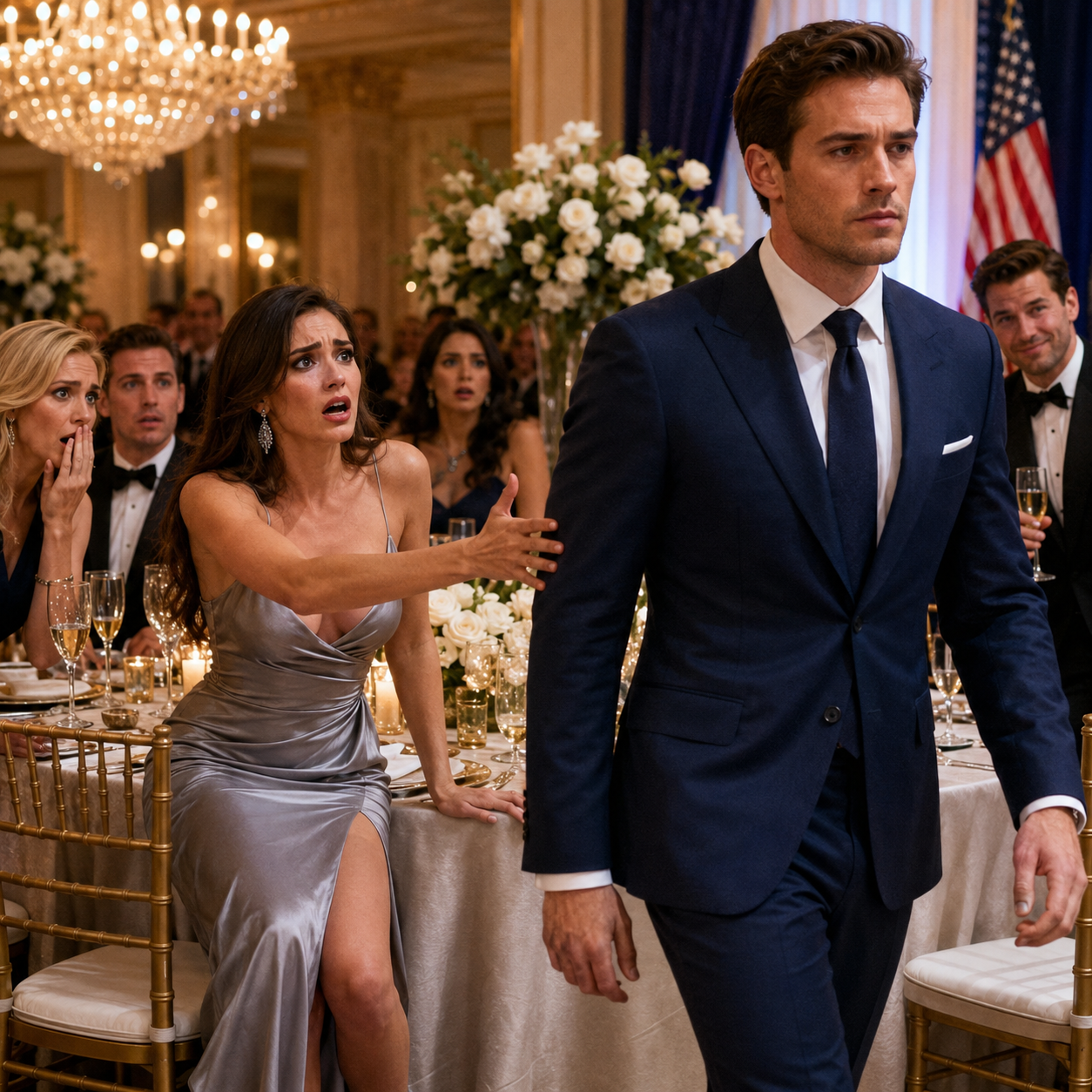
Two weeks later, I was invited to speak at a major tech conference about digital misinformation. The event was held at the Grand Aelia Hotel, owned by Lux Hospitality Group, Meridian’s biggest competitor.
After my talk, an executive named Victoria Chen approached me. She wanted to discuss verification protocols for corporate clients, event security, and reputation management. Then she casually mentioned that Lux had recently hired a new event coordinator who recognized my name.
Beth Williams.
Of course.
Apparently, after TechVision pulled away from Meridian over concerns about staff professionalism, Lux secured the business, and Beth jumped ship looking for a “fresh start.”
I smiled politely.
“Everyone deserves a second chance,” I said.
Then I added, “Just make sure your photographer gets her good side.”
Victoria looked confused.
I excused myself.
That was the last time I involved myself in Beth’s story.
Months passed. The acquisition changed my life, but not in the flashy way people imagine. I paid off debts, helped my parents, invested carefully, and finally let myself rest after years of grinding.
More importantly, I stopped letting other people define whether I was enough.
Beth had spent her life chasing the right image. The right man in the right suit. The right hotel lobby. The right lighting. The right version of herself reflected back by people she wanted to impress.
But image without character is just decoration.
And eventually, decoration cracks.
Almost a year later, I saw her again at an industry event. She was working registration for Lux, polished as ever, smile perfect, hair flawless. For one brief second, our eyes met.
She froze.
I nodded once.
Not warmly.
Not cruelly.
Just acknowledgment.
Then I walked past her toward the stage, where I was scheduled as the keynote speaker.
Life has a strange sense of timing.
People think my revenge was using the photos.
It wasn’t.
The photos only showed what already happened.
The real revenge was walking away without begging to be seen. It was refusing to argue with someone who had already decided I was not good enough for her image. It was building something real while she kept chasing angles.
Beth wanted a love story photoshoot.
She got one.
Just not the story she expected.
Because in the end, she finally got the world she always believed in, a world where appearances mattered, where images traveled, where perception shaped opportunity, and where the right picture could change everything.
She just never imagined she would be standing on the wrong side of the lens.
And I learned something I should have known from the beginning.
The right person will never make you feel like you need better lighting to deserve respect.
They will see you clearly.
No filter.
No edit.
No performance.
And they will choose the real version.

![[FULL STORY] The Price of Silence: How My Fiancée’s Cruel Public Insult Unlocked a $75,000 Family Fraud and Reclaimed My Dignity.](https://social-media.rabedo.com/thumbnails/1777882067_R9.jpg)