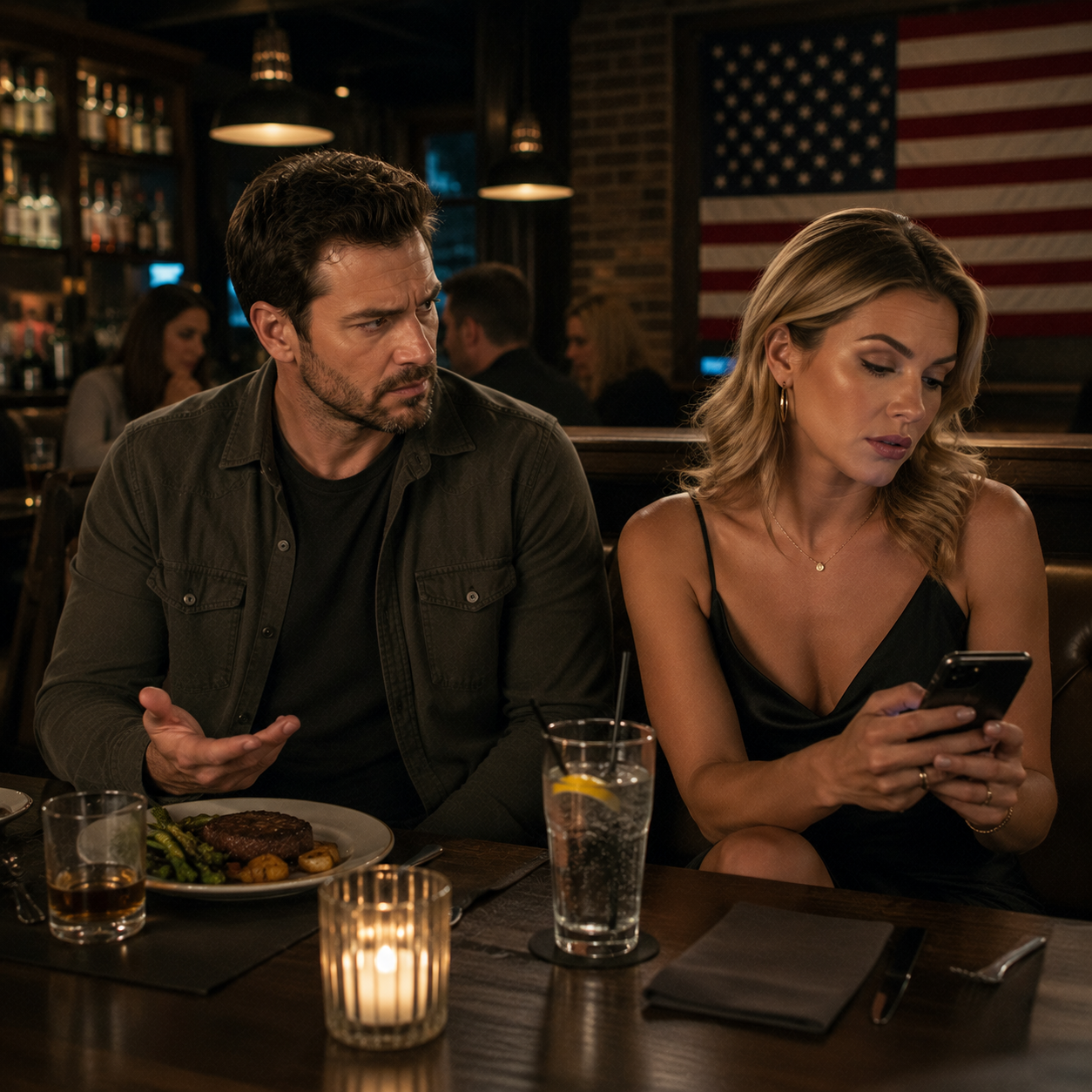
My name is Sam. I am 33 years old, and I work as a plumber in Nashville. My job is not glamorous, but it is honest, steady work. Most mornings start early, and some nights end with me fixing a broken pipe while everyone else is already home watching TV. After years of long hours, weekend jobs, and saving every dollar I could, I bought myself a small two-story townhouse on the east side of the city.
It was not fancy, but it was mine.
My girlfriend Mila was 29 and worked as a florist at a boutique flower shop downtown. We had been together a little over two years when everything happened. She moved into my townhouse about eight months earlier after her rent jumped and her old apartment building started renovations. The arrangement was simple. I handled the mortgage, utilities, repairs, and general upkeep. She paid for groceries and smaller shared expenses.
For the most part, things seemed normal.
Then there was Paul.
Paul was Mila’s male best friend. They had known each other since college, and at first, I had no problem with that. Adults can have long friendships. I was not interested in acting jealous over someone who had been in her life before me.
But Paul was not just present.
He was comfortable.
Too comfortable.
He would show up at my house without much warning, kick his shoes onto the couch, help himself to food from my fridge, and speak like he had authority in rooms he did not pay for. From the beginning, he made little comments about me. Nothing huge enough to start a fight, but constant enough to notice.
Mila deserves someone more exciting.
Plumbing sounds like a boring life.
Sam probably thinks date night is fixing a sink.
Every time, Mila laughed and said, “That’s just Paul. He has a sarcastic sense of humor.”
So I let it slide.
Until the dinner.
We had a small group over at my place one night. Nothing special. Takeout, wine, a few friends, casual conversation. Paul was there, of course. About an hour in, the conversation shifted toward relationships and future plans.
That was when Paul looked at Mila, then at me, and said casually, “Honestly, she’d be better off without you.”
The room went silent.
Everyone knew he had crossed a line.
Mila gave a nervous little laugh, but I did not laugh. I set my glass down and looked directly at him.
“Repeat that.”
Paul leaned back like he was amused.
“Relax. It was just an opinion.”
Then he kept going. He said Mila was smart, social, and full of energy, while I spent my life crawling under sinks and fixing toilets. He said it like my work, my home, and my stability were all things to be mocked while he sat at my table eating food in my house.
So I asked him one simple question.
“Why do you think it’s appropriate to insult me in my own house?”
He rolled his eyes and called me sensitive.
Then he said, “If Mila had listened to me earlier, she probably would’ve found someone better already.”
That was enough.
I stood up.
Not yelling. Not threatening. Just standing.
I told him he was a guest in my home and he was done speaking to me like that. If he had a problem with me, he could keep it to himself or leave.
Paul laughed.
Then Mila stood up too.
But she was not angry at Paul.
She was angry at me.
She said I was embarrassing her. She said Paul was obviously joking. She said I needed to apologize so everyone could relax and enjoy the evening.
For a second, I honestly thought I misheard her.
So I asked her to repeat herself.
She crossed her arms and said louder, “Apologize to Paul, or we’re done.”
That was when everything became very simple.
I looked at her, then at Paul, then around the table at everyone pretending not to stare.
Then I smiled and said, “Then we’re done, sweetheart.”
Nobody moved at first.
So I told everyone dinner was over and it was time to leave.
One of Mila’s friends asked if I was serious. I said yes. I was not interested in hosting people in my house while being told to apologize for being insulted under my own roof.
Chairs started sliding back. People grabbed jackets. Awkward goodbyes followed. Paul stayed seated the longest, still wearing that smug half-smile like he thought I was putting on a show.
I looked at him and said, “You should probably be the first one out the door.”
He finally stood up and muttered something about me having anger issues. I ignored it.
When everyone was gone, I closed the door and turned around. Mila was still standing by the dining table, furious.
She said I had humiliated her in front of her friends.
I told her I had removed someone who disrespected me from my house.
She scoffed.
“Paul didn’t disrespect you. He was telling the truth.”
That sentence did more damage than Paul’s insult ever could.
Because Paul was just an outside problem.
Mila was the person who was supposed to be my partner.
I looked at her for a moment, nodded, and walked upstairs.
She stayed downstairs at first, probably expecting me to come back and continue the argument. Instead, I went straight to the bedroom, opened the closet, grabbed a laundry basket, and started packing her clothes.
A few minutes later, she appeared in the doorway.
“What are you doing?”
“Packing your things.”
She laughed at first, like she thought I was trying to scare her.
Then she realized I was serious.
She told me I was being dramatic. She said I needed to calm down. I kept folding clothes.
“You gave me two options,” I said. “Apologize to Paul or the relationship is over. I chose the second one.”
“That’s not what I meant.”
“That’s exactly what you said.”
She asked if I was really ending a two-year relationship over one dinner argument.
“No,” I said. “I’m ending it because you demanded I apologize to a man who insulted me in my own house, then said he was right.”
She tried defending him again. She said Paul was only looking out for her and that sometimes people outside the relationship could see things more clearly.
I placed her makeup bag into the basket and said, “Then if Paul knows what’s best for you, you can stay with him.”
That was when her confidence cracked.
Within ten minutes, I had two baskets and a small suitcase filled with the things she used every day. I carried them downstairs and set them by the front door.
Mila followed me, still arguing, still saying normal couples worked through disagreements.
I opened the door.
She stared at me.
“Where am I supposed to go?”
I shrugged.
“Paul seemed very confident about what was best for you.”
For a moment, she just stood there looking at the open door like she could not believe I was not backing down. Then she said I would regret this once I cooled off.
I told her I had already cooled off. That was why I was not yelling.
She carried the first basket out. Then the second. Then the suitcase. A car pulled up a minute later, and she loaded her things into the back seat.
Then she was gone.
The house became quiet immediately.
I cleaned the kitchen, cleared the table, and sat on the couch. A few minutes later, my phone started ringing. Mila. I let it go to voicemail. Then came the texts.
She said I needed to stop being ridiculous. She said she was staying at a friend’s place and expected us to work things out in the morning. Then she wrote that Paul had only said what many people were probably thinking anyway.
I read that message twice.
Not because it hurt.
Because it confirmed everything.
There was no apology. No accountability. No acknowledgment that Paul crossed a line.
So I blocked her.
Then I blocked her on social media too.
About an hour later, an unknown number texted me.
“Sam, we need to talk.”
It was Paul.
He said kicking Mila out was messed up. He said I needed to call him so we could fix the situation.
That actually made me laugh.
The man who disrespected me in my own house now wanted to mediate the problem he created.
I replied once.
“There’s nothing to fix.”
He kept texting, calling me childish, saying Mila was upset, telling me to talk to him like a man. I ignored it.
Then another number called.
This time, it was Mila.
Her voice was shaky and rushed.
Paul had kicked her out.
Apparently, she showed up at his apartment expecting support, but once the consequences became real, Paul suddenly did not want drama at his place. He told her the situation was her problem and made her leave.
Now she was standing outside with her bags and nowhere to go.
Then came the apology.
She said she was sorry. She said she should have defended me. She said she made a mistake and asked if she could come back so we could talk.
I let her finish.
Then I told her calmly that I was not angry anymore, but the situation had gone past the point where an apology could reset everything.
She asked if I was really refusing to let her come home.
“Yes,” I said. “Because when Paul disrespected me, you chose his side in front of everyone.”
She started crying again. I reminded her that her parents lived thirty minutes outside Nashville and her sister had an apartment across town. Either place made more sense than coming back to mine.
Then I told her I hoped she got somewhere safe for the night.
And I hung up.
After blocking that number too, the house finally stayed quiet.
The next morning, I changed the front door lock. Not because I expected her to come back, but because the situation needed to be fully closed.
Two years ended in about three hours.
And the strangest part was how simple it felt afterward.
Paul’s insult was not what ended the relationship.
Mila’s reaction did.
She showed me that in the moment I needed basic respect from my partner, she cared more about protecting Paul’s ego than protecting our relationship.
That was the truth I could not unsee.
People think relationships end because of one big fight. Most of the time, that big fight only reveals what has been broken for a long time.
Mila gave me an ultimatum in my own house.
I accepted it.
Paul thought she would be better off without me.
So I gave them both the chance to prove it.
Turns out, he did not even let her stay one night.

![[FULL STORY] She Called My House “Our Home” While Breaking Up With Me and Demanded to Stay. I Showed Her the Deed and Said, “We’re Over. The House Isn’t.”](https://social-media.rabedo.com/thumbnails/1777308293_M2.png)

![[FULL STORY] My Wife Said She Needed “Girls’ Nights” Every Weekend — So I Followed Her and Found Her Ex Waiting at a Hotel](https://social-media.rabedo.com/thumbnails/1776420749_5bb60e6f-4512-40e7-8148-47d3036df143.png)
![[FULL STORY] My fiancée texted me at night:"I used your card for my refreshment trip because you love me."](https://social-media.rabedo.com/thumbnails/1776842967_10.png)