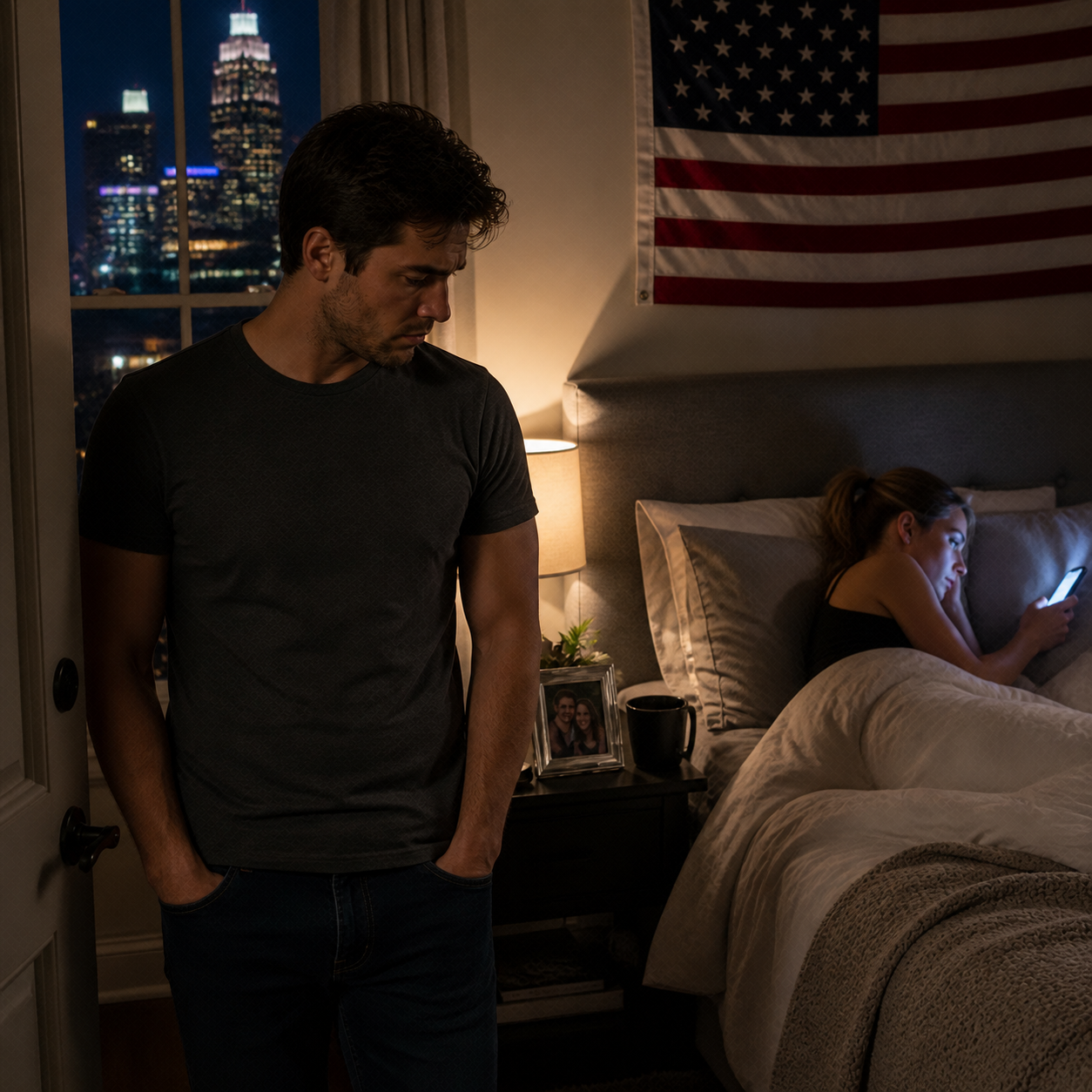

"I can't stay tied to someone with no future, Dylan. And I’m not going to fake being happy on Christmas morning just to make you feel better."
Those were the words. No shouting, no tears, just a cold, flat delivery that cut deeper than any scream ever could. I was sitting at our small kitchen table in Spokane, Washington. The smell of the bacon and eggs I’d just cooked was still heavy in the air. The Christmas tree lights were blinking behind her—red, green, blue—casting a festive glow on a woman who was currently dismantling our entire two-year relationship while wearing her winter coat.
"Kindra, it’s 7:30 in the morning," I said, my voice steadier than I felt. I set my fork down slowly. "We were supposed to open presents. I thought we were a team."
She didn't even look at the gift-wrapped box sitting next to her plate. Inside was a necklace she’d been eyeing for six months. I’d bought it back in November, back when I was still "Dylan the stable IT analyst" with a 401k and a parking spot.
"Teams win, Dylan," she snapped, finally meeting my eyes. "Since you got fired three weeks ago, you haven't been winning. You’ve been ‘hustling’ for scraps, selling your car, acting like a handyman. I didn't sign up to be a struggling freelancer’s wife. I signed up for the life we planned."
"The life we planned included me," I reminded her. "The job loss was a corporate acquisition. It wasn't a choice. I’m already making money back through consulting. I’m working 18 hours a day to make sure our wedding deposits stay paid."
Kindra let out a sharp, mocking laugh. "Wedding deposits? Dylan, look at yourself. You’re stressed, you’re tired, and you’re broke. I’m 31. I’m at my peak. I’m not going to waste my best years waiting for you to ‘rebuild.’ My parents were right. You were a safe bet until you weren't."
She stood up, grabbed her suitcase—which I now realized had been packed and hidden in the closet for days—and walked toward the door. She didn't look back at the apartment we’d decorated together. She didn't look at the cinnamon candle I’d lit because she loved the scent.
"I’m going to my parents'. Don't follow me. I’ll come back for the rest of my things when you're at work... if you even have work."
The door clicked shut. I sat there in the silence, the sound of Mariah Carey’s "All I Want for Christmas" playing softly from the speaker in the corner. I felt like a failure. Not because I lost my job, but because I’d spent two years building a future with someone who saw me as nothing more than a paycheck.
I spent the next three days in a daze. I threw myself into my work, coding until my eyes burned, just to drown out the voice in my head telling me she was right. I had no future. I was 35, jobless, and alone. On December 28th, I was sitting on my floor, surrounded by half-packed boxes of Kindra’s things, when a news notification popped up on my laptop.
“Winning Powerball Ticket Sold in Spokane, Washington. Jackpot: $9 Million.”
I stopped breathing. I remembered a rainy Tuesday two weeks ago. I’d just sold my car for cash to keep our mortgage afloat. I’d stopped at a gas station to fill up Kindra’s Honda—because of course, she kept the car that worked—and on a whim, I’d bought a ticket. Two bucks. Random numbers.
I walked to the kitchen junk drawer, my heart hammering against my ribs. I dug past old batteries and menus until I found the crumpled slip of paper. I pulled up the numbers on my phone.
14... 22... 38... 47... 60... and the Powerball, 08.
I looked at the ticket. I looked at the screen. I looked back at the ticket. I did this ten times. Every single number matched. Every. Single. One.
I didn't scream. I didn't jump. I sat down on the kitchen floor and started to laugh. It wasn't a happy laugh; it was the laugh of a man who realized the universe had a very dark sense of humor. One week ago, I was "trash with no future." Today, I was a multi-millionaire.
But as I sat there, a cold, calculated thought entered my mind. I knew Kindra. I knew her family. If they found out about this, the "no future" speech would be forgotten. She’d be back at my door within the hour, crying about how the "stress" made her lash out and how she always believed in me.
I realized then that this money wasn't just a prize. It was a test. And I was going to make sure Kindra failed it completely. I picked up the phone, but I didn't call her. I called a lawyer in Seattle who specialized in asset protection.
"I need to claim a jackpot," I told him. "And I need to disappear."
But little did I know, Kindra wasn't planning on letting me go that easily—not because she loved me, but because she was already starting to wonder if she’d made a tactical error.

![[FULL STORY] “THE ROOM THEY TOOK FROM ME”](https://social-media.rabedo.com/thumbnails/1776958272_ea50cb79-060a-43cb-8d51-f161b37f97de.png)

![[FULL STORY] She Dumped Me but Expected Boyfriend Benefits — So I Gave Her Exactly What She Asked For](https://social-media.rabedo.com/thumbnails/1776413070_668094175_1908075296812303_1970149885876391582_n.jpg)