
The aftermath was a long, quiet winter.
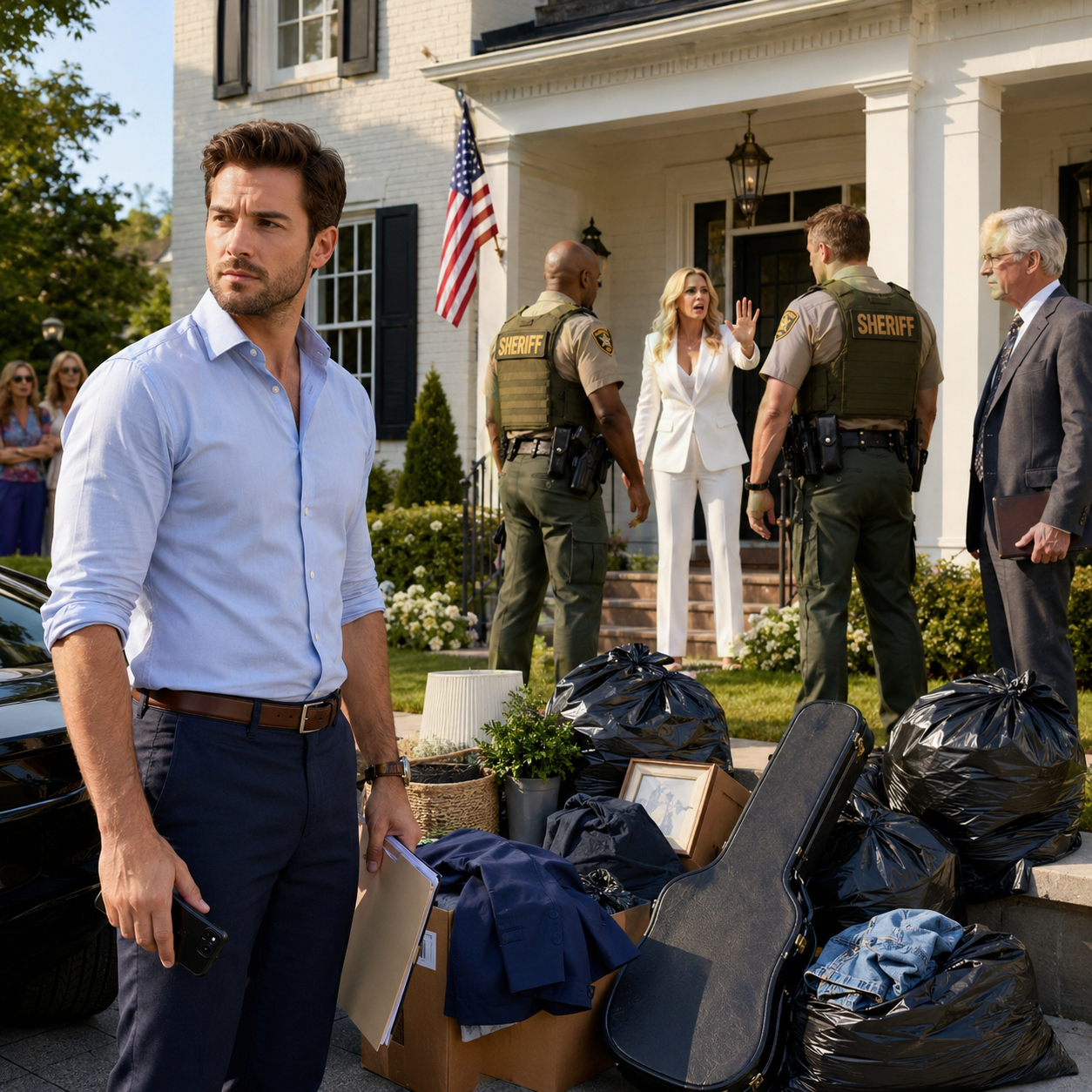
Marcus took a plea deal—five years in federal prison for wire fraud and conspiracy. Elena avoided jail time by testifying against him, but her reputation was radioactive. Every "friend" she had on social media vanished the moment the video of her abusing our father went viral. I didn't even have to leak it; Aunt Martha told the rest of the family, and word spread like wildfire.
Elena moved into a cramped apartment three states away, working a grueling job at a call center. She’s a single mom now, struggling to make ends meet. I set up a secret trust fund for the kids—Justin and Sophie—that covers their schooling and healthcare. I don't want them to pay for the sins of their parents. But Elena doesn't get a dime. She never will.
My parents moved back into the lake house after the "investigation" was over. But for a long time, it didn't feel like the sanctuary I’d envisioned. Mom couldn't sit on the sofa without remembering Elena’s screams. Dad stopped fishing. They felt like they had failed as parents.
"Where did we go wrong, Julian?" Mom asked me one evening as we sat on the deck, watching the first snow fall over the lake. "How did we raise someone who could be so... cruel?"
"You didn't raise her to be that way, Mom," I said, holding her hand. "Some people are just born with a hole in their heart that no amount of love can fill. You gave her every opportunity. She chose to use those opportunities to sharpen her claws."
It took a year of family therapy—for me and my parents—to stop feeling the "survivor’s guilt" of the betrayal. We had to learn that protecting yourself from a toxic person isn't "abandoning" family; it's an act of self-preservation.
I learned the hardest lesson of all: When someone shows you who they are, believe them the first time. I had seen Elena’s entitlement for years. I had seen Marcus’s red flags. I chose to ignore them because I wanted to believe in the "fairytale" of a perfect family. My wealth didn't cause the problem; it just acted as a spotlight, revealing the cracks that were already there.
Today, the lake house is finally a home.
Dad is back on the water every morning. Mom has a garden that’s the envy of the neighborhood. We don't talk to Elena. She’s reached out a few times, usually with a "sob story" about a broken car or a late utility bill. I don't respond. I’ve realized that for people like her, a response is a form of currency. Silence is the only boundary they can't cross.
I’m 33 now. My company is thriving, and I have a wonderful woman in my life who values character over capital. I still think about that "worst nightmare" night sometimes—the shouting, the tears, the feeling of the world collapsing. But then I look at my parents. I see the peace in their eyes, the way they can sleep through the night without fear.
The $380,000 wasn't the gift. The house wasn't the gift.
The gift was the moment I stood in that doorway and told my parents, "I’ve got you." The gift was showing them that even when your own blood turns against you, there is still such a thing as loyalty.
Life has a twisted sense of humor, it’s true. It took a betrayal to show me what true family actually looks like. It’s not about sharing a last name or a DNA strand. It’s about who stands beside you when the vultures come circling.
To anyone out there dealing with a "Laura" or an "Elena"—someone who uses your love as a weapon against you—know this: You are not responsible for their happiness. You are not required to be a sacrificial lamb on the altar of "family loyalty."
Your peace is worth more than their approval. Your boundaries are not a sign of hate; they are a sign of self-respect.
I saved the house. I saved my parents. And in the process, I saved myself.
And as I watch the sunset turn the lake into a sheet of liquid gold, I realize... it was worth every penny.
![[FULL STORY] SHE DEMANDED “LOYALTY,” BUT A JUDGE LATER TOLD HER TO STOP SAYING MY NAME](https://social-media.rabedo.com/thumbnails/1777817906_686167112_994159736469562_4111554418760130434_n.jpg)