
"I’m not your property. Stop calling me."
I stared at those eight words on my phone screen until the light dimmed and the display went black. It was 9:12 p.m. on a rainy Tuesday. My name is Leo. I’m 33, I work in architectural design, and up until that exact second, I thought I was in a committed, three-year relationship with a woman named Maya.
Maya is 29. She’s vibrant, sharp, and has a way of making you feel like the only person in the room—until she doesn’t. For the last year, we’ve shared my apartment. I say my apartment because I’m the one on the lease. I’m the one who paid the security deposit. I’m the one whose bank account takes the hit for the rent and utilities every single month like clockwork. Maya "contributes when she can," which in reality means she buys expensive organic candles and the occasional bag of groceries while her "freelance income" stays a mystery.
That afternoon, Maya didn't come home. No text. No "running late at the studio." By 7:00 p.m., I started to worry. By 8:00 p.m., I was calling. Straight to voicemail. I sent a text: "Everything okay? Getting worried." Nothing. I waited, pacing the living room, imagining car accidents or hospital wings. Then, at 9:12, the "bombshell" arrived.
"I’m not your property. Stop calling me."
I didn't feel the surge of anger I expected. Instead, I felt a strange, cold clarity. You see, Maya had a pattern. Whenever she felt "suffocated"—which usually meant whenever I asked for basic respect or communication—she’d lash out with these buzzwords. Property. Controlling. Insecure. She used them like shields to hide the fact that she was simply being inconsiderate.
I sat on the edge of the sofa, the same sofa I’d spent countless nights on waiting for her, and realized something. She wanted the "single life" benefits of zero accountability, but she wanted the "relationship" benefits of a warm bed and a man paying her bills.
I typed back four sentences. No emojis. No exclamation points.
"Understood. Since you aren't my property, I no longer have any claim to your whereabouts or your safety. Consequently, I am no longer your boyfriend. Do not come home tonight or any other night. We are done."
I didn't wait for a reply. I knew Maya. If I left that door unlocked, she’d waltz in at 2:00 a.m., smell like gin, and tell me I was "making a scene" if I tried to talk. Not this time. I grabbed my keys and went to the hardware store three blocks away. It was twenty minutes before closing. I bought a high-end deadbolt and a new handle set.
Changing a lock is surprisingly therapeutic. The mechanical click of the tumblers, the weight of the metal. It’s the sound of a boundary being set in steel. By 10:30 p.m., the old keys—the ones Maya had in her purse—were useless.
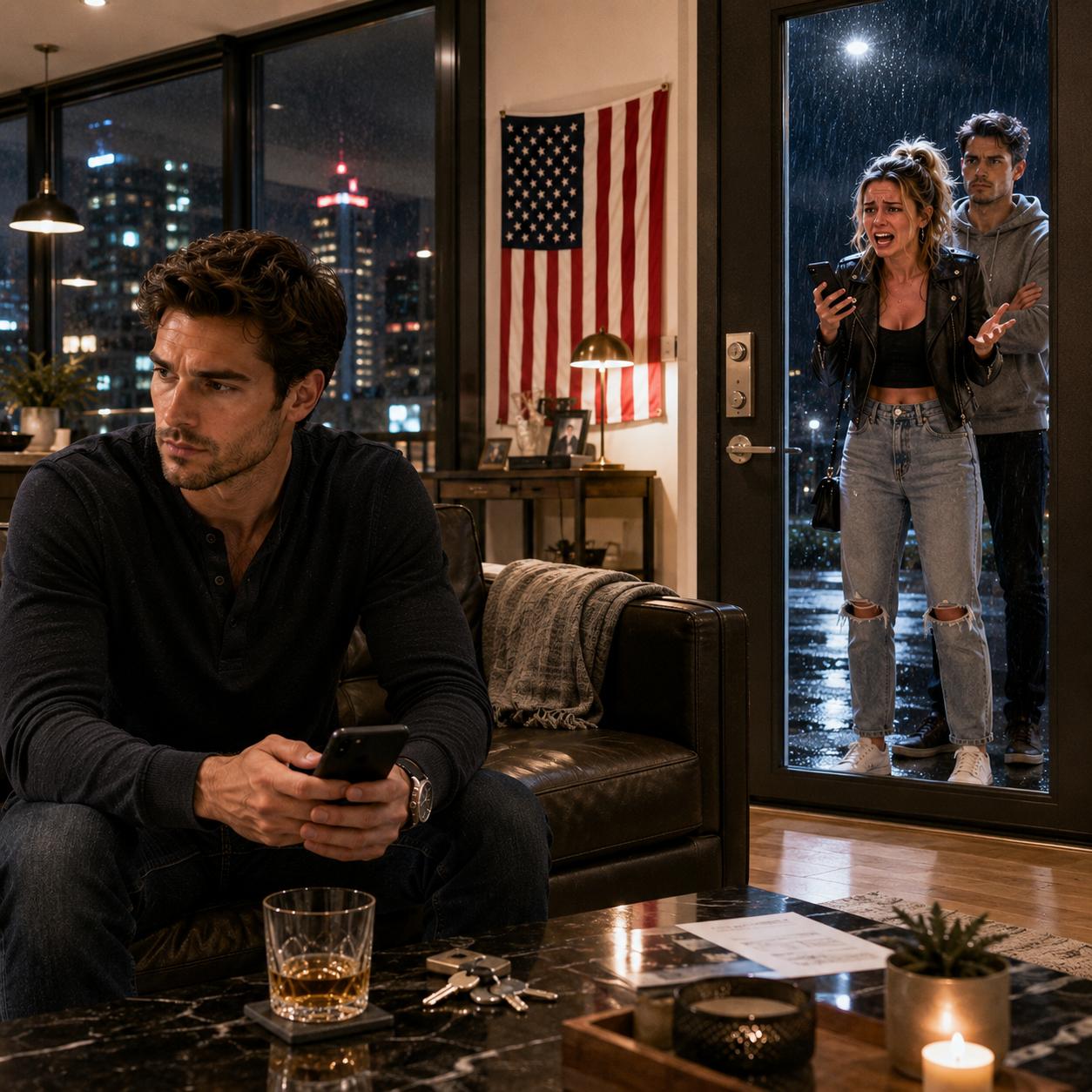
I poured myself a glass of bourbon, sat in the dark living room, and turned my phone face down. For three hours, the world was silent. I watched the rain against the window. I thought about our three years together. The trips, the laughs, but mostly, the exhaustion. I was tired of being the only one holding the rope.
Then, at 12:07 a.m., the phone started to dance on the coffee table. Buzz. Buzz. Buzz.
I didn't pick up. I knew the cycle was starting. But as the missed calls climbed into the double digits, I realized Maya wasn't just coming home late. She was coming home with a storm of her own, and she had no idea that the door she’d spent a year slamming was finally, truly, locked from the inside.
But I had no idea that Maya wasn't alone, and the person she brought with her was about to turn this breakup into a legal nightmare...


![[FULL STORY] She Said Her Love Language Was Acts of Service… So I Gave Her the Final One She Didn’t Expect](https://social-media.rabedo.com/thumbnails/1777138074_997fd3ee-6111-4c78-8ff6-708fff2d61c2.png)


![[FULL STORY] Girlfriend Publicly Humiliates Me at Engagement Party — Then I Walk Away and Learn the Truth That Ends Everything](https://social-media.rabedo.com/thumbnails/1776418478_669698798_1909915313294968_5319091198206731646_n.jpg)