![[ FULL STORY ] I Tested My Boyfriend To See If He’d Chase Me… Instead, He Packed My Things](https://social-media.rabedo.com/thumbnails/1777618767_51a32406-1e27-4cad-aa42-bf24c10f1f41.png)
I’m writing this from my childhood bedroom, staring at a wall full of old trophies and wondering how I managed to destroy the healthiest relationship I ever had.
Actually, that’s not true.
I know exactly how it happened.
It happened the moment I listened to my mother.
I was twenty-six. My boyfriend was twenty-eight. We had been together for two years and living together for eight months in his apartment.
He wasn’t dramatic. He wasn’t the kind of man who made big speeches or posted long romantic captions online. He loved quietly, through actions.
He meal-prepped for both of us every Sunday. He remembered my coffee order. He fixed my laptop when I couldn’t afford a new one. In two years, he never raised his voice at me once.
But according to my mother, that wasn’t enough.
“He’s too comfortable,” she would say every time I visited home. “A man who really loves you should be terrified of losing you.”
“We don’t fight, Mom,” I told her once. “That’s a good thing.”
She shook her head like I was naive.
“No, sweetheart. That means he’s complacent.”
My mother has been divorced twice.
I should have remembered that.
But her words got into my head. Slowly. Quietly. Like poison.
Every time he took a little too long to answer a text, I heard her voice. Every time he said he was tired and wanted a quiet night in, I wondered if he was losing interest. Every time our relationship felt peaceful, I started mistaking that peace for neglect.
Two weeks ago, she came to visit.
She watched us for a weekend. On Sunday night, after he went to bed early because he had work at six in the morning, she pulled me aside.
“You need to test him.”
I frowned. “What?”
“Start a fight. Walk away. If he loves you, he’ll chase you.”
I told her that was manipulative.
She called it protecting myself.
She said every woman in our family had done it. She said my grandmother had tested my grandfather that way, and they had stayed married for fifty-two years.
She wore me down.
And last Tuesday, I did something stupid.
I picked a fight.
It was about our anniversary, even though our anniversary was still six weeks away and he had already made reservations somewhere nice.
“You never put in effort anymore,” I snapped.
He looked genuinely confused.
“What are you talking about? I showed you the reservation last week.”
“It’s not about the reservation,” I said. “It’s about how you make me feel.”
He stayed calm.
“Okay. What do you need me to do differently?”
That wasn’t the script.
He was supposed to get defensive. He was supposed to panic. He was supposed to prove my mother right.
So I escalated.
“You know what? Forget it. I’m leaving. Maybe when I’m gone, you’ll realize what you had.”
I grabbed my purse, stormed out, slammed the door, got in my car, and drove to a grocery store parking lot nearby.
Then I waited.
I waited for the call.
The text.
The “baby, please come back.”
Nothing.
One hour passed.
Then two.
Then three.
My phone stayed silent.
By the fourth hour, panic started creeping in. Not because I thought the relationship was over, but because I wondered if something had happened to him.
So I drove back.
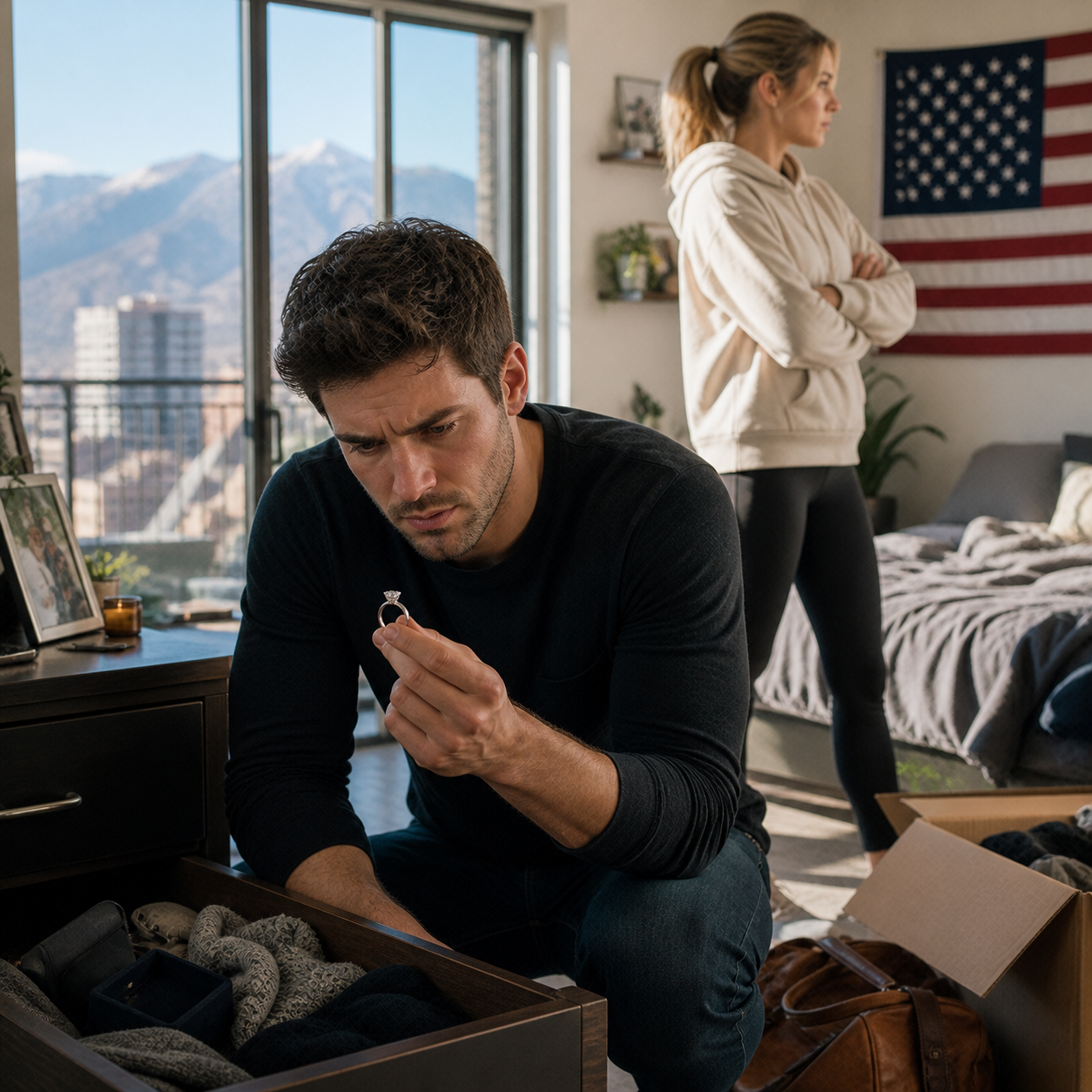
When I opened the apartment door, I saw four cardboard boxes stacked neatly by the entrance.
My clothes.
My books.
My toiletries.
Everything I had brought into his apartment over eight months.
He was sitting on the couch, calm as ever.
“What is this?” I asked.
He looked up.
“You left. I assumed you were done. I packed your things to make it easier.”
My stomach dropped.
“I didn’t mean it.”
“You said you were leaving so I’d realize what I had,” he said. “That’s a test.”
“It was just a fight. Couples fight.”
“No,” he said quietly. “You manufactured drama to see how I’d react. That’s manipulation. I don’t chase people who play games.”
I started crying.
I told him I was sorry. I told him my mother had convinced me it was a good idea.
His expression changed then.
Not anger.
Pity.
“I know your mom has ideas about relationships,” he said. “But you’re twenty-six. You made the choice.”
“Please,” I whispered. “Give me another chance.”
He stood up.
“You should go.”
That night, I drove to my parents’ house and cried in my mother’s arms.
Her response was immediate.
“Good. Now you know he never really loved you.”
And that was the first time her advice sounded different to me.
Not wise.
Not protective.
Wrong.
A week later, my mother still refused to accept that her plan had destroyed my relationship.
At breakfast, she said, “Any man who can pack your things that quickly was looking for an excuse to leave.”
“Or maybe he just has boundaries,” I muttered.
She ignored that and texted him from her phone without asking me.
This is her mother. I think you owe my daughter an apology. She made one small mistake and you threw away two years. Real men fight for women they love.
I almost choked when she showed me.
His reply came twenty minutes later.
Ma’am, your daughter played psychological games and admitted it was a test you suggested. I don’t owe anyone an apology for having self-respect. Please don’t contact me again.
My mother was furious.
“The audacity of that man.”
“He’s right,” I said.
The room went silent.
Then my father, who had been reading quietly in the corner, finally spoke.
“That’s funny,” he said. “You tested me the same way thirty years ago. I chased you, and we still got divorced because you never stopped playing games.”
My mother stared at him.
He didn’t stop.
“You taught our daughter the same manipulation tactics that destroyed our marriage.”
She left the room and didn’t speak to either of us for two days.
That was when I sent my ex a real apology.
No excuses.
No games.
Just the truth.
I told him what I did was wrong. I told him he didn’t deserve to be tested. I told him I had let someone else’s toxic ideas poison our relationship, but that the choice had still been mine.
His response was short.
I appreciate the apology. I hope you find what you’re looking for. Please don’t contact me again.
It hurt.
But I respected it.
My mother didn’t.
She started telling the family her version of the story. That he had abandoned me. That he was cruel. That he was probably cheating.
People called me with pity.
And every time I tried to explain the truth, they looked at me like I was making excuses for him.
Then my younger sister found out what really happened.
She went quiet after I told her everything.
“Mom did this to Dad,” she said. “And to her second husband.”
That was when I realized this wasn’t one bad piece of advice.
It was a pattern.
My mother had raised us to believe manipulation was romance.
Three weeks later, things got worse.
My ex started seeing someone new.
A nurse. Twenty-seven. From what I could tell, she seemed kind.
I didn’t blame him.
I had blown everything up.
My mother did not see it that way.
“Three weeks?” she snapped. “That proves he never loved you.”
Then she found the woman online and messaged her.
She warned her that my ex had kicked out his girlfriend of two years “for no reason,” that he was emotionally abusive, that she should be careful.
When my ex forwarded me the screenshot, I wanted to disappear.
I called my mother immediately.
“What is wrong with you?”
“I’m protecting other women.”
“You’re harassing his new girlfriend. You’re lying.”
She hung up on me.
That was the moment I finally confronted her fully.
I drove to her house and told her the truth.
“Your advice destroyed my relationship. Your test was manipulative, and he saw through it. Now you’re harassing strangers because you can’t admit you were wrong.”
She cried.
“You’re choosing him over your own mother.”
“No,” I said. “I’m choosing reality over your delusions.”
I told her if she contacted him or anyone in his life again, I would go no contact.
She lasted three days.
Then she made a fake profile and messaged his new girlfriend again.
This time, the girlfriend posted publicly.
She didn’t name me, but she made it clear someone’s mother was harassing her, and that she knew the truth.
The post spread fast through our local community.
Then my mother’s second husband commented.
This tracks. She did the same thing to me throughout our marriage. Walking out to test me was her favorite move. I finally stopped chasing after the fifteenth time.
Fifteenth.
After that, everything unraveled.
People started connecting stories. Women who had taken my mother’s advice began realizing how much damage it had caused. Her book club asked her to take a break. Her church group told her she needed to reflect. Friendships she had held for decades suddenly went cold.
My mother called me crying.
“They’re destroying me online.”
“No,” I said. “You’re facing consequences.”
For once, I didn’t rescue her from the mess she created.
Two months have passed now.
My ex is still with the nurse.
I genuinely hope he is happy.
He deserved better than what I gave him.
My mother has finally started real therapy. Not a spa retreat. Not inspirational quotes. Actual therapy with someone who specializes in attachment issues.
We are on limited contact.
The moment she gives relationship advice, I end the conversation.
My sister started therapy too. She is engaged to a good man, and she told me recently that she almost tried to make him jealous on purpose before catching herself.
“It feels like deprogramming,” she said.
She’s right.
That is exactly what it feels like.
I’m in therapy now too.
I’m learning that love does not need to be tested to be real.
Healthy love can be quiet.
Stable.
Boring sometimes.
It can look like meal prep on Sundays, fixed laptops, remembered coffee orders, and a man who doesn’t raise his voice even when you’re trying to provoke him.
I lost a good man because I mistook peace for indifference.
Because I listened to someone who confused chaos with passion.
Because I thought being chased would prove I was loved.
But tests don’t prove love.
They prove you don’t trust it.
A partner who stays through manipulation isn’t proving devotion.
They might just lack boundaries.
And a partner who walks away from games isn’t proving they never cared.
They’re proving they respect themselves enough not to participate in chaos.
My mother always said love meant being chased.
Now I know better.
Real love doesn’t make someone run after you when you walk away for attention.
Real love gives you a reason not to play games in the first place.

![[FULL STORY] My Fiancée Wrongly Accused Me to Have Me Locked Up She Smirked, "Enjoy Your Time Behind Bars](https://social-media.rabedo.com/thumbnails/1777304307_S4.png)