
![[FULL STORY] My Wife Took Off Her Ring at Dinner, Then Vanished With My Business Partner](https://social-media.rabedo.com/thumbnails/1777489996_a8ca7ff8-7e65-4e2d-bb80-e37db17a9f2b.png)
My wife took off her wedding ring halfway through dinner and placed it beside her glass of water like it was nothing more than a piece of jewelry she had grown tired of wearing.
We were at one of those quiet restaurants where people speak softly because the prices make everyone pretend they are more civilized than they really are. I was halfway through my ribeye when she looked at me across the table and said, “I’m not sure about us anymore.”
Just like that.
Eight years of marriage reduced to seven calm words.
I looked at the ring first. Then I looked at her. She was watching me closely, waiting for the reaction she had probably rehearsed in her head. Maybe tears. Maybe anger. Maybe me reaching across the table, begging her not to do this, asking what I could fix, promising to change.
Instead, I wiped my mouth with a napkin and said, “Understood.”
Her jaw tightened.
That was not what she expected.
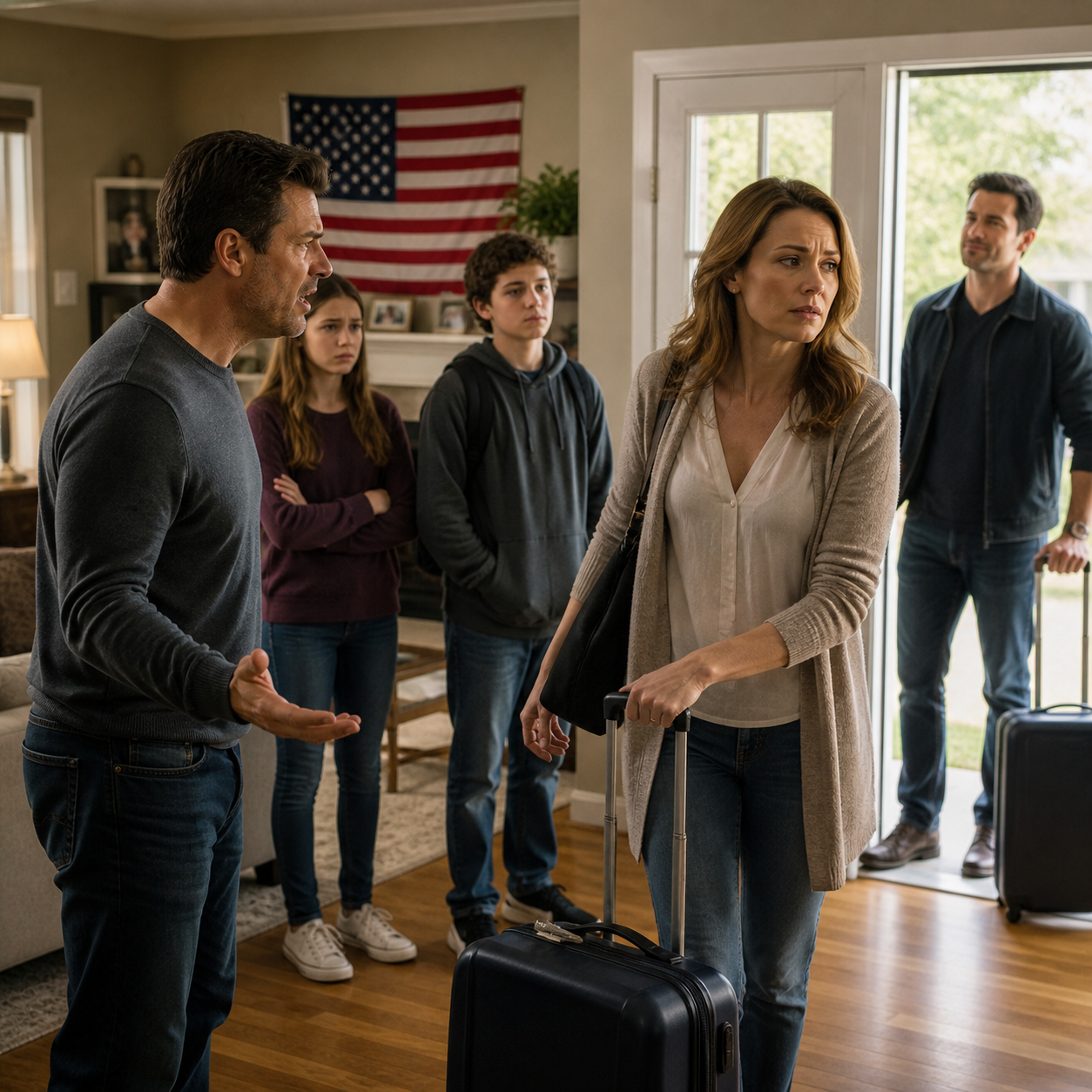
We finished dinner in silence. I paid the bill. We drove home separately. When we got back, she went straight upstairs. I heard drawers opening, suitcase zippers, the quiet sounds of someone packing a life into a bag while pretending it was just temporary.
An hour later, she came downstairs holding a suitcase.
“I need some time away to figure things out,” she said. “Please don’t contact me while I’m gone.”
“How long?” I asked.
“A few days. Maybe a week. I’ll reach out when I’m ready.”
“Okay.”
She stood there for a moment, staring at me like she was waiting for me to stop her. Like she wanted one last performance from me. One last desperate attempt to prove she still mattered.
But I didn’t move.
So she left.
I stood by the window and watched her taillights disappear down the street. Then I went into my office, closed the door, and made a call.
The private investigator answered on the second ring.
We had used him before for a company issue, back when an employee had been stealing petty cash. He was discreet, thorough, and expensive enough to be good.
“I need you to follow someone,” I said.
“Who?”
“My wife. She just left in a silver Accord.”
He didn’t ask unnecessary questions. I gave him the details, and he hung up.
Here is the thing.
My wife didn’t do “alone time.”
Not ever.
When we fought, she called her sister. Or her best friend. Or both. She processed everything out loud with an audience. So the idea that she suddenly needed total silence, no contact, no one knowing where she was, did not sit right with me.
The timing was wrong too.
We had just closed the biggest deal in my company’s history. I co-owned a software consulting firm with my business partner, a man I had known for fifteen years. The contract was seven figures. My wife had been at the celebration dinner. She had smiled, toasted, talked about finally remodeling the kitchen.
Then suddenly, two days later, she needed to find herself?
No.
Something was off.
Two days later, the PI called.
“She’s at a beach resort up north,” he said.
“Alone?”
He paused.
“No. There’s a man.”
My stomach dropped, but my voice stayed flat.
“Can you get photos?”
“I’m working on it.”
The photos arrived that night.
I opened them on my laptop and felt like I was watching someone else’s life collapse.
There she was, poolside, wearing a bikini I had never seen before, laughing with her head tilted back.
And beside her, rubbing sunscreen onto her shoulders, was my business partner.
My best friend.
The man who had stood beside me at my wedding. The man I had helped through his divorce. The man my wife used to call “basically family.”
More photos loaded.
Them holding hands on the beach.
Kissing near the pool bar.
Walking into the same room together.
I stared at the screen for a long time, trying to find shock somewhere inside me, but all I felt was something colder. Cleaner. Sharper.
Clarity.
I closed the laptop.
Then I opened it again and started making calls.
First, my lawyer.
“I need divorce papers drafted. I have proof of adultery. I want them ready when she gets back.”
Then my accountant.
“I need an emergency audit. Full business financials. Focus on anything my partner handled alone.”
Then I pulled up the partnership agreement we had signed twelve years earlier. I scrolled until I found the section I remembered.
Section 12C.
Morality clause.
We had added it almost as a joke. If either partner did something that damaged the company’s reputation, the other could force a buyout based on a prior valuation.
At the time, we laughed about it.
We were friends. Brothers, almost. We thought we would never need it.
I guess the universe has a sense of humor.
For the next three days, I documented everything. The PI report. The photos. Her text saying she needed space. The hotel registration. Copies in three different places. No emotional messages. No confrontation. No threats.
Just evidence.
She came home five days after she left, looking tan, rested, and almost relieved.
She walked into the kitchen and found me sitting at the table.
“Hey,” she said softly. “Can we talk?”
“Sure.”
I slid an envelope across the table.
She opened it. I watched the color drain from her face.
“Divorce papers?” she whispered. “Are you serious right now?”
“Very.”
“This is insane. I just needed time to think, and you—”
I turned my laptop around.
The first photo filled the screen.
She went completely still.
For a few seconds, she didn’t even breathe.
Then she said, “You had someone follow me?”
“I did.”
“That’s disgusting. You violated my privacy.”
“You were in public at a resort with my business partner. There was no privacy to violate.”
Then came the tears.
Right on schedule.
“It just happened,” she said. “We didn’t mean for it to happen. We were both confused, and things got complicated—”
“Stop.”
“You have to understand—”
“I said stop.”
She stared at me, mascara already streaking.
“You have thirty days,” I said. “Pack what you need tonight. Everything else goes through lawyers.”
“You can’t just kick me out. This is my house too.”
“No,” I said. “It’s not. I bought it before we got married. My name is on the deed.”
Her crying turned louder.
“You’re trying to ruin my life.”
“No,” I said. “You did that. I’m just refusing to finance the aftermath.”
She refused to leave at first, but when I told her I would call the police and show them the property deed, she called her sister. They packed in silence. Her sister glared at me like I was the villain.
Before they left, my wife tried one last time.
“We can fix this,” she said. “Therapy. We can work through it.”
“No, we can’t.”
“So eight years means nothing to you?”
“It meant everything,” I said. “Right up until you spent five days at a resort with my business partner.”
She had no answer.
The next morning, I called my business partner into the office.
He walked in looking nervous. That told me my wife had warned him.
I didn’t waste time. I pushed a folder across the desk.
He opened it.
Partnership dissolution papers.
His face went gray.
“What the hell is this?”
“Buyout. Section 12C.”
“You can’t be serious.”
I spread the photos across the desk like playing cards.
He stared at them.
For once in fifteen years, he had nothing clever to say.
“How long?” I asked.
He swallowed.
“Man, it’s not what you think.”
“How long?”
He slumped in the chair.
“Six months. Maybe seven.”
I almost laughed.
“Don’t tell me it just happened.”
He rubbed his face. “We didn’t plan it. We connected. Things got complicated.”
“Save it.”
Then I told him exactly what would happen. I would buy him out using the old valuation in the contract. He would leave the company. Quietly, if he was smart.
His eyes widened.
“That valuation is from three years ago. The company is worth three times that now.”
“Should have thought about that before sleeping with your partner’s wife.”
He threatened to fight. Said a judge would see it as revenge.
Then I asked him about the company credit card charges.
That was partly a bluff. My accountant was still digging.
But the look on his face told me I had hit something real.
The audit confirmed it.
Personal expenses.
Questionable meetings.
Consulting charges that didn’t make sense.
But that was only the beginning.
A week later, I found the thing that changed everything.
My wife had left her iPad at the house. It was still logged into her cloud account. When I opened her messages, I found the thread between her and my business partner.
It went back nine months.
Not six.
Not seven.
Nine.
And it wasn’t just romantic.
It was strategic.
“He’s too busy with work to notice.”
“Once the buyout happens, we’ll have enough to start our own thing.”
“Which clients do you think will come with us?”
“Probably Hayes. Definitely the tech startup. They like me more than him.”
They weren’t just having an affair.
They were planning to dismantle my company.
They were going to take the buyout money, her divorce settlement, my clients, maybe even some employees, and start a competing firm while I sat at dinner with them trusting both of them.
I saved every message.
Sent everything to my lawyer.
He replied within minutes.
“This changes everything.”
And it did.
Emergency discovery was filed. The judge granted it. My ex-partner had to turn over communications, financial records, everything.
What came out was worse than I expected.
He had met with competitors.
Shared pricing details.
Shared strategy.
Shared project information.
This was not just betrayal.
It was corporate sabotage.
I called our three biggest clients and told them the truth. No spin. No drama. Just documentation.
Two gave written statements supporting the lawsuit.
The third gave me a new contract because, in his words, “I trust the person who tells me the ugly truth before it costs me money.”
Meanwhile, my ex-partner tried to turn my employees against me. He called an all-hands meeting while I was out and told everyone the company was failing, that I was pushing him out unfairly, and that they should start looking for new jobs.
I walked in halfway through.
The room went silent.
“Anyone who wants to leave can leave,” I said. “But before you decide, you should know we signed three new contracts this week. We’re expanding, not collapsing. The man standing in front of you is leaving because he was sleeping with my wife while trying to steal company secrets.”
Nobody moved.
Then I said, “Anyone who stays gets a bonus this quarter. Anyone who follows him into a competing venture built on stolen information gets sued.”
He lost it.
Actually tried to throw a punch.
Two developers grabbed him before he reached me.
Security escorted him out.
HR terminated him for workplace violence before the end of the day.
He tried suing me for wrongful termination.
My lawyer sent the security footage.
He dropped it.
The divorce moved faster after that.
My wife tried to claim half the business, saying she had “supported me through the early years.” My lawyer pulled out the prenup she had signed years earlier when we refinanced the house. She had barely read it at the time.
Now she cared.
Too late.
She tried for high spousal support, claiming she had sacrificed her career for me. My lawyer submitted her job history: a string of short-term jobs, none lasting long, none high-paying, none abandoned because of me.
The judge gave her eighteen months of modest support.
She wanted luxury.
She got consequences.
A few weeks later, she showed up at my office.
Somehow, she got past security and walked into my office while I was on a call.
I ended the call.
“You need to leave.”
“Please,” she said. “Just five minutes.”
“No.”
“I made a mistake. I know that now. He manipulated me.”
“Stop.”
Her face crumpled.
“You weren’t manipulated,” I said. “I read the texts. You planned this.”
“That wasn’t real. We were just venting.”
“You planned to destroy my business and take my money. That’s not venting.”
She started crying again.
“I still love you.”
“No,” I said. “You love what I provided. There’s a difference.”
She left with a formal trespass warning.
My ex-partner settled soon after.
The original buyout under the old formula would have been about $240,000. I offered $100,000, full release, five-year non-compete, and no further action from me.
My lawyer said he would never take it.
He took it within forty-eight hours.
Turns out possible criminal exposure makes people very flexible.
The divorce finalized in three minutes.
My wife showed up looking thinner, tired, and angry beneath the sadness. Her lawyer made one last emotional plea about how she had lost her home, her stability, and everything she knew.
The judge looked at him and said, “Your client had an affair with her husband’s business partner and conspired to defraud his company. She is fortunate there are no criminal charges.”
Divorce granted.
Outside the courthouse, she stopped me in the parking lot.
“You got everything you wanted,” she said.
“No,” I replied. “I’m not happy. I’m just free.”
Her sister, standing beside her, snapped, “You’re heartless. She made one mistake and you destroyed her.”
I looked at both of them.
“She made thousands of choices over nine months. Those are not mistakes. And I didn’t destroy anything. I just made sure she couldn’t avoid the consequences.”
Then I got in my car and drove away.
That was months ago.
The business is stronger than ever. Revenue is up. We hired more people. Landed better contracts. Turns out not having someone sabotage you from the inside makes growth much easier.
I refinanced the house. Repainted. Replaced the furniture. It feels like mine again.
My ex-partner tried starting his own firm. It lasted less than two months. Clients didn’t follow him. Competitors didn’t trust him. Last I heard, he was doing tech support somewhere for a third of what he used to make.
My ex-wife moved in with her sister, then got kicked out after a month. Now she’s with her parents, working part-time retail, still receiving support for a little while longer.
Her mother emailed me about forgiveness and how holding grudges poisons the soul.
I deleted it.
My ex-partner sent me a message on LinkedIn.
“Can we talk about old times?”
Blocked.
Here is what I learned.
Betrayal is not one moment.
It is a series of choices.
Every lie. Every hidden text. Every hotel reservation. Every conversation where they planned to take my life apart while smiling at me across dinner tables.
Those were choices.
And when people make choices like that, they do not get to call themselves victims when the truth catches up.
I didn’t scream.
I didn’t beg.
I didn’t chase.
I documented.
I protected myself.
And I walked away.
My wife took off her ring at dinner because she thought it would make me panic.
Instead, it made me pay attention.
And that made all the difference.
![[FULL STORY] My Son-in-Law Stole My Dead Father’s Clock—But Forgot the Cameras Were Watching](https://social-media.rabedo.com/thumbnails/1777105042_6c2409d2-ffd4-4e1e-b7de-35192b7a2649.png)

![[FULL STORY] My materialistic girlfriend threw my three-month anniversary gift in the trash, then tried to crawl back when it sold for ten thousand dollars.](https://social-media.rabedo.com/thumbnails/1777014066_D5.png)
![[FULL STORY] My Fiancée Planned a Week in Vegas With Her Male Best Friend—So I Planned My Own Party With His Ex](https://social-media.rabedo.com/thumbnails/1777536337_01b0987b-a828-4f27-8cb2-084ca1a80547.png)
![[FULL STORY] SHE THOUGHT MY SILENCE MEANT WEAKNESS, UNTIL I PLAYED HER VOICE AT DINNER](https://social-media.rabedo.com/thumbnails/1777820523_690025715_994349716450564_702928747693197533_n.jpg)