![[FULL STORY] My Wife Packed Her Bags and Said She Was Done, So I Let Her Leave](https://social-media.rabedo.com/thumbnails/1777372530_47963664-b969-4469-adb9-f832195663a2.png)
My wife packed her bags and said, “I’m moving out tonight. Don’t try to stop me.”
So I didn’t.
I did not beg.
I did not block the door.
I did not promise to change.
I simply said, “Okay.”
That was the first time Linda looked uncertain.
My name is Jake. I’m thirty-four, and at the time, I had been married to Linda for three years.
I run a construction crew and make a decent living. I bought my house before we got married. I worked hard for that life.
Linda was thirty-one, worked part-time at a boutique, and spent most of her free time online complaining about how boring her life was.
For a while, I ignored it.
Then, about six months before everything ended, she changed.
She started saying she deserved better.
A better house.
A better car.
A more exciting life.
Maybe even a better husband.
She picked fights over nothing.
She stayed out late with divorced friends and came home at two in the morning, saying it was just “girls’ night.”
Then I found out she had been messaging her ex, Derek, on Instagram.
When I confronted her, she called me controlling.
That should have told me everything.
One Friday evening, I came home from work and found Linda in the bedroom, throwing clothes into suitcases.
Not packing for a trip.
Packing to leave.
“What’s going on?” I asked.
She didn’t even look at me.
“I’m done, Jake. This marriage isn’t working. I’m moving out tonight.”
I stared at her.
“We haven’t even talked about this.”
“There’s nothing to talk about. I’ve made up my mind.”
“Where are you going?”
“To Melissa’s. I need space to figure out what I want.”
Then she zipped the suitcase and looked at me coldly.
“I’m leaving tonight. Don’t try to stop me.”
She expected me to break.
I could see it in her face.
She wanted tears.
Panic.
Begging.
She wanted me to chase her and hand her all the power.
Instead, I said, “Okay.”
She froze.
“Okay?”
“If you want to leave, leave. I’m not stopping you.”
Her expression changed.
“You’re not even going to fight for our marriage?”
“Linda, you just said you’re done. What am I supposed to fight for?”
She stood there, waiting for me to fold.
When I didn’t, she got angry.
“Fine. Don’t say I didn’t give you a chance.”
Then she left.
The moment her car pulled out, I called my lawyer, Steve.
He told me exactly what to do.
Cancel her authorized user cards.
Protect accounts in my name.
Leave the joint household account alone.
Document what she took.
Change the locks if the house was legally mine.
So I did.
Within hours, every credit card tied to me was canceled or updated.
The next morning, a locksmith changed the locks.
I photographed everything she left behind.
Furniture.
Clothes.
Decorations.
Kitchen items.
Everything.
Linda had wanted independence.
I decided to respect that fully.
By Sunday, reality hit her.
She called me furious.
“Jake, what did you do? My cards aren’t working.”
“You moved out,” I said. “So I removed your access to my accounts.”
“You can’t just cut me off from money.”
“They’re my credit cards, Linda.”
“I didn’t say I wanted a divorce. I said I needed space.”
“You said the marriage wasn’t working and that you were done.”
“I’m still your wife.”
“You were my wife when you packed your bags too.”
She hung up.
The next day, her friend Melissa called.
“Jake, Linda is really struggling.”
“That’s unfortunate.”
“She made a mistake. She was emotional.”
“Packing suitcases and moving out seems pretty deliberate.”
“She just needed space.”
“No. She wanted freedom. Now she has it.”
Then I reminded Melissa that she had spent months telling Linda she was too young to be tied down.
Melissa went quiet.
I hung up.
Then Linda’s parents got involved.
Then her sister.
Then my mother.
Everyone wanted me to “be reasonable.”
But the truth was simple.
Linda had not been thrown out.
She had left.
She told me she was done.
She bragged to neighbors that she was finally free.
She took money from our joint account.
She tried to use my credit cards after leaving.
Then, when Melissa’s couch became uncomfortable and the money ran out, suddenly she wanted to come home.
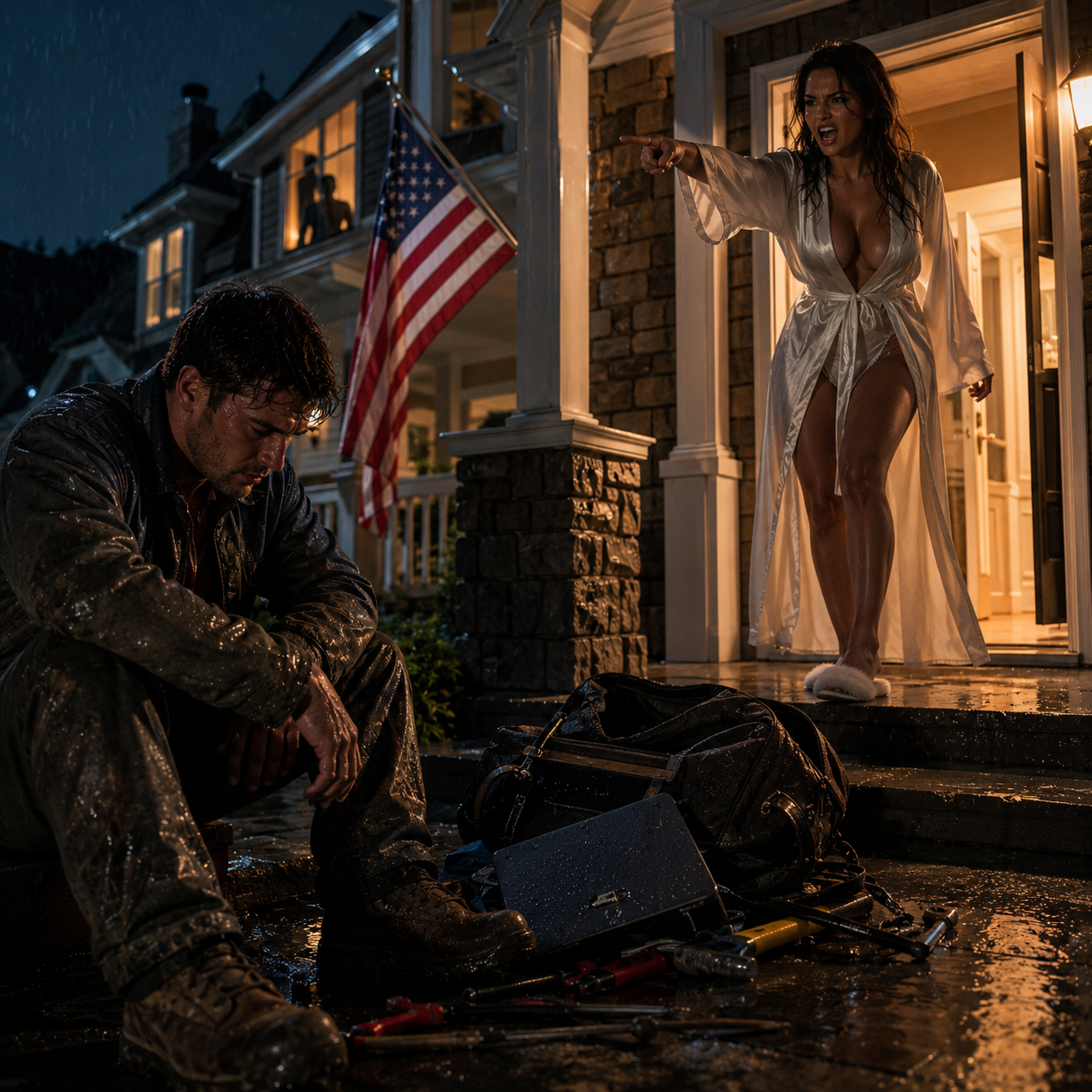
Three days after leaving, Linda showed up at my door.
She tried her old key.
It did not work.
She started pounding on the door.
My neighbor Bob came over, concerned.
Linda turned to him immediately.
“Bob, he locked me out of my own house.”
Bob looked confused.
“Didn’t you tell me Sunday you were finally free and ready to live your life?”
Her face went red.
Then Bob added, “You also asked if I knew any single guys.”
That was the end of her performance.
She cried.
She said she made a mistake.
She said she loved me.
She said she wanted to come home.
I looked at her and asked, “Would you be here if your cards still worked?”
She had no answer.
That was answer enough.
Over the next few weeks, she tried everything.
Guilt.
Tears.
Family pressure.
Promises of counseling.
Claims that Melissa had influenced her.
But my lawyer explained it best.
“She probably thought you’d keep supporting her while she figured out her options. When you didn’t, she realized independence is expensive.”
That was exactly it.
Linda did not miss the marriage.
She missed the safety net.
The divorce moved forward.
Two months later, her lawyer reached out asking if I would consider counseling instead.
By then, she was living with her parents and struggling financially.
I told my lawyer no.
The divorce was finalized last month.
Linda moved three hours away and got a full-time job at an insurance office.
Maybe that will be good for her.
Maybe she will learn what it means to support herself.
As for me, my house is peaceful again.
No drama.
No walking on eggshells.
No wife who complains about the life I worked hard to build while depending on it every day.
I started dating again.
Slowly.
Carefully.
The woman I’m seeing now is a teacher. She owns her own place, works full-time, and does not need me to rescue her from her own choices.
When I told her about Linda, she said something simple.
“She wanted to keep you as a backup plan while she explored other options.”
That was exactly right.
Linda said I did not fight for our marriage.
But I did.
I fought for it every day for three years.
I was faithful.
I worked.
I built a stable home.
I tried to be a good husband.
She gave it up in one night because someone convinced her there might be something better outside the door.
There wasn’t.
But by the time she realized that, I had already believed her.
That is the lesson.
When someone says they are done, listen.
When someone walks away, let them.
Do not chase people who are leaving you.
Let them find out what life looks like without the person they took for granted.



![[FULL STORY] My “Mental Health Weekend” Was a Lie… So I Ended the Relationship While She Was Away](https://social-media.rabedo.com/thumbnails/1777146369_8d08d33d-2483-41d8-b7fa-ae7d8356ea4c.png)